
Sunday, December 07, 2025

News Destination For The Global Indian Community

News Destination For The Global Indian Community

WORLD
LifeMag
Cancel culture decoded

Cancel culture decoded

In spite of  buzzwords such as diversity and heterogeneity, such a culture stands for homogeneity and singularity in thought and action

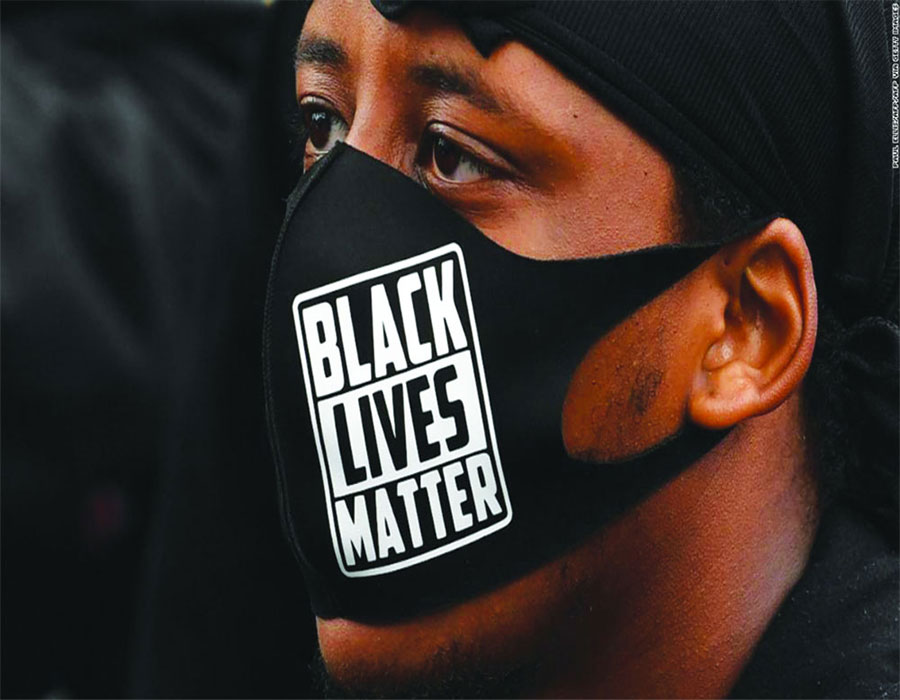
That an innocent sounding word, “cancel”,  has come to define contemporary culture in modern democracies may sound rather baffling to a lay person. The fact that it actually has, at least in select spaces involving debate and dialogue, reveals the degeneration of those spaces, theoretically given to welcoming diverse opinions. In everyday usage, cancel may mean withdrawal or scrapping of a contract, but the “cancel culture”, which unfortunately has become the logic of an impatient generation, has many more layers of meaning that are interlocking and complex. Regardless of its advocates from contrasting ideological umbrellas, “cancel culture” implies that the country and its institutions have failed the people, prompting the militantly “conscientious” groups to take over. Needless to say, such campaigns remain predominantly urban and middle-class. Analysts have traced the prevalence of this culture as definitive of our intellectual reality to the #MeToo campaign in the US. A powerful and perfectly legitimate movement slowly became the weapon of a generation glued to the internet, though without any sincere commitment to the cause that defined earlier generations of protesters, involving marches or picketing, which were demanding in terms of time and energy. Before we realised its frequent occurrence and increasing moralising tendency, it had become part of our cultural sphere and expressed itself through withdrawal of support, challenging authority and advocating suspension of the offender. Thus, Starbucks was targetted for asking its employees not to wear “Black Lives Matter” badges, a gym club brand, Equinox, faced backlash after its owner was found collecting donations for US President Donald Trump. Opinion writer Bari Weiss resigned from her job when her employer, The New York Times, failed to protect her from constant harassment by her colleagues for holding on to different political values. JK Rowling was “cancelled” because of what was seen as her intolerance of trans-women.

The war among liberals: In-built into “cancel culture” is an ethical imperative on the part of the people championing it, who see themselves as the defenders of democratic ethos, prompting them to raise their voices against what they feel is unjust. What is ignored in this so-called ethical order is the reality of an anti-democratic force that betrays intolerance of difference and disagreement. That explains why the same group of people demanding freedom end up cancelling conservative intellectuals. So “cancel culture” remains anti-democratic and promotes a culture of purity where being different and adversarial are offensive. In spite of  buzzwords such as diversity and heterogeneity, such a culture stands for homogeneity and singularity in thought and action. It always looks for new outrages almost as an obsessive compulsive and pounces upon the politically incorrect to threaten him/her or the organisation so as to impose costs.

If it silences democracy in the name of democracy, tramples upon freedom in the name of freedom, we must understand where this habit of speaking in a forked tongue is coming from. It is not difficult to understand that it emanates from within liberal discourse and survives on its propensity towards double-speak and obfuscation. Writing letters to put pressure on governments and organisations for protecting rights, which the Left liberal intelligentsia excels in, is a technique whereby they legitimise themselves. When JK Rowling joined hands with Chomsky, Fukuyama, Rushdie, Atwood and so on, and called out this “cancel culture” as intolerance in an open letter published in Harper’s Magazine, she was, to some extent, joining hands with those who gave oxygen to such a culture. They wrote, “Censoriousness is spreading more widely in our culture: An intolerance of opposing views, a vogue for public shaming and ostracism, and the tendency to dissolve complex policy issues in a blinding moral certainty.” What these people often forget is that writing such letters is always more about protecting their authority over liberalism than the cause itself. If they suddenly realise the violence of “cancel culture”, they should not look beyond themselves to find its provenance. “Cancel culture” is a product of their muscular approach to truth.

Even as “cancel culture” is a product of liberal discourse, it poses an existential threat to that discourse in its demand for a forced outcome rather than a process-oriented approach. It is equally protestant in nature in the sense that it has scant respect for liberal idols and high priests who symbolise entitlement. In fact, we may discern inter-generational conflict within this liberalism or a kind of castration anxiety (in Freudian terms). It marks the coming of age of the next generation of relatively young champions, who see their ideological fathers as patriarchs who have always benefitted from peddling liberal wares. When Pankaj Mishra trashed the Harper’s Magazine letter, he showed a mirror to these ideologues and accused them of fighting for their own freedom rather than that of free speech. This competitive liberalism is not a fight between right and wrong, but the sign that a smooth transition is not taking place. Unlike political parties or sports teams, the “liberal progressive” shop has the same set of owners who refuse to allow the new generation to replace them. Impatient, restless, combative and young, “cancel culture” warriors cannot see themselves waiting perpetually to be counted as intellectual adults. When Pankaj Mishra took issue with Rushdie for being called “the voice of the continent”, he was protesting against an intellectual culture that condemns authors like him (Mishra) to the waiting room of intellectual history.

The Indian story: In India, unlike the US, this culture has traversed both Left-and Right-wing narratives as well as not so politically-conscious actors. In the recent Bloomsbury controversy relating to a book on Delhi riots, the first move came from the Left to cancel the book followed by backlash from the non-Left quarters, who took issue with Bloomsbury’s cancellation and then cancelled Bloomsbury as a publisher of their choice. The death of actor Sushant Singh Rajput (SSR) also created a polarising climate where the outsiders to Bollywood, such as SSR, were pitted against the privileged insiders, who took their stardom for granted. This infuriated and angry group collectively trashed Sadak 2, a movie made by one who is seen as a promoter of nepotism.

However, it will be off the mark to project this as the expression of Right-wing angst. On most occasions Bollywood prima donnas of liberal hue have voiced their opinion against politicians, fellow actors and producers and whoever they imagined is expressing anti-democratic values. The present polarisation of Bollywood  and its adoption of “cancel culture” implies the culture’s traction, cutting across ideological lines.

“Cancel culture” in India remains derivative of American leads, as in the “Black Lives Matter” movement being converted into “Dalit Lives Matter.” However, the cultural Right is learning from its past mistakes and using the vocabulary of democracy and victimhood for its own purpose. Like its Left adversaries, its supporters are writing letters to the public or to the President to raise awareness. They are writing books and speaking from public fora and forcing the Left to dehumanise itself by turning violent. Even as the Right is learning from the Left, the latter is getting into the slush of what it accused the Right to be. The liberal Left, which claimed to have exclusive right over free speech, now understands that liberty and free speech are no longer its exclusive domains. Leftists fear that liberty can be effectively used by the Right and this makes it suspect liberty as an impediment to its ideals of democracy and justice.

Economic imperative: There is yet another dimension of “cancel culture”,  namely the economic imperative. Sometimes, acting on public outrage, as in sacking an employee for contrarian political values or insensitive posts, organisations seek to arrest a backlash or cash in on public outrage or hold on to their clientele. Given that the US intellectual sphere is totally dominated by the Left and the so-called multi-culturalism complex, and common people do not care much until election time, the media and publishing industry actually gain from this competitive outrage. In India however, due to its millennia old culture that has been evolutionary rather than revolutionary, such disruptive changes remain confined to select, elite spaces.

(The writer is Professor, IIT, Madras)

Cancel culture decoded

Cancel culture decoded

In spite of  buzzwords such as diversity and heterogeneity, such a culture stands for homogeneity and singularity in thought and action

That an innocent sounding word, “cancel”,  has come to define contemporary culture in modern democracies may sound rather baffling to a lay person. The fact that it actually has, at least in select spaces involving debate and dialogue, reveals the degeneration of those spaces, theoretically given to welcoming diverse opinions. In everyday usage, cancel may mean withdrawal or scrapping of a contract, but the “cancel culture”, which unfortunately has become the logic of an impatient generation, has many more layers of meaning that are interlocking and complex. Regardless of its advocates from contrasting ideological umbrellas, “cancel culture” implies that the country and its institutions have failed the people, prompting the militantly “conscientious” groups to take over. Needless to say, such campaigns remain predominantly urban and middle-class. Analysts have traced the prevalence of this culture as definitive of our intellectual reality to the #MeToo campaign in the US. A powerful and perfectly legitimate movement slowly became the weapon of a generation glued to the internet, though without any sincere commitment to the cause that defined earlier generations of protesters, involving marches or picketing, which were demanding in terms of time and energy. Before we realised its frequent occurrence and increasing moralising tendency, it had become part of our cultural sphere and expressed itself through withdrawal of support, challenging authority and advocating suspension of the offender. Thus, Starbucks was targetted for asking its employees not to wear “Black Lives Matter” badges, a gym club brand, Equinox, faced backlash after its owner was found collecting donations for US President Donald Trump. Opinion writer Bari Weiss resigned from her job when her employer, The New York Times, failed to protect her from constant harassment by her colleagues for holding on to different political values. JK Rowling was “cancelled” because of what was seen as her intolerance of trans-women.

The war among liberals: In-built into “cancel culture” is an ethical imperative on the part of the people championing it, who see themselves as the defenders of democratic ethos, prompting them to raise their voices against what they feel is unjust. What is ignored in this so-called ethical order is the reality of an anti-democratic force that betrays intolerance of difference and disagreement. That explains why the same group of people demanding freedom end up cancelling conservative intellectuals. So “cancel culture” remains anti-democratic and promotes a culture of purity where being different and adversarial are offensive. In spite of  buzzwords such as diversity and heterogeneity, such a culture stands for homogeneity and singularity in thought and action. It always looks for new outrages almost as an obsessive compulsive and pounces upon the politically incorrect to threaten him/her or the organisation so as to impose costs.

If it silences democracy in the name of democracy, tramples upon freedom in the name of freedom, we must understand where this habit of speaking in a forked tongue is coming from. It is not difficult to understand that it emanates from within liberal discourse and survives on its propensity towards double-speak and obfuscation. Writing letters to put pressure on governments and organisations for protecting rights, which the Left liberal intelligentsia excels in, is a technique whereby they legitimise themselves. When JK Rowling joined hands with Chomsky, Fukuyama, Rushdie, Atwood and so on, and called out this “cancel culture” as intolerance in an open letter published in Harper’s Magazine, she was, to some extent, joining hands with those who gave oxygen to such a culture. They wrote, “Censoriousness is spreading more widely in our culture: An intolerance of opposing views, a vogue for public shaming and ostracism, and the tendency to dissolve complex policy issues in a blinding moral certainty.” What these people often forget is that writing such letters is always more about protecting their authority over liberalism than the cause itself. If they suddenly realise the violence of “cancel culture”, they should not look beyond themselves to find its provenance. “Cancel culture” is a product of their muscular approach to truth.

Even as “cancel culture” is a product of liberal discourse, it poses an existential threat to that discourse in its demand for a forced outcome rather than a process-oriented approach. It is equally protestant in nature in the sense that it has scant respect for liberal idols and high priests who symbolise entitlement. In fact, we may discern inter-generational conflict within this liberalism or a kind of castration anxiety (in Freudian terms). It marks the coming of age of the next generation of relatively young champions, who see their ideological fathers as patriarchs who have always benefitted from peddling liberal wares. When Pankaj Mishra trashed the Harper’s Magazine letter, he showed a mirror to these ideologues and accused them of fighting for their own freedom rather than that of free speech. This competitive liberalism is not a fight between right and wrong, but the sign that a smooth transition is not taking place. Unlike political parties or sports teams, the “liberal progressive” shop has the same set of owners who refuse to allow the new generation to replace them. Impatient, restless, combative and young, “cancel culture” warriors cannot see themselves waiting perpetually to be counted as intellectual adults. When Pankaj Mishra took issue with Rushdie for being called “the voice of the continent”, he was protesting against an intellectual culture that condemns authors like him (Mishra) to the waiting room of intellectual history.

The Indian story: In India, unlike the US, this culture has traversed both Left-and Right-wing narratives as well as not so politically-conscious actors. In the recent Bloomsbury controversy relating to a book on Delhi riots, the first move came from the Left to cancel the book followed by backlash from the non-Left quarters, who took issue with Bloomsbury’s cancellation and then cancelled Bloomsbury as a publisher of their choice. The death of actor Sushant Singh Rajput (SSR) also created a polarising climate where the outsiders to Bollywood, such as SSR, were pitted against the privileged insiders, who took their stardom for granted. This infuriated and angry group collectively trashed Sadak 2, a movie made by one who is seen as a promoter of nepotism.

However, it will be off the mark to project this as the expression of Right-wing angst. On most occasions Bollywood prima donnas of liberal hue have voiced their opinion against politicians, fellow actors and producers and whoever they imagined is expressing anti-democratic values. The present polarisation of Bollywood  and its adoption of “cancel culture” implies the culture’s traction, cutting across ideological lines.

“Cancel culture” in India remains derivative of American leads, as in the “Black Lives Matter” movement being converted into “Dalit Lives Matter.” However, the cultural Right is learning from its past mistakes and using the vocabulary of democracy and victimhood for its own purpose. Like its Left adversaries, its supporters are writing letters to the public or to the President to raise awareness. They are writing books and speaking from public fora and forcing the Left to dehumanise itself by turning violent. Even as the Right is learning from the Left, the latter is getting into the slush of what it accused the Right to be. The liberal Left, which claimed to have exclusive right over free speech, now understands that liberty and free speech are no longer its exclusive domains. Leftists fear that liberty can be effectively used by the Right and this makes it suspect liberty as an impediment to its ideals of democracy and justice.

Economic imperative: There is yet another dimension of “cancel culture”,  namely the economic imperative. Sometimes, acting on public outrage, as in sacking an employee for contrarian political values or insensitive posts, organisations seek to arrest a backlash or cash in on public outrage or hold on to their clientele. Given that the US intellectual sphere is totally dominated by the Left and the so-called multi-culturalism complex, and common people do not care much until election time, the media and publishing industry actually gain from this competitive outrage. In India however, due to its millennia old culture that has been evolutionary rather than revolutionary, such disruptive changes remain confined to select, elite spaces.

(The writer is Professor, IIT, Madras)

Leave a comment

Comments (0)

Related Articles

Opinion Express TV

Shapoorji Pallonji

SUNGROW

GOVNEXT INDIA FOUNDATION

CAMBIUM NETWORKS TECHNOLOGY

Opinion Express Magazine