



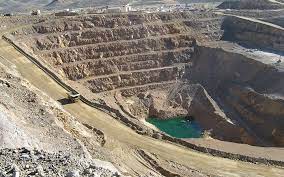
India and the United States have signed a major framework agreement on critical minerals and rare earth elements, marking a significant step in their efforts to reduce global dependence on China’s dominance in the sector.
The agreement was finalised in New Delhi between Indian External Affairs Minister Dr S Jaishankar and US Secretary of State Marco Rubio during Rubio’s four-day visit to India. The deal focuses on cooperation across the entire critical minerals supply chain, including mining, processing, recycling, investment and technology development.
The agreement comes as Washington intensifies its global push to diversify rare earth sourcing and secure supply chains considered essential for economic and national security. China currently controls the majority of the world’s rare earth reserves and nearly 90 percent of global processing capacity, giving Beijing enormous influence over industries ranging from semiconductors and electric vehicles to defence systems and artificial intelligence technologies.
Critical minerals include lithium, cobalt, nickel, graphite and rare earth elements used in batteries, military hardware, renewable energy systems, electronics and advanced manufacturing. Rare earth metals are especially important because of their magnetic and conductive properties, making them essential for permanent magnets used in electric vehicles, wind turbines, smartphones and medical devices.
The US has increasingly sought to reduce reliance on Chinese supply chains amid rising geopolitical tensions and concerns over potential disruptions. The India-US agreement is being viewed as part of a broader strategic effort to create alternative supply networks among trusted partners.
According to statements released by India’s Ministry of External Affairs and the US embassy, the framework aims to strengthen cooperation in exploration, extraction, refining and recycling of critical minerals. The US embassy said the partnership would help protect supply chains from “coercive market practices” and reduce vulnerabilities linked to “single-source monopolies”, in an apparent reference to China.
Although the two Governments have not publicly disclosed detailed commercial terms or investment figures, officials described the agreement as a long-term strategic partnership that could reshape global mineral supply chains.
India has been positioning itself as an emerging player in the rare earth sector. In 2023, the Indian Government identified 30 minerals as “critical”, including lithium, cobalt, graphite, nickel, titanium, tungsten and rare earth elements. Government estimates indicate India possesses around 13.15 million tonnes of monazite, a mineral rich in rare earth oxides.
To strengthen domestic production capabilities, India’s 2026-27 budget introduced plans for “rare earth corridors” in Odisha, Kerala, Andhra Pradesh and Tamil Nadu. These corridors are expected to support mining, refining, research and manufacturing of high-performance rare earth magnets used in clean energy technologies and electric vehicles.
Despite its mineral reserves, India currently produces only a limited range of critical minerals because of gaps in infrastructure, processing technology and large-scale exploration. The new agreement with the US is expected to help India attract investment and technological expertise to accelerate development of its rare earth industry.
The deal was signed alongside a broader Quad initiative involving India, the US, Japan and Australia to strengthen critical mineral supply chains across the Indo-Pacific region. Under the Quad framework, Governments and private companies are expected to mobilise up to $20bn through loans, guarantees, subsidies and long-term purchase agreements to support mining, processing and recycling projects.
The Quad countries also agreed to cooperate on regulatory standards, licensing systems and recycling technologies to make supply chains more resilient and less dependent on a handful of suppliers.
The United States has signed similar critical minerals agreements with several countries in recent months, including Argentina, Morocco, Peru, the Philippines, the United Arab Emirates, the United Kingdom and Uzbekistan. Washington has also backed major mining projects in Pakistan and South Africa as part of its global supply diversification strategy.
The India-US rare earth framework signals a deeper strategic partnership between the two countries that extends beyond defence and diplomacy into economic security and advanced technology cooperation. Analysts say the agreement could play an important role in reshaping the future global supply chain for clean energy technologies, semiconductors and artificial intelligence infrastructure while challenging China’s overwhelming dominance in the rare earth sector.
 OpinionExpress.In












Comments (0)