



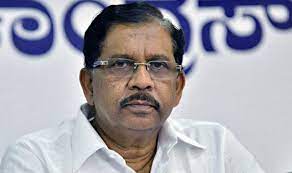
In a state as diverse and economically dynamic as Karnataka, the office of Home Minister carries exceptional responsibility. The portfolio oversees policing, intelligence, prisons, fire services, and civil defence—institutions central to maintaining public order and social stability. During his tenures, particularly between 2013–2018 and again from 2023 onward, Dr. G. Parameshwara has approached this demanding role with a focus on institutional strengthening, technological modernisation, and measured governance.
As Home Minister, he inherited a rapidly transforming administrative landscape. The capital, Bengaluru, had emerged as a global technology hub, attracting multinational corporations and a large migrant workforce. At the same time, tier-two cities such as Mysuru, Mangaluru, Hubballi-Dharwad, and Belagavi were witnessing rapid industrial and urban expansion. These developments placed increasing pressure on the state’s policing and internal security systems.
Dr. Parameshwara’s approach largely revolved around three interconnected priorities: maintaining stability in law and order, integrating technology into policing, and strengthening institutional accountability. Under his leadership, the Home Department emphasised preventive intelligence, coordination between district administrations, and improved readiness during sensitive periods such as elections, festivals, and public gatherings. Peace committee meetings and local intelligence networks were encouraged to reduce the risk of communal tensions escalating into wider disturbances.
Modernisation of the police force formed another major pillar of his tenure. Infrastructure upgrades were undertaken in several police stations, with efforts to make them more accessible and citizen-friendly. Communication systems, vehicle fleets, and command centres were strengthened to enhance operational efficiency and response times. The expansion of surveillance infrastructure in Bengaluru, including the integration of thousands of CCTV cameras into central monitoring networks, significantly improved urban crime tracking and deterrence capabilities.
Given Bengaluru’s status as India’s technology capital, cybercrime posed a particularly complex challenge. Dedicated cybercrime police stations were reinforced, digital forensic laboratories were upgraded, and coordination with banks and technology companies was strengthened to address online financial fraud and phishing scams. Public awareness campaigns were also conducted to educate citizens about digital risks.
Women’s safety initiatives also received attention through the expansion of women police stations, enhanced emergency helpline integration, and training programs aimed at promoting gender-sensitive policing. At the same time, anti-drug enforcement drives targeted narcotics networks operating in metropolitan nightlife zones and educational institutions, signalling a stricter stance against organised crime.
Beyond policing, the Home Department’s responsibilities extend to prison administration and disaster coordination. During his tenure, prison management initiatives focused on improving surveillance, healthcare facilities, and vocational training for inmates, while digitisation of inmate records enhanced administrative transparency. In disaster situations such as urban flooding in Bengaluru, police units were trained to support emergency response and inter-agency coordination.
Dr. Parameshwara’s personal image in public life reflects a leadership style often described as methodical and institution-oriented. Having also served as Deputy Chief Minister, he is widely perceived as a technocrat-politician who prefers structured review meetings and data-driven oversight rather than dramatic public rhetoric. This measured approach has projected administrative steadiness, particularly in a sensitive portfolio like Home.
Public perception of his tenure remains broadly evaluative. Supporters credit him with strengthening institutional frameworks and modernising policing systems, while critics continue to scrutinise response times and the evolving challenges of cybercrime and urban security. Nevertheless, his legacy is frequently associated with a governance model that emphasises procedural discipline, technological adaptation, and the long-term strengthening of state institutions.
 OpinionExpress.In












Comments (0)