




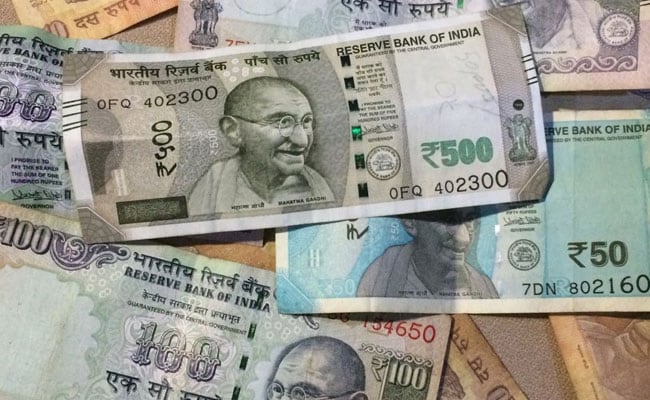
In less than a decade, the Unified Payments Interface (UPI) has transformed India’s payment ecosystem. What began as a digital payment initiative in 2016 has become the backbone of the country’s financial transactions. According to the National Payments Corporation of India (NPCI), UPI processed over 24,000 crore transactions worth approximately ?314 lakh crore in FY 2025–26, representing an extraordinary rise from just 2 crore transactions in FY 2016–17. Today, over 700 banks are connected to the UPI ecosystem, making it the world’s largest real-time payment network. The scale of adoption continues to be remarkable. In July 2026 alone, UPI recorded a record 23.66 billion transactions worth nearly ?29.9 lakh crore, demonstrating that digital payments have become an integral part of everyday life for individuals, merchants, and businesses alike as per India Brand Equity Foundation. However, the recent legislative amendment enabling the government to permit Merchant Discount Rate (MDR) or similar charges on specified UPI transactions has generated considerable debate. While the law does not impose a blanket charge on all users, it creates a legal framework under which transaction fees may be introduced in the future. The government has also clarified that any such charges, if implemented, are expected to apply primarily to merchants rather than ordinary users.
Nevertheless, perception matters as much as policy. UPI’s phenomenal success has been built on three pillars: speed, simplicity, and affordability. Any additional cost, even if borne by merchants, could eventually be reflected in the prices paid by consumers. Small retailers, street vendors, and micro-enterprises, who embraced digital payments because they were virtually cost-free, may become reluctant to rely exclusively on UPI if transaction costs increase. India’s transition from a cash-dominated economy to a digital economy has not merely been about convenience. It has strengthened financial inclusion, improved tax compliance, reduced the scope for unaccounted cash transactions, and enhanced transparency. Any policy that unintentionally incentivises a cash return could dilute these gains.
In our view, a fixed and nominal Merchant Discount Rate (MDR), rather than a percentage-based charge, could provide a more balanced approach. A fixed MDR would make the cost of digital payments more predictable and proportionate for small merchants, while creating a modest but sustainable revenue stream for banks and payment service providers. For instance, a low fixed charge on eligible merchant transactions, subject to appropriate exemptions and transaction-value thresholds, could prevent merchants from facing disproportionately higher costs as transaction values increase. Such a framework could be complemented by government support for low-value transactions, targeted subsidies for micro and small merchants, and differential pricing for higher-value or business-to-business transactions. This would help move the debate beyond the binary choice of free UPI versus paid UPI and towards an inclusive and innovation-oriented digital payments ecosystem.
India’s UPI has been a symbol of India’s digital transformation and a model admired globally. Any reform should preserve the trust that millions of Indians have placed in this digital ecosystem. The objective must be clear enough to strengthen digital payments without weakening the momentum of India’s journey towards a transparent, inclusive, and less cash-dependent economy.
Dr. Shubham Kumar / CA Richa Singh, Assistant Professor, Chandigarh University, Uttar Pradesh
 OpinionExpress.In











Comments (0)