



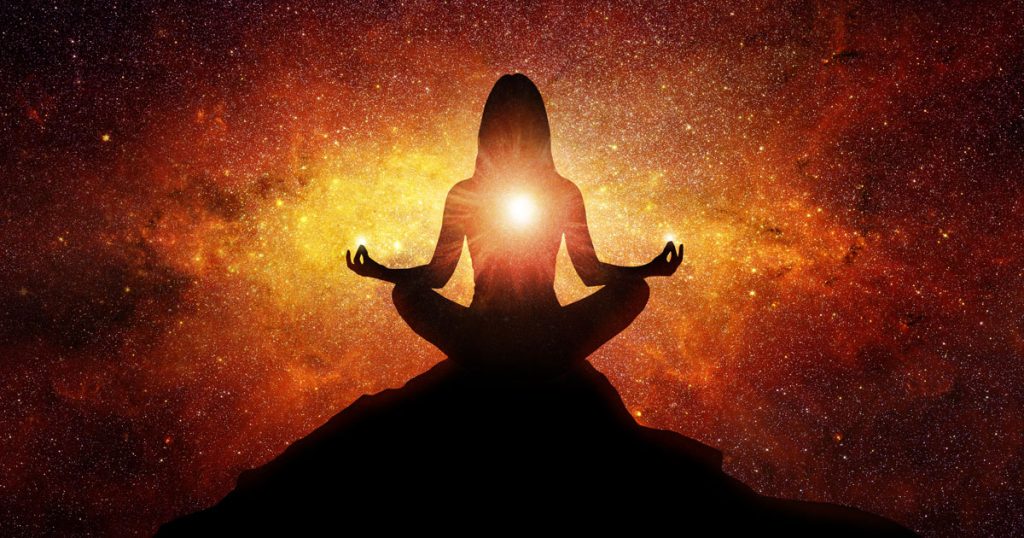
Is the year slipping away, or is it we who quietly slip through the year, unnoticed even by ourselves?
There is something pleasantly strange about the time we transition from one year to another. As we move on with the beginning of a new year, the fireworks begin to fade, the city’s festive glow softens back into its gentler lights, the frantic exchange of greetings comes to rest, and calendars are quietly replaced. The world, as always, impatiently begins to move forward. And somewhere along this journey, a distinct feeling anchors within us, sort of a private ritual of turning inward.
It often arrives while opening an old notebook and finding a sentence highlighted or while discovering a forgotten note inside a book. Sometimes, during a late-night scroll through photographs in our phones, when the early months of the year suddenly begin to look so distant, as if they belonged to another life or at least to another version of ourselves. And sometimes it comes simply as an uneasy feeling that time may have moved with greater sincerity than we ourselves managed to.
The promises we made at the beginning of the year – to live with more discipline; to become calmer in speech and less hurried in thought; to return calls on time; to write regularly; to eat better; to practice a craft; to be less distracted, less reactive, less scattered or to be more available to the present moment while inhabiting it – now collectively stand, more like questions, staring right back at us. Perhaps we make these promises because somewhere we already know that a meaningful life is not always destroyed by one great tragedy. More often, it is slowly diminished through habitual inattentiveness.
Why do we even make such promises each year? I guess a strange symbolic energy gets attached to the turning of the calendars. One begins believing, and quite irrationally, that time itself has offered a new alignment. That a different arrangement of dates may somehow produce a different version of the self. Ahmet Hamdi Tanpinar, a Turkish poet, once wrote of “a mind at peace”, not as idleness, but as a condition in which time is felt rightly. Most of us, however, rarely feel time rightly. We count it, schedule it, divide it, lose it, chase it and in the end complain about it, but seldom do we inhabit it. And still, every new year gives us this brief illusion that time has renewed itself simply because the calendar has.
But a “year”, after all, is not really a thing in nature. It is one of humanity’s ways of negotiating with the incomprehensible, assumingly linear flow of time. The Earth completes one orbit around the Sun. Seasons return the same way. From that recurring movement, we create a unit stable enough to organise memory, expectation and administration of our lives. But nothing in existence truly pauses at these anniversaries. Midnight on the 31st of December is largely indistinguishable from midnight on any other day. Nature keeps evolving, and the galaxies continue moving outward in silence, while human beings gather under fireworks, trying for a moment to believe that beginnings can be scheduled.
This is why time has troubled philosophers and physicists with almost equal intensity. Ordinarily, time appears to be a simple linear movement of events. A clock ticks, a day passes, a year ends. But the moment one looks at it closely, it begins to behave less like a road and more like a maze. Newton imagined time as a kind of flow that moves steadily through the universe i.e. it remains the same everywhere, indifferent to planets, stars, sorrow, age or memory. Whether one stood on Earth, Mars or some remote star, time, in that view, moved with perfect impartiality. It was the great background against which everything else happened.
Well then, Einstein, with his theory of relativity, changed our foundational understanding of time as he quietly removed this common background from the universe. In his universe, time was not a fixed backdrop on which events occurred. It was part of the stage itself. It could stretch, slow, bend and behave differently depending on speed and gravity. A clock on a mountain ticks ever so slightly differently from a clock at sea level. A clock in a fast-moving spacecraft is in disagreement with one left behind on Earth. These differences are tiny in ordinary life, but real enough that modern GPS systems must correct for them every day. Without Einstein’s strange insight, even our maps would gradually begin to be false. The unsettling conclusion is that there is no single grand “now” shared equally by the whole universe. What is present for one observer need not be present in exactly the same way for another. The present, which feels to us so obvious and factual, is in fact local, relational and almost very personal.
And then, just when relativity has made time strange enough, quantum physics makes reality even stranger. At the smallest scales, the universe refuses to behave like the neat, obedient world our senses are trained to expect. Particles do not always seem to possess definite properties until measured. Possibility appears to precede actuality. Events become probabilistic rather than certain. Two particles, separated by great distances, can remain connected in ways that defy ordinary intuition. The world, at that depth, does not look like a machine ticking forward. It looks more like a field of possibilities settling into form, which again depends on our observational field.
This has led some physicists to wonder whether time itself may not be as fundamental as it appears. Perhaps time may not truly be a reality, but something that emerges from our perception — like temperature, which feels real enough to us, but is actually the collective behaviour of countless moving particles. In that sense, time may be less like some linear flow and more like a pattern that appears when reality is observed from a certain distance.
Julian Barbour explains this in one of the most striking ways. He suggests that reality may not be a flowing sequence, but rather it may be made up of several complete moments, called “Nows”. Each “Now” is like a still frame, complete in itself. What we experience as the flow of time may simply be consciousness moving, or appearing to move, from one such frame to another, much like a film feels continuous only because still images pass before our eyes in quick succession. Carlo Rovelli also explains this just as beautifully when he says time is not one great universal clock hanging above the universe and ticking equally for everything. For him, time arises from relationships i.e. from change, heat, movement, decay, memory and interaction. In other words, time is not something the universe carries like a property. It is something that becomes visible when things happen to one another.
Strangely, the closer science looks at time, the less it resembles the thing we usually claim to “have”, “waste”, “save” or “lose”. It begins to look less like a possession and more like an experience. And yet, for all this cosmic complexity, human beings encounter time most intimately through memory. We do not feel relativity in equations. We feel it when childhood seems both yesterday and another lifetime. We feel it when a year disappears in routine but one afternoon remains vivid forever. We feel it when a voice, once ordinary, becomes unreachable. Physics may tell us that time bends with gravity, but life teaches us that it also bends with grief, love, waiting and attention.
This realisation is unsettling, but also strangely liberating. Perhaps time does not pass in the way we imagine. Perhaps consciousness moves. Perhaps what we call a year is less an objective container and more a frame through which memory arranges itself.
A shattered glass does not reassemble itself. Childhood cannot be revisited except through memory. Words, once spoken, continue living in consequence even after their sound has vanished. Physics calls this the arrow of time i.e. the movement towards entropy, dispersion and irreversibility. Life, too, has such an arrow. Moments, once lived, cannot be recovered in their original form. That is why years feel so peculiar in hindsight. Memory does not preserve chronology per se; it preserves intensity of emotions and experiences and what we learn from them. Perhaps this is why reflection is about measuring this intensity.
Did we live the year attentively, or merely pass through it? Were we truly present, or mostly elsewhere, rushing toward some future moment which, once reached, dissolved into another anticipation? Perhaps the real tragedy is not that time passes, but that so much of it passes unlived. The mind remains busy preparing for life instead of inhabiting it. This, I think, is where time is most distorted, i.e. not in clocks or calendars, but in consciousness. We are rarely where life is actually happening. One part of us keeps rehearsing the future; another keeps revisiting the past. The present, meanwhile, becomes only a corridor we cross, without ever fully arriving.
Simone Weil, a French philosopher, considered attention not only a mental skill, but also a moral act because to attend to life is to honour it. Just as to attend to another person is to love them without announcing love, and to attend to one’s own conduct is to stop living as an accident.
Thus, nearly every civilisation created pauses for new year, birthdays, festivals, etc within the frames of time, not because time changes at these thresholds, but because human beings require pauses in order to see clearly again. Without pauses, life becomes one continuous movement of reaction and momentum. One unfinished day spills conveniently into another. Responsibilities keep multiplying; notifications replace reflection; fatigue disguises itself as practicality; survival begins presenting itself as wisdom, and slowly, without any dramatic collapse, the mind that once imagined transformation becomes increasingly occupied with management and maintenance. Many of us disappear through this repetition.
Modern life has made this disappearance easier. Every silence now arrives with discomfort. Every idle moment seeks occupation. Solitude barely remains solitude before stimulation intrudes again. One reaches for the phone for a minute and emerges much later carrying nothing memorable except a vague exhaustion. Information accumulates, but little settles into understanding. The mind remains continuously engaged, yet increasingly unable to remain deeply present with anything long enough to be changed by it. This is the problem of fragmented attention. It has been proven that attention is not infinite; it is a limited resource. What we repeatedly attend to shapes neural pathways, strengthens habits and gradually constructs identity. Many studies in behavioural psychology have proven that habits are not sustained by dramatic declarations but by cues, repetitions and rewards. The brain economises effort by automating repeated actions. This is efficient for survival, but dangerous for living. Because once inattentiveness becomes habitual, even one’s own life can start happening in the background.
Thus, resolutions fail so often, not because people are insincere. But because they mistake desire for design. They confuse emotional clarity with conscious behavioural change. A person may genuinely wish to change, but if the old cues remain, the old rewards remain, the old environment remains, and the old identity remains unexamined, the old pattern will keep returning. And that is why the idea of becoming an entirely “new person” every year eventually begins to feel artificial. Human beings do not transform through declarations. The self is not replaced overnight; it is carried forward. We are not erased and rewritten. We are revised incrementally. Nietzsche wrote of this in the idea of “long obedience in the same direction”. We live in a time that celebrates intensity more than continuity. We want the high emotion of beginning, but not always the humbling dignity of continuing. Yet almost everything worthwhile in life is built through long obedience to work, love, friendship, discipline, prayer, craft, public service, and even character.
In the idea of transformation, I find more resonance with palimpsest, which is an old manuscript on which fresh writing appears over earlier writing, while the older marks still remain faintly visible underneath. We are all palimpsests in that sense. New versions of ourselves are written upon the traces of old ones. So real change is recalibration and not reinvention.
In this recalibration, one learns where excess becomes damaging. One begins making cleaner choices. Fewer compulsions and fewer performances. The Greeks had a phrase for this called meden agan, which means nothing in excess. It was a kind of inner balance or homeostasis. Just like nature, we too survive through homeostasis i.e. temperature, pressure, sugar, oxygen, all must be held within limits and harmony. Rivers change course, forests regenerate, seasons rotate, ecosystems correct and collapse and correct again. Life’s balance does not come from a frozen state, but as a continuous intelligent process.
Looking back at the time or year that has gone by, we are greeted not by pride or regret, but with the emotion of humility. Humility, not because everything went according to plan, but for the fact that very little did. Time does not unfold like a design carefully authored by us. It is revealed scene by scene. Sometimes with grace. Sometimes with inconvenience. Sometimes with beauty. Sometimes, with a strange arrangement of people and circumstances that makes sense only later, as if life has its own intelligence and we merely recognise it in time.
Different traditions have given names to this order. The Stoics called it logos, a rational coherence beneath visible disorder, while Indians named it ?ta, the underlying rhythm that holds the world, while the Chinese have the idea of li i.e. an organic pattern, like the grain in wood or the markings in jade. What matters is not the terminology but the recognition that meaning does not always require control.
We know our years are not fair in their distributions. Some of us receive losses without warning, while some are given responsibilities beyond their strength, and some are gifted in such abundance that they themselves cannot fully explain. One must understand that at a given point in time in life, ease and difficulty do not arrive in proportion to virtue, and effort does not always receive reward. Pretending otherwise is denial, and noticing this honestly is clarity, not pessimism. This is what the Buddha taught us – life is not suffering, but it becomes so when we refuse to see life as it is. Life, strangely enough, does not seem to demand perfection from us. It only asks for sincerity.
And perhaps this is where love enters the equation. When one looks back honestly, whatever goodness has endured in life rarely feels entirely like a work of the self. It arrives through others, even though the ego finds difficulty in admitting it. It comes through patience extended by others towards our shortcomings; their forgiveness that does not humiliate; through people who continue recognising possibility in us during phases when we ourselves have temporarily lost faith in us. Some people absorb our rough edges without converting them into accusations. Some remain even when departure would have been easier and perhaps even logical. Some offer acceptance without making it sound like charity. This kind of love works silently, creating the conditions in which one is allowed to grow without fear.
Maybe maturity begins there i.e. in recognising how much of one’s life has depended upon grace one never fully earned. Even those we call enemies, in some strange way, shape our becoming. They reveal our impatience, our pride, our insecurity, our need to be understood, our hunger to win. To love an enemy may sound impractical or preachy. But perhaps it means something simpler, which is to refuse being internally governed by hostility and deny animosity the privilege of shaping our inner life. It is in such a state that the enemy loses his power. And this is freedom.
Each year, each pause brings the temptation of reinvention. New year, new self. New goals, new routines, new declarations. There is nothing wrong with this impulse. It shows that the mind still wishes to rise. Even abandoned resolutions matter because they reveal direction. They show what part of us still wants refinement, however imperfectly. But perhaps the wiser task is not to become someone else. It is to become more aligned with who we are already capable of being.
We must also remember that each person walks a path that appears comparable to another’s only from a distance. Measuring one’s progress against someone else’s milestones is like using another person’s map to navigate an unfamiliar terrain. We will advance in some places and falter in others. We will appear late in one season and unexpectedly prepared in another. This is our own rhythm, and we must rejoice in it. If there is one understanding worth carrying ahead, it is to know that heaviness is not always a burden. Often, it is the weight of something meaningful in the making. And so lightness, when it comes, is not earned by escape, but by endurance. So for each pause, whenever we choose to have it, I pray that we may keep showing up. May we return to our work even after falling short. May we bow quietly after doing well. May we learn to recognise excess before it becomes ruin. May we live less in anticipation and more in attention. And above all, may we live in a way that feels true from within. Because in the end, truth is the only measure that does not fluctuate. It is the only evidence that remains when applause fades, when plans fail, when calendars change and when the noise of the world grows quiet enough for us to finally hear ourselves.
Disclaimer: The views expressed are personal and are intended only as reflections on life, time and human experience. They do not represent the views of any institution, organisation or authority with which the author may be associated.
 OpinionExpress.In







Comments (0)