



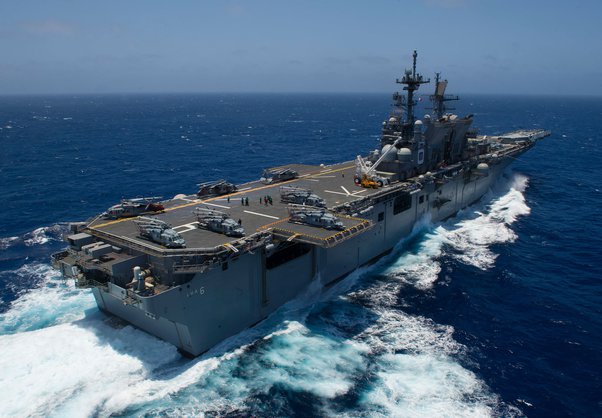
The war in the Middle East demonstrates the sheer failure of the US in terms of clear strategic planning based on effective cost-benefit analysis before going into it. Hence, it failed in anticipating the likely outcomes. The Trump administration moved by simplistic and sweeping understanding judged the military operation would be a short-lived and surgical one that would push Iran to the precipice of regime change. However, this thinking proved wrong and Iran refused to be Venezuela 2.0.
Led by this overly simplistic assumption, both the US and Israel started the game with a gamble to assassinate Iran’s Supreme Leader Ayatollah Ali Khamenei, hoping for the collapse of the regime. However, this did not force Iran to capitulate. They assassinated the commanders and leaders representing Iran’s political and military strength and tried to destroy the country’s nuclear and military strength as much as they could; still, Iran prevailed. The US and Israel were largely successful in scoring these tactical gains vis-à-vis Iran. But judged by overall strategy, they failed and the US paid a heavy price in each step towards knocking out Iran’s missile and drone launching capabilities as the war drained the US stockpile of updated missiles, arms and ammunition along with financial resources. Meanwhile, the US President Donald Trump was forced to recognise the rising costs of the war and recalibrate the strategy by declaring a pause in strikes and looking for off-ramps.
Iran’s Asymmetric Strategies
Iran was aware of the fact that it could not have a conventional victory against a joint military campaign of the US and Israel, two of the world’s most advanced militaries. Hence, it had been training itself since the Iran-Iraq war 1980-88 in the art of surviving the military offensives and imposing high costs on the adversaries. Its preparation and training stem from the awareness that it faced an existential threat from both the US and Israel since the Islamic Revolution of 1979, quickly followed by the protracted Iran-Iraq war of eight years, where Iran alone fought against a colossus collective adversary, just like the current war, when Iran is confronting the US, Israel and Gulf states. Then, Iraq was backed by the US and the Soviet Union, which were providing key assistance at the military, intelligence and diplomatic levels and the Gulf states were assisting with financial inflows. While confronting the two superpowers, Iran was cut off from the international military and economic supply chains. As a result, it was necessary to learn the art of cultivating various non-state actors and fostering a shadow economy not only to survive against the adversaries but to impose prohibitive costs on them as well. Against this backdrop, Iran developed a strategy of mine warfare and fought by recruiting irregular fighters as regular channels of moving men and materiel were blocked. The asymmetric war strategies that developed out of expediency were further fine-tuned and became an integral part of Tehran’s regular strategy to maintain forward defence to help it project power in the region while avoiding direct confrontation with great powers. The deaths and destruction that Iran had to put up with during the Iran-Iraq war propelled it to adopt a forward defence strategy. Using various proxy groups simultaneously allowed Iran the leeway to adopt a course of deniability to avoid exposure to any kind of direct war.
Iran’s shadow economy was maintained through “shadow fleet” or “dark fleet” referring to a covert network of hundreds of older, often uninsured tankers that use deceptive tactics to export oil in violation of international sanctions. Under the Islamic Revolutionary Guard Corp’s (IRGC) institutional control, an expansive military-industrial complex was placed.
The IRGC assiduously built Hezbollah as a massive military force in Lebanon. The American military invasion of Iraq in 2003 helped Iran cultivate Shiite militias who adopted new techniques of asymmetric warfare, including roadside bombing networks, intelligence-driven targeting of US diplomats, commanders other personnel. They also used partner militias to maintain deniability. Civil war in Syria provided a rich theatre of experience for the Iranian-backed proxies since 2011 where they confronted local Islamic radical groups as well as foreign forces. Iran, over the years, developed decentralized logistics network to move fighters and materiel through Iraq and Syria, which is being used in this war as well. The IRGC trained the military personnel as well as proxies in the doctrine of absorbing strikes, dispersing and reconstituting, which has been instrumental not in winning wars but in making the war too costly for the adversaries to reinvigorate.
The Economic and Political Dimensions of Asymmetric War
Iran, over decades, has been cut off from the international financial market and trading system, whereas its assets remain frozen and it is deprived of generating oil revenues through legitimate channels. It has been kept out of the petrodollar system. Hence, it did not see any costs to itself when it sought to hold the global trading and financial system to hostage by blocking the Strait of Hormuz and striking missiles at ports and firms across the Middle East, as it saw little stake in safeguarding the same.
Iran witnessed how the US military bases that were built around the Middle East temporarily to provide security to the Gulf countries in the turbulent region during and following the Gulf War of 1990 were made permanent. The Gulf countries were made to tolerate the military alliance between the US and Israel in return for the American security partnership with them. The US also floated the plan of the Arab-Israeli peace process to alienate Iran. Hence, Iran harboured the desire to demonstrate to the Gulf countries that the US pivot to the region is tethered to and closely aligned with Israel’s interests rather than those of the Gulf countries. In this war, Iran demonstrated how, by initiating the war along with Israel, the US placed the Gulf economy and security in jeopardy. Iran, by attacking the bases, diplomatic and financial centres, with reasonable success in the Gulf region, demonstrated that the US military bases have been built only to provide security to Israel rather than the Gulf countries. Iran sought to raise the political cost of American military operations by generating such a trust deficit in the Gulf.
Iran developed alternative strategies and political willpower to persist and fight back even after the assassination of the top leaders of all branches of military and intelligence wings, along with the decapitation of the Supreme Leader of the Islamic Republic, which Tehran had predicted and was prepared for the eventuality. The adversaries expected that it would steer the country towards regime change. However, the attainment of these tactical gains failed to even deter Iran, let alone the collapse of the regime. The US and Israel eventually prolonged the war driven by sunk cost fallacy. Iran, on the other hand, based on its years of experience and awareness of the massive military threat from the US and Israel to its existence, had trained itself in decentralized warfare tactics by empowering military personnel at each level of decision-making and carrying out military operations.
The removal of older generation leaders paved the way for the assumption of leadership by younger generations who are more battle-hardened and ambitious. Iran knows that success for it is just to survive the military onslaught and impose enough costs to prove that it can uphold its sovereignty by dampening the willingness of external powers to fight an expensive and uncertain war.
 OpinionExpress.In













Comments (0)