



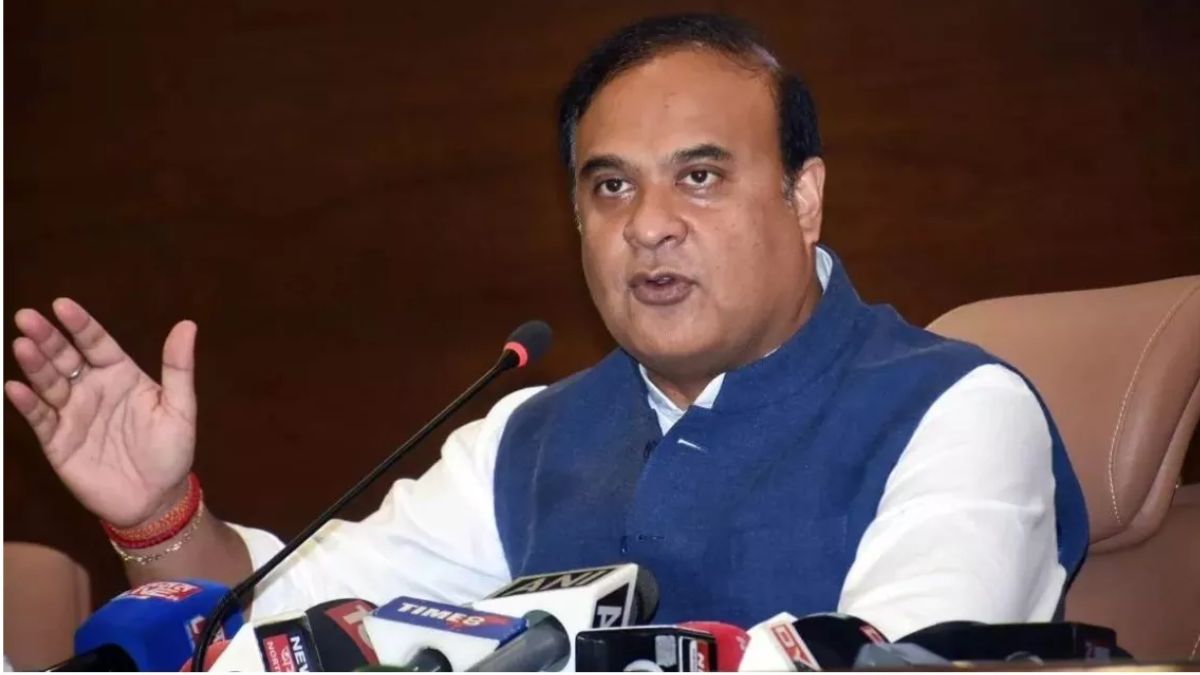
When Dr Himanta Biswa Sarma was sworn in for a second consecutive term as Assam's CM, the numbers of the new Assembly told a story that went beyond one party's triumph. The BJP-led NDA had stormed back with 102 of 126 seats. The Congress once the dominant force in Assam, was reduced to just 19 seats, two seats short of the 21 required to claim the post of Leader of Opposition (LoP). For the first time since 1977, when the LoP position was institutionally consolidated in Indian Politics, Assam may have no recognised Leader of Opposition. The post will remain vacant, whereas each opposition party will have its own floor leader. There will be no unified voice to coordinate, distribute issues, or hold the government to account within the House. Political observers have responded with alarm, some invoking the language of democratic crisis, others urging calm, but both missing the more uncomfortable truth that this is not primarily what happened to the opposition, but what the opposition did to itself.
Having worked across several assembly cycles in Northeast India, including Assam, have seen opposition coalitions form and collapse with a regularity that would be comic if the consequences weren't serious. The pattern is familiar: parties negotiate seat-sharing late, on terms driven by individual survival rather than collective strategy, and arrive at election day with an alliance that is more a ceasefire than a coalition. The 2026 Assam election was no different. The Congress entered the cycle as the principal opposition force but without a credible plan for the specific areas, such as the Hill Districts, the tea garden belts, or the constituencies where smaller parties hold genuine organisational depth. Seat-sharing discussions with the regional formations like Asom Jatiya Parisha (AJP) and Rijor Dal (RD) produced friction rather than synergy. The result was a fragmented vote, not a consolidated opposition mandate. None of this was structurally inevitable. The BJP's victory in Assam was itself a masterclass in consolidation, bringing together Asom Gana Parishad (AGP) Bodoland People's Front (BPF) into a coherent electoral machine.
Much of the current debate has focused on the constitutional mechanics of the LoP post, what the threshold is, whether Congress allies can be counted, and what happens procedurally when the position falls vacant. These are legitimate questions. But the real question is whether Assam's opposition parties understand why they are where they are, and whether they have the organisational will to change course. An LoP is only as effective as the party behind her or him. In Assemblies where the ruling side holds over 80% of seats, even a formally recognised LoP struggles to reshape legislative outcomes, bills pass, and budgets clear, Committees are dominated by the majority. The LoP's power is largely rhetorical and rhetoric, without organisational muscle outside the House, fades quickly.
What actually disciplines governments in states like Assam is not procedural opposition within the Assembly; it is the threat of electoral consequences. And that threat only materialises when opposition parties do the unglamorous work of building booth-level networks, identifying and fielding credible candidates in winnable constituencies, and sustaining the political energy between election cycles, not just in the months before voting. That work has been largely absent from Assam's principal opposition for a decade.
One of the more persistent strategic errors I have observed in opposition campaign planning for the Asam is the tendency to treat the region as a single political block. Assam contains extraordinary internal diversity, including the Brahmaputra valley, the Barak valley, the hill districts and the Bodoland Territorial Region (BTR). Each has distinct grievances, aspirations and political vocabularies. A campaign that speaks to Guwahati does not automatically speak to Diphu or Silchar or Kokrajhar. A narrative about national issues like inflation or corruption may resonate in urban constituencies but fall flat in areas where local identity, development deficits, and land questions dominate. Effective opposition requires not one strategy but several, stitched together under a common frame. The Congress and the opposition more broadly, have struggled to make that stitching work. The BJP by contrast, has been more systematic in deploying targeted welfare schemes, activating cadre networks at the village level, and maintaining the discipline of a party that treats elections as a continuous process rather than a seasonal event.
Opposition politics does not die with the LoP post; outside the Assembly, parties retain the capacity to organise, mobilise, and contest. The question is whether they will use that capacity strategically, or fritter it away in internal blame-shifting. A credible opposition rebuild in Assam would require at a minimum three things. First, honest post-mortem. Not the kind that assigns blame to candidates or local leaders, but the kind that examines structural failures in seat allocation, in candidate selection, in messaging, in the misreading of caste and community arithmetic in key constituencies. Second, investment in sub-regional leadership. Assam's next opposition cycle will not be won from Guwahati; it will be won or lost in the margins of constituencies in the hill districts, the tea belt, and the riverine areas of Lower Assam. Third, a rethink of alliance logic. The current tendency to form defensive alliances to prevent seat wastage needs to give way to offensive alliance-building. Where partners bring genuine additionality in terms of voter bases, ground networks, and social capital. An alliance of parties that are all bleeding votes is not a coalition; it is a mutual decline pact.
The absence of the LoP endangers democratic functioning; it deserves to be taken seriously, not dismissed. The LoP's coordinating role within the Assembly is real, and its absence will be felt in the quality of legislative debate, in the scrutiny of executive action, and in the institutional balance that a functioning democracy requires. But democracy in Assam, as elsewhere, is not housed exclusively within the Assembly chambers. It lives in public squares, in civil society organisations, in the press, and in the decisions of millions of voters who will return to the booth in five years with their own assessments of how power was used. The opposition's task in the absence of formal legislative recognition is to build its case in those spaces. To document failures of governance, to articulate alternatives, and to demonstrate that the absence of a LoP does not mean the absence of scrutiny. That is harder than holding the LoP post. It requires discipline, organisation, and patience. It requires treating the next five years not as an interregnum but as a foundation. Whether Assam's opposition parties have the appetite for that work is the question that matters.
 OpinionExpress.In














Comments (0)