
Sunday, December 07, 2025

News Destination For The Global Indian Community

News Destination For The Global Indian Community

INDIA
LifeMag
MODI SETS PM RACE ON FAST FORWARD ALL HAIL INDIA’S NEW CAESAR

MODI SETS PM RACE ON FAST FORWARD ALL HAIL INDIA’S NEW CAESAR

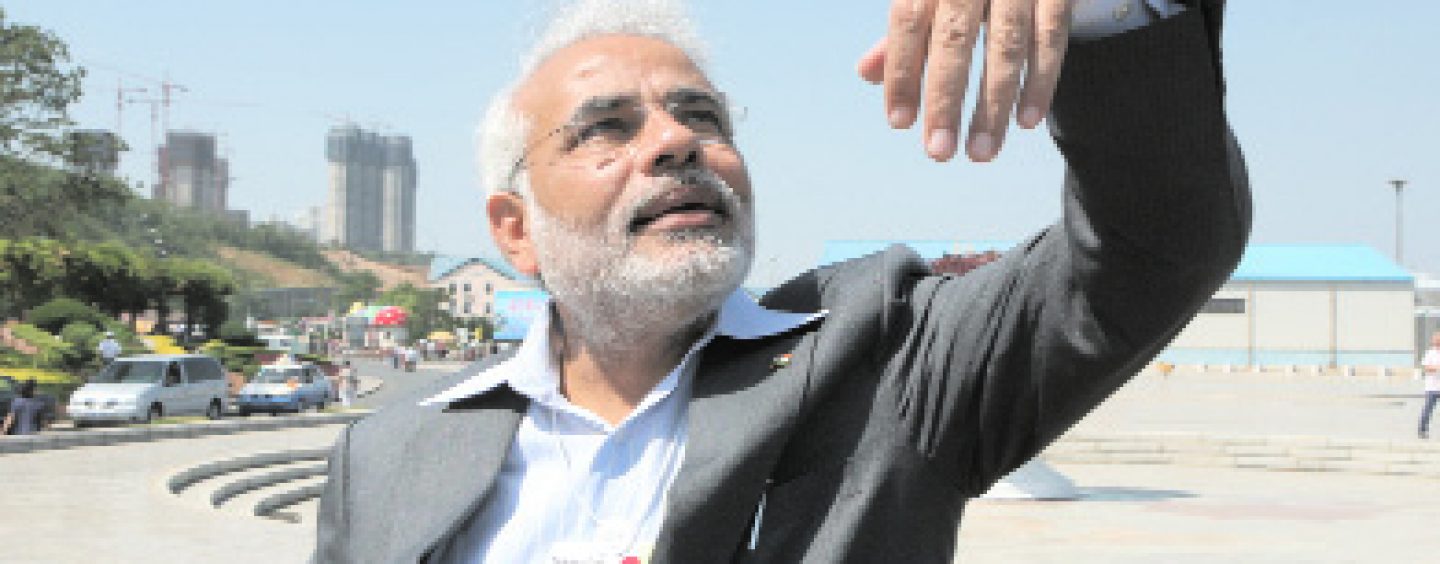
India’s next general election is almost three years away, but the race for prime minister ship may have already begun. Narendra Modi, the controversial chief minister of Gujarat, staged a three day fast on his 61st birthday purportedly to bring peace, prosperity and harmony to a state he has ruled for nearly a decade. Recently, the Supreme Court referred a case related to the death of Congress member of Parliament Ehsan Jafri during the riots to a trial court in Gujarat. This served as the cue for Modi to launch his fast. He said the apex court order vindicated his stand that he never supported the rioters, and promptly announced his fast for harmony. But the manner in which the fast has been played up as a national event reflects its larger political significance. Many top leaders of Modi’s Bharatiya Janata Party (BJP), which is India’s main opposition party, attended the launch of the fast in Ahmedabad. Some other parties in the BJP led National Democratic Alliance (NDA) also sent representatives.

The fast, analysts say, is Modi’s spring board from which he is launching himself as the BJP’s, and possibly the NDA’s, prime ministerial candidate at a time when the ruling Congress party led United time when the ruling Congress party led United Progressive Alliance (UPA) is battling a spate of corruption scandals and a leadership crisis. Using the fast as a launch vehicle has symbolic value. the UPA recently buckled under the pressure of an indefinite fast by activist Anna Hazare to bring crucial changes to a proposed corruption law.

Gujarat chief minister Narendra Modi is eying a bigger national leadership role and is positioning himself for a power struggle in the Bharatiya Janata Party (BJP), say US diplomatic cables made public by online whistle blower WikiLeaks. “Modi is using his strong base in Gujarat to position himself for the BJP power struggle and to crow about Gujarat’s investment friendly (but certainly not minority-friendly) record,” says one of the cables which were uploaded earlier this week by Wikileaks. The cables sent by US diplomats in New Delhi focus on Modi’s rising stature in the BJP and claim that “Modi has his eyes on bigger things”.

The 2002 blot

Within six months of Modi taking over as chief minister in October 2001, Gujarat faced its worst hour. More than 1,000 people were killed in months long communal riots that started after the burning of a train carrying Hindu devotees at the Godhra station in February 2002. Many victims of the riots were Muslims,2002.

Many victims of the riots were Muslims, and critics accused the Modi government of not just failing to keep them safe but also of tacitly supporting Hindu rioters in an attempt to polarize the electorate and win state assembly elections due later that year.

Whether the polarization was intentional or incidental, Modi then reaped its rewards. The BJP won by a handsome margin, and he became the poster boy of its hardliners, or the supporters of its right wing Hindutva ideology.

Road to the top: Narendra Modi with other BJP leaders during a campaign in September 2002. For political opponents as well as civil society groups and minority organizations, though, he became the biggest threat to India’s secular ethos. It’s an image he is yet to shed. And as he looks to broaden his appeal beyond Gujarat, and beyond Hindus, undoing the polarization of 2002 is now the aspiring prime minister’s aspiring prime minister’s biggest challenge.

Political opponents, too, find it easiest to target his divisive politics. Even some allies of the BJP, such as the Janata Dal (United) with which it shares power in Bihar, have not been on good terms with Modi fearful that this may cost them crucial Muslim votes. Ahead of assembly elections in Bihar last year, chief minister and Janata Dal (United) leader Nitish Kumar returned the Rs. 5 crore flood relief that Gujarat had provided his government two years earlier. A number of petitions have been filed by riot victims and social activists alleging Modi’s complicity in the 2002 post Godhra riots.

Pro-development image While faltering on the social harmony front, Modi has keenly cultivated the image of an efficient and pro-business administrator. Gujarat’s gross domestic product has been growing at 11%, higher than the national average of 8-9%, and it has attracted thousands of crores of rupees in investment, mostly through the showpiece Vibrant Gujarat summit, a biennial congregation of industrialists from around the world launched by Modi.

The state has signed memorandums of understanding worth more than Rs. 40 trillion since 2003. More companies have firmed up investments in Gujarat than in most other states of the country. The state is on its way to become an auto hub, with Tata Motors, Ford, Peugeot and Maruti Suzuki eyeing investments.

Many important projects started before Modi was sworn in as chief minister have also materialized in his tenure. The project to build a dam on the Narmada river is an example. The state government’s rural electrification mission lit up even remote parts of Gujarat. With an aim to promote clean energy, Gujarat hopes to produce 200-300 megawatts of solar power by the year end, making it the solar capital of the country. “You are foolish if you are not in Gujarat,” Ratan Tata, chairman of Tata group, once said. Industrialists Anil Ambani and Sunil Bharti Mittal said he was a prime ministerial candidate ahead of the 2009 general elections.

Group, once said. Industrialists Anil Ambani and Sunil Bharti Mittal said he was a prime ministerial candidate ahead of the 2009 general elections. International recognition has also been forthcoming. In December 2008, members of the lower house of the British parliament passed a motion to support Vibrant Gujarat.

The US declined him a visa on account of the 2002 riots. But recently, a US Congressional Research Service report lauded his governance abilities and said Gujarat was perhaps India’s best example of “effective governance and impressive development”.

Rise in politics Modi’s stint in politics began with the Akhil Bharatiya Vidyarthi Parishad, the BJP’s student wing. He joined the Rashtriya Swayamsevak Sangh (RSS), the BJP’s ideological parent, as sangh pracharak and entered mainstream politics by joining the BJP in 1987. His rise through the ranks was brisk. Modi was made general secretary of the Gujarat unit within a year. Zealously building the party in the state, he aimed at creating a strong mass cadre and assumed the role of a strategist. In 2001, he got his big break when he was chosen by the party to replace Keshubhai Patel as Gujarat chief minister. His proximity to senior party leaders and his contribution to building the party’s base in the state were the key factors behind his choice.

Although Modi was victorious the 2002 assembly elections because of communal polarization, the election five years later was fought, and won, on the plank of good governance and development. Now, with the fast for harmony, he is hoping to move a step further.

Modi’s clout in the state cannot be ignored. Be it his effort to bring in industries to the state, his oratory skills or his dressing style, Modi has managed to catch the imagination of the masses, while building a huge popularity among women Voters have turned up in significant numbers in both assembly elections that Modi won.

Voter turnout in the 2002 state assembly election was a healthy 62% and the turnout of women voters was 58%. The corresponding figures for the 2007 assembly election were 60% and 57%. Contrast this with the voter turnout in the 2009 Lok Sabha polls, which was 58.13% while the turnout for women was just 48%.

– OE News Bureau

MODI SETS PM RACE ON FAST FORWARD ALL HAIL INDIA’S NEW CAESAR

MODI SETS PM RACE ON FAST FORWARD ALL HAIL INDIA’S NEW CAESAR

India’s next general election is almost three years away, but the race for prime minister ship may have already begun. Narendra Modi, the controversial chief minister of Gujarat, staged a three day fast on his 61st birthday purportedly to bring peace, prosperity and harmony to a state he has ruled for nearly a decade. Recently, the Supreme Court referred a case related to the death of Congress member of Parliament Ehsan Jafri during the riots to a trial court in Gujarat. This served as the cue for Modi to launch his fast. He said the apex court order vindicated his stand that he never supported the rioters, and promptly announced his fast for harmony. But the manner in which the fast has been played up as a national event reflects its larger political significance. Many top leaders of Modi’s Bharatiya Janata Party (BJP), which is India’s main opposition party, attended the launch of the fast in Ahmedabad. Some other parties in the BJP led National Democratic Alliance (NDA) also sent representatives.

The fast, analysts say, is Modi’s spring board from which he is launching himself as the BJP’s, and possibly the NDA’s, prime ministerial candidate at a time when the ruling Congress party led United time when the ruling Congress party led United Progressive Alliance (UPA) is battling a spate of corruption scandals and a leadership crisis. Using the fast as a launch vehicle has symbolic value. the UPA recently buckled under the pressure of an indefinite fast by activist Anna Hazare to bring crucial changes to a proposed corruption law.

Gujarat chief minister Narendra Modi is eying a bigger national leadership role and is positioning himself for a power struggle in the Bharatiya Janata Party (BJP), say US diplomatic cables made public by online whistle blower WikiLeaks. “Modi is using his strong base in Gujarat to position himself for the BJP power struggle and to crow about Gujarat’s investment friendly (but certainly not minority-friendly) record,” says one of the cables which were uploaded earlier this week by Wikileaks. The cables sent by US diplomats in New Delhi focus on Modi’s rising stature in the BJP and claim that “Modi has his eyes on bigger things”.

The 2002 blot

Within six months of Modi taking over as chief minister in October 2001, Gujarat faced its worst hour. More than 1,000 people were killed in months long communal riots that started after the burning of a train carrying Hindu devotees at the Godhra station in February 2002. Many victims of the riots were Muslims,2002.

Many victims of the riots were Muslims, and critics accused the Modi government of not just failing to keep them safe but also of tacitly supporting Hindu rioters in an attempt to polarize the electorate and win state assembly elections due later that year.

Whether the polarization was intentional or incidental, Modi then reaped its rewards. The BJP won by a handsome margin, and he became the poster boy of its hardliners, or the supporters of its right wing Hindutva ideology.

Road to the top: Narendra Modi with other BJP leaders during a campaign in September 2002. For political opponents as well as civil society groups and minority organizations, though, he became the biggest threat to India’s secular ethos. It’s an image he is yet to shed. And as he looks to broaden his appeal beyond Gujarat, and beyond Hindus, undoing the polarization of 2002 is now the aspiring prime minister’s aspiring prime minister’s biggest challenge.

Political opponents, too, find it easiest to target his divisive politics. Even some allies of the BJP, such as the Janata Dal (United) with which it shares power in Bihar, have not been on good terms with Modi fearful that this may cost them crucial Muslim votes. Ahead of assembly elections in Bihar last year, chief minister and Janata Dal (United) leader Nitish Kumar returned the Rs. 5 crore flood relief that Gujarat had provided his government two years earlier. A number of petitions have been filed by riot victims and social activists alleging Modi’s complicity in the 2002 post Godhra riots.

Pro-development image While faltering on the social harmony front, Modi has keenly cultivated the image of an efficient and pro-business administrator. Gujarat’s gross domestic product has been growing at 11%, higher than the national average of 8-9%, and it has attracted thousands of crores of rupees in investment, mostly through the showpiece Vibrant Gujarat summit, a biennial congregation of industrialists from around the world launched by Modi.

The state has signed memorandums of understanding worth more than Rs. 40 trillion since 2003. More companies have firmed up investments in Gujarat than in most other states of the country. The state is on its way to become an auto hub, with Tata Motors, Ford, Peugeot and Maruti Suzuki eyeing investments.

Many important projects started before Modi was sworn in as chief minister have also materialized in his tenure. The project to build a dam on the Narmada river is an example. The state government’s rural electrification mission lit up even remote parts of Gujarat. With an aim to promote clean energy, Gujarat hopes to produce 200-300 megawatts of solar power by the year end, making it the solar capital of the country. “You are foolish if you are not in Gujarat,” Ratan Tata, chairman of Tata group, once said. Industrialists Anil Ambani and Sunil Bharti Mittal said he was a prime ministerial candidate ahead of the 2009 general elections.

Group, once said. Industrialists Anil Ambani and Sunil Bharti Mittal said he was a prime ministerial candidate ahead of the 2009 general elections. International recognition has also been forthcoming. In December 2008, members of the lower house of the British parliament passed a motion to support Vibrant Gujarat.

The US declined him a visa on account of the 2002 riots. But recently, a US Congressional Research Service report lauded his governance abilities and said Gujarat was perhaps India’s best example of “effective governance and impressive development”.

Rise in politics Modi’s stint in politics began with the Akhil Bharatiya Vidyarthi Parishad, the BJP’s student wing. He joined the Rashtriya Swayamsevak Sangh (RSS), the BJP’s ideological parent, as sangh pracharak and entered mainstream politics by joining the BJP in 1987. His rise through the ranks was brisk. Modi was made general secretary of the Gujarat unit within a year. Zealously building the party in the state, he aimed at creating a strong mass cadre and assumed the role of a strategist. In 2001, he got his big break when he was chosen by the party to replace Keshubhai Patel as Gujarat chief minister. His proximity to senior party leaders and his contribution to building the party’s base in the state were the key factors behind his choice.

Although Modi was victorious the 2002 assembly elections because of communal polarization, the election five years later was fought, and won, on the plank of good governance and development. Now, with the fast for harmony, he is hoping to move a step further.

Modi’s clout in the state cannot be ignored. Be it his effort to bring in industries to the state, his oratory skills or his dressing style, Modi has managed to catch the imagination of the masses, while building a huge popularity among women Voters have turned up in significant numbers in both assembly elections that Modi won.

Voter turnout in the 2002 state assembly election was a healthy 62% and the turnout of women voters was 58%. The corresponding figures for the 2007 assembly election were 60% and 57%. Contrast this with the voter turnout in the 2009 Lok Sabha polls, which was 58.13% while the turnout for women was just 48%.

– OE News Bureau

Leave a comment

Comments (0)

Related Articles

Opinion Express TV

Shapoorji Pallonji

SUNGROW

GOVNEXT INDIA FOUNDATION

CAMBIUM NETWORKS TECHNOLOGY

Opinion Express Magazine