
Sunday, December 07, 2025

News Destination For The Global Indian Community

News Destination For The Global Indian Community

TOP STORY
LifeMag
India, Russia Explore New Sectors

India, Russia Explore New Sectors

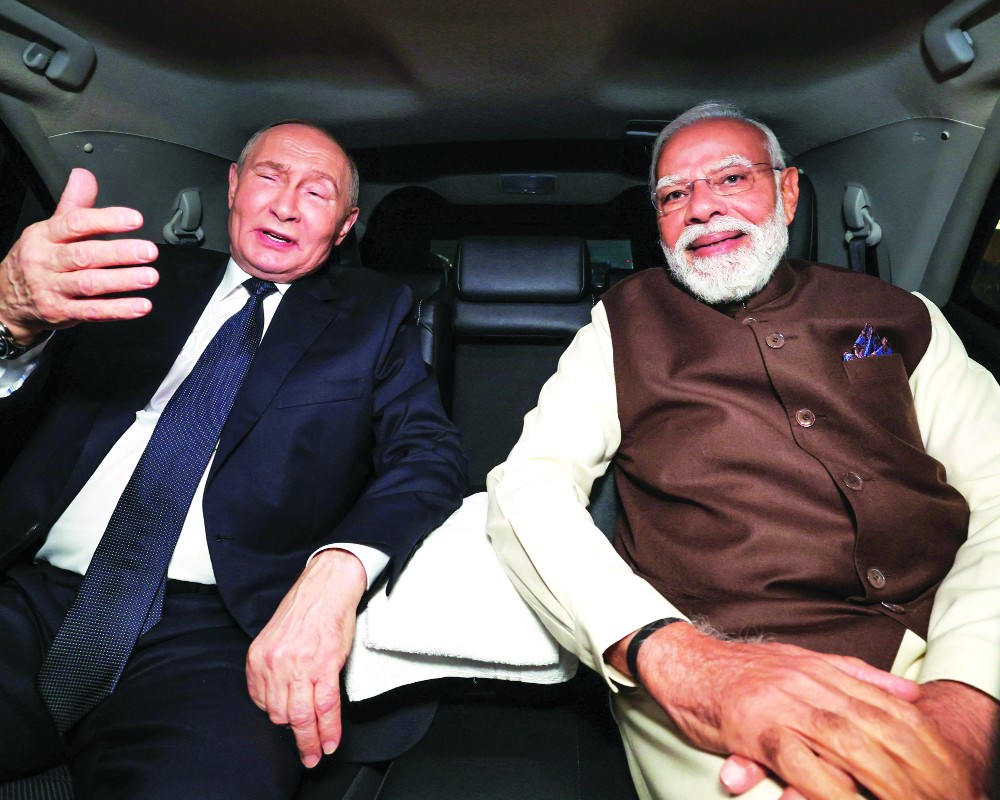
Prime Minister Narendra Modi and Russian President Vladimir Putin committed to broaden economic ties and enhance cooperation in defence and energy at the 23rd annual Russia-India Summit. The summit comes amid ongoing pressure from Washington, DC, on New Delhi to reconsider its longstanding partnership with Moscow as the Ukraine conflict enters its fourth year.

Following the summit, India and Russia unveiled a comprehensive economic cooperation programme through 2030, aiming to boost bilateral trade to $100 billion from $68.7 billion in the fiscal year ending March, which has historically favoured Russia. India seeks to correct the trade imbalance by increasing its exports.

“To achieve this ambitious target, we have agreed on a programme for the development of Russian-Indian economic cooperation until 2030,” Putin said, noting that India’s ongoing free trade agreement negotiations with the Eurasian Economic Union could further accelerate growth. He also reaffirmed Russia’s role as a reliable energy supplier, pledging uninterrupted fuel deliveries to support India’s expanding economy.

Prime Minister Modi highlighted that India would work to fast-track the free trade agreement with the Eurasian bloc and announced plans for free electronic visas for Russian tourists and groups. He emphasised energy security, along with collaboration in civil nuclear energy, clean energy, shipbuilding, fertilisers, and labour mobility, as key pillars of bilateral relations.

The summit occurred against rising tensions with the United States, following Washington’s imposition of a 50% tariff on Indian goods in August, citing New Delhi’s purchases of discounted Russian oil. India remains the world’s second-largest buyer of Russian crude after China.

The US maintains that these purchases indirectly fund Russia’s war in Ukraine. In response, Indian officials stressed that energy sourcing is based on commercial considerations and aligned with international sanctions while prioritising the energy needs of its 1.4 billion citizens. Foreign Secretary Vikram Misri confirmed that sanctions and oil import issues were part of the summit discussions.

Analysts note that Putin’s visit highlights India’s delicate balancing act between maintaining strategic ties with Russia and deepening its partnership with the US. India also pressed Moscow to expedite delivery of two pending S-400 air defence systems under a $5.4-billion deal, which has been delayed due to wartime supply-chain disruptions. Defence ministers from both countries met prior to the summit, agreeing to encourage joint manufacturing of spare parts and components in India through technology transfer and partnerships.

The two nations have also committed to deepening military cooperation through joint exercises, port visits, disaster relief coordination, and logistics support. India is seeking upgrades to its Su-30MKI fighter jets and faster delivery timelines for other Russian-origin platforms. India is pursuing expanded exports of pharmaceuticals, agricultural goods, and textiles to Russia while seeking the removal of non-tariff barriers. Long-term agreements for fertiliser supplies were also discussed.

Both sides are working to establish a framework to ensure the safety and regulation of skilled Indian workers in Russia, reflecting an increased focus on labour mobility. Putin last visited India in 2021, while Modi visited Moscow last year. The leaders also met briefly in September at the Shanghai Cooperation Organization summit in China, underscoring a sustained diplomatic dialogue between the two countries.

The summit signals a renewed commitment to strengthening India-Russia relations across multiple strategic sectors, even as New Delhi navigates complex global pressures and shifting geopolitical dynamics.

India and Russia on Friday formalised a new cooperation initiative by signing a memorandum of understanding (MoU) aimed at training specialists to operate ships in polar regions. The agreement comes as Russian President Vladimir Putin continues his two-day official visit to New Delhi, during which both nations have sought to expand collaboration in emerging strategic sectors.

In a joint statement released by the Ministry of External Affairs, the pact was confirmed as an agreement between India’s Ministry of Ports, Shipping and Waterways and Russia’s Ministry of Transport. The MoU is designed to strengthen India’s capabilities in navigating polar environments - a skillset increasingly relevant as interest grows in Arctic routes and polar research.

The training initiative will focus on developing technical expertise for handling vessels in extreme conditions, enhancing safety, and building a pool of specialised maritime professionals. The signing took place shortly after Prime Minister Narendra Modi and President Putin concluded high-level talks that drew significant international attention. The summit highlighted both countries’ intent to diversify their partnership beyond traditional defence and energy ties, marking a renewed push into maritime, scientific and polar cooperation.

Courtesy: The Pioneer 

India, Russia Explore New Sectors

India, Russia Explore New Sectors

Prime Minister Narendra Modi and Russian President Vladimir Putin committed to broaden economic ties and enhance cooperation in defence and energy at the 23rd annual Russia-India Summit. The summit comes amid ongoing pressure from Washington, DC, on New Delhi to reconsider its longstanding partnership with Moscow as the Ukraine conflict enters its fourth year.

Following the summit, India and Russia unveiled a comprehensive economic cooperation programme through 2030, aiming to boost bilateral trade to $100 billion from $68.7 billion in the fiscal year ending March, which has historically favoured Russia. India seeks to correct the trade imbalance by increasing its exports.

“To achieve this ambitious target, we have agreed on a programme for the development of Russian-Indian economic cooperation until 2030,” Putin said, noting that India’s ongoing free trade agreement negotiations with the Eurasian Economic Union could further accelerate growth. He also reaffirmed Russia’s role as a reliable energy supplier, pledging uninterrupted fuel deliveries to support India’s expanding economy.

Prime Minister Modi highlighted that India would work to fast-track the free trade agreement with the Eurasian bloc and announced plans for free electronic visas for Russian tourists and groups. He emphasised energy security, along with collaboration in civil nuclear energy, clean energy, shipbuilding, fertilisers, and labour mobility, as key pillars of bilateral relations.

The summit occurred against rising tensions with the United States, following Washington’s imposition of a 50% tariff on Indian goods in August, citing New Delhi’s purchases of discounted Russian oil. India remains the world’s second-largest buyer of Russian crude after China.

The US maintains that these purchases indirectly fund Russia’s war in Ukraine. In response, Indian officials stressed that energy sourcing is based on commercial considerations and aligned with international sanctions while prioritising the energy needs of its 1.4 billion citizens. Foreign Secretary Vikram Misri confirmed that sanctions and oil import issues were part of the summit discussions.

Analysts note that Putin’s visit highlights India’s delicate balancing act between maintaining strategic ties with Russia and deepening its partnership with the US. India also pressed Moscow to expedite delivery of two pending S-400 air defence systems under a $5.4-billion deal, which has been delayed due to wartime supply-chain disruptions. Defence ministers from both countries met prior to the summit, agreeing to encourage joint manufacturing of spare parts and components in India through technology transfer and partnerships.

The two nations have also committed to deepening military cooperation through joint exercises, port visits, disaster relief coordination, and logistics support. India is seeking upgrades to its Su-30MKI fighter jets and faster delivery timelines for other Russian-origin platforms. India is pursuing expanded exports of pharmaceuticals, agricultural goods, and textiles to Russia while seeking the removal of non-tariff barriers. Long-term agreements for fertiliser supplies were also discussed.

Both sides are working to establish a framework to ensure the safety and regulation of skilled Indian workers in Russia, reflecting an increased focus on labour mobility. Putin last visited India in 2021, while Modi visited Moscow last year. The leaders also met briefly in September at the Shanghai Cooperation Organization summit in China, underscoring a sustained diplomatic dialogue between the two countries.

The summit signals a renewed commitment to strengthening India-Russia relations across multiple strategic sectors, even as New Delhi navigates complex global pressures and shifting geopolitical dynamics.

India and Russia on Friday formalised a new cooperation initiative by signing a memorandum of understanding (MoU) aimed at training specialists to operate ships in polar regions. The agreement comes as Russian President Vladimir Putin continues his two-day official visit to New Delhi, during which both nations have sought to expand collaboration in emerging strategic sectors.

In a joint statement released by the Ministry of External Affairs, the pact was confirmed as an agreement between India’s Ministry of Ports, Shipping and Waterways and Russia’s Ministry of Transport. The MoU is designed to strengthen India’s capabilities in navigating polar environments - a skillset increasingly relevant as interest grows in Arctic routes and polar research.

The training initiative will focus on developing technical expertise for handling vessels in extreme conditions, enhancing safety, and building a pool of specialised maritime professionals. The signing took place shortly after Prime Minister Narendra Modi and President Putin concluded high-level talks that drew significant international attention. The summit highlighted both countries’ intent to diversify their partnership beyond traditional defence and energy ties, marking a renewed push into maritime, scientific and polar cooperation.

Courtesy: The Pioneer 

Leave a comment

Comments (0)

Related Articles

Opinion Express TV

Shapoorji Pallonji

SUNGROW

GOVNEXT INDIA FOUNDATION

CAMBIUM NETWORKS TECHNOLOGY

Opinion Express Magazine