




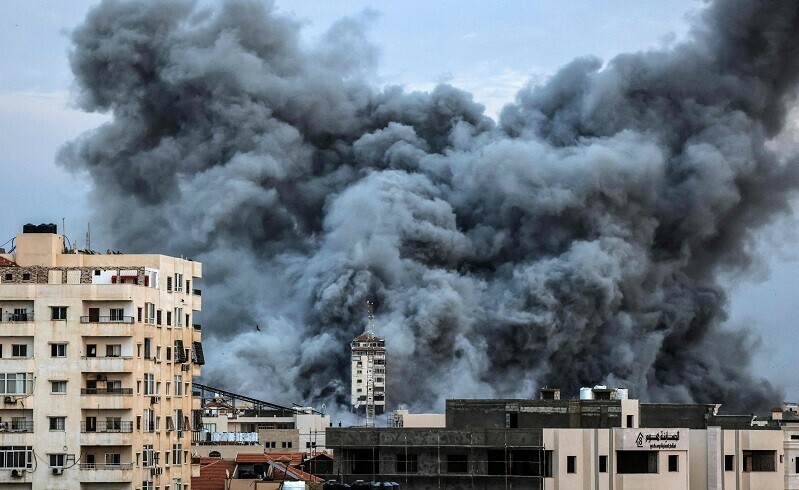
Tehran is reeling under a fresh wave of Israeli airstrikes, as explosions echoed across the capital Monday night amid the most dangerous escalation in the region in decades. Israeli jets and drones have targeted multiple strategic sites across Iran, including the state-run television station during a live broadcast and a major gas facility in the Persian Gulf.
In response to Iran’s pre-dawn missile barrage that killed at least eight people in Israel, Prime Minister Benjamin Netanyahu claimed Israel’s strikes have pushed Iran’s nuclear programme back “by years.” Meanwhile, U.S. President Donald Trump, attending the G7 summit in Canada, issued a stark warning on social media: “IRAN CAN NOT HAVE A NUCLEAR WEAPON,” urging Tehran’s citizens to evacuate the capital immediately.
The G7 leaders echoed the sentiment in a joint statement, backing Israel’s right to self-defence while warning against Iran’s nuclear ambitions. They called for a broader regional ceasefire, including in Gaza, where 34 Palestinians were killed Monday as Israeli troops opened fire near food distribution hubs.
U.S. Defense Secretary Pete Hegseth rushed to the White House Situation Room, as the Pentagon repositioned warships and aircraft to protect American assets. Airports across the region remain shut, stranding thousands of travelers.
Iran’s air defence systems, a mix of Russian, Chinese, and outdated U.S. equipment, were reportedly overwhelmed. With allies like Hezbollah weakened and supplies strained, Tehran’s options to retaliate appear limited. Analysts warn the conflict risks a wider regional war if diplomacy fails.
Despite UN claims that Iran’s underground nuclear facilities remain intact, Israeli officials insist the current campaign is far more comprehensive than past strikes. As Tehran burns and the skies thunder with conflict, the region teeters on the brink of a catastrophic new chapter.
 OpinionExpress.In










Comments (0)