
News Destination For The Global Indian Community


News Destination For The Global Indian Community



Encryption A Hoax?
by Opinion Express / 15 May 2019A fear of surveillance made users switch to this platform but now it has admitted it has been compromised. What next?
Security and the knowledge that communications are direct and private are the underpinnings of any major communications service. So the knowledge that Whatsapp, the world’s most widely-used communication service with an estimated 1.5 billion users across the planet, was targetted by a private intelligence firm, wherein spyware could be installed on a target’s phone, is deeply unsettling. It is unclear how much access the spyware gave governments. The Israeli firm behind it claimed it only sold to governments it had ‘vetted’ but it is clear that the spyware defeated the purpose of the social platform encrypting its messages from end-to-end. It is also unclear how many people were impacted by the breach, how long it was active and who used the breach, which some suspect was the Saudi Arabian government. But it is clear that governments and intelligence agencies across the world are constantly searching for ‘backdoor’ entries to software systems, targetting everybody from political opponents and human rights activists to journalists or even spouses. In fact, in many countries, including Western democracies that take human rights seriously, laws allow spy and police agencies a huge amount of leeway to legally intercept calls and install spying software on devices.
Will this scare users away from WhatsApp onto other platforms that claim that they are even more secure? Unlikely as WhatsApp has a huge user base though smaller groups of users could use services such as Telegram to communicate, as several terrorist cells already do. Not that they are perfect. In fact, they are more than likely to have vulnerabilities that have been exposed by intelligence agencies and private firms and are being used by governments as we speak. In fact, larger services like WhatsApp can ironically be more secure because their large software development teams can patch up security holes quickly if they want to. And for most regular users of such applications and of software in general, there is usually nothing to fear, but when dictatorial governments use such intercepts without any judicial oversight, there is a problem. One thing is clear though. In the cat and mouse game of spying and information arbitrage, things are unlikely to change anytime soon. Software will always have holes that will be exploited. We can only hope that those doing the exploiting are not making fools of us all.
Writer: Pioneer
Courtesy: The Pioneer
Facebook’s Objectivity And Fairplay Under Question
by Opinion Express / 14 May 2019Chris Hughes has argued that the platform is an existential threat to the world and needs to be fragmented
Facebook co-founder Chris Hughes made his millions when the social networking giant went public, but after that he has taken a strong advocacy point and even during a visit to India almost eight years ago, warned of the dangers of the social media platform. Now in an opinion piece in The New York Times, titled “It’s Time to Break Up Facebook”, he lays out in plain detail why the social media behemoth should be fragmented. In essence, he says, it is a clear and present danger to modern life and a threat to democracies. It is a cause taken up by US Senator from California and contender for the Democratic nomination for the 2020 US presidential election, Kamala Harris as well, who ironically represents the San Francisco Bay Area where Facebook is based. Other nations, too, particularly in Europe, have tried to look at ways to curb the social media giant.
But this takes us back almost 15 years when the world was railing against the massive power of another American technology giant, Microsoft. But look at where it is today. And while Microsoft is a pale shadow of the consumer company it once was, it remains a technology icon and a vital piece of the software puzzle. Breaking up Facebook may be as impossible to achieve as breaking up Microsoft was. However, there is little doubt that it does need to be reined in. It has played havoc with the media and has become a tool of fake news and promoting hate. Mark Zuckerberg might have a baby face but his company is doing more harm to humanity than helping it, and there needs to be a proper global consultation on how to combat social media firms and their viral manner of spreading news. Companies like Facebook and Twitter cannot use the fact that they are technology companies as an excuse to prevent being regulated like media companies, considering that they have played havoc with the rules and regulations of fairplay and objectivity. There is no doubt that technology has democratised the media, making it more accessible and able to demolish constructed narratives but it has also allowed hateful agenda to spread very fast with disastrous consequences. India should also sign up with other democracies and look to read the rulebook to Facebook.
Writer: Pioneer
Courtesy: The Pioneer

Social Tech : Boon Or Bane ?
by RK Pachauri / 02 May 2019Instead of imposing blanket rules, Governments globally can implement a regulatory model involving a negotiation with technology companies that is based on identified issues
Technology companies have fundamentally changed the way in which we obtain information, communicate, travel, transact in goods and services and consume content. However, they’ve also been responsible, in many ways, for some of the most pressing issues we face today. For example, concerns that TikTok exposes children to predatory behaviour led to the app being taken off the stores of Google and Apple; although this has since been reversed. YouTube has faced similar issues in the past. Social media platforms like Facebook and Twitter are being used to bully and harass, especially those from socially marginalised communities and to magnify extremist content and propaganda. There are multiple instances where Facebook has been involved in leaking user information, harvesting user data, using targeted advertising to influence election results and pushing political propaganda. It has, along with Whatsapp, also been used to propage “fake news” and spreading disinformation and misinformation, which has been linked to violence and deaths in India, Myanmar and Sri Lanka. Uber, Amazon and Apple have all been criticised for their lax labour standards. And Google, Facebook and Amazon have been accused of (and sometimes held liable for) anti-competitive behaviour. More generally, there is also a lack of transparency in the way these companies function and most of them have access to vast amounts of user data, which is collected, stored and sold to advertisers with minimal oversight.
Many of these issues exist and are exacerbated because some of these technology companies, especially “Big Tech” firms (generally refers to Amazon, Facebook, Alphabet, Microsoft and Apple), have large businesses and because of their significant global market share and revenue. A major reason as to why these companies were able to rapidly scale to their current sizes lies in their leveraging what is known as the “network effect”, wherein the value of certain goods or services increases as they gain more users. These platforms have also been able to invest in improving their services, especially by collecting and leveraging large pools of user data to improve their machine-learning algorithms.
While utilising network effects is not problematic by itself, the vast wealth of these firms has also meant that they could often simply buy out and integrate the products or services of competitors, or prioritise their own platforms over others and, hence, entrench their dominant positions. Furthermore, until recently, they faced virtually no regulatory oversight and were given free rein with how they chose to conduct businesses. This was, in large part, a consequence of the public support that these companies enjoyed and because they, and technology more generally, were seen as offering a way to enable access to information — providing “free” services or helping consumers obtain goods and services at lower costs. However, issues that have arisen have made it clear that there is no longer a question of whether to regulate technology companies but rather one of how best to do so.
Regulators around the world are grappling with this problem in multiple ways. The European Union (EU) introduced the General Data Protection Regulation (GDPR) to regulate the use of personal data of those in the body. Germany introduced a law requiring platforms to remove hate speech and other illegal content within 24 hours of being informed of such material. Singapore introduced a Bill that seeks to impose penalties on users and platforms for spreading “false statements of fact” in the country. Furthermore, Australia passed a Bill that forces technology companies to hand over encrypted data to the police. More recently, the lower House of the Russian Parliament went so far as to vote to support a Bill that would essentially allow it to create its own domestic internet, ostensibly for national security reasons.
Some of these measures can have unintended consequences. For instance, the GDPR has been criticised for its broad definitions and because its stringent data protection requirements are more likely to disproportionately affect smaller companies by driving up costs, potentially stifling competition. Similarly, in India, there are concerns that regulations, often aimed at fixing issues caused by larger platforms, could significantly impair the ability of start-ups to scale their businesses. Moreover, some of the more extreme measures that have been introduced (such as those requiring building in backdoors to encryption and restricting the Internet to national boundaries) have the potential to alter the nature of the Internet itself and have wide-ranging implications for civil liberties, security and rights such as privacy.
India is also in the process of framing regulations applicable to this space. Over the course of the last year, the Government published the draft Information Technology [Intermediaries Guidelines (Amendment) Rules] 2018, the draft Personal Data Protection Bill and the draft National e-Commerce Policy. While each of these regulations was ostensibly introduced to solve specific issues and sought to regulate distinct areas of the digital economy, they also had overlaps, which affected each other. For instance, the Intermediary Rules primarily sought to address misinformation and “fake news” on social media platforms by requiring intermediaries to take certain steps, such as proactively monitoring their platforms for unlawful content. However, the definition of “intermediaries” is broad enough to encompass practically all entities from social media sites, messaging platforms, e-commerce platforms, cyber cafes, payment companies and internet service providers, thereby making these rules applicable to these entities as well. The draft e-Commerce Policy, in addition to introducing data localisation and other requirements, also seems to be conceptualising a State-controlled, community-owned-model for data, referring to it as a “collective resource” and a “national asset.” This has implications for entities beyond e-commerce companies and can impact how the right to privacy is developed in India. It also potentially runs counter to the Supreme Court’s decision in Puttaswamy vs Union of India, where privacy, framed primarily as an individual right, was held to be a fundamental right.
Technology companies can vary widely in the function and services they provide, even though they all share the attribute of providing goods and services through the internet. Therefore, in order to avoid unintended consequences and over-broad application, regulations must be narrowly crafted to address specific identified issues. Regulations must be framed in a manner that they are differentiated on certain metrics (such as the function served by the platforms, the potential impact on users and businesses and the aim sought to be achieved by regulation). One possible method for crafting regulation on this basis is by having more stringent requirements apply to companies that are of a certain size and scale and cross certain prescribed thresholds (whether measured in revenue, user or subscription base, or a combination of such other metrics). Another is by regulating intermediaries based on the function they undertake or the service they provide. However, given how digital companies integrate multiple services such as payments, chat, networking and the like onto the same platforms, this could also be challenging, and would require extensive collaboration with other regulators.
Another key component to consider in this context is the companies that are being currently regulated. It is especially important to include dialogue with technology companies in the context of the digital economy, given that platforms are best placed to understand the limits and abilities of the technologies they deploy. This is also why it might be useful, instead of just seeing regulations as a way to impose liability on companies, to also see them as a means of increasing platform accountability. A regulatory model that takes into account dialogue with these companies, and is based on principles of platform accountability, transparency, and ensuring effective redressal mechanisms may be a more effective way to address some of the challenges presented by digital platforms, than the sort of blanket regulations that are the norm today.
(The writer is junior fellow at the Esya Centre)
Writer: RK Pachauri
Courtesy: Aishwarya Giridhar

Now, digital distancing
by Charru Malhotra / 30 April 2019With the country taking on the Coronavirus pandemic head on, cybercriminals have lost no opportunity to exploit fears around it. We need to crack down on this fast-growing menace
For the world, the outbreak of Coronavirus has meant solitary confinement for so long. There’s nothing much to cheer about. In the words of Prime Minister Narendra Modi, “Home is the new office and the internet is the new meeting room.” Even those, who had otherwise been “digitally ignorant,” have now taken to the internet to stay connected, air anxieties, share information and bide the quarantine time. According to data from the department of telecommunications, Indians consumed 308 petabytes (PB) or 308,000 terabytes (TB) of data daily on an average for the week beginning March 22. Such rapid consumption of data has also lured cybercriminals to “harvest free-floating” data to accelerate the spread of malware. But are internet users even aware of the socio-technical challenges that come along? With the spread of the disease, we are (rightfully) bombarded with health advisories almost every day but are we even aware of the importance of preserving user privacy so as to maintain cyber hygiene in these turbulent times?
Some forms of cybercrimes that have assumed importance in COVID-19 times include phishing, malware distribution, ransomware, fake news, cyberbullying, zoombombing and even child pornography. Phishing is a type of social engineering attack, which is done to steal personal data using emails or phone calls. Many more techniques are applied to lure the victim to click at mischievous links or to share the OTP. Only late last month, a Mumbai resident reported to have lost substantial money after he was coaxed to share an OTP on the recently downloaded malicious contact-tracing app. Similarly, social media platforms, emails and apps have also been “weaponised” with malware (also referred to as “spyware”, “payloads”, “trojans” and “rootkits”), which stealthily steals personal data from the device of the unwitting victim. In the wake of the spread of Coronavirus, a threat map website, too, was launched to steal personal information from a panicked public.
To top it all, sextortion email scams are back with vengeance. Such dubious emails falsely claim to possess porn videos of the victim and demand ransom, usually in bitcoins. In certain instances, IT resources of the victim could be “locked”, this is termed as “denial-of-service” (DoS) attack. Another prevalent category doing the rounds amid Corona pandemic is that of misinformation (fake news), which has only further alleviated fears. To cite an example, a fake message claimed that administrators of 52 WhatsApp groups were detained by the Dadar Cyber Crime Police. Another viral message alleged that Prime Minister Modi is offering Rs 15,000 to all Indians and that the Government has launched a video conferencing tool, “Namaste” as an alternative to Zoom.
Several spurious websites advocating safety tips and treatment methodology have mushroomed, too. The latest scam using UPI revolved around the PM Cares Fund with a fake UPI ID being floated. Likewise, several duplicate websites have emerged where the unemployed are expected to deposit some money to have access to potential job givers. Scams offering discounted services from Reliance Jio and Netflix have been there, too. Believe it or not, fraudsters even tried selling the world’s largest statue for $4 billion, claiming the proceeds would be used to help the Gujarat Government fund its fight against the Coronavirus.
Besides, Zoom calls have witnessed undesirable videos and leakage of sensitive office information. What is most unfortunate is that there has been a sharp rise in the demand for child pornography. The digital preoccupation of children has increased because of lockdown-related compulsions of using digital collaboration tools for “study from home” and they have gone more vigorously on online dating and gaming platforms, too. As a result, “children, teens face a bigger risk online” warned a report. Cyberbullying, including unpleasant social media retorts and humiliating posts against individuals or a community, particularly the Chinese and their look-alike communities, have also inflated to almost 900 per cent in the last few weeks.
All such criminal activities on the cyberspace echo the view that a quarantined world has become like living on a block of thin digital ice that calls us to be extra cautious. To avert COVID-related cybercrimes, we must practise basic “digital distancing” and maintain “cyber hygiene” norms. One must particularly be wary of “unsolicited emails” or unknown “friend requests.” One should never open links made available through unknown addresses. It should also be a complete no-no to apps that originate from unreliable locations or expose our personal details on social media.
Increased digital activity from domestic devices insists that we install anti-virus and virtual private network (to camouflage real IP addresses). We should also regularly upgrade our software. Let us develop a habit of creating stronger passwords, consisting of “caps”, “special symbols” and “numbers.” We must also keep changing your passwords regularly; for this one can rely on inbuilt password managers.
Using two-factor authentication is a must; maybe we can purchase hardware keys like Yubikey. Let us keep our webcams closed when not in use. Adopting a very strict “zero-trust” approach, which includes keeping privacy settings of all the devices and apps stringent, is essential. One must make sure that everything and everyone is verified before we grant any information or access to it. After all, where there are vulnerabilities and weakness, there is space for greater harm — both physical and cyber.
If despite all the aforementioned precautions, one unfortunately gets entrapped in any kind of cybercrime, the easiest way out is to seek help by dialling “100” and registering an FIR/complaint. However, in doing so, the victim must provide all supporting documents and details of the crime, including his/her name, date and time of the incident, email, mobile number, hard copy and soft copy of the screenshot of the malicious message. A complaint can also be lodged with the national central portal, cybercrime.gov.in. Simultaneously, it is prudent to report to the respective service provider of the digital platform where this crime has happened (such as Google for Gmail).
Indeed, these times have imposed serious challenges on us. As rightly remarked by Lt Gen Rajesh Pant, National Cybersecurity Coordinator, “Cybersecurity is everybody’s responsibility” and “…the end-point of cyberspace is our mind.” Let us all join hands together and stay extra vigilant on internet spaces and dampen the celebratory din echoing from the corridors of cybercriminals, a la’ Jamtara. After all, digital trends are here to stay in a post-pandemic period, too.
(Writer: Charru Malhotra; Courtesy: The Pioneer)
Robot with human touch
by Opinion Express / 23 April 2019As robots take over frontline duties for Covid-19 patients, it is time to look at AI’s potential in healthcare
As healthcare personnel on the frontline of humanity’s war against the Coronavirus fall prey to it daily, more and more countries around the world are beginning to bank upon Artificial Intelligence (AI) and AI-powered robots to fight the pandemic. Even though the scientific community, technocrats and even techpreneurs like Elon Musk have time and again warned mankind against the possibility of AI and robots costing people their jobs going forward and creating mass unemployment, right now they are partnering with the human race and playing a major role in the fight against COVID-19. In fact, robots seem to be a good option in fighting any infectious disease in the future. Right from AI predicting the spread, interpreting and analysing data to robots replacing humans in hospital wards to save medical personnel from infection, we are living this science fiction scenario for real. For instance in the US, one of the major COVID-19 hotspots of the world, robots are replacing clinicians in hospitals, helping disinfect rooms, providing telehealth services and are processing and analysing test samples from patients. In fact, doctors even used a robot to treat the first person diagnosed with COVID-19 in Everett, Washington. The robot in question was equipped with a stethoscope to take the person’s vitals and a camera for the doctor to communicate with the patient through a large video screen. AI systems are also helping doctors identify COVID-19 cases through CT scans or X-rays at a rapid rate with high accuracy. Italy and China, too, have used robots to deliver healthcare and minimise contact with Corona positive cases. In India, hospitals in Kerala, Rajasthan and Tamil Nadu have used robots for monitoring patients in isolation wards and for delivering food and medicines to minimise contact with doctors. AIIMS, whose healthcare professionals have borne the brunt of the virus during treatment, is now mulling using robots in its Delhi and Jhajjar facilities where COVID-19 patients are being treated. The Milagrow Humanoid ELF that AIIMS intends to use enables doctors to monitor and interact with COVID-19 patients remotely. Patients in isolation wards can also interact with their relatives from time to time through this robot. ELF can navigate around the ward independently and record the activities in high definition video and audio. The advanced humanoid features eyes with emotion and open application programming interface (API) for further development and customisation. There may not be the human touch but there is no lack of human emotion and intent. Milagrow iMap 9 is a floor disinfecting robot that can navigate and sanitise the floors without any human intervention. It can destroy virus spores on floor surfaces using sodium hypochlorite solution, as recommended by the Indian Council of Medical Research (ICMR). The robot moves around autonomously without falling while planning its own path.
Globally, AI is at the forefront of Coronavirus vaccine and drug research, too, as it has the ability to scan billions of papers and researches in a short while and collate data, thus saving researchers and scientists a lot of grunt work and time taken to come out with a probable cure. Perhaps, that’s the reason why vaccine trials can take place sooner than estimated. However, the use of robots in healthcare is nothing new and has been around for over 30 years. Robots have been used to perform simple laboratory tests or highly complex surgeries, either independently or as an aid to a surgeon. They are also used in hospitals and labs for repetitive tasks, in rehabilitation, physical therapy and in support of those with long-term conditions. AI has been around in the diagnosis of diseases like cancer and heart ailments. In fact, its use is enabling review and translation of mammograms 30 times faster with 99 per cent accuracy, reducing the need for unnecessary biopsies. Plus, what about the health apps and wearable monitoring systems that we use? This is all AI-powered and we don’t even realise how deeply-entrenched it has become in our lives. As science makes rapid strides each day, more possibilities of the use of AI and robots in healthcare are opening up. AI and robots are even being used to provide end of life care to senior citizens and interact with those who live alone to sharpen their minds. The possibilities are endless; it only needs a real human mind to unlock them.
(Courtesy: The Pioneer)

India needs to increase focus on research
by Hima Bindu Kota / 17 April 2019If India’s demographic dividend is to be tapped into, the country must be innovative in its approach and work out policies to boost research. The way forward should be advancing research
Research is the cornerstone of great institutions. Without it, a professor should not be eligible to teach at the university level as he/she will not be in a position to teach anything new to the students other than what is available in textbooks. The only benchmark to judge the quality of a university is its research standard. And Indian universities and prized management institutes do not fare well going by this count. Quality in research is deteriorating and so are the great institutions that were built so painstakingly by our great researchers.
According to the World Bank, India’s higher education system is the third largest in the world, next to the US and China, but it fares miserably in terms of expenditure per student as well as per teacher. In the last decade, access to higher education has improved as more IITs, IIMs and Central and State-level universities have been established. However, this proliferation has also raised concerns about an imbalance between excellence and inclusion. Regional and State-level universities suffer from shortage of good quality teaching staff and laboratories, although they are more inclusive in terms of their geographies and social groups. More than 70 per cent of Indian students study at local and regional universities but these institutes have smaller budgets and are known for inflated grades, deflated quality and absenteeism among students, even teachers.
Statistically, out of India’s 1.3 billion population, there were only 216 researchers per million population in 2015. India’s investment in research is a measly 0.62 per cent of its GDP. These numbers are well below global practices. France, for example, spends 2.25 per cent of its GDP on research and the US spends 2.74 per cent. Both countries have some 4,300 researchers per million population. China, for its part, invests more than 2.11 per cent of its GDP on research and has 1,200 researchers per million population. Particularly in higher education, India’s research expenditure is only four per cent of its GDP. There were some 1,61,412 students enrolled in PhD programmes in 2018. This comprises less than 0.5 per cent of the total student enrollment in higher education in the country, which constitutes students enrolled in universities, colleges and standalone institutes pursuing undergraduate and postgraduate programmes.
After the first revolution of education, which was the massification of education and providing education for all, the second revolution is the arrival of the global knowledge economy, which means universities now compete globally in any given field of study. Forces in the global knowledge economy act in contradiction to massification. All countries need to have top universities that can compete and cooperate at the highest levels in the broader society and the economy. More specifically, this role can be played by research universities.
Research universities are a very small part of any country’s academic system and because they are expensive to fund, nations need to think about how many such universities they need to maintain. In the US, about 200 of the 2,300 state-funded universities are research universities. Of these, 200 are of central importance in the pyramid of the higher education system. In order to have research universities that can talk to the top universities in the world, these campuses need to be given adequate support to enable them to partake of the global knowledge economy at the same level as other universities. Interaction among world class universities entails international student mobility, faculty exchange, research and teaching programmes that require a globally mobile academic labour force.
Realities in context of the higher education mean three things for research universities and their role in the academic system. First, contemporary higher education needs differentiated academic systems. Not all higher education institutions are research universities; not all post-graduate institutions need to be universities.
Second, there only needs to be a small number of research universities but they are important in the system. Research universities play a number of complex roles and at the top of the list is research. Often, research universities are asked to do many things but they are not social service agencies. They do not earn from applied research or consulting but focus on research and teaching. Universities have been the source of research for more than 200 years and need to continue as such. They are the only societal institutions that will carry out basic research and they need to be supported by the Government. It is evident that a balance between basic and applied research is important. The former is what will win Nobel prizes, which in the long run will contribute to applied research. For example, it is only recently that Einstein’s theory of relativity was proven through basic research by the universities.
Third, universities, especially research universities, are in the education business. They educate people with the end-goal of helping them to attain the skills and knowledge required to land jobs. The evidence of universities fulfilling this role is when those that are well-educated find jobs, especially the kind of jobs created in the rapidly changing 21st century. So what kind of education should research universities provide? They need to teach people how to think and communicate in a way that brings forth the importance of being trained in more than one type of job as going forward, training for just one type of job or career in a person’s lifetime is becoming less and less applicable.
But how does academic research contribute fundamentally to the well-being of our society? People benefit from quality, ethical research and should rally to support and defend it. There is, however, a growing reliance on and acceptance of the commodification of research, ie, research projects are increasingly defined on the basis of economic criteria. This practice infringes on academic freedom and narrows the scope of research. The result is that faculty are discouraged from engaging in research that benefits society and are forced to accept research projects that are funded by the private sector or ones that are heavily influenced by the private sector. Public/private partnerships can undermine collective bargaining agreements.
There are several challenges to academic research. Some of them are:
Funding: Public funding for academic research, including basic research, is not meeting the need. Funding needs include but are not limited to creation and maintenance of quality facilities, modern equipment, staff support, informational infrastructure and funding of scholarly activities such as conference attendance. Public/private partnerships must not replace public funding of research. The challenge is to be vigilant about funding opportunities that may allow excessive outside interference and unduly influence the research.
Respect for research within institutions: Many organisations do not adequately address the need for “release time”, reduced teaching loads or other compensations for scholars carrying heavy responsibilities for research.
Academic freedom: Academic freedom of researchers is threatened by a variety of non-academic forces. Situations repeatedly arise where public/private funders assert influence over research priorities and tamper with findings. Those funding research should not be allowed to exercise control over, edit or limit dissemination of findings with which they might disagree.
Intellectual property: Academic researchers are often deprived of their intellectual property rights. For example, there are instances of copyright infringement, conflicts around the ownership of research data and findings and restrictions on publication and presentation of findings by private funders. Such disputes can negatively affect the tenure process for non-tenured faculty. For faculty conducting international research, there may be other barriers due to different or fewer legal protections of their intellectual property rights.
Another important factor to boost research and the quality of higher education is to unshackle quality higher education institutions from Government controls and give them freedom to operate, develop their own roadmaps and pursue ideas of excellence. The status quo in education has resulted in a situation where it is not only sub-standard but has also failed to open inquiring minds to the world of research. India must be innovative in its approach and open its policies to boost research if its demographic dividend is to be tapped into.
(The writer is Assistant Professor, Amity University)
Writer: Hima Bindu Kota
Courtesy: The Pioneer
Facebook pulls the plug on accounts spreading toxic and wrong information
by Opinion Express / 03 April 2019Hundreds of accounts that were found to be spreading toxic and wrong information have been removed by Facebook
Allegations and counter-allegations form the gist of Indian politics on any given day. Primarily, this occurs between the ruling Bharatiya Janata Party (BJP) and the Congress as well as between regional parties across the country. It also takes place in the pages of newspapers and on television screens. But over the past few years, things have changed dramatically. Newsprint and satellite television are not the main means of information dissemination used by political parties. It has all moved online. This is because of the mistrust that has been fostered in what is called the “mainstream media” by years of institutional bias. While the “mainstream media” denies this charge, it is hard to argue that there was no favouritism at all in play. Online, however, one can hear news that confirms his/her own personal choices — whether it is for or against a particular leader. But say what you will about the mainstream media, and that includes this newspaper, there was some level of editorial control, particularly in the print versions. The Press Council of India may be toothless as a watchdog but its censure on transgressions is still internalised seriously. This means that while some misinformation and deliberate news “massaging” continues to take place, out and out fakery rarely occurs; let alone mischievous attempts at misinformation, calls to violence and abuse. Online media though is a different kettle of fish. With little or no editorial control, vile abuse and outright fake news rule the roost, much of which is spread on platforms such as Facebook. So the social media major recently shut down hundreds of sites controlled directly and indirectly by the two main political parties, the BJP and Congress, as well as those fuelled by the Pakistani intelligence community to manipulate our verdict. Occasionally, messages of hate and vile personal insinuations are made on politically driven communities on the virtual plane, the following of which runs into tens of thousands, sometimes millions of people, many of whom believe the utter tripe thrown up. Numbers suggest that 2,06,000 accounts followed one or more of these pages. These also spent about $39,000 on ads to get greater visibility for their posts between August 2014 and March 2019. Experienced political operatives have figured out that by making something appear funny or in a meme, they can spread misinformation far and wide, without making so much as an effort.
Facebook’s actions though may be too little, too late. Many of these pages have been operating for years with impunity and are expected to re-appear in a new format on the site very quickly. This is similar to what happened with the video of the shootings in Christchurch, New Zealand. Social media platforms like Facebook, Twitter and to an extent even YouTube have kept the barriers to entry and posting content so low in order to gain more users and have them spend hours on their sites, that this is bound to happen. Removing pages or users’ post-facto means the damage has been done but censoring content is another dangerous path. Maybe, a few more effective barriers to content posting, such as clearly identifying who is uploading what, might be a better way forward but what happens to internet anonymity then? These are issues that need to be debated. And debated quickly by social platforms.
Writer: Pioneer
Courtesy: The Pioneer

The reliance of rail network on coal produced electricity
by Priyadarshi Dutta / 01 April 2019As more than 50 percent of the electricity is being produced from coal, the fossil fuel is being burned more in power plants than in the furnace of engines as previously thought
Cent per cent electrification of broad gauge, which comprises over 90 per cent of the network, is on the Indian Railways’ agenda. The goal, however, is not as closer as it is projected. “Electrification of the remaining length of the network” is the refrain used to describe the project. But the “remaining” portion is not even in the range of 10, 20 or 30 per cent. The aggregate length of railroads being 67,368 km, the electrified length is only 30,212 km; whereas unelectrified portion is 37,156 km (Lok Sabha unstarred question no: 1351, dated July 25, 2018). In other words, the electrified section of the network is not more than 45 per cent, whereas the unelectrified part is 55 per cent.
Why has the pace of electrification been excruciatingly slow in our country? The first electric train in India ran between Victoria Terminus (now Chhatrapati Shivaji Terminus) and Kurla on Harbour Line in Mumbai (then Bombay) on February 3, 1925. By March 1928, the suburban railway of Bombay (then Mumbai) had been completely electrified. But this early success of the mega city was not extended to whole of India. Until the time of independence in 1947, not more than 388 km of railroad had been electrified, which constituted even less than half a per cent of the network. Until 1980s, the pace of electrification was slow and uneven.
Reason for this is not too far to seek. India was deficient in electricity with competing claims on this scarce resource. On the other hand, proven reserves of coal were in abundance. Electrification involved raising heavy engineering works, which implied high capital expenditure. It also involved using electric locomotives, which was not manufactured in our country. India had developed the technology for manufacturing steam locomotive since 1862 (when Jamalpur Locomotive Workshop was commissioned by the British). The establishment of Chittaranjan Locomotive Works in 1950 in West Bengal resulted in the manufacturing of modern steam engines. There was, thus, little incentive to electrify.
The dominance of steam locomotives continued unabated until the mid-1980s. In 1981, the Indian Railways had 10,908 locomotives. Of these, the number of steam locomotives (7,469) exceeded the combined number of diesel locomotives (2,403) and electric locomotives (1,036) by twice over. In 2014, our fuel use profile had completely changed; although the total number of locomotives was almost the same as or actually less than (10,499) in 1981. In 2014, the field was almost divided between diesel and electricity, with steam engines almost but finished on the broad gauge.
When steam locomotives started losing dominance in the mid-1980s, the vacated ground was occupied by diesel engines, not electricity. Choosing diesel obviated the need for raising heavy engineering work, necessary for electrification of the route. Electricity has come a long way since then indeed but the balance is still titled, even if slightly, in favour of diesel locomotives.
By the end of 2017, there were 5,868 diesel locomotives on broad gauge as against 5,590 electric locomotives. The numbers correspond, fairly, though not exactly, to the length of route electrified and still unelectrified. There are, however, certain railway zones which had been electrified the least. They are the North East Frontier, North Western and South Western railways, where electric locomotives are altogether absent. These are either due to their terrain types or environmental factors.
The drive towards complete electrification is a mid-course correction of the Modi Government. Even by the end of 2017, the Government had plans to procure 1,107 diesel locomotives for broad gauge and 25 for narrow gauge lines (vide Lok Sabha unstarred question no: 831, dated December 20, 2017). The contract agreement between the Indian Railways and GE Diesel Locomotive Private Limited, for the establishment of a diesel locomotive factory at Marhowra, Saran district, Bihar was signed by the Modi Government on November 30, 2015. On the same day, another contract agreement was signed between the Indian Railways and Alstom Manufacturing India Private Limited for the establishment of an electric locomotive factory at Madhepura in Bihar.
But subsequently, an action plan to electrify the whole of broad gauge network came into being. Yearly targets were ambitious to the extent of seemingly impossible — 6,000 km for 2018-19, 7,000 km for 2019-20, 10,500 km for 2020-21 and 10,500 km 2021-22. This shift in plan naturally put into quandary the future of the Marhowra Diesel Locomotive factory.
Would their locomotives be absorbed if, in principle, diesel was to be phased out as a dirty and expensive fuel? The Government decided to convert the entire fleet of diesel engines into electric ones. Technologically, this is eminently possible because there are not vast differences in internal workings. As against common misconception, a diesel locomotive does not burn fuel in internal combustion engine. Instead converts it first into electric energy. This makes a diesel locomotive far more energy-efficient than a diesel automobile.
The projected benefits of railway electrification are numerous. It will lead to an approximate saving of `13,000 crore in fuel bill, rid the railways of using 2.8 billion litre of imported diesel, speed up passenger and goods traffic, lend freedom to tap energy from renewable energy sources and curtail the carbon footprint. But are we overlooking a huge cost to the environment by complete electrification?
Around 54 per cent of electricity in India is still derived from coal, which is the major competent of thermal energy in our country. Other components are gas, lignite and oil. The railways may be replacing diesel with, figuratively speaking, coal. Instead of burning the coal in the furnace of an engine, as previously, we would be burning it in thermal power plants.
Does this really provide any relief for the environment? It is true that one-fifth of India’s energy is nowadays produced from new and renewable sources like solar and wind among others. But there is a long way to go before renewable energy can be harnessed for high-voltage railway traction. At present, its use in the railways is limited to power bulbs and fans.
As per the Indian Railway Year Book (2016-17), coal constitutes 48 per cent of its bulk cargo. Of the cargo traffic, 22 per cent is that coal, which is transported from collieries to power plants. If demand for coal increases to meet electricity supply for the Indian Railways, there is a fear that the tracks can get choked. While diesel is supplied through underground pipe nowadays, transporting coal will require mobilisation of more railway wagons. This may become self-defeatist for the Indian Railways.
Further, using only one kind of energy has certain security implications. Hacking of the grid, in a highly digitised world, can bring trains across a region to a standstill. The use of an energy basket will be a better choice.
(The writer is an independent researcher based in New Delhi; views expressed herein are his personal)
Writer: Priyadarshi Dutta
Courtesy: The Pioneer
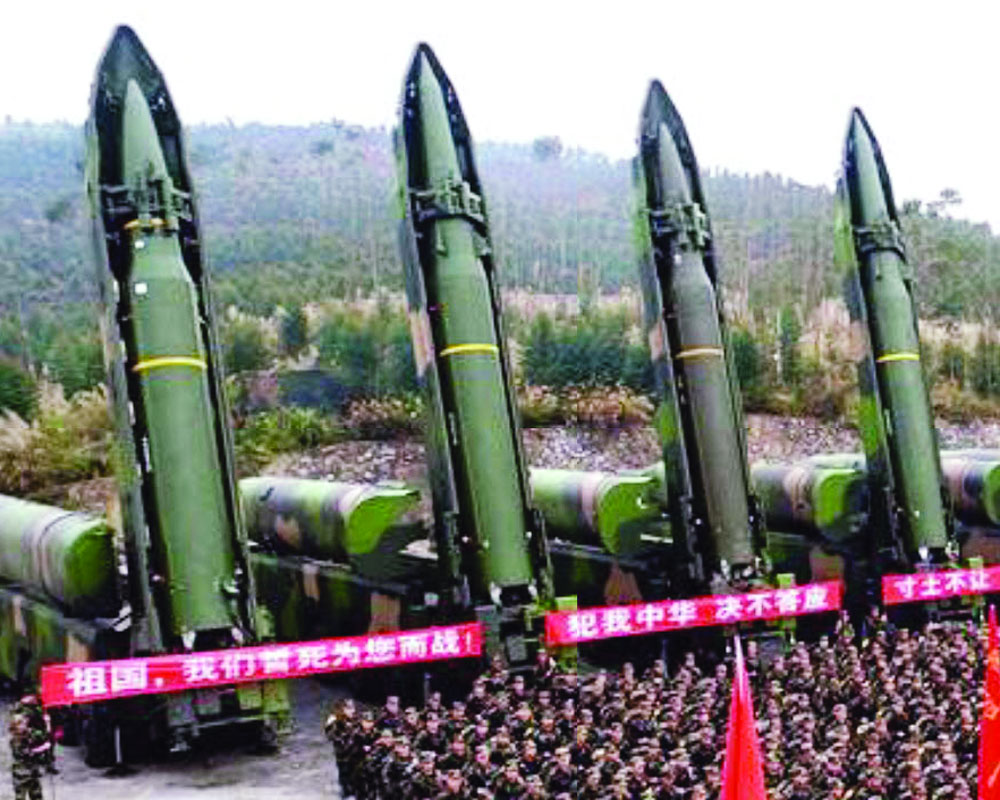
Indian defence to get a much needed overhaul
by Claude Arpi / 14 March 2019To win the battle of information or perception like China, India needs to restore the Historical Division in the MEA or let MOD set up a comparative cell
With India approaching the General Elections, one rarely comes across good news. The “transformative” reforms, soon to be undertaken by the Ministry of Defence, however, are an encouraging sign that a few things in India are changing for good. According to PTI, the idea is “to make the 1.3 million-strong force leaner and meaner as well as enhance its combat capabilities.”
Defence Minister Nirmala Sitharaman has approved the first batch of reforms, which include relocation of 229 officers from the Army headquarters to operational postings, reorganisation of the Army Headquarters and the setting up of new wings for vigilance and human rights issues. Particularly interesting is the creation of a post of Deputy Chief of the Army Staff (Strategy) or DCOAS, which will deal with military operations, military intelligence and operational logistics. Then there will be a new information warfare wing “in keeping with the needs of the future battlefield, hybrid warfare and social media reality.”
The Modi sarkar finally realised that the war of tomorrow will be “hybrid”— “unrestricted warfare” in Chinese terminology — and primarily needs a change of mindset. The Chinese understood this long back. In 2003, China’s Central Military Commission approved the concept of “Three Warfares” — one, the coordinated use of strategic psychological operations; two, overt and covert media manipulation; and three, legal warfare designed to manipulate strategies, defence policies and perceptions of the target audience abroad. Further, on November 23, 2015, Chinese President Xi Jinping announced a new plan to completely change the face of the People’s Liberation Army (PLA). Apart from the three traditional Services (Ground Forces, Air Force and Navy), a Rocket Force and more importantly a Strategic Support Force were set up.
Remember the Doklam incident of 2017, where India won a battle on the ridge in western Bhutan by not allowing China to change the status quo and build a strategic road near the trijunction between Sikkim, Tibet and Bhutan? But Delhi lost another battle. That of the legitimacy of its claim. While everyone in India applauded the forces, which prevented the construction of the road, Delhi was unable to articulate the background of the standoff although it had strong legal and historical arguments. At the same time, the Chinese repeatedly quoted a 1890 Convention between Great Britain and the Manchus. The spokesperson of the Chinese Ministry of Foreign Affairs in Beijing vociferously managed to convince the Indian media posted in Beijing that it was a valid basis for the Chinese action at the trijunction.
The fact that in 1890, the main stakeholders, Tibet and Sikkim and Bhutan, were not even consulted, made it an “unequal” treaty without validity (in any case, the survey of the trijunction was done only several decades after the agreement was signed). The Convention of 1890 proved to be of no use to the British as Tibet never recognised it; this eventually led London to directly “deal” with Lhasa, send the Younghusband expedition there in 1904 and open the doors to the tripartite Simla Convention between British India, Tibet and China sitting on an equal footing in 1914. Since India did not object to the argument behind the 1890 Convention, it meant that the subsequent treaties signed with the Tibetans, particularly the Simla Convention and the border agreement (defining the McMahon Line) in 1914 would have no validity; as a result India would lose its defined border in the Northeast.
The main factor which has led to losing the battle of information is the lack of a Historical Division in the Ministry of External Affairs (MEA). While the Ministry of Defence gets ready to undertake bold reforms, the MEA seems lethargic (at least for an external eye). It is difficult indeed to imagine today the MEA looking at its failure and taking initiative to reform its functioning; it seems beyond the capacity of the mandarins of South Block.
In May 2016, a parliamentary committee on foreign affairs had suggested expanding the manpower in the Indian Foreign Service (IFS), providing lateral entry into the IFS and organising a separate exam for the service. All this is fine, but what about reviving the defunct Historical Division? How can a modern State, which wants to be a “Great Power,” function without a Historical Division to which these types of issues (such as the historical background of the trijunction) can be referred for clarifications and advice, is beyond comprehension.
In the early years after Independence, the Nehru government established a Historical Division with S. Gopal (President Sarvapalli Radhakrishnan’s son) as its first head. Shivshankar Menon, a former foreign secretary and national security advisor, in a book review of Gopal’s Collected Essays explained: “For reasons I find incredible and incomprehensible, the Historical Division was wound up by the MEA in the nineties … some of our present difficulties may indeed be due to a lack of memory.” Today, the MEA has just a Boundary Cell headed by a Lieutenant Colonel, while it should be looked by a Joint Secretary-rank officer (or may be a Major General with intimate ground knowledge of the boundary).
Why was the Historical Division closed in the first place? It seems that in the 1990s, an all-knowing diplomat believed that it was not necessary. Is there a resource base today with the will and the capacity to tackle such a thorny issue today? For the Ministry of Defence, the best would be to forget about the MEA and reorganise itself to bring together all historical records in a well-organised manner (a place where documents would be available when required for operations, public information or other purposes), while keeping a strict classification process.
To keep these records, the Ministry would have to employ a team of professional historians, recruited through lateral entry and who would be given the necessary security clearance (with the punishment it entails if the rules are bent …for illicit photocopies for journalists “seeking the truth”). This move would allow a centralisation of all the historical records kept in different MOD departments. The Directorate of History and Records (or whatever name the Office is given) would make historical documents or notes available to the DCOAS (Strategy) or any other officer requiring them.
It would have an added advantage, the MEA may be able to wake up and decide to recreate its Historical Division. This “reform” could greatly enhance the capacity of the defence forces to fight the hybrid war of tomorrow.
(The writer is an expert on India-China relations)
Writer: Claude Arpi
Courtesy: The Pioneer
Does India Need an “Official Version Act”?
by Priyadarshi Dutta / 04 March 2019The country awaits a clear “official version” of the details of the Balakot strike. Else, there is the risk of media and social media filling up the void with unsubstantiated and fake news
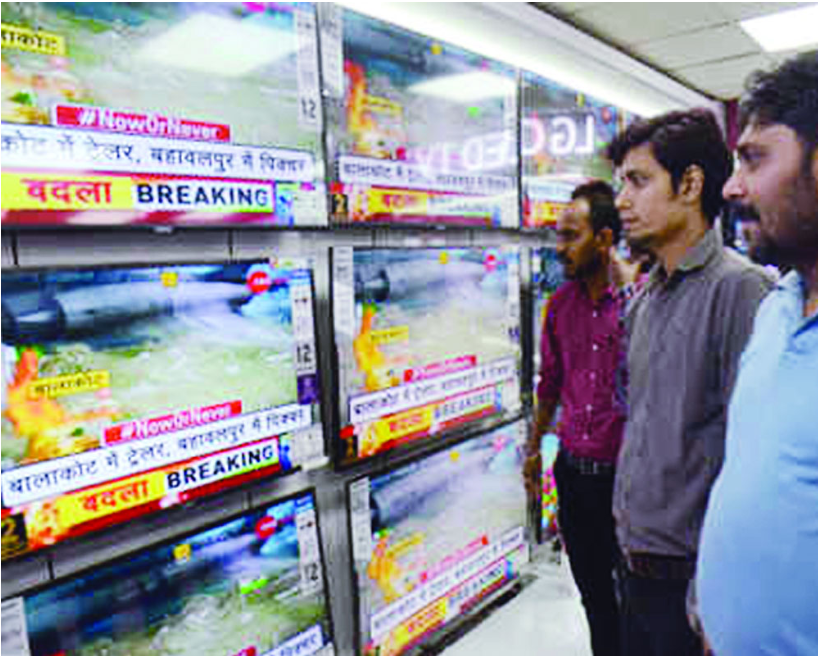
On Tuesday (February 25) morning, the news that the Indian Air Force (IAF) had struck at Jaish-e-Mohammed (JeM) terror camps at Balakot across the LoC in the wee hours spread like wildfire. The strike reportedly led to massive casualties and confusion in the ranks of terrorists. One thousand kilos of bomb, one was told, had been dropped, leading to hundreds of fatalities in a JeM training camp. The triumphant mood proved infectious and the social media exploded in jubilation and jibes. Television journalists chattered with such conviction as though they were reporting from the site. Even though they behaved as “embedded journalists,” surely none of them had been flown in an aircraft to witness the massacre. The images used were also representative rather than actual.
Then one noticed the confusion about the location of Balakot. In war reporting, like in war history, maps are as important as the text. But journalists thought it was in Pakistan-occupied Kashmir, where intuitively most terror camps are located. There was an exchange of Twitter-fire between two well-known journalists regarding the spelling Balakot and Bala Kote as there was confusion about the precise strike location. But another journalist, perhaps aided by quick search on Wikipedia, informed on Facebook that Balakot is in Khyber-Pakhtunkhwa, meaning India had crossed the international border and not just the Line of Control (LoC).
In this melee, this writer scrambled for the official version of events. During the last surgical strikes of September 29, 2016, Lt Gen Ranbir Singh, the then Director-General of Military Operations, had issued a Press statement hosted on the Press Information Bureau (Ministry of Information & Broadcasting) website. There was significant difference between what Lt Gen Singh had said and how the media narrated the surgical strikes. But this time around, there was no such statement from the military and the defence establishment.
This writer looked into the Twitter handles of the IAF, Raksha Mantri (official handle), Nirmala Sitharaman (personal handle) only to notice that there was absolute silence on the issue. The only thing they tweeted during the day was the inauguration of the National War Memorial by the Prime Minister the previous evening. In fact, the airstrike was a non-event for Raksha Mantri, Defence spokesperson and the IAF Twitter handles on February 26, 27 and 28 for reasons best known to them. While the first two Twitter handles sprung to action again after the tri-service Press conference on February 28 evening, the IAF Twitter handle maintained silence.
Getting back to the subject, the text of the official version of the strikes was finally located on the Ministry of External Affair’s website. Why the Foreign Secretary should report an air campaign and IAF should observe silence over it is puzzling. But it was more perplexing to find that Foreign Secretary Vijay Gokhale’s statement made no mention of the IAF. In fact, it described the strike as “non-military pre-emptive action”, which reminded this writer of an innovative Bengali recipe of the 1960s, strangely named ‘vegetarian duck-egg curry’. It does mention Balakot but not whether it is in mainland Pakistan or PoK.
Subsequently, a string of pictures, presumably of the destruction wrought in Balakot due to IAF’s bombing, went viral on social media. Little notice was paid to the fact that the victims looked overwhelmingly civilians, including women, a fact that contradicted the Foreign Secretary’s statement that civilian casualties were avoided. But subsequently, they turned out to be old photos, capturing the destruction caused by an earthquake in Balakot in 2005.
Can the paradox get bigger than this? On the one hand, the Government is flaunting a zero-tolerance policy towards fake news. The heads of social media companies are being summoned before the Standing Committee on Information Technology. On the other, relevant Government institutions and Ministers in-charge maintain silence on such a vital matter or give insufficient and puzzling versions. The Government is, thus, itself helping unsubstantiated or fake news to proliferate.
Some people cite compulsions of secrecy about surgical strikes. One wonders what kind of secrecy is this where media knows more and social media still more about an event within hours but Government institutions provide little or confused information. Gerald Vincent Bull (1928-1990), the Canadian defence engineer who was developing a long-range artillery called Project Babylon “supergun” for Saddam Hussein, was assassinated in Brussels in 1990. His murder, still unsolved, is widely believed to be carried out by the Israeli intelligence service, Mossad. Did the then Israeli Prime Minister Yitzhak Shamir even refer to the action in public let alone taking political credit; although he might have authorised it in the first place?
How is it known which air bases the Miraj squadron flew out from and where was the campaign coordinated? Either the news is incorrect or supplied by some highly-placed sources within the IAF. Does that then mean that the IAF is leaking out confidential news while officially keeping silent on it? Is it the way to deal with military issues in a republic?
The Kargil War was a high point in that sense. It was India’s first “televised war.” Not only were images from the world’s highest battle theatre streamed into our homes throughout the day, but every evening, the then MEA spokesperson, Sardar Raminder Singh Jassal, kept us abreast of the developments. Having seen that era in one’s early youth, one finds this approach to information quite strange. On November 18, 2016, a large number of Lok Sabha members wanted to know about the number of camps destroyed and terrorists killed in the strike. The MoS, Defence, avoided giving an answer. Nor was any answer given to that effect in the Rajya Sabha. After that, the issue surprisingly went cold. The Government has not given any details about the event till date.
Many would like to convert the issue of “proof” into one of believing and not believing in the Indian armed forces. A “non-believer” would be immediately branded as anti-nationalist. But the issue here is actually different. It is whether or not citizens have the right to know the exact position from their elected Government? Is it whether the Government, in this era of fake news, should leave such information about such vital military event to the mercy of media and social media?
It appears in hindsight that Sardar Baldev Singh, India’s first Defence Minister, was charitable in his remarks. He said our Army, Air Force and Navy (sic) were fighting against Pakistan backed infiltrators in Jammu & Kashmir (1947). He reportedly did not buckle when people asked how could the Navy fight in mountains and valleys? He was merely providing some superfluous information, without being economical with the truth. Do we need an Official Version Act for the Government, which has conventionally been governed by the Official Secrets Act?
(The writer is an independent researcher. Views expressed herein are his personal)
Courtesy: Pioneer
Writer: Priyadarshi Dutta
Despite Pak feats a part of India’s population undermines Modi
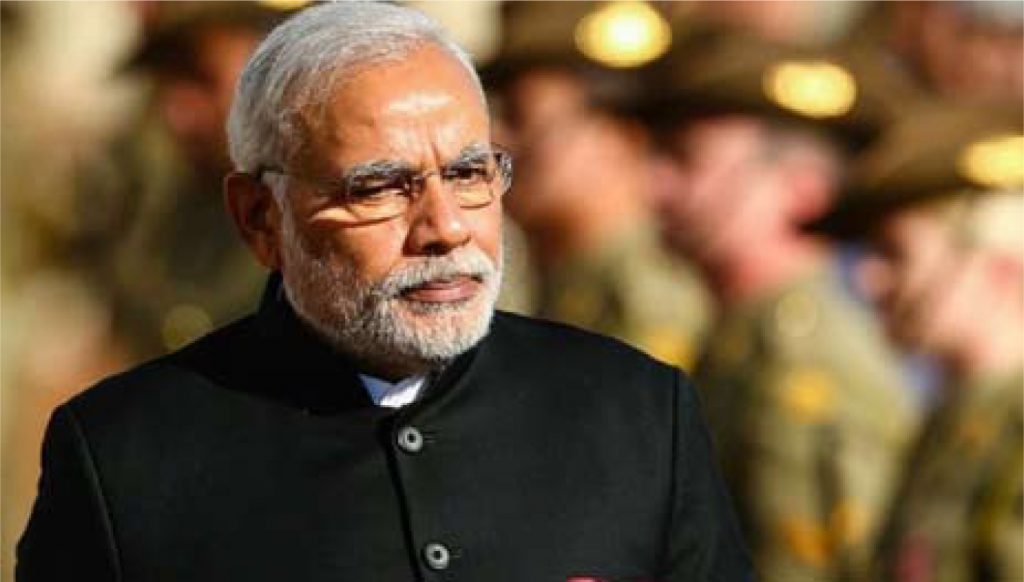
by Pramod Pathak / 03 March 2019The return of IAF pilot Abhinandan to India from Pakistan’s custody, was met by a combination of relief and celebration in India. Relief because, in the light of what happened to some Indian soldiers during the Kargil war of 1999, there were grave concerns over his safety and well-being. Ironically, the videos of Abhinandan capture and subsequently, which Pakistan attempted to use for propaganda purposes, may have ensured that nothing untoward happened to him. But this relief that a brave pilot who distinguished himself by downing a Pakistani F-16 aircraft which Islamabad still hasn’t formally admitted to has returned home to resume his duties was coupled with a celebratory mood.
This mood stemmed from the fact that Indians were aware that the Narendra Modi Government hadn’t negotiated Abhinandan’s release. Despite the attempt by Pakistan to use an Indian soldier to force India to “negotiate”, the Modi Government has refused any talks unless there is credible evidence that the infrastructure of terror that has been built across the border is dismantled and action taken against the organisers of terror. If despite this refusal, Pakistan felt compelled to release Abhinandan hastily, it is not because Prime Minister Imran Khan is a large-hearted sportsman. The Pakistan Prime Minister was unquestionably an accomplished cricketer but his apparent magnanimity was triggered by two factors. First, he needed to look statesmanlike, which is understandable. But more important, confronted with a beleaguered economy and dwindling diplomatic support, particularly after the UN Security Council resolution against terrorism directed at India by the JeM, Pakistan has very little room for manoeuvre. The jihadi problem may have predated Imran Khan but it has cost Pakistan dearly in every possible way. Earlier, Pakistan has leveraged the Cold War and its position as a frontline state in the Afghan war to bargain its way. Today, that is no longer possible. The country’s bluff has been called and the world wants it to atone for its sins, particularly its patronage of global jihadist.
Imran’s gesture may have impressed India’s small community of liberals who were against the air strikes on the Jaish-e-Mohammed camps in Balakot in the first place. This isn’t because they are particularly fond of the JeM or even Pakistan, but because they can’t countenance any move that could lead to Modi becoming the personification of the Indian mood. Consequently, despite being fully aware of Pakistan’s track record of duplicity, including its role in giving shelter to Osama bin Laden in Abbottabad, they have chosen to believe stories of India’s air strikes in Balakot being purposeless. The logic is simple: promote anything to undermine and discredit Modi.
The latest claim is that India has lost the “war of perceptions” to Pakistan. The theory is not based on any analysis of Indian diplomacy — of its record in mustering the support of 105 countries in its campaign against terrorism —but almost entirely on what some foreign journalists have or have not said. It is a different matter that the publications have lost sight of the fact that the present crisis arose from the killing of 44 CRPF jawans in Pulwama and the central issue is terrorism. To them what is relevant is that India has a Government led by Modi and that Modi must be brought down several notches, even if that involves putting a failed state such as Pakistan on a pedestal. The coverage of India’s conflict with a rogue Pakistani state has been reduced to partisan positions on India’s domestic politics.
In justification, it is claimed that this unending scepticism is a counter to the Indian (electronic) media’s xenophobic posturing. Whether the Indian media is excessively shrill and nationalistic or perceives itself as a patriotic vanguard is for the readers and viewers to judge. There is a media war, which to some extent is an extension of the culture wars that have been fought over the past four years, which is of relevance to the journalists and social media gladiators. However, state policy cannot and must not be shaped by this battle. As the custodian of national interests, the Indian Government has a paramount responsibility to its people, and not least the overwhelming majority that identifies itself with the nation. The shift in the country’s strategic doctrine from the do-nothing approach of, say, 2008 to the willingness to cross the Line of Control when necessary was a response to pressure from below — a sentiment that Modi understood and acted in accordance with. True, there are other expressions of opinion in India but they should be accommodated only if they are broadly in synch with national priorities — including the relentless war on terrorism.
In reality, India is today not a divided house. In all the conflicts, there have been the odd dissenting voices. In 1962, during the war with China, a section of the Communists chose to be partial to China. In 1971, the CPI(M) equated Indira Gandhi with Yahya Khan. And during the Kargil conflict in 1999, the Congress baited the Government unendingly, hoping that the failure to recover the heights would lead to Atal Bihari Vajpayee’s defeat in the election. It is that same game that is being replayed today. But just because there are awkward noises being made, it doesn’t imply that the nation should get distracted. Democracy, unfortunately, also confers rights on those whose values don’t correspond with national priorities. They have to be tolerated but not heeded.
Courtesy: The Pioneer
Writer: Pramod Pathak
FREE Download
OPINION EXPRESS MAGAZINE
Offer of the Month