
News Destination For The Global Indian Community


News Destination For The Global Indian Community
Shaping Chinese Ideology
by Dr.Siddharth Singh | Dr.Kunwar Alkendra Pratap Singh / 01 June 2020An Insight From The Opium war
The entire world is witnessing a COVID-19 pandemic due to the novel coronavirus the roots of which are believed to belong to Chinese soil and therefore there are people who prefer to call the novel coronavirus as Chinese virus. Looking into the conduct of the Chinese government it is quite clear that in the 21st century the Chinese have been involved in various kinds of treacherous activities be it an Anti-Satellite Test of 2007, aggressive outer space man oeuvres and stances, One Belt One Road Initiative (OBOR, announced in 2013) or Chinese Debt Trap diplomacy. China is a big civilization like India and both countries went through tough times of crisis due to foreign invasions.
Present-day China although appears to have a strong economy, it is still very much different from what it used to be. The ascent of China is considered a serious threat because of its notorious activities, “Salami Slicing” tactics (strategies involving the divide and conquer process of threats and alliances to overcome opposition and acquire new territories) and expansionist policies. Thus, it becomes imperative to fathom the Chinese mindset.
The territorial claims of the People's Republic of China (hereafter PRC or China) have engaged the Chinese in persistent disputes with its neighbors and other countries. The aggressive policies of China aiming at the expansion of its territory have been a major part of Chinese policy and upon examining the early modern history of China we find that several events in the past have been responsible for shaping the national mindset. Historically, China has been the center of global political power, having great influence in present-day Asia, as a result, the Sino centric perception in history has been of Cultural, Religious, Social and Political dominance. The olden days Chinese considered them to be the ‘Centre of Universe’ surrounded by foreign countries and communities whereas the foreign countries were regarded as “inferior” as well as “barbarian”, especially “culturally barbarian”. Chinese, during those times, considered Chinese Confucianism as something that was a much superior ideology than any other system. However, the changing paradigms in early modern history posed new challenges for China which the Chinese refused to accept and this led to humiliation and misery for the Chinese.
"The olden days Chinese considered them to be the ‘Centre of Universe’ surrounded by foreign countries and communities whereas the foreign countries were regarded as “inferior” as well as“barbarian”, especially “culturally barbarian”. Chinese, during those times, considered the Chinese Confucianism as something that was much more superior ideology than any other system"
What gives China a sense of being China? What gives the Chinese the sense of what it is to be Chinese? China, unlike the western state, is shaped by its sense of Civilization. China is a Civilization state rather than a Nation-state and its history of years of conquest, occupation, absorption, and assimilation has nurtured the Civilization state of China. China is a new kind of paradigm.
Going back to the 18th century, Chinese goods were in great demand in the West. As a result, the demand for products like Chinese tea, silk and porcelain grew in London. Chinese however needed little the West could provide. The Chinese Qing government mandated that goods can only be traded for Silver and this resulted in a drain of wealth for the British in the form of Silver. The British became fearful of too much precious coin leaving the country and in order to rectify the trade deficit with China, the British introduced Opium to Chinese consumers in exchange for Silver, the strategy worked for London and Opium gave the western powers a chance to enter into the Chinese market which has long been impenetrable.
The Chinese allowed the British to open a trading station at Canton in 1737 after its arrival on Chinese land in 1637. The British through the East India Company (EIC) established a trading scheme; partially legal and partially illegal for smuggling Opium into China. They opened a triangular trade of Opium-smuggling Opium from British India into China. The British marketed Opium aggressively after they took control of the main producing areas in British India. The British exports of Opium to China grew manifold and its trade deficit with China turned into a trade surplus. The Chinese started accepting Opium in lieu of precious coins. Americans also entered the Opium trade. The British, the Americans, the Portuguese and other European nations took to the Opium trade with China because of their chronic imbalance with China. Despite several decrees by the Chinese government the smuggling of processed (at Benares & Patna) Opium in China by EIC continued. Though the Chinese imposed a ban on Opium imports, opium exports from India grew from 77 metric tons (by 1775 AD) to 300 metric tons (by 1800 AD) and to 2500 metric tons (in 1839 AD). The Chinese delegation to the International Opium Commission of Shanghai (in 1909 AD) reported a peak of 350000 metric tons of domestic production of Opium in 1906. The enormous production of 35000 metric tons in 1906 can be understood by comparing it with Afghanistan which produces almost 95% of Opium today. In 2007, it produced 9000 metric tons of Opium. The Chinese reserves have declined, the number of Opium addicts in the country increased and too many people were loafing around leading to declining in the Industrial output. Opium trade has long-term implications for the Chinese government and society. The Chinese emperor Daoguang imposed restrictions on the Opium trade, and the emperor’s step backfired, eventually, London became angry and responded by sending its Navy to China demanding compensation. The conflict started and that led to the First Opium War between China and the British.
"The British won the First Opium war which gave them more control over the Opium trade in China. The Chinese ports were opened for Opium trade and Hong Kong was given to Britain. The Chinese empire felt humiliated at the defeat by merely 44 British navy ships."
The British won the First Opium war which gave them more control over the Opium trade in China. The Chinese ports were opened for the Opium trade and Hong Kong was given to Britain. The Chinese empire felt humiliated at the defeat by merely 44 British navy ships. The other world powers sought this as an opportunity to exploit the situation and enter the Opium market of China. The Second Opium war waged by the British and French opened new ports for the British to trade Opium and ensured that the opium continues to generate wealth for the British Empire. It started when Chinese authorities seized a Chinese ship (for involvement in smuggling and piracy) bearing the British flag. The British, the American and the French gained access to several trading ports allowing them to expand through all of China. Chinese markets were flooded with Opium leading to a rise in British Indian exports. The Chinese were forced to legalize Christianity and Opium. Furthermore, in 1887 the Chinese ceded the port city of Macau to the Portuguese.
The ruling emperor of China felt embarrassed at the unfavorable terms of surrender. European powers have formed a regional coalition in Asia threatening Chinese historical superiority. The Chinese experienced a period of Social Unrest led by foreign encroachment and followed by the Yellow river flood of 1887. In 1894-95 the Qing dynasty lost the Korean peninsula and Taiwan to the Japanese. The Japanese force of 240000 troops defeated a strong Chinese army of 630000 troops. In 1899, the Qing dynasty empress Cixi along with Boxer Rebellions (a peasant uprising aimed at driving foreigners out of Chinese soil) declared war against the United Kingdom, Russia, France, Japan, Germany, Italy, Austria, Netherlands and the United States of America. The nine-nation coalition army defeated the Chinese imperial army and major cities were occupied and local people faced ruthless atrocities. The Russian-Japanese war of 1904-05 further weakened the Qing dynasty. The imperialist demand increased and the desire to see a unified China gave rise to revolutionary movements. The revolutionary groups intensified their activities in China. Qing dynasty witnessed frequent revolts demanding Constitutional Monarchy. In 1912 the Qing dynasty was overthrown in a revolution. China became a Democratic Republic. Sun Yat-Sen was declared the President of the new Republic. This was the first revolution for a complete change which China was to witness in 1949. Although the new government created the Republic of China it failed to create a unified China. The foreign countries remained neutral with the sole aim of protecting their interest gained through various treaties signed with the Qing dynasty. The United States was the first country to establish diplomatic relations with the newly formed Republican government. It was soon followed by the British, Japan and Russia. The absence of a central strong power led to the emergence of small provinces being governed by warlords. China witnessed mass unrest for the next thirty years. The 1925 Civil war forced the Chinese to focus inwards. Japanese and Russian forces invaded the Manchurian region in the 1930s. In 1937 Japan again invaded China leading to continuous defeats for the Chinese. The Japanese killed lakhs of Chinese citizens and soldiers. The Japanese army committed mass murder and mass rape of the citizens of Nanjing (Nanjing Massacre), the then capital of China.
1940 witnessed an important event in the history of China. Widespread disparities existed between the wealthy coastal cities and eastern cities of China, and Mao Zedong, the then-president of the Communist Party took advantage of the disparity and raised an army. The poor peasants formed the majority of the army. They stood against the Japanese and it was after a long that the Chinese were able to stand against a foreign aggressor. They drove Japan out of mainland of China. Mao Zedong declared the People’s Republic of China. In 1958, Mao introduced the Great Leap Forward policy aiming at industrializing agrarian societies. All private firms were placed under the care of the government and millions of people were moved from rural areas to work in industries. The Great Leap Forward policy of Mao failed because of the overstated estimates of production, pressure on the Communist officials to perform and the exchange of crops for heavy machinery with the Soviet Union.
This resulted in a famine from 1959 to 1961. The economic decline caused by the Great Leap Forward has lasting effects for the next twenty years. Although the true power lay with Mao, he took a backseat in the government. In 1966, with the aim of a comeback and gaining power he launched the Cultural Revolution. He motivated the students, frustrated peasants and soldiers to denounce and challenge the authorities. Mao Zedong consolidated power under the guise of the Cultural Revolution. For most of the 20th century, China is shaped and designed according to the will of the Communist government. The Communist ideology has its roots in the post-Opium era which is a period of humiliation and disgrace for China. The period from 1839 to 1939 shaped the current geo-political mindset of China. The Chinese consider the majority of the treaties signed during 1839-1939 as unfair.
Undoubtedly, the Chinese bloodshed and humiliation of the past have shaped the modern Chinese mindset, therefore, the Chinese hardly trust on international agencies and foreign nationals. In fact, for the Chinese, the international agreements are aimed at keeping a check on Chinese sovereignty. The present Chinese policymakers strongly believe that in the past they have been defeated because of their defensive strategies; therefore, the Chinese have sought a solution in aggressive policies towards the outside world and have adopted the ideology of ‘Developmental Nationalism’ and modern-day China has a strong nationalistic system with the focus on becoming an economic power. As a result, the Chinese mindset and growth cannot be simply understood with the conventional approach that is dominated by western ideology. China is different, its past has been different and the future is going to be different and the modern Chinese mindset will mutate only when hell freezes over.
(Authors are experts on various Economic issues, Science & Technology, International Relations and Strategic Affairs. Dr.Siddharth Singh is working as Assistant Professor, the Department of Economics at DAV, Banaras Hindu University, Varanasi, India and Dr.Kunwar Alkendra Pratap Singh is an Assistant Professor, at the Department of Physics, Banaras Hindu University, Varanasi, India)
Covid 19: Internal threats and external opportunities
by Prashant Tewari / 13 May 2020Tablighi Jamaat and its leader Maulana Saad with his global masters had serious issues with CAA, NRC, Triple Talaq, Babri Masjid court verdict etc. in India and they unleashed frustration during the national crisis of COVID 19. The community is still hanging on to the political matters with a focus on discrediting the Narendra Modi government at any cost while the entire nation is combating the national health emergency. The country must take the threat of the Tablighis as an eye opener for future planning that must include the complete ban on Tablighi Jamaat in India, seizers of entire assets base of Tablighi Jamaat, identify ancillary units of Tablighi Jamaat so that they can be stopped in operating under different names, punish the traitors of COVID 19, immediately amend Article 25(1) so that the money and preachers from outside the country can be restricted in their operations ( it is a national security threat ), set up expert committee to re-examine provisions under Article 25-30 in the Indian constitution and give additional power to the police in IPC & CRPC to identity and book the anti-national culprits. It is important that Deoband, Barelvi, Salafi ideologies managing the network of mosques in India must be brought under government supervision and control as the temples of India are supervised under the Religious endowment Act 1873.
On the economic front, we have a battle royal ahead of us to capitalize on the flight of firms from China. Despite the doom and gloom scenario in the country right now due to the lockdown, the fact re- mains that the current Corona crisis has provided an opportunity, too, for India. But for the country to take advantage of this spell, it would require major initiatives and that too, at a fast pace. Covid-19 has provided the much-needed elbow room to the political leadership to push for transformation, more particularly land and labour reforms.
If Communist China can serve the economic interests of the capitalist West, then India is even better positioned to do that. The world order is expected to change and diplomacy will play a key role in establishing India as an alternative, low-cost manufacturing destination. For this to happen, first and foremost, Indian manufacturers must start thinking globally. In 2017, Deloitte research identified five countries, which it dubbed the MITI-V (Malaysia, India, Thailand, Indonesia, and Vietnam) as an alternative to China in which India was positioned at the top. We have our advantage in terms of a young population, cheap labour, domestic consumer market, rising income levels and so on, but this will remain in theory only till the time policy interventions grab the eyeballs of investors. Time holds a great value here and the government must take immediate proactive measures to avail once in a lifetime opportunity to make INDIA GREAT AGAIN.
Prashant Tewari – Writer is Editor of Opinion Express and regular columnist to The Pioneer. twitter@prashanttewari11
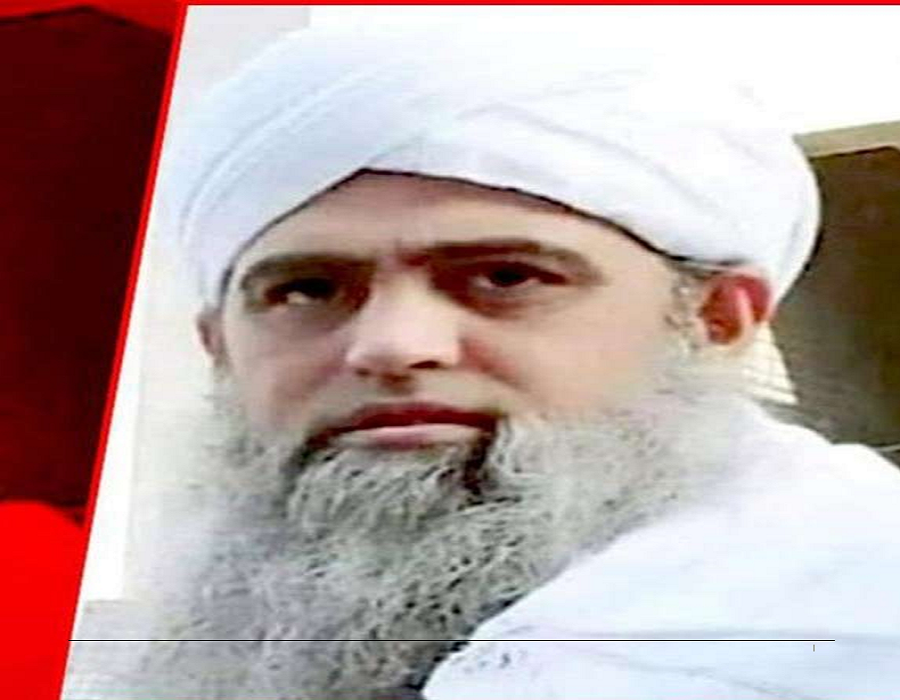
MAULANA, TABLIGHI JAMAAT AND REALPOLITIK OF MODERATE ISLAM
by Prashant Tewari / 01 May 2020An incisive look at the birth and journey of Tablighi Jamaat which is largely being held responsible for spiking Covid numbers in India
The Tablighi Jamaat (Society of Preachers) was founded by a Deobandi Islamic scholar Muhammad Ilyas al-Kandhlawi in Mewat, India, in 1926 with the objective of establishing a group of dedicated preachers as a Muslim revivalist society, who could reclaim “true” Islam, which he felt was not being practiced by many Muslims. The slogan Al-Kandhlawi coined for his new organisation captured the essence of its activities — “O Muslims, become true Muslims”. By the mid-1930s, Tablighi Jamaat had a program of belief, which included, beyond the five pillars of Islam and Islamic doctrinal tenets the following: Islamic education, modest Islamic dress and appearance, rejection of other religions, high regard for Muslims ( yet allowed to operate in India since 1947 ), propagating Islam, self-financing of Tablighi trips, lawful means of earning a living, and strict avoidance of divisive and sectarian issues. Tablighi Jamaat is often considered extremely orthodox in its interpretations, with the ability to convert Muslims into radical believers. The organisation grew fast in British India. In its annual conference held in November 1941, some 25,000 people attended.
After Partition, it grew stronger in Pakistan and East Pakistan (lately Bangladesh). Now, Tablighi’s largest national wing is in Bangladesh. The group has a presence in 150 countries and millions of followers. Incidentally, it was our great Mahatma Gandhi who convinced Maulana Ilyas to stay back in India at the time of partition and India continues to pay a huge price for Mahatma’s sin. The Tablighi Jamaat members claim to be non-political but they tacitly support “secular” political parties in India to protect their interests after the partition of the country. They say the Prophet Mohammed has commanded all Muslims to convey the message of Allah, and the Tablighis take this as their duty. They divide themselves into small Jamaats (societies) and travel frequently across the world to spread the message of Islam to Muslim houses. During this travel, they stay in local mosques. This free spread has enabled them to meet the vulnerable deprived section of the Hindu population in India and backed up by the power of petrodollars & ISI dirty money machine including the vast network of Dawood Ibrahim and other anti-national entities, they have converted large section of the population in the last 70 years with ease and without coercion with the tacit support of secular political outfits in India.
"The organisation grew fast in British India. In its annual conference held in November 1941, some 25,000 people attended. After Partition, it grew stronger in Pakistan and East Pakistan (lately Bangladesh)"
The group’s modus operandi is deceptively peaceful, so much so that it outsmarted even super cop Ajit Doval, now India’s National Security Adviser and a former intelligence boss, said in 2013 - “The movement was never viewed adversely by the government.” But the Tablighi Jamaat has been banned in some Central Asian countries such as Uzbekistan, Tajikistan and Kazakhstan, whose governments see its puritanical preachings as extremist.
Radicalism and Role in Acts of Terror
Some TJ followers have worked as allies of Jihadi and sectarian organizations. However, once they joined the militant organizations, they cut off their links with the Tablighis. Terror groups have used the TJ congregations as recruitment camps. Tablighi Jamaat has been a sympathizer and supporter of jihadi organizations such as the Harkatul-Mujahideen, the Harkat-ul-Jihadal-Islami, the Lashkar-e-Taiba, Jaishe-Mohammad, Al Qaeda and Taliban. “As per WikiLeaks, some of the 9/11 al-Qaeda suspects detained by the US in Guantanamo Bay had stayed in the Tablighi Jamaat headquarters in Nizamuddin West, New Delhi, years ago”. According to Pakistani security analysts and Indian investigators, Harkat-ul-Mujahideen (HuM) members, involved in the hijacking of Indian Airlines Flight 814 in 1999, were members of Tablighi Jamaat.
The 2011 U.S investigation reports suggest that Tablighi Jamaat had supported members of Al Qaeda to get visas and funds to travel from Pakistan. Moreover, there are many more such cases from Kenya, Somalia and Pakistan. It leads us to the conclusion that Tablighi Jaamat is used as a conduit by Islamic terrorist organizations to facilitate travel for their members. The Tablighi Jamaat has become a jihadi spotter as they exhort Muslims to devote themselves to religion https://idsa.in/strategicanalysis/TabligheJamaatUndertheScannerofGermanIntelligence_armukhopadhyay_0405
One of the attackers in the 2017 London Bridge Attack, Youssef Zaghba, was associated with the Tablighi Jamaat. Mohammed Siddique Khan, leader of the 7th July London Bombings in 2005, was also a member of the Tablighi Jaamat.https://worldview.stratfor.com/article/tablighi-jamaat-indirect-lineterrorism
Saad - The new Khalifa
Born on May 10, 1965, Maulana Muhammad Saad is the Amir (chief) of the Tablighi Jamaat. He is the grandson of Maulana Muhammad Ilyas, who founded Tablighi Jamaat*. Maulana Saad became the chief of the Tablighi Jamaat on November 16, 2015. He was a member of ‘Shura’ (central consultative council) of Tablighi Jamaat from 1995 to 2015. He studied Maulviyat from the madrasa Kashif-ul-Uloom located in a part of Markaz. The former head of the Tablighi Jamaat Inamul Hasan Kandhlawi had formed a 10-member committee before his death in 1995 to look after the Tablighi Jamaat affairs and this committee (commonly shura) was in place until 2015. Most of the scholars in this group passed away during these 20 years including Zubair ul Hassan Kandhlawi. A meeting was held in Raiwind Markaz on 16 November 2015 to fill up the vacant spaces of the shura legislation and a new shura consisting of 13 members including Muhammad Abdul Wahhab was formed. Kandhlawi did not agree with this shura and declared himself as the head of Tablighi Jamaat, Kandhlawi leads the Nizamuddin Markaz faction of the Tablighi Jamaat. Some of the intemperate statements of Kandhlawi led the Deobandi scholars to issue fatwa against him.
Saad claims to have 100 crore followers in 214 countries; this includes almost 3-4 crore converts in western UP that his Jamaat has successfully targeted in the last 70 years in connivance with the so-called secular political parties of India in general and UP specifically. Tablighi Jamaat has changed the religious landscape of UP, Bihar, West Bengal, Tamil Nadu, Telengana, Kerala and Maharashtra extensively by targeting vulnerable and marginalized sections of the Hindu population with the power of petrodollars aided by secular ruling elites of India by creating vote bank for secular parties and in return, converting millions of Hindus by exploiting the weakness of Article 25(1) ( this article guarantees to every person, and not merely to the citizens of India, the freedom of conscience and the right freely to profess, practice, and propagate religion).
Tablighi Jamaat used “not merely to the citizens of India” weapon extensively over the years under the nose of the Indian state for the last 70 years by inviting many radical preachers and import of petrodollars to facilitate the growth of the Muslim population from less than 7% In 1947 to 14.5% in 2011 to likely 16.8% in 2021 https://www.business-standard.com/article/current-affairs/india-spopulation-at-1-21-billion-hindus-79-8-muslims-14-2-115082600038_1.html . Furthermore, there are indeed some links between Tablighis and the world of jihadism. First, there is evidence of indirect connections between the group and the wider radical/extremist Deobandi nexus composed of anti-Shiite sectarian groups, Kashmiri militants and the Taliban. As per intelligence reports, Rohingyas residing in camps in different parts of the country, have a direct link with Tablighi Jamaat and they took part in a religious congregation at the Nizamuddin Markaz. There are around 40,000 Rohingyas living in different parts of the country and only 17,000 have registered as refugees with the UNHCR. The government has repeatedly insisted that the Rohingya are illegal immigrants, even those registered with the UN refugee agency, and would be deported. But Tablighi Jamaat and its Muslim Ummah (brotherhood) slogan is playing a dangerous game by offering means and ways to assist Rohingyas to secure ration cards, Aadhar cards, ID proof to facilitate their permanent stay in India.
Coronavirus pandemic 2019-2020 Amid Coronavirus Lockdown, a number of patients from Nizamuddin were tested and found to be positive for coronavirus, which resulted in Kejriwal Delhi Government reluctantly registering an FIR against Kandhlawi for arranging a Tablighi Jamaat program despite restriction of such gatherings after March 16 at the Nizamuddin Markaz. The Tablighi Jamaat congregation took place between 13 and 15 March 2020. They had sought help from authorities for vacating the premises on March 25. On 31 March 2020, FIR was filed against Kandhlawi and others by the Delhi Police Crime Branch under Section 3 (the penalty for offense) of the Epidemic Diseases Act, 1897 and Section 269 (Negligent act likely to spread infection of disease), 270 (malignant act likely to spread infection of disease), 271 (disobedience to quarantine rule) and 120b (punishment of criminal conspiracy) of the IPC. Later the police slapped 304 (Punishment for culpable homicide not amounting to murder): ED has filed a PMLA case and IT department is scanning the bank accounts and suspicious transactions of Tablighi Jamaat. Over 2,000 people, including foreigners with a tourist visas and radical Indians from across the country, participated in the Tablighi Jamaat gathering in Delhi’s Nizamuddin which violated lockdown guidelines and exposed many to COVID-19. Nizamuddin Markaz has been the international headquarters of the Jamaat for nearly 100 years. As per reports, a large number of attendees began showing symptoms of COVID19 after attending the congregation at Nizamuddin Markaz, and acted with criminal intent to spread the virus across the country.
Why Tablighi Jamaat Antagonized their Defense?
Spitting and pelting stones have almost become weapons of war for the Tablighis. Does it make one question what can be the reason for this kind of deplorable behaviour? According to some news reports, there have been protests against medical staff and resistance against going to hospitals is not related to Covid19. Some of the issues cited by them are CAA, NRC, Triple Talaq, Babri Masjid etc. Unfortunately, the community is still hanging on to political matters with a focus on discrediting the Narendra Modi government at any cost while the entire nation is combating the national health emergency. The country must take the threat of the Tablighis as an eye-opener for future planning that must include the complete ban on Tablighi Jamaat in India, seizers of entire assets base of Tablighi Jamaat, identify ancillary units of Tablighi Jamaat so that they can be stopped in operating under different names, punish the traitors of COVID 19, immediately amend Article 25(1) so that the money and preachers from outside the country can be restricted in their operations ( it is a national security threat ), set up an expert committee to reexamine provisions under Article 25-30 in the Indian constitution and give additional power to the police in IPC & CRPC to identity and book the anti-national culprits. It is important that Deoband, Barelvi, Salafi ideologies managing the network of a mosque in India must be brought under government supervision and control as the temples of India are supervised under the Religious endowment Act 1873. India is the only place on the earth that Hindus can claim as their own; it is the last chance for the Hindu community to save themselves from the onslaught of the ever-increasing threat of a monotheistic cult.
But there are a few questions that the nation would be keen to know from the government of the day: (a) the role of the Indian foreign mission in issuing tourist visas with impunity and without proper verification of the person travelling to India (b) the role of the bureau of immigration staff at the international airport for allowing seamless entry of mentally and physically sick persons in India (c) the role of IB desk dealing with Tablighi Jamaat & other related similar organizations operating in India with zero restriction, here it is important to mention that Narendra Modi government is in its sixth year of existence (d) the role of Delhi government that failed comprehensively in allowing the assembly of over 3000 jokers at a single place despite there was an international red alert (e) the role of Delhi police under MHA for sleeping over a month till the situation became out of control and the country is paying a huge penalty for the incompetence of irresponsible government agencies.
CORONA: LIKELY POLITICAL FALLOUT
by Opinion Express / 01 May 2020GOVT FALLS..?
NATIONAL EMERGENCY?
Sounds hilarious to me too..!!
In recent times we have been hammered with the popular quote “Extraordinary situation demands extraordinary measures” but this quote is half the truth, the full truth is, that extraordinary measures leads to extraordinary consequences.
Lockdown was the most important extraordinary measure the Govt. could have taken. Lockdown was certainly not imposed to flatten the curve but tactically intended to delay the curve, to gain time, to enable the Govt. for preparation of such impending disaster. Thali and tali were tactically aimed to christen health workers as warriors with nationalist spirits and passion. This strategy worth a salutation. A great psychological move. Govt. needed health “warriors” to work on infrastructure it developed. Anti India forces could recognize this Govt. move and first attacked those warriors to flatten the morale.
TEN COMMANDMENTS: 2020
- Corona is here to stay
- Lockdown will be kind of “new” normal way of life.
- Blue-collar workforce will now be scarce and at a premium and there may be situations where the new theme would be localisation than globalisation.
- White-collar workforce may be at, steep discount, creating a divide among salary class.
- Casualty percentage of COVID, to remain in the region of 4 to 5%
- Govt. would expect banks to cooperate and help almost all sectors whereas RBI and investors would expect banks to have necessary compliances and even heightened disclosures. Once a complementary measure will have contradictory consequences.
- Big will become bigger. Big fish will be gobbled up the ailing fish. It would not be sectors but only “bankable” and equity market-friendly group, would flourish
- In 2021, it would be almost impossible to justify and convince people at large of the various action Govt. has taken to tackle the crisis. Present problem and in retrospect would appear too minuscule, vis a vis various action Govt. has taken or not taken. Such will be perfect breeding ground of lot many convincing theories. Blame game would be at its best.
- One can’t rule out vast population will see exodus towards villages, including upper middle class of the society.
- It is impossible that under such pandemic, for any incumbent Govt. to keep majority of the population happy and satisfied.
Govt. has done, so far, a fabulous and commendable job with the support from health workers and police department across the India to an extent most of the citizen believed that
“Politicians work too and Police are honest too.”
Now coming to the Consequences part, for any incumbent government, in such situation, will definitely fail to satisfy the aspiration and expectation of the people. There will be a strong anti incumbency wave backed by disparity in society, Big- Becomes- bigger, situation will run the risk of igniting into a civil unrest. Flame of dissatisfaction, already though, slowly simmering and brewing in the political pot and then at the right time a skillful trigger will this turn into a fully blown explosion. Social media will come handy for this “cause” to do the final act. Once Corona tamed, in retrospective situation, it would be impossible for the government to convince and convey the people the logic of lock down, when death percentage is merely 3-5% and even in absolute terms even if it is 1 lac casualty. Opposition would then ask if the lock down was worth for mere 1 lac casualty and lot many theories would come on play, in retrospect.
Initial response to the lockdown of the Govt. was by and large, well received and accepted by General public and will continue to get the support for some time, may be even till 30th May. But thereafter how long, no one has answer and no one seems to have any clue. Goal post would keep changing and keep people confused, guessing and era of uncertainty sets in.
We must accept that Corona is here to stay till we don’t get anti -dote or vaccine which is still, at least, 9 months away.
In such situation, Govt. has two option either to lift the lock down preceded by formulation of strategy with the death percentage as acceptable devil and make this ratio as threshold reference to issue general health compliance and regulation and open the lock down and or leave it on the respective state government.
"In such situation, Govt. has two option either to lift the lock down preceded by formulation of strategy with the death percentage as acceptable devil and make this ratio as threshold reference to issue general health compliance and regulation and open the lock down and or leave it on the respective state government."
Lifting lockdown at this stage, may have its own fall out, eventhough it may look economically responsible and attractive:
I) There will still be a situation of self-imposed lockdown, workers would still wary to return from the villages to the cities and they would feel happy in their own shell back at home, even if they return workforce, for sure, will come at huge premium. Era of body shopper may set in, in lines of IT industry.
II) Govt. would find itself in difficult situation to politically convince the masses of the logic of imposition of lockdown when infected person were not even 500 and lifting of lockdown now when infected person is more than 40000 (a likely figure on 3rd May). A Sitting duck opportunity for opposition parties.
III) Any explosion of number of cases will crumble, under pressure, the two most vital pillars of the society health workers and enforcement institutions such as Police. This is what the opposition parties waiting for. It is a catch 22 situation.
Now the other options Govt. has, is to continue the lock down for indefinite period. Continuing the lockdown, is like riding the lion. If you get down from. Lions back, lion will suck u but then how long u can ride on lion back.
There are so many likely socio economic fall outs of continued lock down situation, some of them are:
• Civil unrest
• Civil disobedience (like ShaheenBagh)
• Run on banks
• Communal tension
• Breakdown of law and order
• Collapse of health infrastructure
So what Govt. at present strength and might may consider to impose national emergency and nationalise all banks as it’s instant measure and reset the entire economy.
India’s super spreaders
by A Surya Prakash / 07 April 2020
At a time when the Union and State Governments and institutions are working with a single determination to contain COVID-19, the Tablighi Jammat has turned out to be a spoiler
The latest estimates of the Union Health Ministry indicate that over 35 percent of the COVID-19 cases that are springing up in the country have their origins in the conference organised by the Tablighi Jamaat, an Islamic evangelical movement, in New Delhi in the second half of March, which was in gross violation of State Government orders. At a time when the Union Government, State Governments and every national institution is working with single-minded determination and focus to contain the pandemic that has affected over a million patients globally and claimed over 50,000 lives, the Tablighi Jammat has turned out to be a spoiler.
Displaying gross irresponsibility by flouting the orders of the Delhi Government, the Jamaat held a conference of thousands of its members. The congregation continued even as devotees were barred entry in the most popular temples, including the Balaji Temple in Tirupati, the Siddhivinayak Temple in Mumbai, the Sai Baba temple in Shirdi, the Dargah of Khwaja Moinuddin Chishti in Ajmer and the Haji Ali Dargah in Mumbai. Lakhs of other temples, churches and religious places remained closed as per Government orders in their areas.
Also, it is said that probably for the first time after the birth of Christianity, churches around the world will be closed in the week leading up to Easter, which is regarded as the most spiritually enriching week for the faithful. Fr Filipe Neri Ferrao, the Archbishop of Goa, asked the clergy to use technology and Livestream church services. It quoted him as saying: “The faithful are dispensed from the obligation of participating in the mass on Sundays and holy days of obligation. In order to prevent community transmission of the virus, the faithful are advised not to go for daily mass, unless it is strictly necessary.”
If this is so with other faiths, why did the Tablighi Jamaat defy the Government’s orders? What do we do with these Muslim clerics, who lack basic civic sense, violate the law and even throw a challenge to the authorities? Also, this writer has seen several videos of Muslims violating the lockdown orders and social distancing norms and congregating in large numbers in masjids in different regions in the country in the initial days of the lockdown. This happened because these mullahs pooh-poohed social distancing and virtually laughed at the world that was groaning under the Corona epidemic.
It is now almost two weeks since the authorities suspended prayers in Mecca and Medina. Similarly, several important mosques in India have remained closed. The Kerala Governor, Arif Mohammad Khan, was the other day reciting verses from the Quran in which Allah tells the believers not to go to the mosque but to pray from home when the circumstances are not conducive.
Yet, none of this matters to some Muslim clerics in India, who are hell-bent on challenging the system time and again on the specious ground that Islam is under threat (Islam khatre mein hai). In fact, this was the theme of the address of the chief of the Tablighi Jamaat, Maulana Muhammad Saad, to his audience at the headquarters of the Jamaat. As per an audio clip of his “sermon” that is in circulation, he asked Muslims to ignore the orders for the closure of mosques because there was no better place to be than a mosque.
Second, this Coronavirus scare was a conspiracy to keep Muslims away from each other and to weaken Islam. They should, therefore, not fall prey to this propaganda. Finally, he declared that there was no better place to die than a mosque. This is absolutely horrendous. It shows that despite his long years of Indian citizenship, nothing in the Indian Constitution, the nation’s democratic and fraternal traditions has rubbed off on him. He seems so maladjusted to the nation’s secular, liberal traditions that he renders himself unworthy of the citizenship of such a great democracy.
Every word that he has uttered does violence to the core values in the Constitution and to the deep and abiding faith that all of us have in the principles laid down by our nation’s founding fathers.
It is indeed ironic that this maulana, who delivered this chilling advice to his audience and even said no one can escape from the wrath of Allah, has in recent days gone into hiding. It is so sad that all this bombast does not equip him to face the mundane authorities of the Delhi Government.
Meanwhile, JP Nadda, the president of the BJP, rightly exhorted his party colleagues to ensure that the sins of the Tablighi are not pinned on the entire Muslim community. He has advised them to ensure that this does not become a communal flash point. This is very important. We must sift the wheat from the chaff. It is also important that Muslim political leaders must speak up. Unlike the Hindus, who have hordes of objectors in their ranks against fundamentalists and fringe elements, Muslim politicians hesitate to call out those who threaten the nation’s secular fabric. They must change tack if they wish to preserve the Constitution that enables politicians of all hues to be elected to public office.
There are troublemakers like Maulana Saad and some other clerics. If we wish to preserve our Constitution and protect the health of 1,300 million citizens, such people must be dealt with in the most severe manner. Just when we thought we were getting to grips with COVID-19, the maulana and other leaders of the Tablighi triggered a monumental spread of the disease. The Government must send out a strong message that those who play around with the lives of millions of citizens, will be made to pay.
The Indian Penal Code (Sections 168-170) deals with persons, who commit nuisance and spread epidemic diseases, but the punishments under these sections are too mild. The Government must go beyond this. Several States, including Delhi, have already invoked the powers vested in them under the Epidemic Diseases Act, 1897.
The Delhi Government’s regulations required foreigners and persons with a travel history to self-quarantine. On March 13, it prohibited the assembly or 200 or more people. The Chief Minister, Arvind Kejriwal, slashed this to 20 on March 19. Each of these orders and regulations has been violated by the Nizamuddin gathering.
But the punishments prescribed in these Acts and even in the National Security Act (NSA) are too inadequate for this dastardly and unpardonable sin. Those who violated the curfew, behaved irresponsibly, contracted the disease and spread it to others are in one category. But those who are involved in the diabolical act of deliberately spreading this disease should be classified as mass murderers. What should be the punishment for endangering the lives of millions of people and ensuring the death of hundreds of them? The Indian State needs to ponder over this.
(Writer: A Surya Prakash; Courtesy: The Pioneer)
Of Shared Values, Common Destiny
by Opinion Express / 01 April 2020The historic visit of 10 heads of ASEAN countries as guests of honour has opened new vistas in international relations
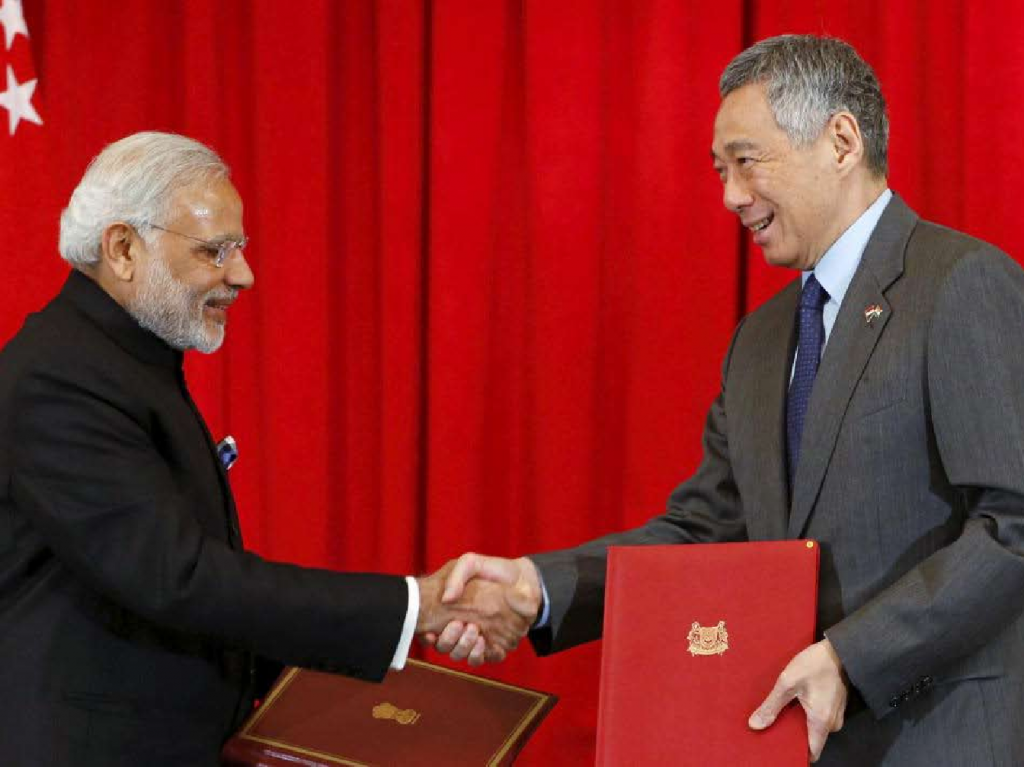
On 26TH January, 1.25 billion Indians had the honour to host 10 esteemed guests — leaders of ASEAN nations — at India’s republic Day celebrations in New Delhi. on Thursday, I had the privilege to host the ASEAN leaders for the Commemorative Summit to mark 25 years of ASEAN-India Partnership. Their presence with us is an unprecedented gesture of goodwill from ASEAN nations. responding to this, on a winter morning, India has come out to greet them in a warm embrace of friendship. This is no ordinary event. It is a historic milestone in a remarkable journey that has brought India and ASEAN in a deepening partnership of great promise for their 1.9 billion people, about one-fourth of human kind. The India-ASEAN partnership may be just 25 years old. But, India’s ties with Southeast Asia stretch back more than two millennia. Forged in peace and friendship, religion and culture, art and commerce, language and literature, these enduring links are now present in every facet of the magnificent diversity of India and Southeast Asia, providing a unique envelope of comfort and familiarity between our people.
“More than two decades ago, India opened itself to the world with tectonic changes. And, with instincts honed over centuries, it turned naturally to the East. Thus, began a new journey of India’s reintegration with the East”
More than two decades ago, India opened itself to the world with tectonic changes. And, with instincts honed over centuries, it turned naturally to the East. Thus, began a new journey of India’s reintegration with the East. For India, most of our major partners and markets — from ASEAN and East Asia to North America — lie to the East. And, Southeast Asia and ASEAN, our neighbors by land and sea, have been the springboard of our Look East and, for the last three years, the Act East Policy.
Along the way, from dialogue partners, ASEAN and India have become strategic partners. We advance our broad-based partnership through 30 mechanisms. With each ASEAN member, we have growing diplomatic, economic and security partnership. We work together to keep our seas safe and se- cure. Our trade and investment flows have multiplied several times. ASEAN is India’s fourth largest trading partner; India is ASEAN’s seventh. Over 20 per cent of India’s outbound in- vestments go to ASEAN. Led by Singapore, ASEAN is India’s leading source of investments. India’s free trade agreements in the region are its oldest and among the most ambitious anywhere.
Air links have expanded rapidly and we are extending highways deep into continental Southeast Asia with new urgency and priority. Growing connectivity has reinforced proximity. It has also put India among the fastest growing sources of tourism in Southeast Asia. Over a 6 million strong Indian diaspora in the region — rooted in diversity and steeped in dynamism — constitutes an extraordinary human bond be- tween us.
Thailand

Thailand has emerged as an important trading partner of India in ASEAN and is also one of the important investors in India from ASEAN. Bilateral trade between India and Thailand has more than double over the last decade. relations between India and Thailand are extensively spread across many areas. We are important regional partners linking South and Southeast Asia. We cooperate closely in the ASEAN, East Asia Summit and Bimstec (the Bay of Bengal Initiative for Multi-Sectoral Technical and Economic Cooperation), as also in the frameworks of Mekong Ganga Cooperation, Asia Cooperation Dialogue and Indian ocean rim Association. Thailand Prime Minister’s state visit to India in 2016 has made a long-lasting impact on bilateral relations.
The whole of India mourned with their Thai brothers and sisters the demise of the great and popular King Bhumibol Adulyadej. The people of India also join the friendly people of Thailand in praying for the long, prosperous and peaceful reign of the new king, His Majesty King Maha Vajiralongkorn Bodindradebayavarangkun.
Vietnam
The traditionally close and cordial relations have their historical roots in the common struggle for liberation from foreign rule and the national struggle for independence. Leaders like Mahatma Gandhi and President Ho Chi Minh led our peoples in the heroic struggle against colonialism. During the visit of Prime Minister Nguyen Xuan Phuc to India in 2007, we signed the strategic partnership agreement. This strategic partnership has grown into a Comprehensive Strategic Partnership with my visit to Vietnam in 2016.

India’s relations with Vietnam are marked by growing economic and commercial engagement. Bilateral trade be- tween India and Vietnam has increased about 10 fold in 10 years. Defence cooperation has emerged as a significant pillar of strategic partnership between India and vietnam. Science and technology is another important area of cooperation be- tween India and vietnam.
Myanmar
India and Myanmar share a land-border of over 1,600 kms as well as a maritime boundary. religious and cultural traditions flowing from our deep sense of kinship and our common Buddhist heritage bind us as closely as does our shared historical past. Nothing illuminates it more gloriously than the gleaming tower of Shwedagon Pagoda. The cooperation to restore Ananda Temple in Bagan with assistance of the Archaeological Survey of India also is emblematic of this shared heritage

During the colonial period, political bonds were forged between our leaders, who displayed a great sense of hope and unity during our common struggle for independence. Gandhi ji visited Yangon several times. Bal Gangadhar Tilak was deported to Yangon for many years. The clarion call of Netaji Subhash Chandra Bose for India’s Independence stirred the souls of many in Myanmar.
Our trade has more than doubled over the last decade. our investment ties are also robust. Development cooperation has a significant role in India’s relations with Myanmar. This assistance portfolio is presently worth over $1.73 billion. India’s transparent development cooperation is in line with Myanmar’s national priorities and also builds synergy with the Master Plan of ASEAN Connectivity.
Singapore
Singapore is a window to the heritage of India’s ties to the region, the progress of the present and the potential of the future. Singapore was a bridge between India and Asean. Today, it is our gateway to the East, our leading economic partner and a major global strategic partner, which resonates in our membership in several regional and global forums.

Singapore and India share a strategic partnership. our political relations are infused with goodwill, warmth and trust. our Defence ties are among the strongest for both. our economic partnership covers every area of priority for our two nations. Singapore is India’s leading destination and source of investments. Thousands of Indian companies are registered in Singapore.
Sixteen Indian cities have over 240 direct flights every week to Singapore. Indians make up the third-largest group of tourists in Singapore. Singapore’s inspirational multiculturalism and respect for talent have nurtured a vibrant and dynamic Indian community that is contributing to deeper co-operation between our nations.
Malaysia
The contemporary relations between India and Malaysia are quite extensive and spread across many areas. Malaysia and India share strategic partnership and we cooperate in a number of multilateral and regional fora. Malaysian Prime Minister’s state visit to India in 2017 has made a long-lasting impact on the bilateral relations.

Malaysia has emerged as the third largest trading partner of India in ASEAN and is one of the important investors in India from ASEAN. Bilateral trade between India and Malaysia has increased more than two-fold in 10 years.
India and Malaysia have a bilateral Comprehensive Economic Cooperation Agreement since 2011. This Agreement is unique in the sense that both sides have offered ASEAN Plus commitments in trade in goods and have exchanged WTO Plus offers in trade in services. The Revised Double Taxation Avoidance Agreement between the two countries, signed in May 2012, and the MOU on Customs Cooperation, signed in 2013 further facilitate our trade and investment cooperation.
Philippines
I had a very satisfying visit to the Philippines a little over two months ago. In addition to attending the ASEAN-India, EAS and related Summits, I had the pleasure of meeting President Duterte and we had extensive discussions on how to carry forward our warm and problem-free relationship. We are both strong in services and our growth rates are amongst the highest among major countries. our business and trade potential holds great promise.

I laud President Duterte’s commitment to bringing about inclusive development and to fighting corruption. These are areas where both countries can work together. We are happy to share our experience with the Philippines in universal ID cards, financial inclusion, making banking accessible to all, facilitating direct transfer of benefits, and in promoting cash- less transactions. Making affordable medicines available to all is another priority area for the government of the Philip- pines that we are ready to contribute to. From Mumbai to Marawi, terrorism knows no boundaries. We are enhancing our cooperation with the Philippines in facing this common challenge.
Brunei

Bilateral trade between India and Brunei has more than doubled over the last decade. India and Brunei share common membership of UN, NAM, Commonwealth, ARF, etc., and as developing countries with strong traditional and cultural ties, Brunei and India enjoy a fair degree of commonality in their perceptions on major international issues.
The visit of the Sultan of Brunei to India in May 2008 was a landmark in India-Brunei relations. vice-President of India visited Brunei in February 2016.
Lao PDR

Relations between India and Lao PDR are extensively spread across many areas. India has been actively involved in power transmission and agricultural sectors in Lao PDR. Today, India and Lao PDR cooperate in a number of multilateral and regional fora.
While the trade between India and Lao PDR is still below potential, India has extended Duty Free Tariff Preference Schemes to Lao PDR, encourage exports of goods from Lao PDR to India. We also have immense opportunities in services trade that goes in building the economy of Lao PDR. Implementation of the ASEAN-India Services and Investment Agreement would help facilitate our services trade.
Indonesia
Separated by a mere 90 nautical miles in the Indian ocean, India and Indonesia share a continuity of civilizational relationship that spans over two millennia. Whether it is the annual Balijatra celebrated in odisha or the legends of ramayana and Mahabharata, which are visible across the entire landscape of Indonesia, these unique cultural threads umbilically bind the peoples of Asia’s two largest democracies in a special neighbourly embrace.

“Unity in diversity” or Bhinneka Tung-gal Ika is also a key facet of the shared societal value structures that both countries celebrate, as also the common values of democracy and rule of law. Today, as strategic partners, our cooperation spans across the entire gamut of political, economic, Defence & security, cultural and people-to-people fields. Indonesia continues to be our largest trading partner in ASEAN. Bilateral trade between India and Indonesia increased 2.5 times in the last ten years. President Joko Widodo’s State visit to India in 2016 has made a long- lasting impact on the bilateral relations.
Cambodia
The traditional and friendly relations between India and Cambodia are deeply rooted in civilizational ties. The magnificent structure of Angkor Wat temple is a glorious testimony and grand symbol of our ancient historical, religious and cultural links. India was proud to undertake restoration and preservation of Angkor Wat temple during the difficult period from 1986-1993.
India continues this valuable association in the ongoing restoration of TaProhm temple. After the collapse of Khmer rouge regime, India was the first country to recognize the new Government in 1981. India was also associated with the Paris Peace Accord and its finalisation in 1991. These traditional bonds of friendship have strengthened through regular exchange of high-level visits. We have expanded our cooperation in diverse fields such as institutional capacity building, human resource development, developmental and social projects, cultural exchanges, Defence cooperation, tourism and people-to- people contact.

In the ASEAN context, and on various global platforms, Cambodia is an important interlocutor and a supportive partner for India. India is committed to remain a partner in Cambodia’s eco- nomic development and looks forward to further deepen its traditional ties.
And, India and ASEAN are doing much more. our partnership in ASEAN- led institutions like East Asia Summit, ADMM+ (the ASEAN Defence Ministerial Meeting Plus) and ARF (the ASEAN regional Forum) are advancing peace and stability in our region. India is also an eager participant in the regional Comprehensive Economic Partnership Agreement, seeking a comprehensive, balanced and fair agreement for all 16 participants.
The strength and resilience of partnerships come not just from arithmetic of numbers, but also from the underpinnings of the relationship. India and ASEAN nations have relations free from contests and claims. We have a common vision for the future, built on commitment to inclusion and integration, belief in sovereign equality of all nations irrespective of size, and support for free and open pathways of commerce and engagement.
The ASEAN-India partnership will continue to grow. With the gift of demography, dynamism and demand — and with rapidly maturing economies
— India and ASEAN will build a strong economic partnership. Connectivity will increase and trade will expand. In an era of cooperative and competitive federal- ism in India, our states are also building productive cooperation with Southeast Asian nations. India’s Northeast is on a resurgent path. Links with Southeast Asia will accelerate its progress. In turn, a connected Northeast will be a bridge to ASEAN-India ties of our dreams. As Prime Minister, I have attended four annual ASEAN-India Summits and East Asia Summit. These have reinforced my conviction in ASEAN unity, centrality and leadership in shaping the region in this vision.
This is a year of milestones. India turned 70 last year. ASEAN reached the golden milestone of 50 years. We can each look to our future with optimism and to our partnership with confidence.
At 70, India exudes the spirit, enterprise and energy of its young population. As the fastest growing major economy in the world, India has become the new frontier of global opportunities and an anchor of stability of the global economy. With every passing day, it is easier and smoother to do business in India. I hope that ASEAN nations, as our neigh- bours and friends, will be an integral part of New India’s transformation.
We admire ASEAN’s own progress. Born when Southeast Asia was a theatre of a brutal war and a region of uncertain nations, ASEAN has united 10 countries behind a common purpose and a shared future. We have the potential to pursue higher ambitions and address the challenges of our times: from infrastructure and urbanization to resilient agriculture and a healthy planet. We can also use the power of digital technology, innovation and connectivity to transform lives at unprecedented speed and scale.
A future of hope needs a solid bed- rock of peace. This is an age of change, disruptions and shifts that comes only rarely in history. ASEAN and India have immense opportunities — indeed, enormous responsibility — to chart a steady course through the uncertainty and turbulence of our times to a stable and peaceful future for our region and the world.
Indians have always looked East to see the nurturing sunrise and the light of opportunities. Now, as before, the East, or the Indo-Pacific Region, will be indispensable to India’s future and our common destiny. The ASEAN-India partnership will play a defining role in both. And, in Delhi, ASEAN and India renewed their pledge for the journey ahead.
Govt banks big time on Modicare
by Prashant Tewari / 30 March 2020‘No reimbursement scheme, it will be cashless’
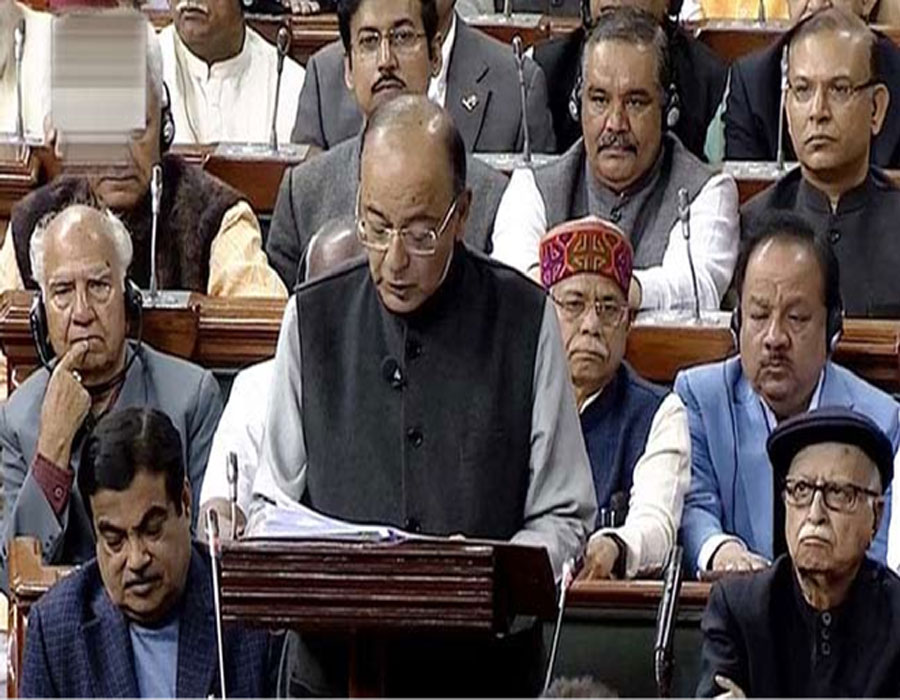
Finance minister Arun Jaitley said that the world’s biggest health cover plan announced in the Union Budget will be cashless and not a reimbursement scheme, and promised more funds if required depending on the rollout later next financial year.
The National Health Protection Scheme (NHPS) touted as ModiCare envisaged to provide medical cover of up to Rs 5 lakh to over 10 crore poor and vulnerable families, constituting 40% of the population.
“It takes care of hospitalization, the secondary and tertiary care. obviously, it will involve various state hospitals and selected private hospitals. It can be on trust model; it can be on insurance model. It’s not on reimbursement mod- el because too many complaints come on the reimbursement model,” he said.
The model is now being worked out between the NITI Aayog and the health ministry, he said, adding that the date of implementation would be next financial year and sometime in the course of the year it will be worked out.
If assuming the model to be insurance led, the premium shrink with the increase in number of policy holders, he said at an event organized by a magazine. The scheme although appreciated by experts also raises apprehension about its implementation and the initial corpus of just Rs 2,000 crore.
Assuring that the scheme will be entirely state funded, Jaitley said initial funds of Rs 2,000 crore has been allocated and whatever funds required, as the scheme rolls over, would be made available.
“In the coming year, I see more comfortable situation as far as revenues are concerned because the graphs as far as direct tax is concerned would move very fast,” he said.
Following demonetisation and implementation of Goods and Services Tax, the number of direct tax assesses have gone up … once anti-evasion measures, I do expect a little bump up in the GST collection also. I don’t see revenue going to be a major challenge in that,” he said.
Jaitley in the Budget speech said, “We are all aware that lakhs of families in our country have to borrow or sell assets to receive indoor treatment in hospitals. Government is seriously concerned about such impoverishment of poor and vulnerable families. Present RSBY provide annual coverage of only Rs 30,000 to poor families.”
Several state governments have also implemented supplemented health protection schemes providing varying coverage, he had said in the Lok Sabha.
The finance minister also advocated that the central and the state government can pool in resources for health care to achieve efficiency.
He also emphasized on having better hospitals in rural areas even though Tier I and Tier II cities have good hospitals.
Setting up of hospitals in various districts is the state subject under the federal structure, he added.
Prashant Tewari – Writer is Editor of Opinion Express and regular columnist to The Pioneer.
Marking a paradigm shift
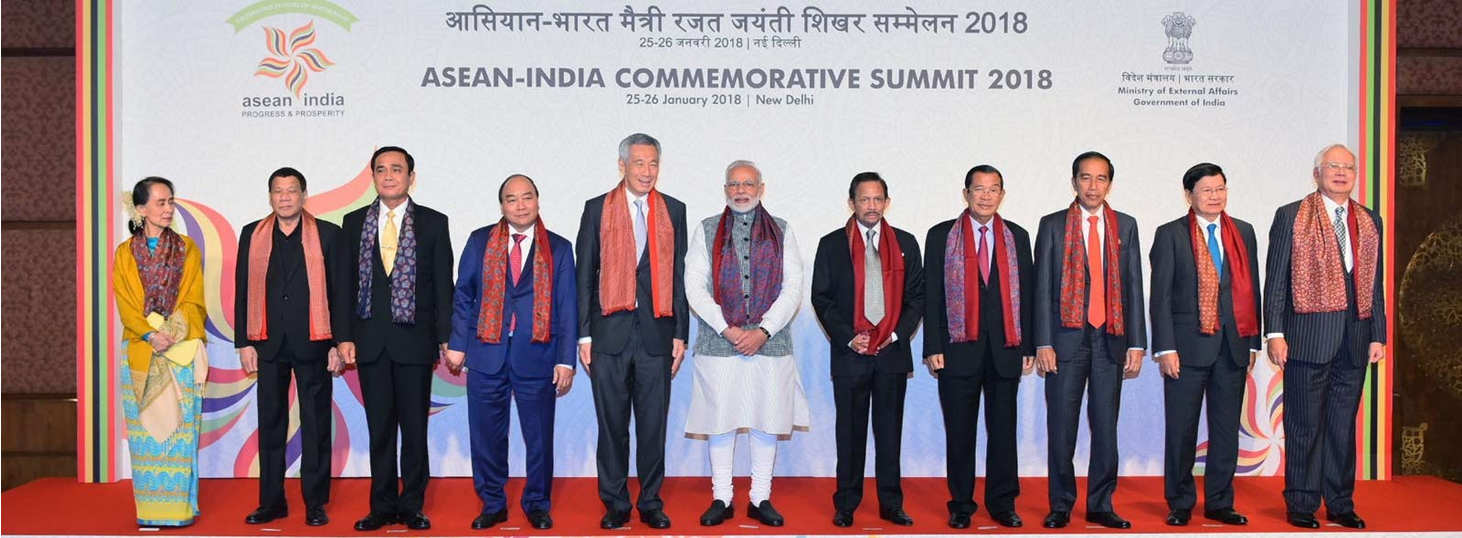
by Srihari Avuthu / 01 March 2020The coming together of all 10 Asean heads as guests of honour for the Republic Day parade signals how regional powers like India have evolved to play a vital role in modern international architecture.
Regional organisations are increasingly becoming a vital feature of modern international architecture. The Association of South-East Asian Nations (ASEAN), which completed its golden jubilee recently in 2017, is a regional grouping of 10 separate nation-states - Brunei, Cambodia, Indonesia, Laos, Malaysia, Myanmar, Philippines, Singapore, Thailand and Vietnam. It was formed by five countries, which later extended to 10 members.
ASEAN also shares wide-ranging partnerships with various other regional organizations and countries, such as India, China, Japan, South Korea, Australia and United States. It is the most institutionalized regional association in Asia and a classic example of successful regional multilateralism. Most importantly, it has not remained a mere talk shop, but has embraced economic integration and has, thereby, slowly transformed a once-impoverished ASEAN region with some war-torn countries into a dynamic economic powerhouse.
The combined Asean Gross Domestic Product rose from $95 billion in 1970 to $2.55 trillion in 2016 and is expected to reach $6.4 trillion by 2027. If it were a single entity, ASEAN would be ranked as the sixth-largest economy in the world just behind the US, China, Japan, Germany, and the UK. France is also at about the same position. ASEAN is projected to emerge as the fourth-largest economy in the world by 2050, with some describing it as the growth engine of the world.
"Asean also shares wide ranging partnerships with various other regional organizations and countries, such as India, China, Japan, South Korea, Australia and United States. It is the most institutionalized regional association in Asia and a classic example of successful regional multilateralism."
All the first five ASEAN countries — Thailand, Philippines, Indonesia, Malaysia and Singapore — which once suffered varying degrees of internal communist insurgencies, managed to surpass them. Asean’s success has resulted in the fundamental transformation of geopolitics and geoeconomics in Southeast Asia. Its diplomatic weight bears footprints not only in Southeast Asia and East Asia but also in the broader Indo-Pacific region and in the global arena.
India-Asean partnership: India and Asean share geographical proximity and a robust people-to-people relationship which is deeply rooted in history and culture. on seeing deep cultural imprints, Rabindranath Tagore, during his visit to Indonesia lamented, “I see India everywhere, but I do not recognize it.” Even today, in Indonesia’s capital Jakarta, statues placed at major traffic intersections depict figures from the ramayana and the Mahabharata. Jeferysng, a former diplomat based in Bangkok and Kishore Mahbubani, dean of the Lee Kuan Yew School of Public Policy, National University of Singapore, in their jointly authored book, The ASEAN Miracle: A Catalyst for Peace, observe, “Many ordinary Southeast Asians are well acquainted with figures from, say, the ramayana and Mahabharata. Yet, they would be surprised to learn that these figures, which they consider to be part of their heritage, come from In- dia.”
"Perhaps no other country can match India’s long historical links with Southeast Asia. Ancient maritime trade routes had linked the Kalingas, Pallavas and the Cholas to Southeast Asia."
Perhaps no other country can match India’s long historical links with Southeast Asia. Ancient maritime trade routes had linked the Kalingas, Pallavas and the Cholas to Southeast Asia. Barring Vietnam and the Philippines, all other eight Asean countries share some sort of cultural roots in or exchanges with the Indian civilisation.
India’s Look East Policy, articulated during the Government of PV Narasimha Rao, has been re-phrased and energized as ‘Act East Policy’ by the incumbent Government and its being in full gear is visible from the republic Day invite to all Asean leaders. That India-Asean partnership is on the upward trajectory is evident from the fact that the partnership had graduated from Sectoral Dialogue Partnership in 1992 to Full Dialogue Partnership in 1996 to Summit Level Partnership in 2002 and then to Strategic Partnership in 2012. ASEAN is home to about seven million Indian diasporas. All ASEAN countries are among the list of countries to which India’s e-visa facility is available. India has set-up Asean-India Centre (AIC) in New Delhi in 2013 and a separate Asean diplomatic mission in Jakarta in 2015 in order to smoothly and speedily facilitate India’s engagements with ASEAN. Currently, 30 different dialogue mechanisms, focusing on a range of sectors are operational.
Mutually beneficial engagement: India-Asean relations are mutually advantageous and beneficial on economic, cultural and strategic fronts. India-Asean economic ties are gradually deepening. Statistics of 2016 show, Asean was India’s fourth-largest trading partner, accounting for 10 per cent of India’s total trade, whereas India was Asean’s seventh-largest trading partner. India’s production linkages with ASEAN countries, especially with Malaysia in electronics, with Thailand in automobiles, with Singapore in digital networks, are strengthening. There is rapid growth in India’s textile trade with Vietnam.
India’s mostly service-oriented economy has got potential to compliment the mostly manufacturing-based economy of ASEAN. India is a member of Asean led regional Comprehensive Economic Partnership (RCEP), which when implemented, is likely to cover 40 per cent of the world’s population, 40 per cent of world trade and 33 per cent of global GDP. The Government of the State of Andhra Pradesh has availed support from Singapore in designing master plan of its upcoming new capital Amaravati and is also drawing collaboration with it for infrastructure development in its new capital city.
North-East India is looked at by some as being at the frontier of India at a remote corner. But if South Asia and Southeast Asia are taken as a continuum, which is a geographical reality, then North-East India is right at the middle of it. India needs to tap this advantage to its full potential. Whereas over three million Indian tourists go to Asean countries every year, only about seven lakh tourists from ASEAN come to India.
China and Japan are more preferred tourist destinations for ASEAN people. With improved connectivity, geared up infrastructure, enhanced awareness, North-East India, with its charming tourist destinations, should be able to attract a greater number of tourists from ASEAN countries. Potential for land-based international connectivity is the highest in North-East. Borders must be made vibrant with land ports and North-East must be evolved as a hub of healthcare and education facilities besides tourism.
Both India and Asean are rich with diversity and nurture a culture of tolerance and co-existence. Ecosystem of peace provided by ASEAN and its live illustration of the culture of co-existence may hopefully help moderate the aggressive impulses of China, which has got economic interests in ASEAN. India and Asean collaboration would be promising in securing trade routes, ensuring freedom of navigation and sustaining a rules-based order in the In- do-Pacific region in particular, which is vital for economic and security interests all stakeholders.
Republic Day invite to Asean: India has invited all heads of states of all 10 ASEAN countries to take part as chief guests in upcoming Republic Day parade on January 26. Except in 1956, 1968 and 1974, when India had two republic Day guests, in all other years since 1950, there was only one chief guest each year. Hosting 10 heads of states as Chief Guests on republic Day parade this year is a unique symbolic gesture, underlining the importance India attaches to further strengthening friendly relations with all ASEAN countries. New Delhi will also host an Asean-India commemorative summit on January 25, which marks the silver jubilee of the establishment of dialogue partnership between India and ASEAN. India-Asean partnership can play a vital role in shaping 21ST century as the Asian century.
(The writer is an advocate & Assistant Editor, India Foundation Journal. Views expressed are personal)
Trump - Modi: Salesmen
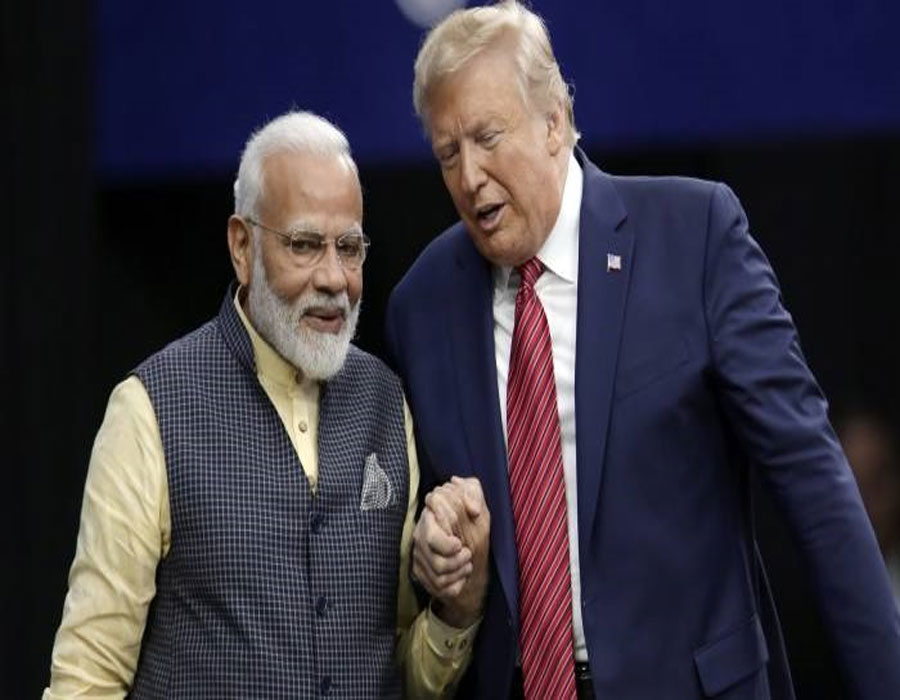
by Prashant Tewari / 01 March 2020There may not be too many big takeaways from the visit of US President Donald Trump to India as the trajectory of Indo-US relations has been only going up despite regime changes with respective heads of State striking up some sort of optical chemistry. The civil nuclear deal began a new season of engagement, one that has helped each fill-up the other’s strategic requirement. For the US, there’s our sizeable market and value as a bulwark against a hegemonic China in the region. For India, that has meant de-hyphenation from Pakistan and the US’ own narrowed down zoom of our neighbour’s relevance in the strategic backyard of Afghanistan, humouring it within that context. It has also meant US endorsement of the changed status of Kashmir. So, this visit would have yielded as much had Trump or Modi not pushed Yeh Dosti visuals. The continuity of the Indo-US relations is no more in doubt. The greatest takeaways are, therefore, for the two men who are bound by a similar personality, politics and ideology, of justifying even autocracy and divisive excesses as putting their nations first. To that extent, Trump has wisely chosen India to build up momentum for his campaign at home, besmirched by the impeachment move. He has simply used India’s demographics and population to prove a US President has magnified his global popularity.
Hence the preoccupation with the scale of events and spectacles. Considering that he has yet to broker a worthwhile truce despite his global ambitions to be seen as a peacemaker or a big enough economic pact that justifies his protectionist policies, the big defence deals with India will give him a talking point about generating jobs back home. Apart from the billions that Indian companies will be investing in the US energy market. For Modi, the ceremonial genuflection is intended for the same reason, to prove that his leadership has the endorsement of none other than the US President and that for all the opposition by both political parties and civil society at home, he has the US-sanctioned trust and a broader silence on Kashmir, no matter the pyrrhic bursts of angst. Yes, there’s a subtext in the larger hyperboles of stronger ties and comradeship, like the mention of India’s diversity as a democracy and Pakistan’s efforts at curbing terrorism, albeit at US insistence. Also, Trump renewed his willingness to mediate between India and Pakistan on Kashmir, leaving it up to Modi to decide. He even mentioned religious freedoms, saying a lookback would prove that India had worked hard for religious freedom and that Modi wasn’t against it. That was a not so subtle hint about the historical timeline and the changed contemporary situation. And while he announced that India was all for Afghan peace, the Government would be anxious about the Taliban’s role in the new regime, one that would be controlled by Pakistan and one it would use to extract some concessions from the US that is dependent on it. The US has definitely softened towards our neighbour of late. And in insisting that the 5G network be used in a transparent and accountable manner and not as a conduit of censorship, there was a hidden message for India, too, though the target implied was China. Clearly, Trump doesn’t forget to remind us of our weaknesses and his coercive strengths. There was a gentle heave, not a hard push though.
The economic partnership is a work in progress, and India won’t be as servile as the US expects it to be. Trump has been punishing on that front, taking us out from the Generalized System of Preferences List, saying India is no longer a “developing” country. The tit-for-tat tariff war continues and although we have cut import duties on the Harley Davidson by about 50 per cent, Trump reiterated it again.
(The writer is Prashant Tewari, Editor-In-Chief of The Opinion Express Group)
Modi government should have planned CAA at better time
by Prashant Tewari, Editor-in-Chief / 01 February 2020The nationwide conflict over the Citizenship Amendment Act (CAA) could not have come at a worse time as economic activities are at a minimal; industrial production is at its lowest; consumption is hit; purchasing power is ebbing and the prices of commodities are skyrocketing. Food inflation jumped to a 71-month high in November, adding to the people’s woes. Now these countrywide protests and violence against the Citizenship Amendment Act (CAA), leading to disruptions in traffic, transportation, internet and telecom services, are resulting in more losses and delays in production, which are not easy to assess. However, industry leaders maintain a studied silence over such issues lest they be tagged as political activists.
The Government should have launched a move to educate people on the CAA through public discussion, debate and attempt a national consensus. It also might have chosen a better time to bring the CAA so that the last fiscal quarter did not become victim of the public outcry that it should have anticipated in the first place. Now the fiscal health of the country has become a victim of the violence that has gripped the nation for days together. This announcement has sparked off yet another political battle between the Centre and the State, worsening the already tenuous relationship between the two. Many States and even a half-ally of the BJP, the BJD supremo and Odisha Chief Minister Naveen Patnaik, who supported the CAA earlier, is opposing the NRC now.
The CAA agitation has added to the woes of the Government also as it has come at a time when preparations for Budget presentation have begun and States are demanding their piece of the Goods and Services Tax (GST) pie. The States in their interactions with Finance Minister Nirmala Sitharaman are complaining that delay in release of their share of the GST is causing immense problems for them and affecting their financial and economic activities. For a better future, they are also seeking an increase in their fiscal deficit limits.
CAA is vital for national security because India is having porous borders with several countries, it may lead to huge influx of undesired people leading to further pressure on ever-increasing population. Secondly, the distribution of subsidies for the native poor people is stressed and Indian national’s needs are compromised. The Centre needs to call all stakeholders to the negotiating table to help boost the economy.
2G scam verdict - massive crisis of confidence?
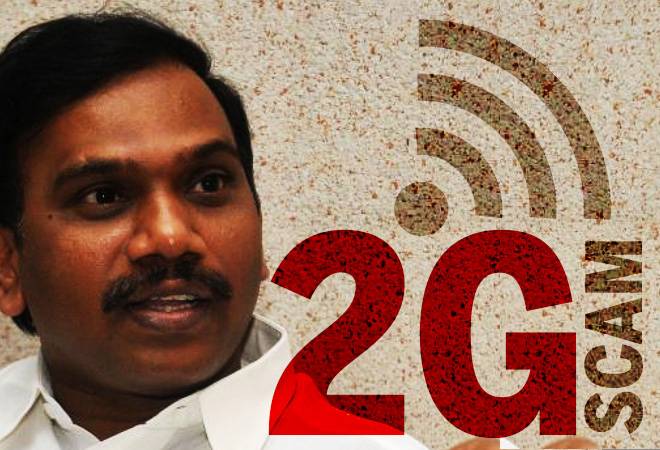
by J Gopikrishnan / 01 February 2020Proofs and documents that convinced the Supreme Court couldn’t satisfy the trial court!
The trial court judgment on 2G Scam delivered by the Special Judge acquitting all the accused in India’s biggest loot is flabbergasting. The 1552-page judgment just ignores the findings of the Supreme Court judgment delivered by Justice GS Singhvi and Justice AK Ganguly cancelling all the 122 telecom licences and severely indicting the then Telecom Minister A Raja. The trial court judgment delivered by Special Judge OP Saini simply ignored the entire concrete money trail data provided by CBI and ED. Perhaps this was one of the rarest cases CBI and ED provided kickback details which happened through bank transfers. Interestingly, ignoring all such solid evidences, Judge OP Saini said that these were routine business transfers.
Supreme Court’s Judgment emphasis on each violation, citing the appreciation of each evidence submitted. This landmark judgment was the outcome of the Public Interest Litigation filed Subramanian Swamy and Prashant Bhushan and the evidences submitted by them and the evidences submitted by CBI and Enforcement Directorate (ED) in sealed covers. The apex court judgment clearly says the main accused then Telecom Minister A. Raja acted in dishonest way.
“The exercise undertaken under the leadership of the Minister (A.Raja) was wholly arbitrary, capricious and contrary to public interest apart from being violative of the doctrine of the equality.....
“The material produced before the Court shows that the Minister (Raja) wanted to favour some companies at the cost of public exchequer,” said the Judgment delivered by Supreme Court on February 2, 2012.
The apex court judgment went on against the accused Telecom Minister: “Arbitrary action of the Minister (Raja) though appears to innocuous was actually intended to benefit some of the real estate companies who did not have any experience in the dealing the telecom services.”
It is intriguing that how a trial judge’s verdict can simply say the evidences provided were not enough and sufficient. How the documents convinced the Supreme Court was not acceptable to trial court? This is not a murder case to give benefit of doubts. This is a case under Prevention of Corruption Act based on solid evidence and not to ponder on intention of the accused.
Now mysteriously the trial court judgment says there was no convincing evidence. It was interesting to note that in his own judgment dated February 4, 2012, Judge OP Saini said he has enough evidence to prosecute Raja. This was on the petition by Subramanian Swamy to prosecute then Finance Minister P Chidambaram for engaging in conspiracy with Raja in the price-fixing and approving the allotment of the licences. In that bad judgment also judge Saini gave clean chit to Chidambaram that though there are enough evidence on the criminality of Raja, Swamy failed to prove the criminality of Chidambaram! The judgment agrees that documents provided by Swamy shows that Chidambaram and Raja unitedly fixed the base price of controversial allotments in 2FG Scam, Swamy could not establish the evidence on association of Chidambaram invited criminality through evidences show Raja’s criminality.
Judge Saini wrote in his Order on Feb 2, 2012: “I may add that there is such incriminating material against other accused persons, who stand charged and facing trial.” And the same Judge now claims he was waiting for evidences. Till Feb 2012, Saini firmly believed he had got all incriminating evidences against Raja including criminality.
Was it Swamy’s job to prove Chidambaram’s criminality? It would have been fair if the judge or the apex court ordered CBI to prove Swamy’s allegation against Chidambaram. Anyway, it is a known fact that Courts won’t so easily go against top sitting Ministers including Chief Minister and Prime Minister after the landmark Allahabad High Court judgment indicted Prime Minister Indira Gandhi, which ultimately lead to imposition of Emergency. After this, there is an open secret that there is an unwritten rule for avoiding friction between Judiciary and Executive.
It is a big question how the evidences of Raja’s criminality detailed in the February 4, 2012 judgment by Judge OP Saini now not convincing when he acquitted main accused Raja in December 21, 2017. It is very sure many things have flown under bridge in these six years.
"Judge Saini wrote in his Order on Feb 2, 2012: “I may add that there is such incriminating material against other accused persons, who stand charged and facing trial.”
Shockingly at many areas the Judge praises Minister A.Raja and even termed that some proofs shows that Raja is an accommodative persons and given freedom to bureaucrats. Judge blames former Telecom Secretary DS Mathur in very unkind way and wonders how democratically elected Minister can work with such bureaucrats. The Judge justifies the deposition of whistle-blower Aseervatham Achary that he heard Raja shouting at Mathur for not toeing the line. Actually, Mathur deserves appreciation for not allowing Raja allot spectrum and licences till his retirement December 31, 2007. Within 10 days new Secretary Siddaharth Behura, who was Raja’s co-accused approved the dubious issue of allotting 122 licences.
But this yardstick was not applicable to another democratically elected Law Minister HR Bhardwaj. Judge in his judgment wonders why the Law Minister objected and suggested for Empowered Group of Ministers in deciding on spectrum allocation. The trial judge simply says Law Minister was wrong, when Supreme Court appreciated HR Bhardwaj’s decision. The trail judge also wonders why Law Secretary is always sending files to Law Minister!!!.
"Shockingly at many areas the Judge praises Minister A.Raja and even termed that some proofs shows that Raja is an accommodative persons and given freedom to bureaucrats. Judge blames former Telecom Secretary DS Mathur in very unkind way and wonders how democratically elected Minister can work with such bureaucrats."
After ignoring the Supreme Court judgment and evidences mentioned in it blatantly the trial court judgement in many areas vents anger against Investigation and Prosecution. Being a regular visitor in the 2G Court on almost all days, I have witnessed on many many occasions Judge Saini praising the Supreme Court appointed Special Public Prosecutors (SPP) UU Lalit and Anand Grover. Judge Saini agreed to add charging Raja and other accused for Breach of Public Trust under IPC 409 as per the recommendation to SPP UU Lalit during Framing of Charges. Lalit lead the majority part of Prosecution till August 2014, till he was elevated as Supreme Court Judge. The crossing of Prosecution was ended by November 2013 under Lalit. Anand Grover took charge from September 2014 and lead the Final Arguments. Many times, I have witnessed the Judge was fully agreeing and appreciating the arguments and evidences put forward by UU lalit and Anand Grover. It is intriguing to see the judgment of OP Saini, now accusing and ruing and complaining against Prosecution and Investigation. It was fun to read his observation that he waited whole day for evidences which look similar to the dialogue of the judge character in the famous sarcastic move on judicial system – ‘Jolly LLB.’
I have witnessed the appreciation of Judge OP Saini on many deposition of star witnesses like the 2G Scam whistleblower Aseervatham Achary and then TRAI Chairman Nripendra Mishra, currently Principal Secretary to Prime Minister Narendra Modi.
"It is intriguing to see the judgment of OP Saini, now accusing and ruing and complaining against Prosecution and Investigation. It was fun to read his observation that he waited whole day for evidences which look similar to the dialogue of the judge character in the famous sarcastic move on judicial system – ‘Jolly LLB.’ "
It is interesting to note in the judgment, Judge OP Saini says Nripendra Mishra proved that Raja violated TRAI Act citing the rovisions. What was proved by Nripendra Mishra? He proved during his deposition that among the 122 licenses allotted 85 belong to new companies, the shell companies of real estate companies owned by accused like Shahid Balwa, Vinod Goenka and Sanjay Chandra. As per the TRAI Act, it needs TRAI’s mandatory clearance to allow a new firm to operate in telecom sector. This big violation was the crux in the Supreme Court Judgment cancelling licenses based on the PILs of Subramanian Swamy and Prashant Bhushan. This was the major evidence cited in CAG Report and CBI’s charges. And during his deposition also then TRAI Chairman Nripendra Mishra proved it, says Judge Saini in his controversial judgment. Then how he acquitted all simply and complaining lacked evidences?
The judgment simply ignores the deposition of whistleblower Aseervatham Achary to give clean chit to Raja and Kanimozhi. Judge says as Achary had political ambitions and so can’t be taken his deposition at value. Having political ambition is a crime? How can ignore the facts provided by CBI corroborated by Achary’s deposition?
What is the basic of 2G Scam and evidence provided?
- Raja allotted telecom license in 2008 at a price fixed in 2001 by violating the Cabinet decision of October 2003 and TRAI recommendations. In 2001, there were only three Million mobile users and in 2008 mobile users number surged to 360 million. So, he made a gross loss to the exchequer and did favouritism.
- Raja preponed the last date of application from October 1, 2007 to September 25. How can you prepone? On January 10, 2008 (scam day) at 2:30 pm Telecom Department issues a controversial press release on this controversial decision.
- The press release also said that that day itself all operators have to pay the license fee ranging up to Rs.165 crore in Demand Draft between 3:30 pm to 4:30 pm!!!!! How can you make high-value Demand Drafts in an hour?
- CBI and CAG found all these Demand Drafts were made well in advance and some companies a week ago. This clearly shows that all the preferred companies were given information in advance. If this not criminal conspiracy then what is criminal conspiracy all about? Aseervatham Achary in his deposition corroborated these evidences saying who were all in touch with Raja on regular days before the scam day January 10, 2008.
- CBI and ED gave crystal clear bank transaction evidence of Rs200 crore kickback to DMK MP Kanimozhi from Swan Telecom owners benami companies in circuitous transaction. The money transferred between 2008 to 2009 were all of a sudden returned through banking channels hours after CBI summoned Raja in December 2010. Is this not an evidence of kickback, then what more proof CBI and ED can give? If this is not convincing to a Judge, what more we can say. As the laws on Contempt of Court implies strong provisions let me limit myself to say this is totally a BAD judgment.
"Raja preponed the last date of application from October 1, 2007, to September 25. How can you prepone? On January 10, 2008 (scam day) at 2:30 pm Telecom Department issues a controversial press release on this controversial decision."
What are the evidences of kickback:
- Bank transfers details of Rs.200 crore from Swan Telecom owners’ firms to DMK’s Kalagnar TV through circuitous route
- Bank transfer details of Rs.1.25 crore from Swan Telecom owners’ firm to Raja’s relatives’ company Green House promoters.
- Rs.65000/ month rental to Raja’s Private Secretary RK Chandolia’s home by Swan Telecom owners’ company.
The Judge termed all these concrete facts as routine business transfers. CBI and ED also took statement of Raja’s aide Sadhik Batch who admitted that full load of money bags were transported in a Tavera Car from Maharashtra to Chennai. Once when Sadhik Batcha counted the bags, he found two bags were missing and he beaten driver Krishnamoorthy. The Driver was put in illegal police custody and later they found that Diver after some months started travel agency by buying four vehicles. Weeks after this statement Sadhik Batcha was found dead in March 16, 2011. CBI produced Driver Krishnamoorthy to depose in court as witness. He was crying and telling judge, his life would be in danger and he can’t tell anything more that he said in the statement. The Judgment was totally insensitive to this stunning incident.
Government, CBI, Enforcement Directorate and Chief Prosecutor Anand Grover should immediately challenge this bad in law judgment by filing appeal in Delhi High Court. There should be a well-coordinated strategy in filing appeal to bring justice in this grand loot 2G Scam. We have seen the frauds committed by then tainted CBI Director Ranjit Sinha in mid-2014 and he was stripped by Supreme Court from meddling in 2G Scam probe and now he is facing investigation in trying to sabotage Coal Scam. Most of the accused were caught for regular night visiting at his home.
There are many such hurdles faced by Investigators. ED’s Investigating Officer Rajeshwar Singh is still facing all kind of hardships created by the corrupt politicians and corporates. Many times, Supreme Court has warned the Government on this. Recently also attempts were to shunt him out from ED as soon as after he attached Karti Chidambaram’s bank accounts in connection with Aircel-Maxis scam. We have seen the shunting of CBI Joint Director Ashok Tiwari to Himachal Road Transport Corporation for summoning Chidambaram in December 2014. It is high time for Prime Minister Narendra Modi to tighten and fix the Investigation and Prosecution in high profile corruption cases where all sort of unholy nexus working including judicial fixing. Niira Radia tapes remind us how then judgments were written by someone and transferring to certain judges in pen drives. These murky things have to end and it is the responsibility of the Modi led government which came to power on the promises in fight against corruption. At the end of the passing of the buck stops at Prime Minister Narendra Modi.
This trial court judgment is black chapter in the history of the judgments in the judiciary. This judgment shows how crony capitalism and corrupt lobbies survives and escapes. There are many factual errors in the trial court’s judgment, apart from many portions which are simply bad at law.
Fiat justitia ruat caelum: This famous Latin legal phrase means “Let justice be done though the heavens fall.” Let us be optimistic that higher forums of Indian judiciary will do justice in the bad judgment on the 2G trial court.
(The writer works with ‘The Pioneer’ daily’s New Delhi Bureau)
FREE Download
OPINION EXPRESS MAGAZINE
Offer of the Month