
News Destination For The Global Indian Community


News Destination For The Global Indian Community
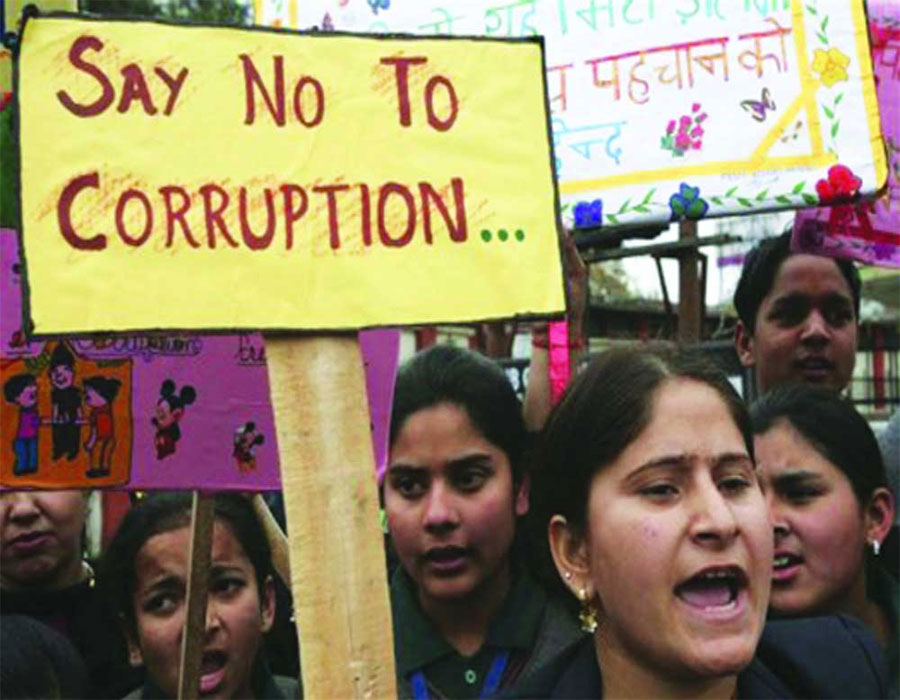
Institutional corruption kills the soul of vibrant democracy
by Prashant Tewari / 08 October 2020Rampant corruption is a way of life, an accepted evil in India. Today, the mega political scams are restricted but the crony capitalists have continued their practice unabated leading to a slowdown in technological advancement, a lack of competition and an era of monopolies. While we must give the present government some credit for its implementation of the GST to expand the formal economy platform, since the shadow economy leads to an unorganized workforce, where workers face problems regarding salaries, job security, contract agreements, working conditions, etc. An informal workforce hampers the growth of manufacturing firms through lower degrees of productivity. It should not be surprising that India is a country that largely consists of an informal workforce and the continuation will have an effect on both the quantitative and qualitative aspects of growth in the long run.
The present government was clear with its agenda when it came into power six years ago and to some extent the intention to get rid of corruption through the main economic reforms that the government introduced (demonetisation and GST). The reality of the situation however reflects the plain and simple fact that nothing has changed or it has gone worse. The PNB scam is a clear indication of this, and of course, the situation has been reflected in Transparency International’s global corruption index. A lower ranking for India compared to previous years is certainly a black mark on the BJP government’s report card. Bofors Scam, Spectrum Scam, CWG Scam, Fodder Scam, FCI Scam, Coal Scam, Aircel Maxis Scam, National Herald Scam, Banking Scams of Nirav Modi, Mehul Choksi, Vijay Mallya, Sandesara scam have largely gone in sleep mode. Congress or BJP, fraudsters have mastered the art of over-power the system.
All wings of democracy are infected by the corruption virus. Legislative, Executive, Judiciary and Media are overpowered by corporate money power. Today, Lok Sabha elections are heavily funded by corporate money hence irrespective of the outcome, they decide the leadership issue. The prime posting in the key government positions for bureaucrats is decided by a third party in consultation with the ruling elites to secure their interests. In recent times, the appointment of Judges in the higher judiciary is pushed by vested interest groups to safeguard their interests and lastly, the national media is completely controlled by select big pocket corporate houses directly or indirectly to set up a narrative that suits the interest of their business. The essence of democracy is crushed by the vested interest lobbies and the common man on the street is left off-guard to secure his basic rights guaranteed in the constitution. It is conclusively said that unless the nexus between money and governance is smashed, the common citizen of the country will be treated as the consumer by the so-called ruling elites and their super bosses and the dream of establishing an ideal democracy will remain an illusion.
—Prashant Tewari, Editor-in-Chief
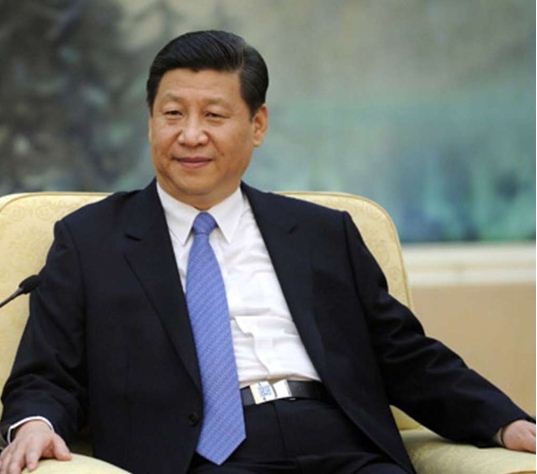
Emperor Xi corona misadventure isolates China
by Prashant Tewari / 01 September 2020Even before the Covid 19 catastrophe, Emperor Xi Jinping decided that 2020 is the year to establish the Chinese century. American think- tank predicts in 2019 the Chinese GDP was already larger than the USA’s GDP and by 2030 it could be up to 70% larger. As a share of Global output, China would grow to 32% from 20% currently, as opposed to the USA declining from 16% to 10%. In terms of Global Market capitalisation the Chinese would grow to 25% from 5% in 2019, whilst the USA would decline from 40% to 18%. China’s share of global exports would rise to 18% from 12% whilst the USA would be static at 8%. The above forecasts were supported by massive Chinese investments in Education in the fields of Mathematics, Science, Technology, and Medicine and rapidly improving the quality of education. Starting with the 1980’S the Chinese successfully got the world’s manufacturing supply chain to relocate to China, and was truly the “factory of the world”. From a pure labour arbitrage offering, they created world-class infrastructure (Cities, Roads, Ports, and Airports) to support it. The top 2500 corporates outside China all had a business presence in China. This aggressive export-led growth model allowed the Chinese to radically improve per capita income, and in the process also create a massive domestic consumption engine. A 40% domestic savings rate supported the huge developments that happened on their Eastern Seaboard. Till 2012 the Chinese government was sitting on Foreign Exchange Reserves of close to $5 Trillion. Over time Chinese labour had become a very skilled workforce, moved up the value chain and was no longer cheap. China now imports/consumed 45-50% of virtually every commodity in the world even though more than half of it was re-exported.
Chinese leaders till 2012 had made the country keep a low profile, hiding their strengths, whilst they relentlessly gained market share from the world. Asian growth engines Japan and South Korea had also felt compelled to move/make tangible manufacturing investments in China. The Chinese had mastered the skill of acquiring the world’s IPRs by any means. Their Chinese Communist Party(CCP) command and control structure had also silently expanded their Foreign Ministry with requisite resources to create a Public Relations repository in every- major country, to manage the national discourse on any prickly subject in their favour. This three-decade profile started changing with Xi Jinping’s ascension to Chairmanship in 2012. The Chinese strategists now started believing that the Middle Kingdom deserved to rule the world. They changed the nomenclature of the 21st century from being an Asian century to a Chinese century. They mapped that post-2008 Global Financial Institutions were weakened, substantially dysfunctional and lacking leadership. They unleashed a project of achieving complete Chinese dominance in the manpower of every multilateral agency and United Nations body in the world. Chinese students were encouraged to study overseas and many were persuaded to join these organizations, so many FBI investigations are now showing made instruments of government policy.
The collapse of the USSR in the 1990S and the profligacy of the US financial sector in 2008 had left a leadership vacuum in many areas. Xi Jinping moved rapidly to occupy the vacancies. China needed to secure its supply chain as it neither produced adequate food for its population nor was endowed with manufacturing or energy raw materials. Chinese leadership wanted to avoid supply-side shocks and created strategies to acquire assets surreptitiously. They moved rapidly to fund every country and project that the World Bank or the rest of the world would not find viable. The Chinese wanted to eventually acquire the underlying asset and default was hence a preferred option for them. This juggernaut covered 150 countries and nearly $5 Trillion in loans/investments. The new Chairman had successfully overinvested the Chinese USD reserves and left his country very vulnerable. They desperately needed their Dollar engine (Foreign Direct Investment, Foreign Portfolio Investment, and Foreign Currency Loans) to keep firing quickly to recoup their position, or alternately fast-track their long-term vision to get global trade out of the dollar and into the RMB.
Unluckily for the Chinese two things changed the landscape in 2017. President Trump had won the US election and was a wildcard that the Chinese read wrongly. Secondly, the world economy started topping out, and growth started stalling. The Chinese engine was not designed to handle economic contraction. Fault lines in the domestic economy are led by huge nonperforming loans in domestic state-owned Enterprises. Ghost cities started appearing, as domestic demand stalled, whilst domestic real estate started going belly-up. The country was overbuilt and no more infrastructure spending was needed.
Trump started the trade war and insisted that the Chinese reduce the Trade surpluses. President Xi erred massively in not giving Trump a cheap victory, and getting the Americans riled. American strategists had clearly war games that the days of the USD hegemony were numbered, and if their political dominance was to be extended, a war with China was not an option, the only question was timing. By a strange coincidence, the two technology hardware giant’s USA and China were tangibly dependent on Taiwan for their Semiconductor underbelly. Taiwan has a dominant share in the Semiconductor foundries globally, and both the USA and China are dependent on them. The Americans had anticipated this and a JV with the Taiwanese would go operational in Arizona in 2023. Till then any military threat to Taiwan would be an attack on its technological dominance, an intolerable thought for them. Democrat Presidents had soft-pedaled on the one-China policy, and the Chinese had succeeded in getting away with their wish lists. The Americans had celebrated access to a large consumption market but landed up creating a rival.
The Chinese People’s Liberation Army (PLA) in manpower terms is the largest standing armed force on the globe. The PLA and CCP moved fast to upgrade weapon systems, stealing blueprints and buying where they could not, theoretically, they were a lethal strike force. However the navy is their Achilles heel, and they lack best-in-class aircraft carriers and submarines. This limits their ability to protect their interests spanning 150 countries. 75% of Chinese oil still moves in tankers through the narrow Malacca Straits. To reach the Arabian sea by land they invested in bankrupt Pakistan by constructing the CPEC which links Xinjiang to Gwadar Port and is a dedicated economic corridor. They also engaged east European and European countries to construct the Belt and Road Initiative (BRI) for creating dedicated freight corridors to 50 European cities. In the process, they have de-risked their trade supply routes, but their oil buy routes lie exposed. The nightmare for China to achieve dominance is that Indian land illegally occupied by Pakistan is being used by CPEC and India reacquiring PoK by use of military power could render their $66 Billion investment in Pakistan useless, blocking the oil supply. The Chinese realized that economic sanctions against Iran had crippled the proud country with 15% of the world’s oil, needed investments, and so decided to bust sanctions on Iran imposed by the United Nations (they were party to imposing them). China and Iran signed a 25-year Trade and Military alliance in June 2020. China has bet on the USA exiting Afghanistan in 2020, and by using the Pakistani’s to install a puppet regime in Afghanistan, they could take a pipeline from Iran to Xinjiang. In turn, the Chinese have to pump in the equivalent of $400 Billion into Iran’s development, which they can crank their RMB economy to deliver. Where does that leave the Pakistani’s?
In the interim President Xi got the CCP to appoint him as the leader for life and emerged as an emperor. The CCP decided that by its 100th anniversary in 2021, they would stamp themselves as “numero uno” in the world. A few pinpricks remained: Taiwan and Hong Kong as independent democracies were an eyesore and raised aspirations of the good life in mainland Chinese youth. They had to be acquired by coercion or force at the earliest. The South China Sea had $5 Trillion of the supply chain that transited the route. China laid claims to territories/islands of all its neighbours and started constructing artificial islands as missile bases. They started bullying and humiliating Australia since 70% of Australian mining exports are bought by China. Singularly none of the Asian countries could take on China, but many could exact a heavy toll if it came to conflict. The Chinese flirted with conflict with all their neighbours using “wearing down” tactics.
The success of this gambit hinged on the continuity of their trade with the USA, heavily skewed in their favour. President Trump not getting an early trade war win, upped the ante, imposing a $250 Billion annual hit on China. Chinese perhaps felt that US corporations would not listen to their government and continue business as usual. They floated a trial balloon by abrogating the agreement with Hong Kong which would have lapsed in 2047, and suppressing protests with brute force. Then they ostensibly colluded/ manipulated the WHO and unleashed the Covid 19 pandemic on the world infecting every- country on the planet. This collapsed world economies and has created a very strong anti-China sentiment. It has resulted in fast-tracking the creation of the Quad, an alliance of the USA, Japan, Australia and India to take on the Chinese. UK, France and Israel are openly in support of the Quad, whilst Vietnam, Myanmar, Philippines, Indonesia, Taiwan and South Korea have alerted their armed forces for battle readiness. In the Chinese camp are North Korea, Pakistan, Iran and Turkey with anti-India squeaks may emerge from Nepal, Bangladesh and Sri Lanka.
With China designated as world enemy number 1, even Joe Biden has ratcheted up the anti-China rhetoric, lest President Trump steals the thunder and a potentially lost election by a war with China before November this year. The Indian and Chinese armies are facing off across 3400 Km. border and a tense peace prevail currently. The Middle East has so far stayed quiet, but by default will have to choose sides as a Shia Iran and a Sunni Pakistan and Turkey side with the Chinese. It is an uneasy time for the Saudis and the UAE. It is ironic that the OIC and its 54 member countries including the ”Turkish caliphate” maintain a studied silence on China incarcerating nearly 3 million Uyghur Muslims in Xinjiang.
The Koreans however had seen this coming two years earlier and Samsung had moved an $18 Billion annual capacity out of China to Vietnam. Japan has incentivized its corporations to exit China totally. USA and UK have banned Hauwei telecom with immediate effect to secure data for national security. India has banned Chinese Telecom equipment and Apps with immediate effect. There is a very strong anti-Chinese imports movement starting in India and may set an example for the world to follow. China’s partners in BRI and in Africa are resenting the usurious conditions in their loan agreements. The Americans are shutting off access to their Capital markets to the Chinese, and the cancellation of the Hong Kong treaty will kill the USD supply route to China. The Chinese Balance of payments is negative for the last few months, and days of surpluses are now a memory. They still need to buy food and oil and commodities.
Even nature seems to have conspired to ruin Emperor Xi’s timing. China is being ravaged by the worst ever floods in the last 100 years with 29 of its provinces impacted, and the survival of the showpiece three Gorges Dam is under threat from heavy rain which could affect nearly 400 Million people as downstream cities including Shanghai could be impacted. Scams like fake Gold collateral have shaken China’s $5 Trillion Shadow banking industry as the Kin- gold default is by a powerful former CCP member. It also puts a question mark on the credibility of China’s domestic gold production which is part of its National Reserves, as to how much of it is gold-plated copper. Will anyone in the world now ever trust a Chinese certification of gold? This scandal has seriously damaged China’s plans of having a partially gold-backed alternate currency to replace the dollar.
The world now sits on a powder keg in the midst of the Covid crisis. Funnily it is China’s 150 debtor countries (especially Pakistan) that must be praying for a fall and dismemberment of their Lender, for them to escape losing their sovereignty which they have so negligently mortgaged. President Trump and Emperor Xi now have gone too far for either of them to back down without losing their crowns. For Trump, it’s just an election, but the world knows what happens to deposed Chinese dictators. The South Asian countries all want Tibet to regain its independence after being annexed by the Chinese in 1950 so that they all get their freshwater security back.
Meanwhile, the domestic market collapse will force Emperor Xi to take a few more hasty decisions. China’s banking regulator has advised domestic banks to be prepared for sharp rises in bad loans once the Covid moratorium period is over. It has guided banks to conserve capital by not paying dividends and bonuses. Three Chinese banks have collapsed in the last three years, and 15% of the financial sector is supposedly past a high-risk stage. Tax revenues have grown under 5%, and budget deficits exceed 11%. The season of discontent for 1.4 Billion Chinese has arrived. China created the BRI to use the surplus capacity in its construction materials and equipment sector, and to keep Chinese labour occupied. Experts estimate that this project needs another $5Trillion over the next five years to complete it. The money given to 150 countries cannot be recalled. The Hong Kong door may be closed by the Americans if push comes to shove. The FDI and FPI flow post-Covid may flow outwards. China’s $10 Trillion foreign debt is realistically supported by $2 Trillion of reserves. With the Balance of Trade going negative, even diehard Chinese supporters are a highly nervous lot. If China’s trading partners do not agree to settlements denominated in the RMB, a run on the currency is highly possible.
It is a serious reason to worry for 1.3 billion Indians. Already, we were facing an economic downtrend for the last three years, the GDP growth rate is gradually slipping towards the 5% mark and Covid 19 has destroyed a large section of the economy permanently. Xi Jinping has taken the Chinese virus as an opportunity to attack its neighbors to distract the world’s attention from the pandemic. Now it is India’s turn to return the gesture to China. This crisis offers a tremendous long-term strategic advantage for policymakers to deal with Chinese threats permanently. India must immediately recognize Tibet and Taiwan as sovereign countries and allow them to run official embassies in India and vice versa, this will open the floodgate for several countries to follow in the footsteps of India in shaking up Chinese hegemony globally. Secondly, India must supply subsidized arms and military technology to Vietnam and Philippines to create multiple fronts for China and its PLA in response to what China is doing by arming Pakistan to be used for India in a proxy war. Thirdly, India should take a lead in Indo pacific command with the USA, Japan, and Australia to choke the Chinese trade route; it will hurt PRC and its ambition to be a global economic leader. Fourth, India must use weapons and its army on a regular basis when it is spending billions of dollars on armed forces and weapon procurement. Countries like Pakistan, Nepal and others must be fearful of the consequences if they plan to go against the interest of India. Lastly, restrict Chinese import of nonessential goods by imposing tariffs and focus our attention on building a formidable self-reliant economy with a target of $10 trillion by 2030 to face hostile China, this threat is permanent and China should be treated as a permanent adversary even when the times are good. India and the world must escalate the information warfare to expose the draconian CCP and its oppressive regime working against the interest of native Chinese. The dilemma for the Xi-led CCP is what they tell their domestic audience. In the age of the internet, you can censor but not hide. News spreads like wildfire with every citizen carrying a smartphone. Do the Chinese need to beat the war drums to transfer the blame for their miscalculations? The world scenario is evolving every week, and 2020 threatened to be a very long year indeed.
(Prashant Tewari Editor in Chief Opinion Express & Sanjit Paul Singh Managing Partner S&S associates)
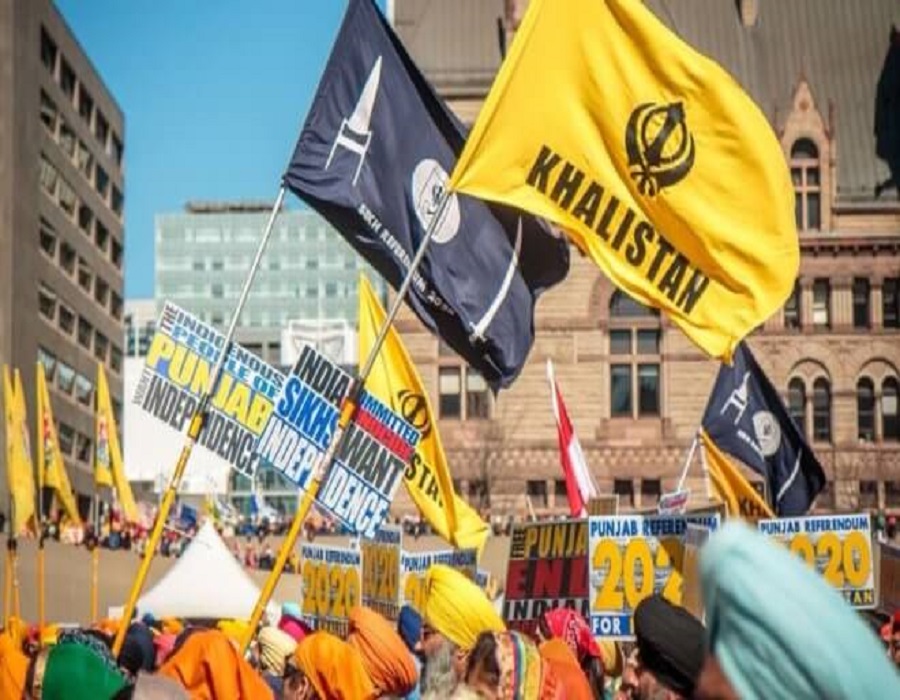
Khalistan Referendum 2020
by Prashant Tewari/ Prakhar Misra / 01 September 2020A Myth carried forward by vested interest groups ignores historical facts
Who wants Khaistan? The native Indian Sikh community in Punjab has absolutely no interest even to discuss the subject in routine life. Sikh Diaspora attached to the mainland has no interest in the issue. But some disgruntled anti-national set of people prompted by the foreign funding is running a futile campaign to instigate the subject with no support from credible places. The Sikh community in India is the most progressive and prosperous community in the country. It has proudly represented the highest offices of the country – the president and the prime minister, army general, top bureaucrat, technocrats, and state heads. Independent India with a majority 80% Hindu population size has showered tremendous love and respect on the 2% Sikh community in every sphere of life. It can be a unique case study model anywhere in the world wherein the overwhelming population majority has voluntarily offered respect and position to the almost dismal population size group. Sikhs have completely justified the faith and they have reciprocated the gesture with full commitment in every sector that it has represented.
To watch video | Part 2 | English : Khalistan Referendum 2020 - A failed Pakistani propaganda
To watch video | Part 2 | Hindi : Khalistan Referendum 2020 - A failed Pakistani propaganda
Of course, there are differences of opinion and minute governance disputes within the family but the two communities have integrated well enough to be bifurcated by vested foreign interest. Desperate Pakistan led by ISI has put a lot of stakes in abetting the Khalistan movement since the operation blue star incident. There are western interest groups based in the USA, Canada, UK that is putting up loop-sided efforts to flame the fire to keep the Indian progress in check and at the same time, they are keeping the Indian government in good humor to balance the new emerging world order. Frankly, the limited section of Sikh Diaspora aided by western powers and the rouge Pakistani ISI has wrongly evaluated the bond between the Hindus and Sikhs in India and surely one needs to spend time in India to understand the genuine cultural integration between the two communities.
Lately, the prominent countries where this mischief is played have decided to come up with a clear policy of no support to Khalistan. Canada has rejected the idea of Khalistan. In a statement, it said: “ Canada respects the sovereignty, unity and territorial integrity of India, and the Government of Canada will not recognize the referendum”. The Punjab Chief Minister Captain Amarinder Singh said that the categorical stand taken by the Justin Trudeau government on this issue is exemplary. He hopes other nations and governments should come out, and be against SFJ as well—which has been banned by India as a terrorist organization. The founder of SFJ, Gurpatwant Singh Pannu, has been declared a terrorist for actively promoting Pakistan-backed terror activities on Indian soil. The Chief Minister added that failing to oppose the separatist SJF organisation could set a dangerous precedent for any country; this could be seen as covert support to an organisation that would freely be propagating secessionist activities. This was in the interest of global peace and security to reject forces, that are hell-bent on spreading terror, the Chief Minister added. Sikhs in Punjab had categorically rejected SFJ’s pro-Khalistan movement, which the outfit was spreading at the behest of Pakistan’s ISI, he concluded.
Dejected by the stand taken by the USA, Canada, EU countries to reject Khalistan, groups associated and funded by anti-India forces are desperate to fuel the unrest in Punjab, three ‘hardcore supporters of the ‘Khalistan movement’ were planning to execute targeted killings in several states of Northern India were arrested by Delhi police. on the KLF radar were several activists, politicians, and religious leaders, particularly from Punjab. During the interrogation of the three accused and further investigation, it was revealed that they were in contact with Pakistan ISI-sponsored Khalistan leader Gopal Singh Chawla and leaders of the banned Khalistan group Sikhs for Justice (SFJ), based in Pakistan and the US respectively. The dossier New Delhi shared with Islamabad about Khalistani anti-India propaganda led by Gopal Singh Chawla. Pakistani intelligence agency asset Go- pal Singh Chawla is the former General Secretary of the Pakistan Sikh Gurudwara Prabhandhak Committee and President of Punjabi Sikh Sangat. Chawla is a well-known Khalistan element, who often spews venom against India in his speeches, and supports terrorism in Punjab. Sikhs for Justice (SFJ) is a lesser-known Khalistan group based in the US, which was banned by the Indian government in July 2019. SFJ has been involved in several recent anti-India protests in the US, UK and Canada, which have been indirectly sponsored by Pakistani agencies.
In October 2018, Gopal Singh Chawla, in a telephonic interview, confessed to having knowledge of the role of Khalistan in the killing of RSS leaders in Punjab. “The killing of the RSS leaders will continue in Punjab. RSS leaders are our very first target. We don’t want any interference from RSS in our gurdwaras or in Punjab. The Indian government may do whatever it wants, but we won’t tolerate interference in Punjab in any way,” he had told this journalist. On being asked about the support of globally-designated terrorists and chief of terror group Lashkar- e-Tayyiba, Hafiz Saeed, Chawla said: “I have had relations with Hafiz Saeed and continue even now. Doesn’t mean we operate together. Hafiz Saeed is my ideal person. (sic).” While several ISI chiefs in the past have been vocal supporters of the Khalistan movement – including former Army General Hamid Gul – the Pakistani deep state seems to have now embarked on the K2 (Kashmir and Khalistan) strategy with newfound hate and vengeance. A part of this hatred stems from the fact that diplomatically, Pakistan has failed to gather any global momentum against India. Post abrogation of article 370, the terror groups in Kashmir have been at their weakest in the last three decades, with Indian security forces killing about 116 terrorists in less than six months (including the top commanders of Hizbul Mujahideen who acted as the ground assets for Pakistani terrorists infiltrating India through J&K).
Misguided section of Sikh Diaspora plans unofficial vote in 2020
Sikhs for Justice says a poll to be organized in Punjab and 20 countries abroad to press for a legally binding referendum on India but India has categorically rejected the demand since it is Pakistan-sponsored activity to disturb peace in Punjab.
Diaspora group Sikhs for Justice (SFJ) argues Punjab is “currently occupied by India” and vows to organize a non-binding vote —both in Punjab and 20 countries abroad where Sikh diasporas exist on the issue of establishing an independent country, which they call Khalistan. The group believes that “an overwhelming ‘yes’ vote” would “start the process through which we will eventually conduct an official legally binding referendum in Punjab thereby peacefully establishing Khalistan.” SFJ says it aims “to get 5 million votes in support of independence for Punjab” in the unofficial vote, the result than “presented to the United Nations with a request for them to intervene and negotiate an agreement between the Punjabi peoples and India for holding an independence referendum in Punjab,” a legally binding one this time.
The group has not disclosed how it will be able to organize the vote in Pun- jab in the face of Indian opposition to it. Analysts say support for independence is more popular among diaspora Sikhs than in Punjab itself. In Punjab, the government has been traditionally dominated by either the nationwide Indian National Congress or the Shiromani Akali Dal —a conservative, Sikh- majority, pro-autonomy Punjabi party currently not striving for independence, despite the fact that in past times some of its leaders and factions had been secession proponents. And the current Chief Minister of Punjab Capt Amarinder Singh of INC is the tallest nationalist leader having the support of the entire Punjab and Indian Sikh community so the so-called vote by SFJ remains a noncentury, however, Muslim conquests in the Indian subcontinent were more successful and saw the emergence of Islamic states over Hindu-majority populations. In the early 16th century, one such state was the Mughal Empire, founded by the successful king Babur in northern India. Meanwhile, in the later 15th century in Punjab, Sikhism had been proclaimed by Guru Nanak as a new monotheistic religion that rejected both Hinduism and Islam, and rapidly gained followers. Perceiving the growth of the Sikhs as a threat, the Mughal authorities began to persecute them, and in 1606 Sikh leader Guru Arjan was executed by Mughal emperor Jahangir, starting in the mainland Punjab.
1947 partition to 1984 tragedy ignores history
The Khalistan independence movement decries the Punjab partition between India and Pakistan in 1947. Still, SFJ is merely calling for independence from India, not Pakistan. Sikhs make up 58% of the population of the Indian state of Punjab, while they are a very tiny minority in Pakistan’s Punjab after most of them left the area at the time of partition while thousands were killed in inter-communal violence. Faced with the choice between India and Pakistan, most Sikhs went for the former. Yet blindfolded power-hungry traitors like Gopal Singh Chawla, Ranjeet Singh, Lakhbir Singh, Wadhawa Singh Babbar, Paramjit Singh with a few of their followers are trying to defy the bare fact of history by using the Bluestar operation misadventure for political purpose and by forgetting the supreme sacrifices made by Sikh Guru’s fighting Mughal rulers for the protection of their religious rights.
Between the 7th and 11th centuries, Islamic armies conducted several campaigns into the Hindu-dominated Indian subcontinent, making conquests limited to present-day Pakistan and Punjab. From the 12th through the 16th apparently for helping prince Khusrau. Sikhism split into two movements: one led by Guru Arjan’s son Guru Hargobind began to regard Guru Arjan as a martyr, became more political and militaristic, and started organising armed rebellions against the Mughals; the other was led by Guru Arjan’s older brother Prithi Chand focused on peace and nonviolence, and rejected uprisings. The Sikhs first raised their weapons against the Mughal Empire under Guru Hargobind. The tenth and the last Guru, Guru Gobind Singh organized Sikhs into a military sect called Khalsa (means “pure”), in 1699, against the Mughal emperor Aurangzeb. Before his death in 1708, he sent Banda Bahadur to lead the Sikhs of Punjab. Banda Bahadur through his outstanding leadership skills weakened the Mughal grasp over eastern Punjab. But he was later captured and beheaded in Delhi in 1716, during the reign of Farrukhsiyar. Thereafter, Sikhs became leaderless and were divided into Misls. Although their martial skills were enormous, their political disunity made them vulnerable to foreign attacks. In 1738, Nadir Shah of Iran attacked India and looted Delhi and Mughals were never able to recover their power in Punjab. Later, Punjab was subject to constant invasions by Ahmad Shah Durrani of Afghanistan, who upon hearing of the persecution of Muslims of Punjab by the invading Sikhs, took it as his duty to protect the Muslims. Abdali tried many times to recover Lahore but ultimately had to return to Pashtun territories. After his final invasion of Punjab in 1767, he left Lahore which was when it was re-captured by the Sikhs. For more than three decades, Sikhs consolidated their power in areas of Punjab. But the decisive moment came in 1790, when Ranjit Singh of Sukerchakia misl became misldar. He started uniting misls and finally took Lahore in 1799. His coronation on 12 April 1801 marked the beginning of the Sikh Empire, which went on to conquer the whole Punjab, Kangra, parts of Kashmir, and briefly, the city of Peshawar.
The tenth and the last guru of Sikhs Guru Gobind Singh organised themselves in jathas, which would see their first battle in 1621. The tenth Sikh Guru is remembered as the spiritual master, warrior, poet and philosopher. When his father, Guru Tegh Bahadur, was beheaded for refusing to convert to Islam, Guru Gobind Singh was formally installed as the leader of the Sikhs at age nine, becoming the tenth Sikh Guru. His four sons died during his lifetime – two in battle, two executed by the Mughal army. Guru’s mother Mata Gujri and his two younger sons were captured by Wazir Khan, the Muslim governor of Sirhind. His youngest sons, aged 5 and 8, were tortured and then executed by burying them alive into a wall after they refused to convert to Islam, and Mata Gujri collapsed on hearing her grandsons’ death. Both his eldest sons, aged 13 and 17, were also killed in the battle of December 1704 against the Mughal army. After several decades, small Sikh states known as misls combined to form the Sikh Confederacy in 1716, which jointly fought against Mughal power. In 1735, the jathas would be combined into a single army, the Dal Khalsa. Though successes varied, the Sikhs contributed to the decline of the Mughal Empire during the first half of the 18th century. By the 1750's, the neighbouring northwestern Islamic Durrani Empire and the southern Hindu Maratha Empire had all but destroyed the Mughal Empire, which retained a small territory around Delhi. This is a glorious factual chapter of Sikh history that certain so-called Sikhs are completely ignored to serve their vested interest.
Foolishly, ISI back Chawla and nine designated terrorists namely Ranjeet Singh Pakistan based Chief of a terrorist organization, “Khalistan Zindabad Force”, Lakhbir Singh Pakistan based Chief of a terrorist organization “International Sikh youth Federation”, Wadhawa Singh Babbar Pakistan based Chief of terrorist organization “Babbar Khalsa International”, Paramjit Singh Pakistan based Chief of a terrorist organization “Khalistan Commando Force”, Gurmeet Singh Bagga Germany based key member of terrorist organisation “Khalistan Zindabad Force”, Bhupinder Singh Bhinda Germany based key member of a terrorist organization “Khalistan Zindabad Force”, Gurpatwant Singh Pannun USA based key member of Unlawful Association, “Sikh for Justice”, Paramjit Singh United Kingdom-based Chief of a terrorist organization “Babbar Khalsa International”, Hardeep Singh Nijjar Canada based Chief of “KhalistanTiger Force” have been declared terrorists under the provision of UAPA. All of them are blindfolded to read the script written by Pakistan to use them for destabilizing India. Likewise, the confused Sikh Diaspora is affluent and well-accomplished in academics yet some of the anti-national community leaders are distorting the image of the community through their actions and ignoring the history of the great Khalsa Path. The tragedy of Sikhs is that they have not found a leader worthy of carrying forward the legacy of their illustrious Gurus since Maharaja Ranjit Singh The first work of Guru Nanak who is invariably referred to as the founder of Sikhism, maintained, propounded the original teachings, established a new religion and gathered round himself a following drawn from both Hindu and Muslim. This continued for about a century till Guru Hargobind, the sixth guru whose period occupies most of the first half of the seventeen century adopted the doctrine of ‘miripiri’ and resorted to an arm rebellion against the attempts made by Mughals to interfere and curb the religious rights of Non-Muslims in India. He accordingly responded `to the Mughal threat of violent repression by arming his followers though nothing basic had, however, been changed. The tenth Guru Gobind Singh having observed the growing hostility of Mughal authorities reached a momentous decision to form a structured group of fighters to be named Khalsa having military discipline.
Indian leaders blame SFJ over alleged links to Pakistan
Both the Indian and Punjab governments oppose referendum calls, claiming that SFJ is being helped by Pakistan to undermine the unity of its longtime regional foe. India CDS and Ex-Army Chief General Bipin Rawat referred to “external linkages” to “revive insurgency” in Punjab, as Punjab Chief Minister Amarinder Singh linked SFJ with Pakistan’s intelligence agency ISI. The row has reached Canada, the US, and the UK, where large Sikh communities live. The Indian intelligence agencies are on alert keening watching the overseas footprint of a group of foreign-aided vested interests to fuel the movement and create unrest in the border state of India. It is a shame that Pakistan society is damaging temples, Gurudawaras, and Churches with impunity having the full support of the establishment since it is a declared Islamic state yet traitors like Gopal Singh Chawla, Ranjeet Singh, Lakhbir Singh, Paramjit Singh are working against the overall interest of the Sikh community by collaborating with ISI and non-state players to hurt the Indian interest. Surely, they have virtually no support in the Indian state of Punjab or in India but a certain section of western supported Sikh Diaspora is fueling the fire by funding groups to weaken the Indian state that is likely to be the most powerful nation in terms of military and economy in the next decade.
It is high time that his disgruntled group should shed the violence and anti-India activities by collaborating with overseas vested interest groups and seek pardon from the mighty Indian state so that they can be integrated with the mainstream Sikh community of the country that remains the pride of the country. The illusion of Khalistan completely ignores the history and it misrepresents the larger interest of the Sikh community. The glorious sacrifice made by the Sikh community for their motherland is unparallel in the recent past and the contribution made to the community in nation-building remains second to none. Lastly, India is considered by many as a soft state till the narrative is altered by the current government of Narendra Modi hence it is highly advisable for the traitors working against the interest of the country to be on guard because Doval’s offensive-defensive strategy doctrine can really hurt them badly. As Prime Minister Modi and Home Minister Amit Shah have indicated to all the disgruntled elements to shun the violence and talk to the government to secure peace on all ends, this is the only option left now.
By Prashant Tewari Editor in Chief with Prakhar Misra Political Editor: Opinion Express.
Khalistan – An illusion with no substance
by Prashant Tewari / 01 September 2020Who wants Khalistan? The native Indian Sikh community in Punjab has absolutely no interest even to discuss the subject in their routine life. Sikh Diaspora attached to the mainland has no interest in the issue. But some disgruntled anti-national set of people prompted by the foreign funding is running a futile campaign to instigate the subject with no support from credible places. The Sikh community in India is the most progressive and prosperous community in the country. Independent India with a majority 80% Hindu population size has showered tremendous love and respect on the 2% Sikh community in every sphere of life. It can be a unique case study model anywhere in the world wherein the overwhelming population majority has voluntarily offered respect and position to the almost dismal population size group. The Sikh community has completely justified the faith and they have reciprocated the gesture with full commitment in every sector that it has been represented.
But the tragedy of Sikhs is that they have not found a leader worthy of carrying forward the legacy of their illustrious Gurus since Maharaja Ranjit Singh The first work of Guru Nanak who is invariably referred to as the founder of Sikhism, maintained, propounded original teachings, established a new religion and gathered round himself a following drawn from both Hindu and Muslim. This continued for about a century till Guru Hargobind, the sixth guru whose period occupies most of the first half of the seventeen century adopted the doctrine of ‘miripiri’ and resorted to an arm rebellion against the attempts made by Mughals to interfere and curb the religious rights of non-Muslims in India. He accordingly responded `to the Mughal threat of violent repression by arming his followers though nothing basic had, however, been changed. The tenth Guru Gobind Singh having observed the growing hostility of Mughal authorities reached a momentous decision to form a structured group of fighters to be named Khalsa having the military discipline
To watch video | Part 1 | English : Khalistan Referendum 2020 - A failed Pakistani propaganda
To watch video | Part 1 | Hindi : Khalistan Referendum 2020 - A failed Pakistani propaganda
The present self-proclaimed leaders of the Sikh community are illiterate and anti-national. They have no intellect to understand the historical perspective and the current geopolitical games. We are still trying to get over the fallout from the lack of vision and leadership of Jarnail Singh Bhindranwale, now another “visionary”, Gurpatwant Singh Pannu, has appeared from America. He now wishes to lead the Sikhs by carrying forward the legacy of Bhindranwale. No one has divided Sikhs more than Bhindrawala and also poisoned the minds of our youth who have limited understanding of our faith and history but feel angry due to the attack on the Golden Temple.
And we in India must stop blaming Pakistan for fuelling the insurgency in recent times. Rather the blame must go straight to the ignorant Sikh groups who have either no access to their own history or are blinded by the power of foreign money to destabilize their own motherland. No one has supported operation blue star in totality but the rebel community elements must realise that the issue is permanently dead, just to keep raking up the issue repeatedly and playing to the opponent gallery has discredited the entire community. India has given Sikh President, Prime Minster, Army Chief, top bureaucrats and prominent businessmen and surely it makes the Sikh community the most respected group of the country but any activity against the strategic interest of the country used by any religious or ethnic group must be permanently eliminated. The new offensive defensive policy of the nation must send shivers to the militants and terror groups representing any section of society. And permanent elimination will be scripted if the larger interest of the country is hurt by any insane action conducted by them directly or under the influence of foreign forces against India.
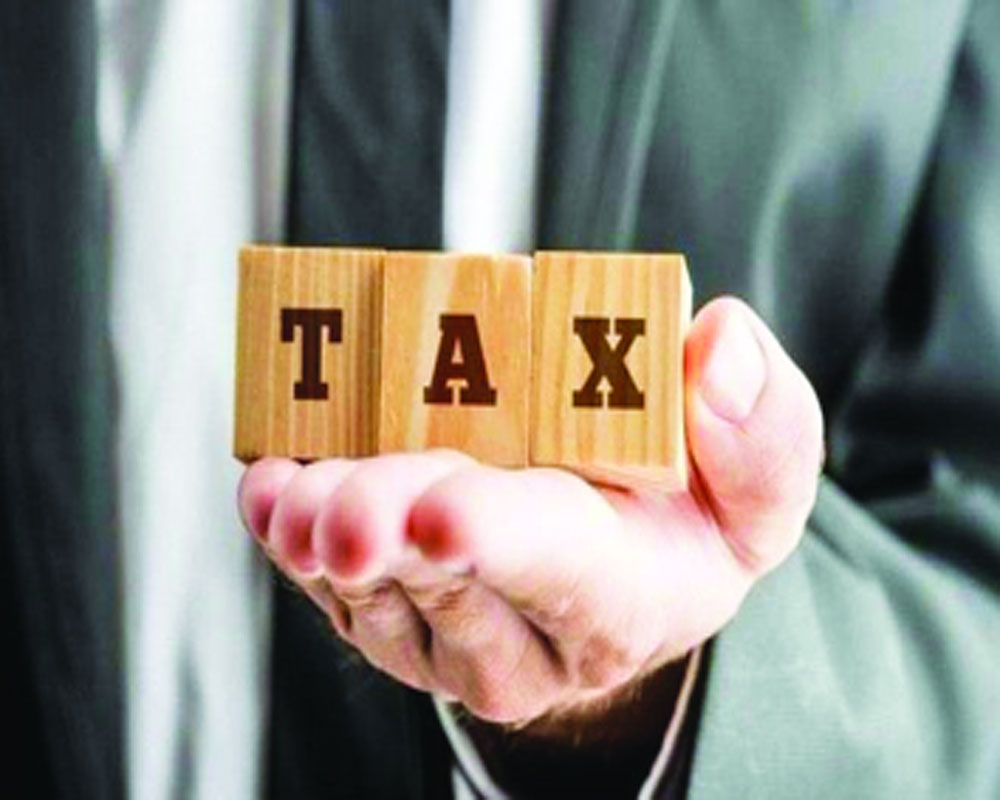
Rewarding the honest
by Opinion Express / 14 August 2020Tax reforms were a long-standing demand by the salaried class. Will PM Modi’s measures go far enough?
Income tax-paying citizens of our country have often argued that they are the most ignored lot of voters by the political classes despite them “paying” the most to the Government. While there is a feeling of sympathy for them, one has to understand that while the incidence of income tax payers is low in our country, almost every Indian contributes to nation-building through indirect taxation. That said, the income tax system in India has become unduly complex over the years with all sorts of exemptions and cess payments as well as innovative ways for individuals and companies to escape paying up. The beginning of the reform process came in the form of simpler slabs, announced by Finance Minister Nirmala Sitharaman during this year’s budget, while the existing slabs with exemptions remained. This could be seen as a start for the simplification of the tax code although the impact, particularly on charitable donations, remains to be seen.
In essence, the reforms announced by Prime Minister Narendra Modi yesterday, that will impact personal income taxpayers, are relatively simple. However, increased digitisation will have a dramatic impact on the way disputes and issues are handled. Fewer “informal” ways of dealing with the taxpayers, with all communication digitised, will lead to fewer discrepancies and most importantly, reduced corruption. There is an overwhelming sense in India, despite punitive action taken over the past few years, that the taxman is a corrupt rent-seeker. These reforms might not do much for the taxpayer for now, but if implemented well, could help rehabilitate the image of the much-maligned taxman. Much work remains to be done to improve the methods of tax collection. Thousands of loopholes remain. In particular, the rich have taken advantage of them for years, including the infamous “farming income” being non-taxable. These gaps need to be plugged. Everyone should be made to pay their fair share of tax. If they do so, the nation will only benefit and the Government will not be seen as always attacking the honest salaried worker’s wallet with its money-grubbing hands. The reforms might be mainly some lip service but if they can spark a change, that would be a positive step.
Courtesy: Editorial-The Pioneer
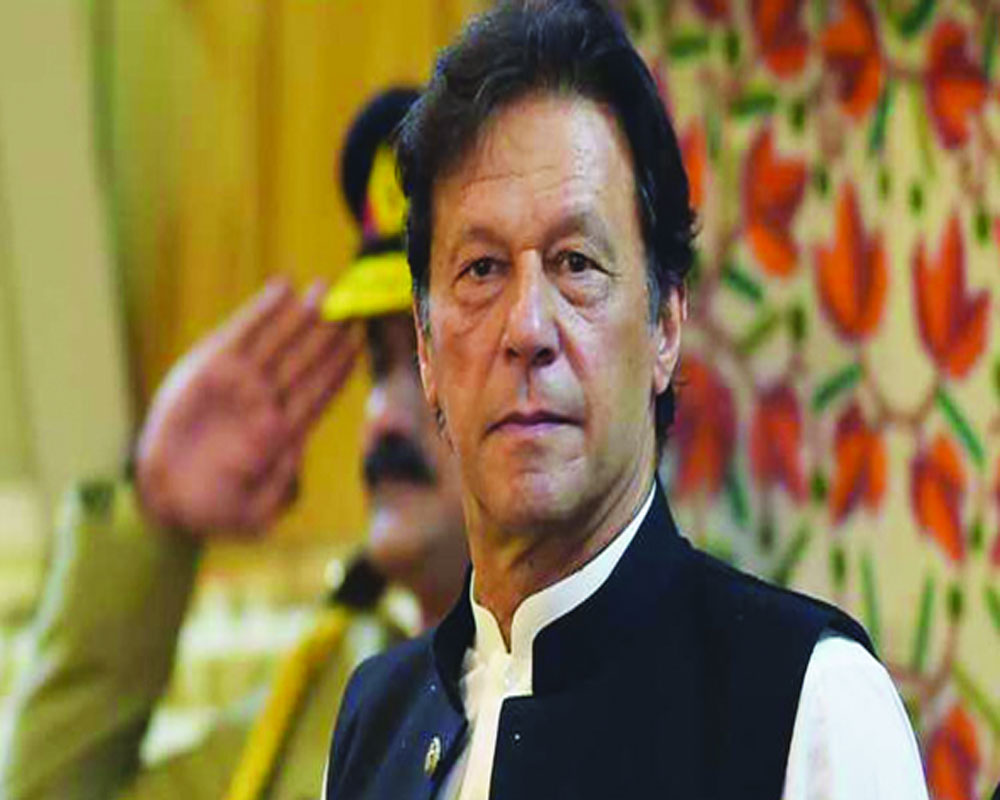
Now Pak in map war
by Opinion Express / 06 August 2020Imran Khan releases arbitrary map absorbing Kashmir, possibly at China’s behest. But there won’t be takers
Everybody knows that Pakistan never misses an opportunity to internationalise the Kashmir issue but the “cry wolf” screams make for such a tired and wasted diplomatic move that they don’t make news at all. Yet it could not have let the anniversary of the abrogation of Article 370 go past without making some noise. So it released a new map of Pakistan, incorporating Kashmir, parts of Ladakh and Junagadh in Gujarat in a naked display of its territorial ambitions and highly wishful thinking. India has rightly called the vacuous and unilateral declaration, that is not backed by any credible reasoning, support groups, historical reasoning or legal validity, as a “political absurdity.” Worse, the challenge to our globally accepted sovereignty came from none other than Pakistan Prime Minister Imran Khan, who cited the endorsement of his Cabinet, the Opposition and an unnamed Kashmiri leadership as the rationale for the new map. But it was what Pakistan’s Foreign Minister Shah Mehmood Qureshi said that shows this cartographic offensive to be a part of a larger pattern and not just Pakistan’s independent move. “The new map shows Kashmir shares a clear border with China,” he said, a clear indication that like Nepal, this attempt to redraw boundaries was made at China’s behest and underlines our eastern neighbour’s desire for strategic contiguity in the region than Pakistan’s any real concern for Kashmir. While India is firm on Chinese withdrawal from eastern Ladakh that seems to have driven a wedge in their greater plan to control the Karakoram by squeezing us with salami-slicing, Pakistan’s map claims are clearly intended to warn us of a two-front offensive. With the Chinese reluctant to pull back from claimed spurs and ridgelines in Ladakh, India is looking at a long haul of vigil and alertness this winter. China just wants to exhaust our capacities at the heights by opening up a second flashpoint. Just last month, Pakistan had moved almost 20,000 soldiers to the Line of Control (LoC) to match Chinese deployment on the Line of Actual Control (LAC). Strangely it hadn’t positioned such troops even after the Balakot air strikes. The simultaneous build-up along the border and Pakistan’s renewed push on infiltration are clearly intended to stretch our resources thin and wear us out so that both could manage some territorial grabs in the process. If recent reports are to be believed, then the Chinese are no longer shadow-boxing. Just like in Nepal, their officials have had a series of meetings with Pakistani ones on Gilgit-Baltistan. China is also encouraging Pakistan to revive the defunct terrorist network of Al-Badr that was once active in Kashmir. Debt-trapped by the China-Pakistan Economic Corridor (CPEC), with its economy in the doldrums and heavily dependent on borrowings and bailouts, Pakistan is but a pawn in China’s gameplan. The hyperbolic claims of Imran Khan are less spontaneous and more in alignment with the grandiloquent declarations of the Chinese dream.
Of course, Khan is also looking at extracting some home advantages with this move. He wants his constituents to know that he has not lost the leadership of the Kashmir cause although his repeated attempts to raise the change in its status at several international fora have not got any traction over the last year. At China’s insistence, the UN held a closed-door meeting on Article 370 last August but stopped short of censuring India and described Kashmir an internal issue within India’s constitutional space. At one time, he himself had conceded ground, saying he wasn’t being able to turn the tide of international opinion because India was a “large market.” So he needed to show he still means business. Second, by involving Turkey in its criticism of India, Khan wants to stake his claim to leadership of a neo-Islamic axis involving Pakistan, Turkey and Malaysia. This is evident from the Pakistan Government’s information campaign, encouraging both China and Turkey to issue anti-India statements and tweets. It is trying to get Kashmir under the banner of pan-Islamism. Most significantly, the US is now more an ally of India to humour it. So it is now left to Pakistan to devise its own exportable Kashmir strategy. This is one of the reasons why the Government must make efforts for a civil integration of Kashmir lest the perceived alienation becomes a fertile ground for Pakistan to implement a new separatist agenda. Already the Kashmiri youth, who have been more interactive with mainstream discourse because of pursuing higher education and jobs across the country, are sensing a conspiracy to keep them out with continued curfews and internet bans. There must be political engagement with people’s representatives as confinement is only making them martyrs before locals when they could be used as assets to push governance. The ground situation will be chaotic or negative but one has to work through it rather than risk Pakistan whipping up its agenda at our expense. If indeed the Government wants to publicise normalcy, then it should take a step forward, no matter what the risks. Or else the political economy of Kashmir could just drift away.
Courtesy: EDITORIAL-The Pioneer
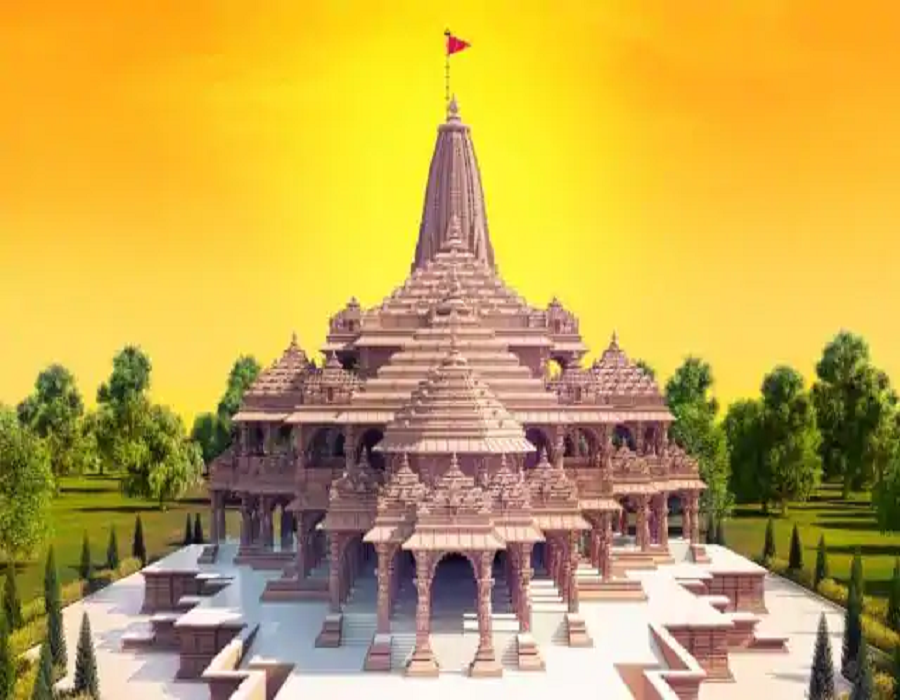
It is just not a temple
by Prashant Tewari / 01 August 2020On August 5, 2020, five hundred years of struggle for the reclamation of Janmabhoomi of the most revered historical figure and seventh incarnation of Bhagwan Vishnu have come to an end. The construction of the grand temple at Ayodhya must become a transformative event for Indian political discourse. It should be looked at as the central place of cultural identity for millions of Hindus as the Vatican is for Christians and Mecca is for Muslims. It should be the spiritual guiding place for the nation in the years to follow and subsequently, it should be delinked from politics. From now on, Indians must learn to treat religion as a personal affair of an individual and should never be brought up to score political points or gain electoral victories. The hate for each other was growing louder day by day on the issue of Ram Mandir. A common Hindu feeling was that why Muslims stayed here in India if they wanted a mosque when we had given them a Pakistan. And the Muslims always feel insecure because they got Pakistan, and Hindus think they are overstaying here. Both feelings were not there originally, but the appeasement politics brought them in.
The political landscape of India has been shaped by the tussle between two competing and mutually antagonistic grand ideas: composite nationalism and cultural nationalism. Initially, the dominant idea of Indian nationalism was the one the Congress championed. India’s composite culture, shaped by influences from different cultures over the centuries, was its leitmotif. The BJP, its predecessor Jana Sangh, and their parent the RSS rejected the idea of composite nationalism as a ploy by the post-Independence ruling elite to hide out of sight the impulses that had resulted in Partition. Indian nationalism, the Sangh argued, was a continuous stream flowing for thousands of years, based on the Hindu culture of South Asia. In this understanding, concepts such as composite culture appeared as an attempt to deny Hindu cultural nationalism its rightful place.
Lastly, it is a matter of great pride for the millions of Hindus worldwide that Ram Temple is emerging from the pale shadow of past slavery. For over 70 years the Ayodhya Mandir issue was a bone of contention for all parties versus the BJP. BJP was always accused of polarizing the Hindu in the name of Mandir, Article 370, and Common Civil Code etc. Now that the BJP is in power for a successive term led by a brilliant team of Narendra Modi and his man Friday Amit Shah, the controversial Article 370 has been abrogated. Ram Mandir is being reconstructed. The CAA has been enacted. The only issue pending as per its manifesto is the Uniform Civil Code. Narendra Modi made it perfectly acceptable to be ‘Hindu and Proud’ in mainstream political discourse. I am sure it is a non-issue for Lutyens Delhi elites but trust me; it will touch the heart of millions of Indians living in rural India for ages.
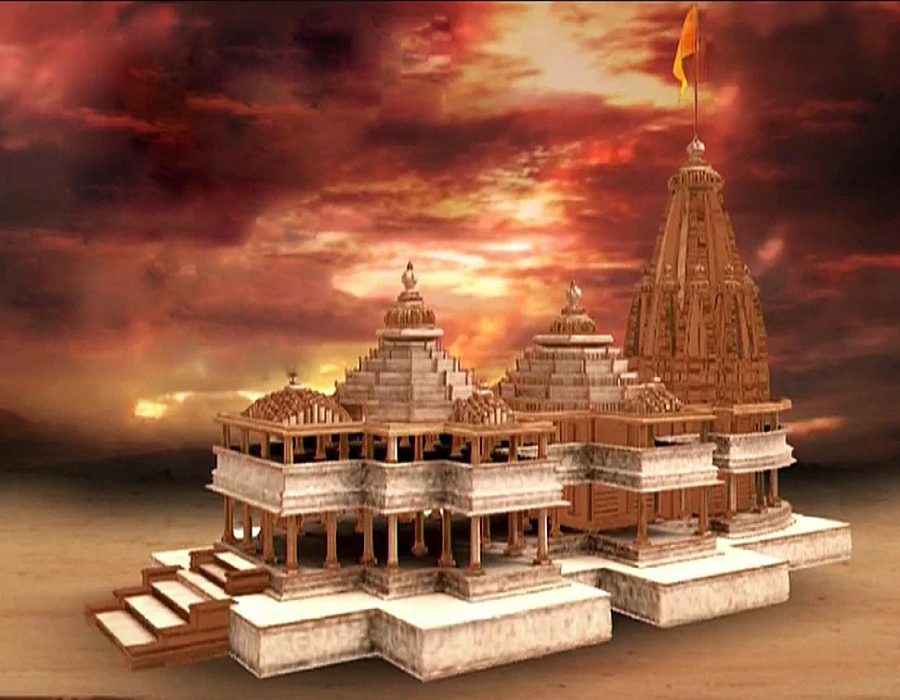
Ram Mandir is likely to transform Indian political discourse
by Dr Shiv Kumar / 01 August 2020One fifth of humanity following Sanatan Dharma must secure its historical relevance to be the spiritual leader of the emerging new world order
Bharat (India) has been a battleground for the western civilisation for well over 2000 years now. Alexander was the first to come here on an expansion spree, followed by many Turks, Mongols, shun [saka], Kushan, and Huns who came to loot India’s wealth but were finally absorbed by our great Indic civilisation. Today one can’t identify those who came from ancient Greece, Persia, Mesopotamia, Mongolia etc. The plunder and loot continued unabated in the British rule for over two centuries and the native people of Bharat land lost its identity and significance completely.
With the advent of Semitic cults in the West Asia, its lust to spread its cult the world over was seen in the onslaught of first century with the emergence of Christianity. The Christians conquest for religious expansion had ruined the great Greek, Roman, and Egyptian civilisations. The challenge was to accept their religion or perish. But the real menace came with the advent of Islam in the seventh century, when a dominant tribe Quresh leader Muhammad declared himself the prophet of a new cult called Islam. Later it spread over Europe, east of Asia and India. Earlier, the Muslims came in as looters, later they became invaders and finally became rulers of the Indian subcontinent. These alien rulers did not stop at invading and looting India. They used their swords to convert Hindus. They did forced conversion, destroyed Mandirs, and erected mosques over them. Sri Ram Janmabhoomi Mandir was one of the chief centres of faith for all Sanatanis, including Buddhists and Sikhs along with Hindus at the time of Akhand Bharat from Kabul to Kanyakumari. Its conversion was a major achievement for the Islamist rulers of Delhi. Hindus were morally defeated by destroying the centre of faith and erecting mosque over it. The modern historians are misquoting this fact by comparing Islamic invasion with Ashok’s battle of Kalinga, which was purely for geographical expansion.
On August 5, 2020, five hundred years of struggle for reclamation of Janmabhoomi of the most revered historical figure and seventh incarnation of Bhagwan Vishnu will come to an end. With reconstruction of the temple, the faith, patience, tolerance, faith on Constitution and perseverance of 100 crore Hindus worldwide will re-establish the values of Sanatan dharma. This is the time for our minorities to realise that their ancestors were all Hindus. Today Egyptians, Iraqis, Iranians and Indonesians have started taking pride in their pre-Islamic past. Even few Pakistanis now believe that their King Porus defeated Alexander. A section of literate Pakistanis now considers Gazani, Ghori and Babur as invaders who did not belong to Pakistan (then Bharat). It is time for Indian Muslims to introspect and try to join the main stream.
"With the advent of Semitic cults in the West Asia, its lust to spread its cult the world over was seen in the onslaught of first century with the emergence of Christianity. The Christians conquest for religious expansion had ruined the great Greek, Roman, and Egyptian civilisations. The challenge was to accept their religion or perish."
According to renowned American Indic scholar Shri Nilesh Oak, the birth of King Dashrath, father of Bhagwan Ram, is 12300 years BCE, means 14320 years from now. Birthdate of Bhagwan Ram is November 29, 12240 BCE. Oak’s calculation is based on astronomical references given in the Valmiki Ramayan with reference to the birth of Bhagwan Ram, which are proven as per modern astronomy and science. Many historical structures are evident of Ram’s existence as a historical figure, which the Left historians have otherwise painted as a mythical character. In Sri Lanka, there are many places which are referred to as belonging to Ramayana periods like Ashok Vatika, or the place where Meghnad performed yagna etc.In south Gujarat, one Anavil Brahman community is believed to have performed yagna with Bhagwan Ram at Shabari’sKutia. The place is known as Anaval. Those who participated in the yagna are called Anavil Brahmans from that day onwards. But to oppose the reconstruction of Ram Mandir at Ayodhya, the leftist historians tried their best to establish Ram as a mythological figure and Ramayan as fiction.
As per modern historians, Mir Baki (a lieutenant of first Mughal invader Babur) demolished the Ram Mandir and erected a mosque over it. But I am of the opinion, by going through memoirs of Persian, Chinese & British travelers, that there was a grand temple at the birthplace of Bhagwan Ram even after the period of Akbar, Jahangir and Shahjahan. Babur was a struggler when he conquered Delhi from Sikandar Lodhi. He was not in a position to do such heroic for the imposition of Islam in the early phase of his rule as that might have antagonised the Hindus against him. It was Aurangzeb who did this heinous crime as he was a habitual offender and cruel preacher of Islam and had done it with Kashi & Mathura & other forty thousand temples as well. Surely, the Kashi and Mathura needs to be liberated from the draconian clutches of historical mistakes.
There were several attempts made by Hindus to free the birthplace during slavery as well. As per the records available one, Md Salim had filed an FIR against a group of Nihang Sikhs who installed Trishul and painted Ram Naam inside the mosque and performed Yagna. In 1885 Mahant Raghubar das filed a suit in Faizabad (Now Ayodhya) district court to rebuild the temple but the court dismissed it. In 1934 under the leadership of Mahant Digvijay Nath ji of Gorakshpeeth Gorakhpur, Sadhus claimed a portion of the premise and started performing Puja but the Britisher rebuilt the damaged portion. The government seized the premise in 1949 after Hindus started performing Puja at the birthplace. The matter was then challenged in the court by Nirmohi Akhada.
The turning point was the famous Shah Bano case, where the Supreme Court awarded her alimony as per Indian laws applicable to all Indian citizens. This was opposed by conservative Muslim leadership of the country and the then government led by late Rajiv Gandhi, who enjoyed three fourth majority in the Parliament as he had won 1984 elections on a sympathy wave following the assassination of Mrs. Indira Gandhi, amended the Constitution to overrule the Supreme Court judgment given in favour of a helpless Muslim woman divorced illegally by her husband.
This case of shameless appeasement of Muslims by Congress party resulted in the consolidation of Hindu sentiments against such appeasement of minority. BJP, as the political party took full advantage of this growing Hindu alienation and eventually produced what is known as the Ram Janmabhoomi movement. The principle architect were VHP Chief Ashok Singhal, BJP Leaders LK Advani, MM Joshi, Kalyan Singh with the core support of ideological master RSS and affiliates Bal Thakery. On December 6 1992, the disputed structure was demolished by karsevaks. The Nobel Prize-winning West Indies born Hindu author late VS Naipaul described this event as follows: “Pulling down the first Mughal emperor’s [masjid], is a marvellous idea. I think in years to come it will be seen as a great moment. … It would be a historical statement of India striving to regain her soul.”
The Supreme Court pronounced the verdict in favour of the Ram Janmabhoomi Mandir on October 27 2019, after 70 years of the legal battle in independent India that was perused religiously by Dr Subramanian Swamy and others. This is after the traumatic partisan of the country, Indian community in general and the tolerant Hindu society in specific must be complimented for having faith in the Constitution and legal system of the country.
The construction of the grand temple at Ayodhya must become a transformative event for Indian political discourse. It should be looked as the central place of cultural identity for millions of Hindus as Vatican is for Christians and Mecca is for Muslims. It should be the spiritual guiding place for the nation in the years to follow and subsequently it should be delinked from the politics. From now on, Indians must learn to treat religion as a personal affair of an individual and should never be brought up to score political points or to gain electoral victories. The hate for each other was growing louder day by day on the issue of Ram Mandir. A common Hindu feeling was that why Muslims stayed here in India if they wanted a mosque when we had given them a Pakistan? And the Muslims always feel insecure because they got Pakistan, Hindus think they are overstaying here. Both the feelings were not there originally, but the appeasement politics brought it in.
For over 70 years the Ayodhya Mandir issue was a bone of contention for all parties versus BJP. BJP was always accused of polarising the Hindu in the name of Mandir, Article 370, and Common Civil Code etc. These were the election issues as BJP could identify Congress with appeasing Muslims and Christians at the cost of Hindu culture and tradition by destroying them gradually. But pity is Congress never tried to solve these issues in 60 years of their rule. They rather used to call BJP as a communal party. Now that the BJP is in power for a successive term led by brilliant team of Narendra Modi and his man’s Friday Amit Shah, the controversial Article 370 has been abrogated. Ram Mandir is being reconstructed. The CAA has been enacted. Only issue pending as per its manifesto is the Uniform Civil Code. As momentous it was, the elevation of Yogi Adityanath was only the highlight and not the whole reel of the manner in which Modi Sarkar shifted the Overton Window of Indian politics towards a more Hindu oriented approach. With every of his, Narendra Modi made it perfectly acceptable to be ‘Hindu and Proud’ in mainstream political discourse.
We need to learn from modern Christian countries of Europe and North America. They are all Christian countries, their national flags carry symbols of the holy cross, they swear by the Bible, and yet they are liberal! If they are not afraid or ashamed to call themselves Christians, why can’t we call ourselves Hindus and swear by modernity and liberal values? The same holds true for the Muslims that they swear by the Kuran, use religious symbols on national flags and buildings. The Hindus were deliberately forced to sacrifice the pride because of the long history of overseas rule but this is an appropriate time in the history of the course correction.
Now all sections of the society are expecting a new era of “Ram-Rajya” with the reconstruction of Sri Ram Mandir at Ayodhya. Without Ram, there cannot be ‘Ram-Rajya.” India embarks in its journey free from the baggage of slavery and distorted history to become the world leaders in the present century.
(The writer is a research scholar. Views are personal)
Superpower dogfight and the Indian Response
by Prashant Tewari / 11 July 2020The Goldman Sach report in 2007/8 predicted the Chinese economy will be almost the same size as the US economy by 2025, with the Indian economy the fourth largest after Japan. By 2050, they projected the largest economy in the world will be China, which will be almost twice the size of the US economy, with the Indian economy almost following the US economy at number two or at par with it. The new century dawned around two decades was forced to accept overwhelming American power, after the dismantling of the Soviet era. The overwhelming military superiority enjoyed by the United States and its economic might has established unipolar world order.
Military and political power rests on the economic strength of any country. American present superpower status is a product of its rapid economic growth between 1870 and 1950 and the fact that during the second half of the twentieth century it was the world’s largest and often most dynamic economy. Today, it enjoys 22% of the world’s total nominal GDP share with a population of less than 5% of the world’s population. However, the financial crisis of 2008 marked the end of American international domination and the emergence of China. The United States has lost considerable ground as a major manufacturer and as a large exporter of manufactured goods having steadily ceded that position to East Asia and especially China. Gradually, American domination in institutions like IMF, World Bank, WHO has declined significantly.
Although we are witnessing the Chinese rise as a growing superpower that is the bearer and driver of the new world, its tentacles have stretched across East Asia, Central Asia, South Asia, Latin America and Africa yet it is an authoritarian state with a dictator in command having an imperial ambition to expand its influence globally. President Xi Jinping is highly insecure within CCP. He is an aristocrat as well as a poor man’s poster boy in a confused Chinese system wherein officially it proclaims itself to be a communist state but de-facto it is a capitalist state. Xi has installed himself as the commander of the PLA, he has become President till eternity, he has wiped out dissenters from the country, he has purged several PLA commanders on the charges of corruption, and he has jailed potential rivals in the garb of the fight against corruption. His plan for global domination resulted in PRC pushing for trillion dollars ONE BELT ONE ROAD initiative to connect China with the rest of the world. Xi Jinping use PLA as a tool to frame his foreign policy. He has opened confrontation with all his neighbors namely Taiwan, Vietnam, Japan, South Korea, and India and his list includes bordering Russia and Kazakistan, he claims ownership over the south China sea that is fiercely disputed by Brunei, Vietnam, Philippines, Malaysia & Taiwan. Xi Jinping's lust for power is driving him crazy in the most difficult times that humanity has faced due to the Chinese-manufactured and exported coronavirus.
It is a serious reason to worry for 1.3 billion Indians. Already, we were facing an economic downtrend for the last three years, the GDP growth rate is gradually slipping towards the 5% mark and Covid 19 has destroyed a large section of the economy permanently. Xi Jinping has taken the Chinese virus as an opportunity to attack its neighbors to distract the world’s attention from the pandemic. Now it is India’s turn to return the gesture to China. This crisis offers a tremendous long-term strategic advantage for policymakers to deal with the Chinese threat permanently. India must immediately recognize Tibet and Taiwan as sovereign countries and allow them to run official embassies in India and vice versa, this will open the floodgate for several countries to follow in the footsteps of India in shaking up Chinese hegemony globally. Secondly, India must supply subsidized arms and military technology to Vietnam and Philippines to create multiple fronts for China and its PLA in response to what China is doing by arming Pakistan to be used for India in a proxy war. Thirdly, India should take a lead in Indo pacific command with the USA, Japan, and Australia to choke the Chinese trade route; it will hurt PRC and its ambition to be a global economic leader. Fourth, India must use weapons and army on a regular basis when it is spending billions of dollars on armed forces and weapon procurement. A country like Pakistan, Nepal and others must be fearful of the consequences if they plan to go against the interest of India. Lastly, restrict Chinese import of nonessential goods by imposing tariffs and focus our attention on building a formidable self-reliant economy with a target of $10 trillion by 2030 to face hostile China, this threat is permanent and China should be treated as a permanent adversary even when the times are good.
Editor-in-Chief Prashant Tewari: Connect at twitter / FB # prashanttewari11
Chinese Checker
by J Gopikrishnan / 01 July 2020How has China penetrated India’s Telecom sector? Who was all behind this Chinese incursion?
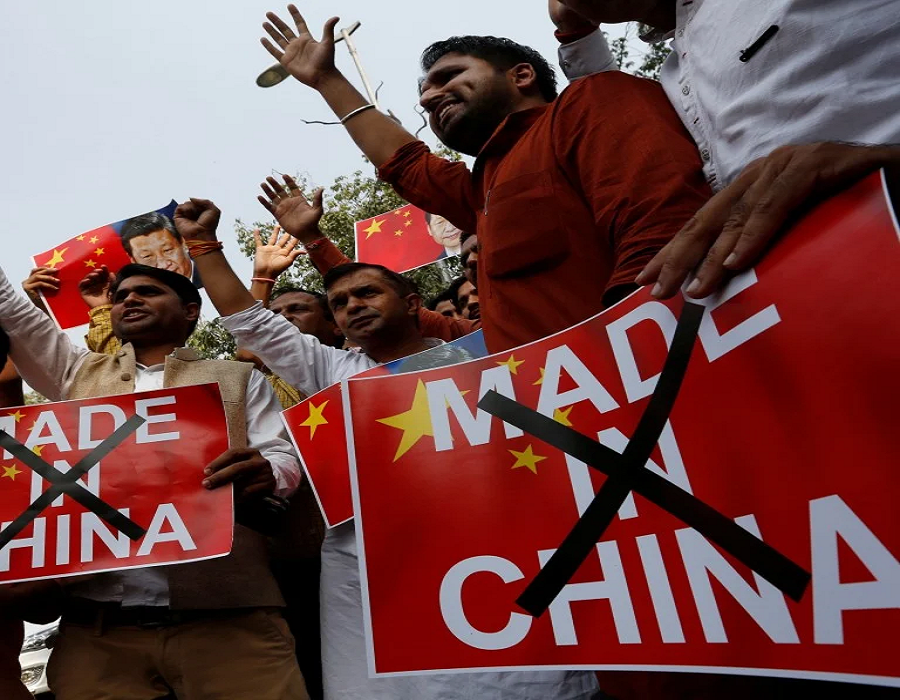
Now after the violent clashes with India and China leading to the death of soldiers, the “Boycott Chinese Goods” clarion got momentum. How practical this is a big question. Recently, the Department of Telecom (DoT) on July 1, 2020 directed PSUs BSNL and MTNL to avoid Chinese equipment from the 4G network upgrading process. The DoT officials also said that private telecom operators would also be directed to stop using Chinese equipment. Being a Journalist who covered so many telecom scams and murky tales in the telecom sector, this newsflash has taken me to the history of Chinese entry into the Indian telecom sector.
Many Chinese products entered the Indian market in the mid-70s like cycles, automobile parts etc due to their low price and more finishing touches compared to the then-Indian products. Then came entry in the pharmacy sector and hardware machinery sector and then in computers. But entry into the telecom sector by 2007 (not individual mobile phones but in telecom networks) was controversial due to the inbuilt software (spywares) becoming problematic from a country’s security point of view. But these concerns were gone to wind due to the corrupt political leadership, bureaucracy and many unscrupulous private telecom operators who were just interested in money making, ignoring the security concerns.
Flashback:
India’s mobile phone sector witnessed a total change when Dhirubhai Ambani landed in the Telecom sector by giving a mobile phone and connection for just Rs.500 in mid-2002. At that time Reliance, mobile phone operations were headed by elder son Mukesh Ambani and later went to Anil Ambani after the family partition in 2006. All the mobile phones given to the public with just Rs.500 with connection were fully imported from China. Indian public at that time paying around Rs.9,000 to Rs.15,000 on average for a mobile phone with exorbitant call charges were overnight rallying in the queue before Reliance shops to get a mobile phone and connection for Rs.500. After getting a connection, Reliance used to charge the price of the mobile phone in installments along with the monthly bill, which ultimately leads to a lot of displeasure from customers on the hidden pricing. “Kar lo duniya mutti mein” was the Reliance advertisement for this package with a smiling Dhirubhai Ambani’s photo. Actually, these Chinese phones were not durable ones like European, Korean and Japanese makes. But due to low pricing large number of the public preferred Chinese due to its cheap price.
This great magic of pumping cheap Chinese phones by Reliance outsmarted other European mobile companies like Nokia, Siemens, Erickson, Motorola and Korean brand Samsung and Japanese brands like Sony, Mitsubishi along with other mobile operators like Airtel, Idea, Essar etc. So soon all the mobile operators were also forced to go for low-cost Chinese phones while giving connection.
"Many Chinese products entered the Indian market from mid-70s like cycles, automobile parts etc. due to its low price and its more finishing touches compared to the then Indian products."
Here come the typical Indian problems. Why has India never thought of manufacturing mobile phones in India? The answer is simple. Our system is always slow in the decision-making process and we started manufacturing mobile phones only in 2005 by inviting Nokia to start a manufacturing unit in Chennai and within a few years, we created hell for them through taxation issues, leading to shutting the shop. India allowed mobile phones in 1994 and started mobile phone manufacturing only in 2005. That is 11 years later, allowing other countries to pump their phones here. That is India’s policy-making whoever rules the country. Thankfully now Korean brands Samsung and Apple iPhones started manufacturing facilities in India in 2018 and many firms have started mobile phone and accessories businesses. Still, we have to go long way in archaic taxation to boost this sector.
The problem in Chinese mobile phones and the silence of Indian authorities:
Meanwhile, by 2006, so many Chinese phones started manufacturing and assembling in India. There were fake Indian brands also like Micromax etc. They were just importing raw materials and just assembling or importing with Indian names from China. But there was a problem with Chinese phones. These mobile phones, with internet connectivity and little-known funny brand names, were sold at anything between Rs 3,000 and Rs 6,000 when established companies like Nokia, SonyEricsson, and Motorola were selling handsets between Rs 15,000 and Rs 25,000. Why the Chinese were allowed to sell handsets at such throw-away prices remains a mystery. Within three years, by 2009, more than five crore Chinese mobile phones were sold in the Indian market. By 2009, Indian authorities found out that these phones were illegal because they were violating basic security norms.
This is a blatant violation: In 2003, in order to track mobile phones, the International Telecom Union (ITU), had insisted that all manufacturers provide a unique number for each mobile set called the International Mobile Equipment Identity (IMEI) number. Every mobile user can get this 15-17-digit IMEI number by pressing *#06# on his or her handset. According to the ITU, service providers must not provide a connection to a mobile phone without this IMEI number because this number helps security agencies track a subscriber.
The question is: Why did the Commerce Ministry under Kamal Nath and his deputy Jairam Ramesh, back in 2006, allow illegal Chinese mobile phones, that clearly violated international standards, into the Indian market? Why Telecom Ministry at that time headed by Dayanidhi Maran and A.Raja gave a connection to these Chinese mobiles without an IMEI number? Woken up in 2010 with a rude shock, Indian intelligence agencies, in a rather delayed intervention, alerted the Department of Telecom which then ordered service providers to disconnect all service to Chinese mobile phones operating without the IMEI number. The damage, however, had been done with more than five crores unaccounted for Chinese handsets already out in the market. And more than Rs.25,000 crore had flown to China by this. All these mobile phones without IMEI numbers went to the dustbin.
Entry of Chinese equipment’s in Indian telecom networks:
Allowing Chinese companies into India’s telecom networks by 2007 was the worst. The political leadership, corrupt officials and certain uncouth mobile phone operating Corporates were behind this. It is intriguing that despite repeated alerts from the Government’s intelligence and technical units, Chinese telecom giants Huawei and Zhong Xing Telecommunication Equipment (ZTE) were allowed into the Indian telecom sector by 2007. That time India’s Telecom Minister was none other than controversial A.Raja. No need to say further on this.
It is still a mystery as to how, back in 2007, Huawei was entertained in India, when all knew that the company is headed by officers of the People’s Liberation Army (PLA) of China and that it was founded in 1987 by Brigadier Ren Zhengfei and other ex-PLA officers. In fact, much before R&AW and Intelligence Bureau raised an alarm over this company’s presence here, the credentials of Huawei were questioned by junior telecom officials at the Sanchar Bhawan.
"It is still a mystery as to how, back in 2007, Huawei was entertained in India, when all knew that the company is headed by officers of the People’s Liberation Army (PLA) of China and that it was founded in 1987 by Brigadier Ren Zhengfei and other ex-PLA officers. In fact, much before R&AW and Intelligence Bureau raised an alarm over this company’s presence here, the credentials of Huawei were questioned by junior telecom officials at the Sanchar Bhawan."
According to Indian telecom engineers familiar with the case, Huawei’s first presentation to the Department of Telecommunication (DoT) for empaneling them as vendors, after they had crossed certain “political barriers,” sowed the first seeds of doubt. They say, “Huawei engineers boasted about having the unique advantage of a Remote Access Servicing System. When asked to explain, they said that their equipment, in case of any faults, can be repaired or serviced from their headquarters in China. Our engineers, out of curiosity, asked what kind of technology this was and how could they repair equipment installed in India by sitting in China.” Clearly unconvinced, India’s telecom engineers decided to probe further. “When we consulted our technical counterparts in the security agencies, they also found something fishy in this technology. Back then, the entire world was researching to decode the method behind this Chinese technology. Within days we found out that the company was installing some bugging software or chip in its equipment which enables the company’s Chinese headquarters to enter into our network without our knowledge,” say India’s smart telecom engineers. Despite the obvious seriousness of this alert, it was not entertained either by the DoT bureaucrats or their political masters; worse, those who raised these concerns were asked to keep quiet.
Huawei bagged several contracts in the BSNL’s southern networks, amounting to more than Rs 2000 crore during tainted A.Raja’s tenure. As R&AW and IB were putting pressures against Chinese equipment’s due to inbuilt spywares, the Indian political leadership came with a great compromise deal.
It soon became apparent that Chinese brokers had slowly but surely begun to dominate the power corridors in India, virtually kicking out existing European giants like Nokia, Ericsson, Siemens etc. It is an open secret now that most Chinese brokers in India are Hawala agents operating in New Delhi, Mumbai and Chennai and whose instant and speedy delivery of strategies alongside their ability to please the bureaucracy and politicians outwitted the tactics employed by the European vendors. Fact is all gave kickbacks because India is big market. But Chinese give it smarter and faster ways.
Following Huawei, Indian authorities allowed yet another Chinese company, the ZTE, into the telecom sector in 2008. By that time Anil Ambani’s Reliance was mainly using ZTE and helping them to lobby in India. This company, founded in 1985, is a listed company in the Shanghai Stock Exchange and is a strategic partner to many Chinese defense establishments. In fact, a major stake in this company is still controlled by Chinese Government units connected with defense and aerospace. Between the two of them these telecom giants managed to corner plenty of business in the Indian telecom sector.
Huawei bagged several contracts in the BSNL’s southern networks, amounting to more than Rs 2000 crore during tainted A.Raja’s tenure. As R&AW and IB were putting pressures against Chinese equipment’s due to inbuilt spywares, the Indian political leadership came with a great compromise deal. The deal was don’t use Chinese equipment’s in North Indian telecom networks and decided to use in South Indian telecom networks. What an Idea!!!!
Given the stiff competition and the Chinese vendors’ cheap pricing policy, private mobile operators too started getting drawn to these companies. It is a well-known fact that the Chinese Government reimburses losses, in the form of subsidy, in several ways, to their companies for bagging international contracts. Things went largely undisturbed till Indian intelligence agencies alerted in 2010 by their American and British counterparts about the exact nature of the bugging software/chip hidden inside the Chinese telecom equipment.
“The bugging software or chip is now widely known as the Manchurian Micro Chip. This is an advanced, spy software developed by Chinese hackers with the help of the Call-Home Technology. As soon as anyone installs a Chinese equipment, it is reported to its master server in China. That means, at any given time they can infiltrate our network and jam it as and when they wish to. The technology also helps them enter our network and access sensitive data. Still, it took months for our Government to take action and ban them,” say telecom engineers.
The first official international alarm against Chinese telecom operators was sounded in September 2009 by the Australian intelligence agency, Australian Security Intelligence Organization (ASIO) that officially started investigations into Chinese telecom equipment installed in their country. Following investigations, Huawei was promptly asked to replace all Chinese engineers in Australia and the ASIO ordered the insulation of their network by de-bugging the devilish Manchurian Micro Chip. Predictably, amid allegations pouring thick and fast against this bugging software, Chinese diplomats chose to term the entire matter, “American pulp fiction”. Playing the aggrieved party, they said investigations on Chinese cyber infiltrations worldwide amounted to denial of a level playing field. Back in India, the Telecom Ministry’s plan to grant a Rs 36,000 crore GSM line tender to Huawei in 2010 was cancelled by the Prime Minister’s Office after security agencies confirmed the presence of bugging software in their equipment. In a shocking move, however, the Telecom Ministry then under A.Raja, advocating Huawei’s cause, said that while border areas can be avoided, the company must be allowed access to the rest of the country. Fortunately, on the intervention of the Central Vigilance Commission and the Advisor to Prime Minister Sam Pitroda, cancellation of the entire tendering procedure was ordered. Then Huawei and ZTE used Indian media with tall claims about “huge investments and huge employment” they plan in India.
In ‘The Pioneer’ newspaper on May 16, 2010, I wrote a full-page article on this incident. The article was based on the mid 2010 fight between then Home Minister P Chidambaram and Environmental Minister Jairam Ramesh on Chinese entry on India’s telecom networks. Jairam Ramesh was caught in a controversy for supporting Chinese companies and later Chidambaram flexed muscles and I feel after flexing muscles Chidambaram must have satisfied with Chinese after getting his pound of flesh in the battle. Those days Huawei and ZTE representatives and Chinese diplomats were always seen in the Home Ministry’s office corridors waiting for Chidambaram. Later ‘Mogambo khush hua.’ And Indian media too kept silence as Chinese telecom companies’ advertisements were pumped.
"The first official international alarm against Chinese telecom operators was sounded in September 2009 by the Australian intelligence agency, Australian Security Intelligence Organization (ASIO) that officially started investigations into Chinese telecom equipment installed in their country. "
The latest info
Now it is exposed that Anil Ambani’s Reliance was using full Chinese equipment’s and he had bagged Rs.15 billion dollar from Chinese Banks from 2008 to 2010. According to Chinese Banks’ cases (now with interest dues Chinese banks demand 18 billion dollar) filed before the London Court, this huge loan was given to install Chinese equipment’s in India’s telecom and power sectors. According to Aid Data’s research paper on China’s Global Footprints, in May 2008, first Reliance Communications got 750 Million Dollar to purchase Chinese telecom equipment from Huawei. This loan was given by China Development Bank when Anil Ambani’s Telecom firm bagged the controversial GSM license in November 2007 with blessing of then Telecom Minister A. Raja and then Finance Minister P Chidambaram.
In December 2010, the Chinese Development Bank with other Chinese banks’ consortium funded a big loan of 1.93 Billion Dollars to Anil Ambani’s now-defunct Reliance Communications. This was used for short term refinancing and to buy controversial Chinese equipment from Huawei and ZTE, which was always objected to by India’s Intelligence Bureau. Though IB sleuths objected, Anil Ambani always managed to get clearances from Home Ministry and Telecom Ministry, who was always seen in all Ministers’ offices or homes including Prime Minister’s office or home on every Wednesdays during Congress led UPA regime.
Now Anil Ambani is bankrupt and still getting favors from BJP Government also. On May 23, 2020, the London Court ordered to pay immediately 717 million dollars in 21 days in the demands raised by Chinese banks. As per the London Court’s Order, Anil Ambani was supposed to pay these 717 million dollars (Rs. 5400 crore) by June 13, 2020. As per the information this payment is not yet paid. How bankrupt Anil Ambani going to pay all these huge dues is a multi-billion-dollar question.
Now dear readers, what is the point in current propaganda of boycotting Chinese products? We have seen how our Intelligence agencies and telecom engineers’ warning were ignored by India’s political leadership, officials and certain Corporates. Now, the Department of Telecom directed PSUs BSNL and MTNL to avoid Chinese firms from telecom networks. The DoT officials say private telecom operators will also be directed to do so. Mukesh Ambani’s Reliance Jio, which has already pumped Millions Chinese phones in Indian market and other operators too. Sensing the atmosphere, Mukesh Ambani declared that Chinese equipments are not used in his networks. Now he is in the good book of United States by avoiding Chinese equipments from network, while dumping all low-cost Chinese phones in India. Only time will tell on the changing market equations subject to changing geo-political equations and its ups and downs.
(Journalist working with ‘The Pioneer’ newspaper, credited for reporting many telecom scams.)
Globally cornered, China threatens neighbors to stay relevant
by Prashant Tewari / 16 June 2020Covid-19 has exposed Chinese design to capture the world through its sheer power of manufacturing and its control over the global supply chain. The world has realized that over-dependence on China will have a disastrous effect on the economies, and it is leading to empowering a totalitarian state that has no value system. The ruling CCP is threatening India, Vietnam, Taiwan, Hong Kong, Indonesia, and Japan and of course, Tibet is engulfed in a dragon basket. President Xi Jinping desire to make China a superpower has thrown the world into a strange paradox. China is on the verge of setting a cold war with the USA and the various countries have to decide the way they want to be a party to this ultimate divide. India is inching for closure to the USA in the last few decades and this is the reason why China has launched a military threat to mitigate this possibility.
On the military front, the three sectors where India and China have a recurrence of disputes are in Arunachal Pradesh, Sikkim and Ladakh. The Arunachal sector is largely dormant despite China’s claim to the entire State. The Sikkim sector is strategic as any Chinese road and infrastructure development in its proximity can threaten the narrow Siliguri Corridor which is the gateway from India to the seven States of North-East India. It is in the Ladakh sector that the geostrategic implications of the face-off and incursions assume significance. The Chinese have made an immense investment of $62 billion in the China-Pakistan Economic Corridor (CPEC) project. Recent assertions by India on its right to Gilgit-Baltistan through which the CPEC passes on its way to the Karakoram Pass in the Shaksgam valley (illegally conceded by Pakistan to China) have obviously rocked the boat. Unlike Doklam, where the Chinese movement was restricted to the single track that they were trying to develop along a narrow valley, in Ladakh the LAC is open and rugged. There are various “disputed areas” and “areas of differing perceptions” from the DBO in the north to Fukche in the south. Its centrality to the entire LAC in Ladakh and proximity to the Spanggur Gap and Chushul make the south bank of the lake a secure flank for large-scale moves by the Chinese. Hence, it holds operational importance to both armies. The western Ladakh region of DBO provides a buffer against Chinese direct access to Shaksgam valley and the Siachen heights. India therefore must hold on to DBO.
The Modi government's decision to broadcast weather reports of Gilgit-Baltistan on Indian news channels and the preconditions set for Foreign Direct Investment in segments of the Indian economy has definitely upped the ante for the Chinese. India is a huge market for Chinese manufactured goods and India hardly exports to China. China would hate to lose the large lucrative Indian market when the USA is pushing for tariffs and barriers for Chinese imports. India must put the trade upfront in the negotiations with the Chinese government rather than the military and diplomatic options, Chinese are smart business people to understand the cost of losing the Indian market. Finally, Narendra Modi must reshape the cabinet; the ministers lack global experience and political authority to drive a large country ahead. Narendra Modi has proved himself a decisive mass leader by winning two successive Lok Sabha elections, his deputy has proved himself an articulate political strategist and taskmaster in home ministry but the rest? Either they are not given space to work or they are incompetent. PM is not getting the required support from the cabinet to govern India effectively and the country is suffering. Recent events namely the Delhi riots, Shaheenbagh drama, Tablighi Jamaat show, Covid-19 crisis, and Chinese adventure have shown that team Modi-Shah is overburdened with work and they need extra competent hands to handle the crisis driver country.
Editor-in-Chief Prashant Tewari: Connect at twitter / FB # prashanttewari11 email:prashant.tewari@opinionexpress.in
FREE Download
OPINION EXPRESS MAGAZINE
Offer of the Month