
News Destination For The Global Indian Community


News Destination For The Global Indian Community
Saga of criminalisation in politics and buried Vohra Committee Report
by J Gopikrishnan / 02 April 2021Whenever debates on criminalisation and its link with politics, memories will resurface about the not yet fully published Vohra Committee Report of 1993. Actually, the 12-page report prepared by Home Secretary NN Vohra names only fugitives Dawood Ibrahim, first parked in Dubai and now in Pakistan and late Iqbal Mirchi parked in London, and then talks about criminalization of politics in Bihar, Haryana, Uttar Pradesh without any naming any politicians. It also talks about the role of the narcotics trade, film world mafia etc without naming anyone in the signed first 12 pages of the report. It is well known that Vohra who later enjoyed post-retirement life of more than 25 years up to Governorship has annexed many unsigned intelligence reports, newspaper clippings and sensitive letters of many which name many big names.
Many portions of this unsigned annexure naming important politicians (one recently died) basically from the Western region and their involvement with Dawood Ibrahim, narcotics gangs, and hawala rackets are still available. Generally, the media avoided publishing due to its sensitive nature and this annexure is unsigned. Many Editors lost jobs for bringing out some of the portions of this annexure. A classic case was the termination of the late Editor Vinod Mehta for naming a big politician from Maharashtra for his links with Dawood Ibrahim. Not only Vinod Mehta lost his job, the newspaper owned by Times of India also closed down after this incident. We leave it to the guess of readers about the name of the politician, still controlling the affairs of Maharashtra.
Basically, criminalization of politics starts from election-winning techniques like booth capturing and retaining power by terrorizing the people to ensure the money collection. “In certain States, like Bihar, Haryana and UP, these gangs enjoy the patronage of local level politicians, cutting across party lines and the protection of governmental functionaries. Some political leaders become the leaders of these gangs/armed senas and, over the years, get themselves elected to local bodies, State Assemblies and the national Parliament. Resultantly, such elements have acquired considerable political clout seriously jeopardizing the smooth functioning of the administration and the safety of life and property of the common man, causing a sense of despair and alienation among the people,” narrates Vohra Committee Report.
The Report goes on: “An organised crime Syndicate/Mafia generally commences its activities by indulging in petty crime at the local level, mostly relating to illicit distillation/gambling/organised satta and prostitution in the larger towns. In port towns, their activities involve the smuggling and sale of imported goods and progressively graduate to narcotics and drug trafficking. In the bigger cities, the main source of income relates to real estate – forcibly occupying lands/buildings, procuring such properties at cheap rates by forcing out the existing occupants/tenants etc. Over time, the money power thus acquired is used for building up contacts with bureaucrats and politicians and expansion of activities with impunity. The money power is used to develop a network of muscle-power which is also used by the politicians during elections”.
The above two paragraphs of the Vohra Committee Reports neatly narrate the role of criminalization in Indian politics. Now let us back to the electoral violence. Since the introduction of the Electronic Voting Machine, booth-capturing violence is not happening since 2000. Thanks to maverick former maverick Election Commissioner late T.N.Sheshan for forcefully implementing Electoral Identity Cards and Electronic Voting Machines. But politicians are not fools. They devise new methods to grab power. Violence is perpetrated using the local anti-social elements to fear the electorate to stay away from voting, and money pumping to bribe voters still going on.
Elimination of political rivals
Elimination of political rivals is the worst in Indian politics, where Left parties have a say. This intolerant barbarism happens in Left controlled areas like Kerala and West Bengal and Maoist infiltrated areas of central India. Sadly though Left parties are sidelined in West Bengal politics, in the Trinamool Congress regime also this violence and elimination of political opponents are happening. It must be interesting to note that such barbaric methods are not happening in areas where BJP and Congress are strong. So we can attribute the origin of elimination of political enemy methods to Left parties which once even passed a resolution (famously known as the Calcutta Thesis) justifying the need for the elimination of “class enemies”.
There is another kind of violence still practiced in India. This is the violence or elimination of enemies within the party. Here comes the real role of the usage of mafia elements by politicians to eliminate their rivals within the party. Even terrorists, mafia underworld and ultra-Naxal gangs were used to eliminate the rivals within the party. Unfortunately, probes in these cold-blooded murders never proved due to the professional killings and alibis deployed with complete precision techniques. So still general beliefs on these murders remain as hear says without any proof. The famous film ‘New Delhi Times’ narrates this kind of elimination of political rivals from within the party.
Another such incident of big violence erupted inside DMK. In a tussle to become the party’s No: 2, supremo Karunanidhi’s sons Stalin and Alagiri went to street fights leading to the murder of Stalin’s supporter MLA Tha Kiruttinan in 2003. The brothers’ fight for supremacy in the party ended up in the burning of nephew Maran brother's newspaper office and burn to death of staffers. Alagiri lost his temper when Marans’ newspaper published a “survey” saying people want Stalin as the leader. After this violent incident, Karuanidhi ordered Dayanidhi Maran to resign from Union Cabinet in 2006.
Other crimes
Many big crimes involving politicians, and agencies are literally tied to their hands. Police are forced to act when public anger goes bigger. Many sleazy stories, and blackmailing also involved in the politically linked murders. These were many times stories for many action-thriller movies. Aspiring lady politician Banwari Devi murder, activist Shehla Masood murder, and journalist Shivani Bhatnagar murder cases are such full of sleaze involving many political leaders.
Sunanda murder case exposes the intricacies of politicians and IPL betting rackets. Sunanda was found dead in seven-star Hotel Leela within a few hours when she was going to expose her Husband Minister Shashi Tharoor and his IPL controversies in January 2014. It took more than a year for Delhi Police to register FIR and forced to chargesheet Tharoor only in 2018. Actually, Delhi Police was forced to act after BJP leader Subramanian Swamy approached Courts while all in politics and media were keeping criminals silence.
Smuggling, Narcotics rackets and Politics
Smuggling rackets and politicians are closely associated from time immemorial. From Mumbai underworld dons to fugitives to the latest Kerala’s UAE Consulate involved gold smuggling are the telling examples of this big syndicate. The government can if they want to curtail this smuggling and narcotics syndicates. But no one wanted and that is why India’s Customs Department is known as the most corrupt department. Corruption in Customs Department is always so bigger than in Police and other money-spinning departments and it is well known that politicians routinely get their cuts from these dreaded rackets which are capable of eliminating the people who stood against them. Smuggling is basically due to the Government’s hyped taxation and when the tax terrorism ends smuggling will be hit hard.
“The big smuggling Syndicates, having international linkages, have spread into and infected the various economic and financial activities, including havala transactions, circulation of black money and operations of a vicious parallel economy causing serious damage to the economic fiber of the country. These Syndicates have acquired substantial financial and muscle power and social respectability and have successfully corrupted the government machinery at all levels and wield enough influence to make the task of Investigating and Prosecuting agencies extremely difficult; even the members of the Judicial system have not escaped the embrace of the Mafia.
“Certain elements of the Mafia have shifted to narcotics, drugs and weapon smuggling and established narco-terrorism networks, especially in the States of J&K, Punjab, Gujarat and Maharashtra. The cost of contesting elections has thrown the politician into the lap of these elements and led to a grave compromise by officials of the preventive/detective systems. The virus has spread to almost all the centers in the country; the coastal and the border States have been particularly affected” narrates Vohra Committee Report on the role of big smuggling and narcotics trade syndicates,” narrates the Report.
Detailing the role of smuggling rackets, Vohra Report goes on: “It has been suggested that the menace has first to be tackled at the local level where the agencies of the State and the concerned Central Enforcement Agencies like Customs and Excise, Income Tax etc. would be required to take effective action. In cases where a crime Syndicate has graduated to big business, it would be necessary to conduct detailed investigations into its assets, both movable and immovable. It has been stressed that when such action is not timely and effectively taken, the lower functionaries of the concerned State and Central Departments/organisations start overlooking the activities of the crime Syndicates. To elucidate this point, the Director CBI has given the example of IQBAL MIRCHI of Bombay who, till the late 80’s, was merely a visitor to passenger and carrier ships to obtain liquor and cigarettes for selling the same at a profit.
“In the last 3-4 years, MIRCHI acquired real estate valuing crores of rupees; he has many bank accounts and has been paying lakhs of rupees to his carriers. The growth of MIRCHI is due to the fact that the concerned Enforcement agencies did not timely take action against him and, later, this perhaps became difficult on account of the enormous patronage that he had developed. If MIRCHI is investigated, the entire patronage enjoyed by him and his linkages will come to light. Director CBI has observed that there are many such cases, such as that of MIRCHI where the initial failure has led to the emergence of Mafia giants who have become too big to be tackled.
“Director CBI has stated that the main mode of communication/contacts of the Mafias operating at the international level is through telephonic communications. Referring to the useful leads emerging from the investigations into the activities of Dawood Ibrahim, a Mafia leader, the director CBI has stated that the effective monitoring of the telephone calls made from India/received from abroad would yield useful information and, for this being done, Government may grant sanction to monitor certain telephone connections”.
Role of Banks
Banks are always hesitant with the probe agencies in sharing details of the money movements. There are even instances of the Enforcement Directorate, DRI which are under the Finance Ministry complaining to the Ministry for resistance of the State Bank of India in sharing details. See, all these organizations come under Finance Ministry. This is the system created and the political boss is the sole answerable. We have seen former Finance Minister Arun Jaitley venting his anger against CBI when it charged top bankers for fraud. What poor probe agencies and their good officers can do in such Catch 22 situation? Many whistle-blower officers were kicked out and got all kinds of service punishments and some were even jailed for concocted cases.
“The assistance of Banks is an essential input. The Bank Managers can be placed under obligation to render reports on all heavy transactions and suspicious accounts to the Enforcement agencies. Such a practice obtains in UK,” said the Vohra Committee Report, which is not yet implemented for the past 28 years.
Trial Stage
Rarely do big cases came up before the trial. Many cases landed before the Courts due to maverick officers. But here come the problems in the trial. Many big cases fail in the trial due to bad prosecution and corruption in the judiciary. There is a bizarre incident that must be referred to here. One smuggler and his brother now running India’s big law office in handling smuggling and tax evasion cases. The smuggler was caught and jailed at a young age and from jail, he passed LLB. Now he is running a big law firm handling such cases and a few years ago he was caught flying with the country’s Attorney General to Dubai.
Suggestions
From the above-mentioned incidents, how the system can be cleaned up? The only answer is for the electorate to select ethical political leaders who have the desire, capacity, and moral integrity not only to root out systemic corruption and break the nexus between politicians, officials, and criminal elements, but also to fully support whistle-blowers, worthy officers, and prosecutors in order to ensure justice is delivered at all costs. And there is a responsibility for the electorate while select credible leaders and to be vigil always.
(J Gopikrishnan is a senior journalist working with ‘The Pioneer’ newspaper)
Focus is back on Vohra committee report
by Prashant Tewari / 02 April 2021THE MAHA BLUNDER: Many political leaders, who were in influential positions in Maharashtra and Gujarat during 1990s had developed close relations with underworld don Dawood Ibrahim and his henchman Iqbal Mirchi. This assertion was officially put down on paper when the N.N. Vohra committee submitted its report to the Ministry of Home Affairs (MHA) in 5 October 1993, roughly three months after it was established on 9 July 1993 in the aftermath of 12 March 1993 Bombay bomb blasts. While the contents of the report, which was subsequently made public on 1 August 1995 in Parliament, were only limited to 11 pages, it is a part of the government’s own records that the finding of the report, in total, was close to 100 pages. It is these 100 pages that were never made public, that have now become relevant, almost 26 years after they were brought into existence after Union Home Minister Amit Shah highlighted the issue on the floor of the parliament. The 100 pages with annexures, which are the most vital part of the report, according to old Intelligence Bureau (IB) hands, contain the names of leading politicians and bureaucrats who helped Dawood and Mirchi from the 1970s till 1993 and beyond.
However, there is strong hope among former Intelligence officials that the present dispensation at North Block will now be able to gather the courage to make 100 pages of the report public, especially with the BJP now raking up the issue of the connections between politicians and Dawood. The matter has taken a serious turn in the present context when Pakistan is using Dawood & Co extensively to sabotage the progress of India. The terror attacks, gold smuggling, drug trafficking, and money laundering is extensively pushed by the Dawood network to weaken the Indian state on the behest of hostile neighbor Pakistan, a proxy controlled by China.
The growth of Dawood and Mirchi was due to the fact that the concerned enforcement agencies did not timely take action against him and, later, this perhaps became difficult on account of the enormous patronage that he had developed. MHA was given all kinds of information, in volumes of pages, which were ‘ultra-sensitive’ in nature. This information clearly showed how politicians were on the payroll of Dawood and how they were acting as his servants. Much of this information was produced in the Vohra committee report, in the portion which was not made public. We can understand why it was not made public before, but now, there is no political compulsion as such. It should have been presented before the public to show the deep nexus that existed between the politicians, police and criminals. All the recent developments in Maharashtra related to Vazegate and his handlers rouge police commissioner Paramvir Singh, NCP & Shiv Sena political leadership are known to the entire country. It further establishes the fact that nothing has changed on the ground when it comes to the criminal synergy between the various stakeholders.
Syndicated crime has dented the prosperity of the country and it has infected the system from top to bottom. It is imperative that the present government must table the Vohra committee report on the floor of the parliament and expose the nexus between the politics, police, bureaucrat, and media linkage with the syndicated mafia to clean up the governance. Narendra Modi has repeatedly promised corruption-free governance, and transparent society and his strong-willed home minister should take up the Vohra committee report seriously and the process to clean up the opaque corrupt system controlled by the mafia must end. The role of the state governments is critical to clean up the mess since law & order is a state subject. The roadmap set up by UP Chief Minister to clean up the syndicated mafia should be taken as a glaring example to set law & order right. Our country has limited resources and the scarcity is going to increase further, hence the distribution of available resources becomes key for the success of the nation. We need a coordinated effort from all the stakeholders to erase the mafia nexus so that the next generations can live in peace.
(The writer is Prashant Tewari Editor in Chief)
Reforms 2.0
by Prashant Tewari / 18 March 2021As a COVID-19-induced slowdown marks the Modi 2.0 term, there is a desperate need to get the economy back on track. The country urgently needs a revival of the spirit, ultimately it is a question of the survival of over a billion people. Next-generation reforms include opening most of the railways to foreign direct investment (FDI), allowing more private sector participation in coal production and FDI in construction projects, extending the validity of industrial licenses, removing the last 20 remaining protected sectors under the small-scale industries list, and deregulating diesel pricing.
Reforms noticeably slowed as the Modi 1.0 term progressed but the government managed to institute two key reforms by its mid-term; the goods and services tax (GST) and the Insolvency and Bankruptcy Code (IBC). By contrast, two years into Modi’s 2.0 term, only two reforms namely 25 percent corporate tax limit and the controversial Farm Bills 2020 were pushed by the government.
The compulsion to remain in power has refocused the government’s political energies on socio-political issues like ending the temporary special status of Kashmir, doing away with triple talaq, fast-tracking citizenship for regional minorities through the Citizenship Amendment Bill, and starting the Ram Mandir construction. Socio-political issues are popular but detract energy from taking steps to revive the economy. Reforms that can spur economic activity, boost confidence, and put people back to jobs are the real game-changers yet the focus is largely missing on economic management. The need for reforms, although ever-present, becomes even more critical in a COVID-19-induced slowdown. The government recently announced a slew of reforms that were akin to budget announcements, though implementation timelines are unclear.
Big-ticket and high-impact reforms are required. Lifting foreign equity restrictions in protected sectors and giving more autonomy to major ports can provide a quick bump in growth. Other reforms related to judicial reform, securing timely business licenses/clearances, and making land acquisition easier are long-awaited and can boost business and investor sentiment amidst a slowdown. Some reforms that made sense pre-COVID are even more relevant today, like creating a paperless court system, pushing e-governance, reducing the fiscal deficit, reducing oil imports and promoting clean energy sources to make the country self-reliant. Narendra Modi is blessed with a majority government and the present leadership must take urgent steps to bring back focus on the economic management of the country before it is too late.
Prashant Tewari: Editor in Chief
Farmers Mess : A lost movement
by Opinion Express / 09 February 2021The mayhem that took place in Delhi on R-Day has hurt the farmers as they have lost their bargaining power
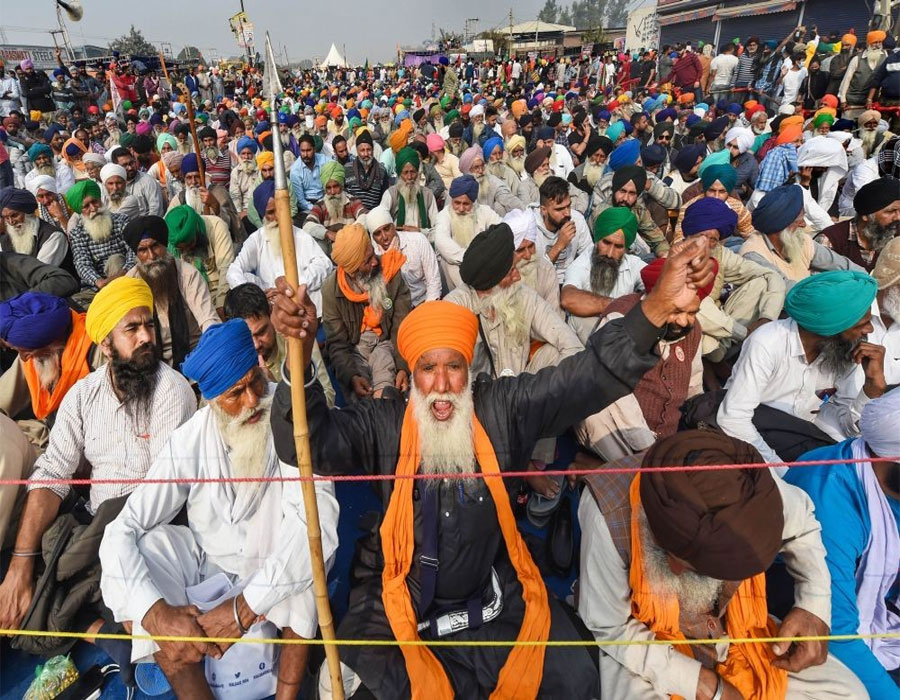
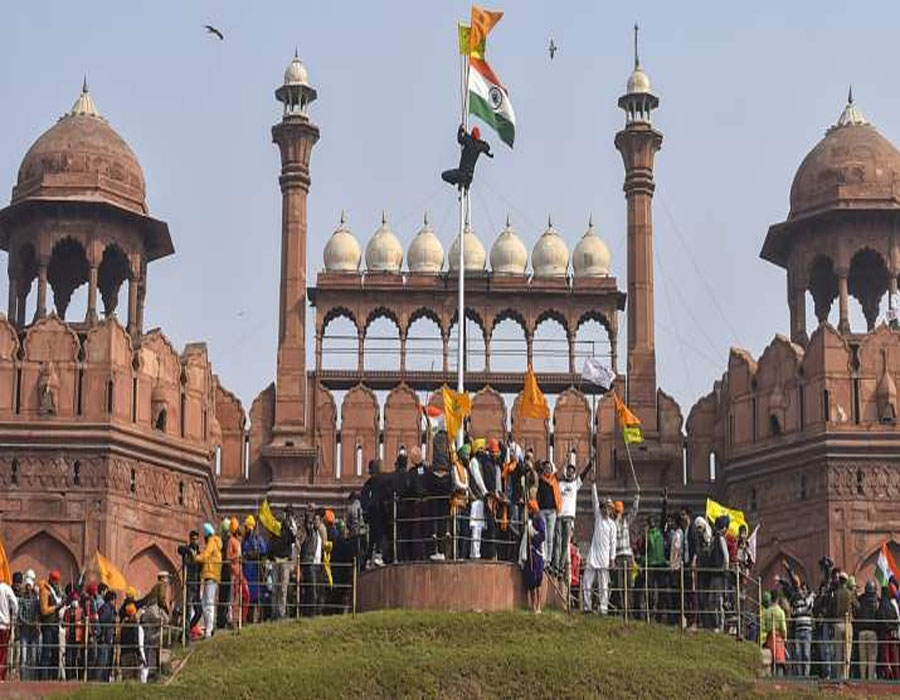
After democracy was put to shame by unscrupulous elements in the garb of farmers and Nihangs (Sikh religious warriors) who hoisted the ‘Nishan Sahib’ on the Red Fort after laying siege to the iconic-building when India was celebrating its 72nd Republic Day, deep fissures have started to appear among different factions of the protesters who are now apparently pitted against each other. This means that the majority of the cultivators are not in favour of what happened on the fateful day when thousands of farmers stormed the Capital, vandalised public property, attacked policemen, ran amok on the streets and captured Red Fort. The protesting farmers allege that antisocial elements orchestrated the violence which was part of a “larger conspiracy” to derail the movement. With police hunting down the perpetrators of the violence, a name which is making the rounds is that of Punjabi actor Deep Sidhu who is being blamed for instigating the growers as well as changing the route. Sidhu is currently absconding.
The Bharatiya Kisan Union (Bhanu) called off its protest from the Chilla border connecting Delhi and Noida. At the Singhu border, the two farmers’ unions protesting from separate daises blamed each other for the violence. The Rashtriya Mazdoor Kisan Sangathan and the Bharatiya Kisan Union (Lok Shakti) are also ending their protests against the farm laws. The unions have also called off the February 1 march to Parliament. As many as 25 cases, including those of rioting and criminal conspiracy, have been registered and arrests and detentions are the order of the day. The police claim that the protesters violated all conditions that were agreed upon by not following the predetermined route, starting the tractor rally before the scheduled time and by carrying firearms, swords and other weapons. With the widening differences and growing disagreements among the farmers, it is safe to predict that the protest will not last long and the farmers will have to return empty-handed. Although the Government has indicated that it will keep its communication channels open and its previous offer to put the three farm laws in abeyance for 18 months stands, right now it doesn’t seem to be a workable proposition for the farm unions who had rejected it earlier. With the growers’ unity in shambles, their leaders no longer find themselves in a position to bargain or exert significant pressure on the Government. And with that, a farmer’s movement which fought all odds for roughly two months now hangs by a thread, courtesy of the violence and mayhem caused by a select few who infiltrated their ranks. The real victims of the violence on R-Day are the farmers themselves and the movement that had united the country in their favour.
The Farm Divide
Whosoever wins this ‘war of prestige, the poor peasants will still remain at the receiving end
No matter who wins the tug-of-war between the farmer unions and the Government, the poor cultivators will continue to remain at the receiving end. Who are these tens of thousands of farmers protesting on Delhi’s borders for almost two months, demanding a repeal of the three new farm legislation and remunerative Minimum Support Price (MSP)? They certainly do not belong to the class of peasants that is neck-deep in debt and many of whom die by suicide every year as they see no option to bail themselves out of the vicious cycle of interest payments on loan by moneylenders. A majority of those camping at the interstate borders are big and upper-middle-class landlords from Punjab, Haryana and western Uttar Pradesh who are part and parcel of the strong arhatiya (commission agents) lobby, a community that drives the Agricultural Produce Marketing Committee’s (APMC’s) mandis. These farmers constitute a sizeable chunk of the vote bank of various political parties who cannot afford to go against the populist stance taken by the community. Only the APMC-licenced traders are allowed to purchase produce from farmers within that particular APMC’s jurisdiction. This helps the cartel of traders and prevents the hardworking farmers from receiving a fair price for their produce. This is why, perhaps, the hectic parleys and several rounds of dialogue have yielded no result and the farmer leaders have even turned down the Centre’s offer to put the new laws on hold. The latest round of talks on Friday also remained inconclusive, with no date fixed for the next meeting. The growers remain adamant on the full repeal of the farm Acts and for enacting legislation on the MSP. The farmers have also raised doubts over receiving fair treatment at the hands of the members of the Supreme Court-appointed expert committee and termed it “biased”. On the other hand, the apex court has made it clear that the panel, tasked to submit its report after noting the farmers’ reservations, would proceed with or without their participation.
However, the farmers’ apprehensions cannot just be brushed aside. The NDA Government’s haste in finalising the three laws, the lack of consultation with stakeholders and the Bills’ passage in Parliament without thoroughly discussing and debating these ought to raise reasonable doubt over the Centre’s intention. Further, these laws were first introduced in June 2020 as Ordinances before being approved by Parliament in September by a voice vote. The farmers allege that the Centre has made laws for benefiting big corporate houses and is not concerned about the welfare of the peasants. It cannot be denied that by promoting private investment in the sector and allowing outside-APMC trade of farm produce, the Government will subsequently buy less from farmers, and it will eventually make the MSP system irrelevant. Further, there is no denying that India’s MSP system is the costliest Government food procurement programme in the world. It’s high time the Government and the farmers think about the pertinent issues impacting the agriculture sector. The Green Revolution has given us food self-sufficiency but chemical fertiliser-centric farming has also led to enormous health and environmental hazards, besides degrading the soil’s fertility. These harmful carcinogens have become embedded into our food web. Further, the introduction of hybrid and transgenic varieties of seeds and crops, just for the sake of increasing productivity and meeting the market demand, is a potent threat to indigenous varieties. These local varieties are naturally resistant to many diseases and pests, and are part of our rich genetic stock. Apart from focusing on eco-friendly agriculture, the Government must devise an effective policy to help the poor peasants who are in distress and who are always at the receiving end, no matter what.
Protesting farmers enter Red Fort, man climbs flagstaff to hoist flag
Deviating from the designated route for the proposed tractor parade, a section of protesting farmers entered the Red Fort on Tuesday and hoisted flags from some domes of the iconic monument in the national capital.
Pushed back by the police form the ITO in Central Delhi a section of the protesting farmers drove their tractors to the Red Fort complex.
The crowd swelled at the monument as some protesting farmers and 'Nihangs' (traditional Sikh warriors) were seen entering the Red Fort and hoisting a flag from the staff from which the prime minister unfurls the tricolour on Independence Day.
Earlier, a clash broke out between police and protesting farmers after the latter reached ITO and tried to push towards Lutyen's Delhi, prompting the force to resort to lathicharge and use tear gas shells against them.
The farmers who began their march from different border points, much before the time permitted to them for their tractor rally, reached ITO in Central Delhi despite the force denying them permission for it.
The Delhi Police had given permission to farmers protesting the three farm laws to hold their tractor parade on selected routes only after the official Republic Day parade on the Rajpath concludes.
However, chaos ensued as the farmers were adamant of heading towards central Delhi.
(Courtesy – The Pioneer)
Farmer crisis management is a self-goal by Modi government
by Prashant Tewari / 09 February 2021The chaos and confusion, allegations and counter-allegations, and social media war are the new order of the day. On every contentious issue, citizens are on roads to settle their grievances. The redressal mechanism through the courts has become extremely weak and our country is under seizure for the entire year. Farmer’s protest in India’s national capital has created headlines globally but why the farmers are protesting, what is controversial in the contentious farm laws is hardly known to the majority of the people. The situation worsened further on republic day as a section of protesters reached the Red Fort on their tractors and stormed into its ramparts. The protesters climbed onto the ramparts of the Red Fort and waved their religious flags. One of them even climbed the flag post where the Tricolour was hoisted by the Prime Minister of India on Independence Day and replaced it with a religious flag there. Later, the police resorted to mild lathicharge and removed the people from the red Fort premises. It is imperative to fix the responsibility for this grave security failure that has led to the shaming of 1.3 billion people living in India. The weakness shown by the government will prove extremely costly in the times to come.
Farmer leaders have clearly stated that the agitation would continue till the farm laws are repealed. The entire confusion is fueled by the exit of NDA partner Akali Dal from the government in protest of the passing of the Farm Bill 2020 without enacting the MSP clause in the final draft of the Farm Bill 2020. It is fair to suggest that the Narendra Modi-led government being in the absolute majority is ignoring the sentiments of its allies since their absence has no impact in the lower house of the parliament for the government's survival. But as rightly suggested by Punjab Chief Minister Captain Amrinder Singh that anti-national forces are looking for an opportunity to penetrate any controversial movement to destabilize the country. Failed Khalistan push by overseas forces may trigger confusion in the minds of the sulking farmer community of Punjab to misguide them on the pretext of ethnic-religious divide hence the government of the day must remain vigilant and the requisite concessions should be extended to the farming community to defuse the unnecessary bitterness and heartbreak between the government and its people.
The government is lacking in communication skill set hence on every contentious issue - strikes and lockdowns are setting in. Lastly, the uncalled international intervention by certain groups and foreign leaders in an internal matter of the country is highly deplorable and it must be condemned in the strongest words. The government must defuse the crisis at the earliest and restore normalcy to accelerate the pace of developmental work that has suffered due to the Covid lockdown. The budget presented has a long-term vision and the government must focus on economic rejuvenation without any manmade disruption.
(The writer is Prashant Tewari, Editor-in-Chief, Opinion Express)
Bofors crucified Rajiv and painted Congress corrupt
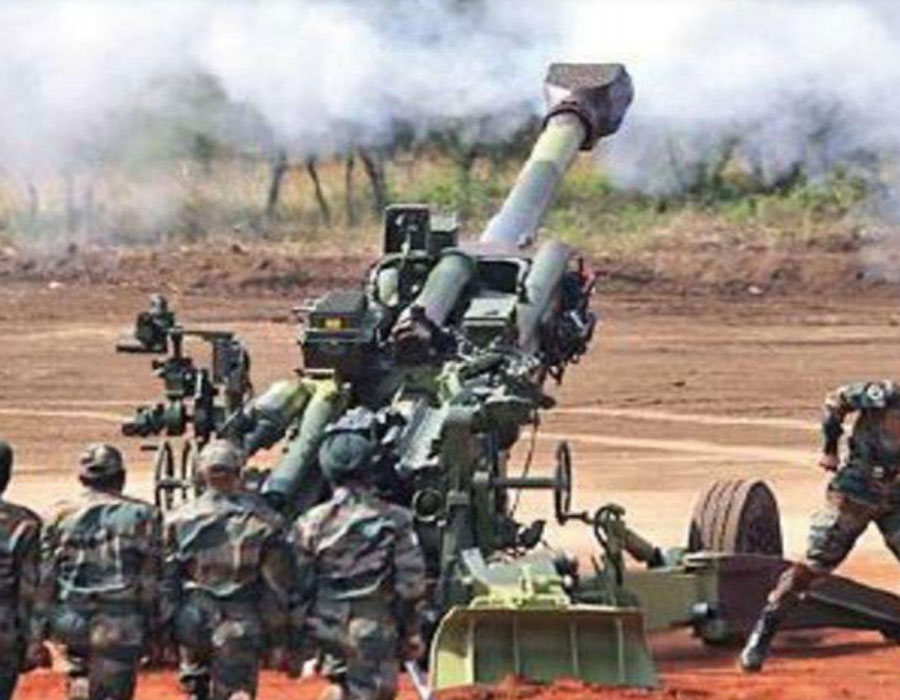
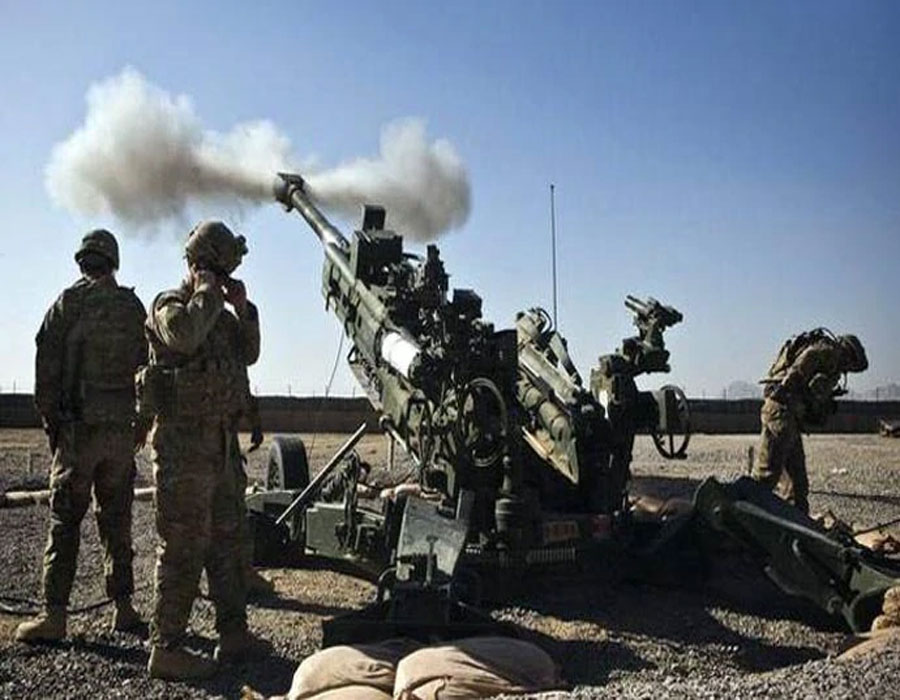
by Prashant Tewari / J Gopikrishnan / 05 January 2021Amateur, inexperienced and perhaps innocent late Rajiv Gandhi was crucified by a powerful cartel of middlemen leading to the destruction of India’s oldest political party. The present government and the proactive courts must order a re-investigation of the BOFORS SCAM to focus on exposing middlemen rather than the past ruling establishment because we felt that the Bofors scam triggered birth to a new class of “dalals” in India and they overpowered the crucial institutions, establishing India as one of the most corrupt countries in the world. Though we are fortunate to have fiscally clean Prime Minister in the last few decades yet corruption is rampant in the country. Where it went wrong? The answer is simple, the country is held hostage at the mercy of middlemen operating in politics, bureaucracy, legal and media. The country is bleeding from corruption and the common man's misery continued unabated.
Against this backdrop, it is vital to explore the Bofors scandal that changed the politics of the country some 33 years ago in 1987. With revelations in 1987 by Swedish Radio alleging kickbacks in the purchase of guns for the Indian Army tremors started in Indian polity and press that shook the roots of the Congress regime under Prime Minister Rajiv Gandhi. Unfortunately, there were several bigwigs cutting across party lines with incriminating links to this scam and they colluded to sabotage this case allowing several culprits to escape public scrutiny and legal prosecution.
Part 1: Background
A healthy democracy evolves through the legislature, executive, judiciary and media. The Bofors scandal in 1980s set in motion a process of decay in all the organs of democracy whereby they were compromised to save the guilty that were among the country’s powerful elite. It may well be that the allegedly guilty leader of the then-ruling party was beguiled by his cronies for their own vested interests. It is also true that propriety demands that a dead person should not be accused since he cannot respond and clear his name (We will strictly follow the convention). However, the country has a right to know the whole truth once it was established that money exchanged hands in the deal. Corruption in the defense establishment should be treated as treachery against the nation and it must be investigated under IPC and stringent NSA guidelines. In 2005, the Delhi High Court quashed charges against all other people who were accused in the Bofors case, including the Hinduja brothers who were also accused of being middlemen in the deal. The CBI plea against the High Court verdict was filed in February 2018 after an extraordinarily long delay of 13 years; it was rejected by the SC. The Court should have taken note of the fact that UPA I & UPA II were in power from 2004-2014, hence the question of an appeal in the top court during this period would have been impossible. However, one ex BJP worker and Advocate Ajay Agrawal had filed an appeal against the Delhi High Court judgment in 2005. The Supreme Court agreed to hear Agrawal's plea and the case is currently pending in the court. The Supreme Court told the CBI that it could make itself heard during the hearings on Agrawal's plea. Will the CBI under the BJP regime now file an Intervention Application (IA) in Ajay Agrawal’s case?
Background: Mohan Guruswamy wrote investigative reports on the case to know the scam's political background and the business nexus behind it. Olaf Palme, the Prime Minister of Sweden was an influential and respected name in world affairs and had strenuously opposed the US war on Vietnam. He inspired Rajiv Gandhi to take the initiative on nuclear disarmament. The quid pro quo for facilitating Rajiv Gandhi's easy entry to the global high table was the purchase of the Bofors FH45 Howitzer. Palme was also facing re-election and his party's coffers needed topping up. The Indian Army’s Howitzer order would do the trick. The competition was shortlisted in to M/s Sofma of France, M/s AB Bofors of Sweden, M/s International Military Services of the United Kingdom, and M/s Voest Alpine of Austria. In the first six evaluations, the Sofma 155mm TR howitzer, with its extended range, was decisively preferred to the Bofors gun. Financial considerations also gave the French manufacturer what seemed to be an unbeatable lead. The donation by the Bofors Foundation at Karlskrona to the Swedish SDP is solid proof.
Losing this lucrative order made the Arun Nehru-led Austrian competitor Voest Alpine furious since it was confident of bagging it, largely because its product was the best gun and preferred choice of the armed forces technical committee. Austrian leader Eisenberger told the parliamentary committee that the funds they wanted accounted for were paid to the Congress party and that a kinsman of the Indian Prime Minister had received them. The Austrian government then advised the Indian government to have this money returned and close the matter. This was the first time the new Indian Prime Minister heard about the dirty game played by his known set of close people. He was furious. A very powerful Minister in his government was summarily sacked. Now a way was sought to set this account right. Bofors were required to close this hole. This was being arranged via a Swiss banker Francis Laffont. The route went like this. Bofors pays Laffont, Laffont pays Voest Alpine and the money already paid in India stays where it is. Eisenberger alleged that Voest Alpine's representative in Delhi, a man called Unterweger was Ottavio Quatrochhi's neighbor in New Delhi. Being expatriate businessmen, they became good friends and both were good friends of Rajiv Gandhi’s wife Sonia Gandhi and her sister Anushka’s then-husband Walter Vinci. It is a well-documented fact that Vinci was in the group of Rajiv Gandhi’s delegation which signed the Bofors deal. BJP leader Subramanian Swamy many times petitioned to Central Governments on probing the role of Vinci who got a major cut in the deal and later buzzed off from Sonia’s family.
As was the well-established practice then, Unterweger also cut a deal with Quattrocchi. What Unterweger did not know was that Quattrocchi had similar deals cut with Bofors and Sofma, the French howitzer manufacturer. When the Voest Alpine deal collapsed, Quattrocchi was required to close that account, as did the Congress party. So one more payoff stream was organised by Bofors to Quattrochi to close this hole. The Hinduja brothers took this to the next level. People like the Hindujas have friends in all parties and many countries. Lest we forget, it was Atal Bihari Vajpayee who wrote to then Prime Minister PV Narasimha Rao seeking closure of the Bofors case against the Hinduja brothers. And it was Srichand Hinduja who accompanied Vajpayee’s Principal Secretary Brajesh Mishra to his meetings with then-British PM Tony Blair and then-French PM Jacques Chirac after the nuclear tests in 1998. Vajpayee and Mishra were actively canvassing for approval of the controversial proposed Hinduja power plant at Vizagapatam. Not surprisingly, even today the plant is under tremendous debt burden and the public sector banks are at high risk of losing tax payers money. Adding to the trouble, there is a massive litigation going on between the state government, state power regulator and the Hinduja’s.
So far, the Indian Government has been given two names by the Swedish journalists who are involved in the story. One is Win Chadha, a Delhi-based arms dealer who represents a number of companies abroad, including Bofors. Chadha has denied that he received any payments and claimed that he stopped representing Bofors in 1985 after the agreement between Rajiv and the then-Swedish premier Olof Palme that no middlemen would be involved. A photograph published in several Swedish dailies, which elicited amused comment in Stockholm, was that of a jubilant Chadha celebrating with champagne, with Bofors officials, after the contract was clinched. The other name given is that of Commander M.R.A. Rao, who used to represent Bofors in the late '70s, but retired from the arms business after Chadha's appointment. Moreover, there is a big hidden aspect in this Bofors saga. The kickback money paid to Quattrocchi and Walter Vinci came from a shell firm AE Services. BJP leader Subramanian Swamy, who was also Law Minister during 1990-91 and saw many prosecution files and investigators reports, repeatedly stated that M/s AE Service was first promoted by Congress leader P Chidambaram’s elder cousin and industrialist AC Muthaiah. Swamy many times demanded a probe into Muthaiah’s role in Bofor's kickback arrangement. However, CBI even during the BJP regime from 1998 to 2004 and till now in 2020 has kept silent on this fact. Even BJP leader Arun Jaitley, whose career brightened as Additional Solicitor General (ASG) in charge of the Bofors case during VP Singh's regime, always kept quiet on this aspect due to his proximity with Chidambaram. Like Jaitley, all BJP leaders kept silent on the role of the Hinduja brothers due to the latter's proximity to Vajpayee. The worst role in the cover-up was that of the Law Minister Ram Jethmalani who handled the files of Bofors in the law ministry and later against all norms of administrative and political morality, became the advocate of Hinduja Brothers.
Such is the sordid and nefarious saga of the Bofors case in which powerful businessmen and politicians cutting across party lines colluded to deceive the Indian public and nation.
Bofors Scandal – The murky tale of sabotage: Who are all responsible?
The real sabotage started in the Bofors case when the trial started in 2000. The corruption case came to light in 1987 and it politically finished Rajiv Gandhi though the subsequent investigation showed his innocence in person. The beneficiaries could have been his colleagues, close family acquaintances and surely the middlemen and corporate Dallas.
Part – 2
In 1997, Swedish Government submitted a box full of documents about the Bofors case to India. Journalist Chitra Subramanium, who first exposed Swedish Radio’s revelation of 1987 was present in the function of the box handed over to the Indian Ambassador by the Swedish Federal Bureau of Police along with other journalists. Defence Minister George Fernandez many times complained that Prime Minister AB Vajpayee never allowed him to touch this box or any of the Bofors files. Why? The answer is simple: the role of Vajpayee protégé Hinduja Brothers in the Bofors kickback would have been exposed. Now the question is where is the box handed over by Swedish Police to CBI? CBI never mentioned about this box in their charge sheet filed after five years.
Legal Battle: The charge sheet filed on October 9, 2000 by the Central Bureau of Investigation (CBI) in the Delhi court of Special Judge Ajit Bharihoke, along with the detailed post-April 1987 record of the media investigation and other documents and reports to make two things clear. While there is nothing new in the claim made by the Hinduja Brothers about their "non-involvement in the Bofors case", a mass of multi-faceted documentary evidence and information gives the lie to this claim. On April 22, 1987, the respected Swedish daily newspaper Dagens Nyheter (DN), quoting highly placed company sources in an original report, identified the Hindujas as recipients of the "commission" paid by Bofors in connection with winning the Bofors-India howitzer contract of March 24, 1986. The first irrefutable documentary basis of the Hindujas’ involvement in the Bofors-India payoff scandal came in the form of six documents relating to the PitcoMoresco: 'Lotus', 'Mont Blanc', 'Tulip' accounts track of 'commission' payments, amounting to nearly SEK 81 million, published and analysed in The Hindu of April 22, 1988 and June 25, 1988. Especially important were three transaction documents which made the link, "Pitco, c/o Sangam Ltd" and "Pitco, c/o Mr G.P. Hinduja Sangam Ltd.," for 1982 and 1984. By June 1988, the independent media investigation had acquired and published a large number of authoritative Bofors documents that gave the lie to the 'winding up', 'no middlemen', 'no commission', 'no Indian recipient' story. By late1989, a great deal of further evidence and information, notably from the Martin Ardbo diary entries and notes for 1987 seized by the Swedish police and from The Hindu investigation's interaction with the Hindujas had revealed the involvement of the Hinduja Brothers as lead actors in the crisis-management and cover-up. In fact, these developments strongly indicated that the Hinduja's role in the Bofors howitzer scandal went deeper than the role of anyone.
After a regular criminal case was registered by the CBI in 1990, this strategy of blanket denial continued with S.P. Hinduja and G.P. Hinduja reportedly claiming to the CBI investigators, as late as 1991, that "our family has never dealt with Bofors" and S.P. Hinduja going so far as to assert, in a newspaper interview published on April 14, 1991, that "we are not an appellant before Swiss courts on the Bofors matter." This unsavory chapter should have come to an end with the incriminating documents received in December 1999 by India's premier criminal investigation agency from the Swiss authorities in the execution of the letter of rogatory of February 7, 1990. But during a phase of pre-charge sheet jitters, the denial continued with new variants of the falsehood in desperate attempts to block and even derail the lawful investigation. No longer was it possible to deny the fact of Bofors payments into the coded accounts opened by a Panama-based front spelled as M/s Mc Intyre Corporation and M/s Mac Intire Corporation, or ownership of this 'M...' corporation (by whatever name spelled) by the three Hinduja brothers, Srichand, Gopichand and Prakash Hinduja.
The Bofors case, as investigated by the CBI, is about criminal conspiracy, bribery, criminal misconduct by public servants, cheating, criminal breach of trust, forgery for the purpose of cheating, and using as genuine a forged document in respect of the Bofors-India howitzer contract of March 24, 1986. The first charge sheet, filed in October 1999, was against the former Defence Secretary, S.K. Bhatnagar, Ottavio Quattrocchi, W.N. Chadha, Martin Ardbo, M/s A.B. Bofors for various offenses under the Indian Penal Code. The charge sheet against G.P., S.P. and P.P. Hinduja alleges that they were "party to the criminal conspiracy with Martin Ardbo and others during the period 1985-1987 and thereafter, in pursuance thereof, they also received commissions from M/s AB Bofors"; that the Swedish arms manufacturer paid the three brothers, through the 'M...' corporation, SEK 80.80 million; that although the Government of India had laid down a requirement of no middlemen and no commissions in the howitzer deal and Bofors had agreed, "in pursuance of the criminal conspiracy, the accused persons dishonestly led the government to believe that there were no agents and induced the government to part with" an amount that included "commissions," thus cheating the government and putting it to "a wrongful loss."
The supplementary charge sheet makes clear that in the CBI's professional judgment, there is abundant evidence linking the 'Arab-Tulip," "Lotus," and "Mont Blanc" coded payments (SEK 37.03 million, SEK 31.99 million and SEK 11.77 million) into three Hinduja Swiss bank accounts with the 1986 Bofors-India howitzer contract and the consequent payoffs. A CBI analysis of the nine discrete payments made by Bofors into the three coded Hinduja accounts between May and December 1986 showed that the payments were contingent on, and linked precisely to the advance paid to Bofors by the Government of India and the payments made on account of the actual delivery of the gun systems, ammunition and so on. The evidence is absolutely clear that these were 'commissions' in accordance with the 3 percent of the total contract value laid down in a Moresco-Bofors contract, as revealed to the Government of India by the Bofors officials.
The CBI charge sheet documents blocking maneuvers by the three Hinduja brothers in Switzerland, undertaken to prevent the Government of India from receiving the legal assistance requested under the 'dual criminality' provision. It also calls attention to the significance of the change of nationality by G.P. Hinduja in June 1998 and by S.P. Hinduja in April 1999; it found a direct link between these events and "the stages of execution of the Letters Rogatory in Switzerland. The charge sheet asserts that such conduct by the three Hinduja brothers "shows that they are also conspirators along with M/s A.B. Bofors." The three Hinduja brothers, two of whom have become U.K. nationals and the third has reportedly acquired Swiss nationality, have defied the CBI's summons and have, in effect, kept away from the law. They have been unable to come to India to attend to their substantial business interests and other matters because the CBI would, without doubt, have knocked at their door and taken whatever action, under the law of the land, that it considered appropriate in the interests of its investigation. However, they have cleverly put their fourth brother Ashok Hinduja to regulate the business interest in India. The CBI has also had a 'look-out' notice issued against the three Hinduja brothers which meant that had they landed in India; immigration would have alerted the CBI about their arrival. Once the charges are framed by the Special Judge and the action moves decisively to a trial, it could be a new and even more worrying ball game for the brothers from the standpoint of both personal and business interests. After the charges are framed, the CBI's leverage in making the intransigent accused submit themselves to the law of the land will increase considerably - with summons, warrants, legal sanctions against properties and business assets and extradition proceedings becoming theoretical possibilities and there could be a high cost to staying away notwithstanding the influence in high political places the Hinduja brothers are reputed to enjoy. It was during the UPA1 rule that Hindujas managed to kill the case in the Delhi High court. The Hinduja Brothers had access everywhere from Congress to BJP, to even regional parties like Samajwadi Party, too many journalists who purposely obscured their specific role and wrote only about unreachable foreign brokers.
In nutshell, Indian journalists concentrated on hazy, inaccessible foreign brokers and shut their eyes to the easily traceable links of Hinduja Brothers and AC Muthaiah’s role. It was somewhat similar to highlighting the responsibility of unreachable US citizen Anderson in the Union Carbide case while whitewashing the criminally negligent role of a local Indian group in the Bhopal Gas Tragedy. And, at last, CBI buried the Bofors case in 2008 by filing a closure report when Ashwani Kumar was Director, who was close to Sonia Gandhi and died recently by committing suicide in mysterious circumstances. He was earlier Security In-charge of Sonia Gandhi when working in the Special Protection Group (SPG). In 2008 Ashwani Kumar was brought in as CBI Director by Sonia Gandhi bypassing persons shortlisted for the post and having done his job, he got a reward from his ultimate patron Sonia: the governorship of a state as a quid pro quo after retirement from CBI.
The subsequent behavior of successive Governments did indicate that while there is something to hide, they were not in agreement on what to hide. The Congress kept sheltering Quattrochi and the BJP was more intent on shielding the Hinduja brothers. The two roads crisscrossed and neither the truth prevailed nor did the law take its course. And to add misery to the wound, the perpetrator has recently complained about the rotten system of India in an international magazine. It is clear that the middlemen have destroyed the transparency in governance and the system works according to the wimps and fancies of the “dalals”.
Opinion Express explained the players involved in the sabotages and why it is vital to expose middlemen and corporate Dalal’s and to delink politics from the subsequent investigation; it was an international conspiracy to desterilize the country via middlemen. The same practice is almost repeated in the Rafale fighter jet deal wherein the opponent pressed the accelerator to defame the government and the middlemen continued to enjoy the cream.
Part-3
The conspiracy, timeline & Road Ahead:
The special investigation team has said that 'Rajiv Gandhi’s name appears not as a beneficiary but because as Prime Minister and defense minister, as he was involved in one of the swiftest government decisions ever of awarding hefty defense contracts". One is at a loss to understand what was wrong with it. It was for the government and the defense ministry to decide how quickly they needed the equipment and simply because the government took a quick decision in clinching the deal, it does mean something was fishy about it. Generally, it is said that delay and red tape lead to corruption but here SIT people strangely took a different view. R.C.Sharma who succeeded Joginder Singh as CBI chief has publicly remarked, there is no evidence to blame Rajiv for the Bofor's pay-offs. The press has a view that Sharma was close to Congress in general and Sonia in particular.
Especially in arms deals, agreements are signed between two countries but it is common practice that it is helped along the way by some individuals called middlemen or brokers who are generally expert negotiators. It was Rajiv Gandhi who insisted with the Bofors that no middlemen should be employed and Bofors issued the 'no middlemen' certificate to India. Rajiv earlier in his talk with Olaf Palme discussed the no middlemen condition with him and the Swedish Prime Minister gave his word on it. Later Olaf Palme was killed under mysterious circumstances and Rajiv went to Stockholm to attend the funeral of Palme. Then the new Prime Minister Ingvar Carlsson and told him that he had recorded his decision on the file approving the award of the contract for the Howitzer gun to Swedish company Bofors subject to certain certifications from the Swedish government regarding the financial terms of the contract. That all anybody received any money from Bofors, it was purely a legitimate business deal between that person and Bofors; and Rajiv was neither aware of it nor had he to do anything with it.
The Hindujas having a wide network of international business are also said to have a hand in the Bofors commission money. It was reported that the Swiss authorities have told CBI informally that the Hindujas made the mistake of channeling money from other deals through the same account into which the Bofors pay-offs were transferred. The Hindujas are worried that their Swiss account would expose many of their illegal gun deals in Iran and Contra Rebels. Therefore, since 1991, the Hindujas have been protecting their Bofors account by imposing legal hurdles in the form of appeals and so on.
From the maze of information available from the CBI investigations into the Bofors scandal, one thing becomes clear the Bofors paid money by way of commission or winding up charges to some intermediaries who had something to do professionally in such deals and the linking of Rajiv Gandhi's name in such transfer of money is a politically motivated attempt to tarnish his image and also to put hurdles in the purchase of necessary weaponry for the Indian Defence Services.
The Hindujas are among the alleged recipients of the pay-offs in the Bofors scam. The details of Hinduja's Swiss account were released by the Swiss authorities in the second installment of papers but it was followed up with no action. AB Vajpayee was alleged to have close links with the Hinduja brothers, and it is said they have done intense international lobbying for Vajpayee to project his image. Vajpayee was the guest of honour at the inauguration in Mumbai of the Indus-Ind Bank owned by the Hindujas. Earlier he had been a guest of honour at the Diwali banquet hosted by the Hinduja brothers in London. It was said Vajpayee often listens to Hinduja's advice on the formulation of India's economic policy. No one seems to be worried about such connections but everybody linked Rajiv Gandhi with the alleged receipt of money by Hinduja from Bofors. On the contrary, the probe should have also focused on Vajpayee Hinduja links to target Rajiv Gandhi. This relationship suited both: Vajpayee was politically rewarded and Hinduja got away from a confirmed corruption case conviction. The Bofors scandal was a political ghost created by the international destabilisers of India. Later, some Indian politicians and a group of sensation-mongering journalists gave it disproportionately demonic dimensions with a view to discrediting Rajiv Gandhi. The final conclusion is emerging from the investigation that the middlemen in the deal were acting as the double agent; this is the conclusive outcome of the investigation. They certainly made money in the transaction and then conveniently shifted to the other side to defame the political adversary by using selective leaks in the press from time to time and taking business advantages from their new political masters.
The road ahead: Unlike the old Atal-Advani soft BJP, the present Narendra Modi-led BJP government is relentless in dealing with white color criminals no matter how high and mighty. Apart from the Ram Mandir movement, people’s anger on the Bofors scandal and various scams of the Congress era was a significant factor for the surge of the BJP. Given its unquestioned commitment to bringing about a corruption-free India, it becomes the natural duty of this Government to undo the cover-ups in the Bofors case. And the present government must think of setting up an SIT to investigate all the defense deals and purchases during the UPA period 2004-2014 as corruption was rampant during that time.
The Supreme Court rejected the appeal of CBI in 2018 (citing the Swedish investigator’s revelations) with advice to club the petition with the pending Ajay Agarawal case. It is imperative for the present Government to investigate the matter without any political witch-hunting and delinking the name of Rajiv Gandhi from the process to avoid giving political colors to the investigation. The Bofors Scandal was exposed 33 years ago and Swedish Police gave a box full of documents 23 years ago to CBI. The country has waited for over three decades to know the truth of the matter that has ruined the political life of many prominent leaders and in the process has established new alternative leadership based on the “Bofors politics”. Today, the sanctity of the four pillars of democracy is in crisis because the process that started with the Bofors scandal has vitiated our democracy and spawned so many subsequent frauds and scams. One can't help wondering as to how many subsequent cases of corruption would have been avoided had the Bofors scam not provided a veritable template to the Kalmadi's and Rajas that followed. The pride of 1.3 billion countrymen, our defense forces and their valour, demand a just and definitive denouement to this protracted murky saga of treachery to the nation. It is high time that the CBI intervened in Ajay Agrawal’s petition in the Bofors case pending before the Supreme Court with complete details of documents in the box given by Swedish Police in 1997 to reinvestigate the case and bring guilty to books. India must eradicate and punish “Dalals” from the system to leap-bound herself at the global level and lead the new world order. The onus is on the present Narendra Modi government and hyperactive Supreme Court of the country to order reinvestigation in the case without any political overtone and present correct facts to undo the damage done by middlemen by giving them exemplary punishment for breaking the backbone of the vital institutions of this glorious country. It will act as a strong deterrent to the operating middlemen community and certainly, it will clean the toxic system.
By Prashant Tewari Editor in Chief of Opinion Express with India’s most well-known Investigative journalist J Gopikrishnan.
The Great Middlemen Takeover
by Prashant Tewari / 05 January 2021The downtrend of the Congress party can be traced back to one single event when the Bofors scam rocked the nation. The perception of the Congress party subsequently is built around corruption thereafter. Amateur, inexperienced and perhaps innocent late Rajiv Gandhi was crucified by a powerful cartel of middlemen facilitating the destruction of India’s oldest political party. Consequently, the wrong man died and middlemen flourished. Till today, Congress has reluctantly defended itself despite the established fact that the late Rajiv Gandhi was fooled by his associates to bring about his political death during his lifetime. Later, the Gandhi family handpicked middlemen namely Ahmed Patel, V George became leaders and party-junked PV Narsimha Rao, ND Tiwari, Pranab Mukherjee, Buta Singh, GK Moopanar, K Karunakaran, JB Panaik, SM Krishna, HR Bharadwaj, Shukla Brothers, Jagan Reddy, Mamta Banerjee in their lifetime. The middlemen take over pushed crony capitalism: Anil Ambani, Hinduja, Dhoot’s, BR Raju, Vijay Mallaya, GVK Reddy and many more became rock stars of the corporate world, together they milked the public sector banks with impunity to bring India’s growth story to a grinding halt.
The government of the day and the proactive courts must reopen the investigation of the BOFORS SCAM with a focus on exposing middlemen rather than the past ruling establishment primarily because the Bofors scam triggered birth to a new class of “dalals” in India and they gained tremendous control over the crucial institutions, establishing India as one of the most corrupt countries in the world. Though we are fortunate to have had fiscally clean Prime Ministers in the last few decades yet corruption is rampant in the country at every level. So, where it went wrong? The answer is simple, the country is held hostage at the mercy of middlemen operating in politics, bureaucracy, corporate, legal and media domains. The country is bleeding from corruption and the current sufferings of the desperate poor masses are synonymous with this system's failure.
Today, the sanctity of the four pillars of democracy is in deep crisis because the process that started with the Bofors scandal has vitiated our democracy and spawned so many subsequent frauds and scams. One can't help wondering as to how many subsequent cases of corruption would have been avoided had the Bofors scam not provided a veritable template to the Kalmadis and Rajas that followed. The pride of 1.3 billion countrymen, our defense forces and their valour, demand a just and definitive denouement to this protracted murky saga of treachery to the nation. It is high time that the CBI intervened in Ajay Agrawal’s petition in the Bofors case pending before the Supreme Court with complete details of documents in the box given by Swedish Police in 1997 to reinvestigate the case and bring guilty to books. India must eradicate and punish “Dalals” from the system to leap-bound herself at the global level and lead the new world order. The onus is on the present Narendra Modi government and hyperactive Supreme Court of the country to order reinvestigation in the case without any political overtone and present correct facts to undo the damage done by middlemen by giving them exemplary punishment for breaking the backbone of the vital institutions of this glorious country. It will act as a strong deterrent to the operating middlemen community and certainly, it will clean the toxic system.
(The writer is Prashant Tewari Editor in Chief, Twitter: prashanttewar11 FB:prashanttewari11@hotmail.com)
Farmers crisis is badly handled by Modi Government
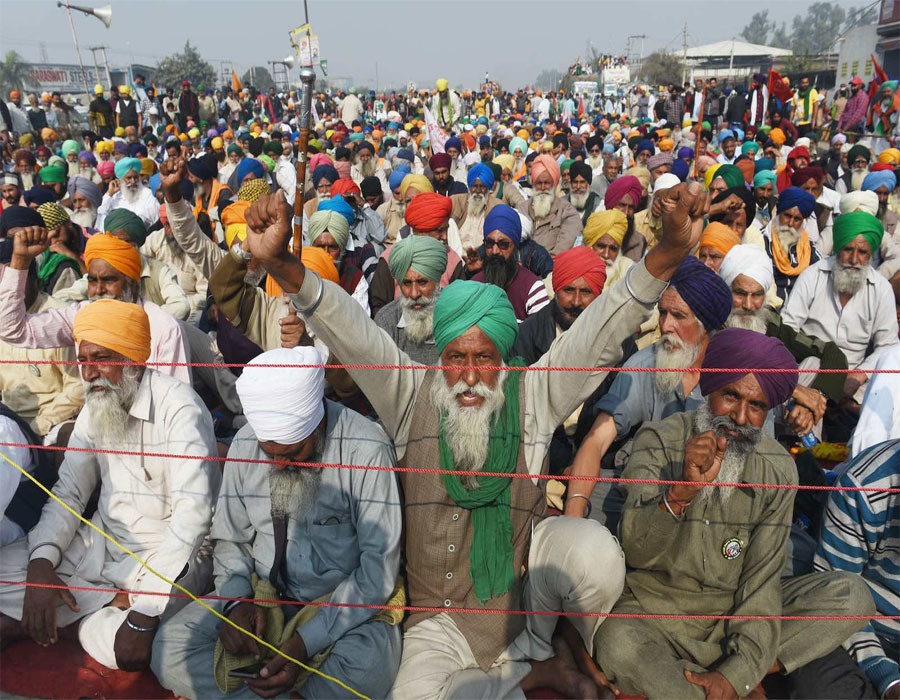
by Prashant Tewari / 16 December 2020The chaos and confusing, allegations and counter allegations, social media war are the new order of the day. On every contentious issue, we are on roads to settle the grievance. The redressal mechanism through the courts have become weak and our country is under seize for entire year. Farmer's protest in India's national capital has created headlines globally. But why the farmers are protesting, what is controversial in the contentious Farm Bills is hardly known to majority of the people.
The farmers are protesting against two Farm Bills that the Rajya Sabha recently passed: (1) the Farmers’ Produce Trade and Commerce (Promotion and Facilitation) Bill, 2020, and (2) the Farmers (Empowerment and Protection) Agreement on Price Assurance and Farm Services Bill, 2020. The two bills had already cleared the lower house – the Lok Sabha. When they were introduced in the Rajya Sabha, there was ruckus and finally, the Bill was passed through a voice vote. It is noteworthy to mention that NDA ally Akali Dal has quit the government in protest of the passing of the bills in the parliament.
This Bill allows the farmers to sell their produce outside the Agricultural Produce Market Committee (APMC) regulated markets. The APMCs are government-controlled marketing yards or mandis. So, the farmers clearly have more choice on who they want to sell. This Bill makes provisions for the setting up of a framework for contract farming. The farmer and an ordained buyer can strike a deal before the production happens. The farmers of Uttar Pradesh, Punjab, and Haryana are angry fearing that the Minimum Support Price (MSP) guarantee that was their safety net since the Green Revolution of the 1960s kicked in, maybe snatched away from under the pretext of giving the farmers more playing ground and better platforms. Farmers fear the two recent bills as they feel these agriculture reform processes will kill the government procurement process as well as the MSP. And why do we see most protesters from Punjab and Haryana? That is because they are the biggest beneficiaries of this safety net.
Farmer leaders have clearly stated that the agitation would continue till the farm laws are repealed. The entire confusion is fueled by the exit of NDA partner Akali Dal from the government in protest of the passing of the Farm bills 2020 without enacting the MSP clause in the final draft of the farm bills 2020. It is fair to suggest that Narendra Modi led government being in absolute majority is ignoring the sentiments of its allies since their absence has no impact in the lower house of the parliament for the government survival. But as rightly suggested by Punjab Chief Minister Captain Amrinder Singh that anti national forces are looking for an opportunity to penetrate in any popular controversial issue to destabilize the country. Failed Khalistan push by overseas forces may trigger confusion in the minds of the sulking farmer community of Punjab to misguide them on the pretext of ethic religious divide hence the government of the day must remain vigilant and the requisite concessions should be extended to farming community to defuse the unnecessary bitterness and heart break between the government and its people. The government is lacking in communication skill set hence on every contentious issue, strikes and lockdowns are setting in. Lastly, the uncalled international intervention by certain groups and foreign leaders in an internal matter of the country is highly deplorable and it must be condemned in strongest words.
(The writer is the Editor-in Chief of The Opinion Express Group)
Taiwan can be a major foreign policy card NDA government
by Prashant Kumar Singh / 04 November 2020Taiwan is a part of the geographical area of operation of India’s Look East Policy (LEP). Although India does not recognise Taiwan as a sovereign state, its functional and people-to-people contacts with Taiwan are explainable under the LEP. Besides, India’s economic activities are on the rise in the vicinity of Taiwan. Though commercial in nature, India’s presence in the South China Sea, along with improvement in its bilateral relations with Asia-Pacific countries — especially in the realm of politics and defense cooperation — is of strategic significance. In the overall strategic context of the region, increasing functional ties with Taiwan without undermining the support of the one-China Policy would be a stiff challenge requiring clarity of vision and skilled diplomacy. Thus, it is imperative for India to have a much better understanding of Taiwan, and the Asia-Pacific region.
In the author’s view, functional ties/cooperation and people-to-people relations could make a separate category without attaching any diplomatic, political or strategic meanings. The main attributes of this category can be listed as below:
- A comprehensive package that includes cooperation in education, culture, science and technology, trade and investment and other similar issue areas.
- The package could also be characterised as people-to-people relations.
- Cooperation without manifest strategic underpinning and implications. Engagement with Taiwan would lead India to have a more informed Taiwan policy.
Its unique geographical location and political situation would also contribute to India’s understanding of the Asia-Pacific region. Taiwan is situated in the middle of the disputed waters of the South and the East China Seas. Considering the continued threat from the People's Republic of China (PRC) to its national security, Taiwan not only has a natural interest in the modernisation of the People’s Liberation Army (PLA), China-Japan tensions, and the dynamic of Sino-US relations but also a natural expertise on them. Taiwan and China have a historical and cultural affinity, but political and strategic distance. Strategically, Taiwan is close to the US and figures in Japan’s security considerations. It is obliquely mentioned in the US-Japan Defence Guidelines, 1997. But the US and Japan’s support for PRC’s One-China Policy has set a limit on their relations with Taiwan. Thus, Taiwan is not fully open to either of the major regional players. This situation leaves it marginalised and dissatisfied with every major power in the region and makes it a neutral interpreter of the region’s politics. India could tap into this consultative potential of Taiwan.
Functional cooperation with Taiwan is even more valuable. Taiwan is a thriving and industrialised economy that is closely integrated with the international economy. It is amongst the world’s leading exporting and importing countries. It is the leading producer and manufacturer in the world in foundries, IC packages, blank optical discs, mask ROMs, mobility scooters/powered wheelchairs and chlorella. If the products made by Taiwanese companies outside Taiwan are also taken into account, the list of products commanding a high share in the world is even longer. Notebooks, Tablets, LCD monitors, IC packages, motherboards (System & Pure MB), WLAN CPEs, cable modems, and digital blood-pressure monitors are a few examples. Apart from electronics, Taiwan’s agro-industries, particularly food processing, maintain international standards. It also holds a high rank in the international rating by agencies like the Institute for Management Development (IMD), Business Environment Risk Intelligence (BERI), the World Economic Forum (WEF), and the Heritage Foundation. Its business environment, research and development, and innovation are recognised worldwide. (Data relating to all these is available in the tables at the end of this monograph). Further, Taiwan’s education system ranks quite high. For instance, fourteen Taiwanese universities in 30 disciplines are on the list—compiled by the QS World University of the UK—of the top 200 universities in the world.1 India could become an important destination for Taiwan’s new Go South policy for diversifying Taiwan’s a trade and investment basket. India could also become an alternative to China for many Taiwanese companies in view of rising wages and costs in that country. In fact, a regulated flow of skilled labour from India can help overcome the problem of high costs in Taiwan itself. Taiwanese FDI can contribute to India’s manufacturing, infrastructure and other sectors. India and Taiwan make a case for mutual benefit by being substantial complementary economies, as India’s computer software industry complements Taiwan’s computer hardware capability. India’s demography, with a more than 300 million strong middle class, offers an economic opportunity for Taiwanese entrepreneurs. India is also one of the leading suppliers of natural resources. It can be a gateway to South Asia, and even West Asia, for Taiwanese companies. Further, like Taiwan, India too has a reasonably impressive record of achievements in science and technology. For instance, India has gained international recognition in the automobile, electronics and space science sectors. In education, India has internationally recognised institutes— like the Indian Institutes of Technology (IITs) and Indian Institutes of Management (IIMs). Besides, there is sufficient space for co-operation between the two countries in the spheres of culture and tourism. This monograph deals with Taiwan as it exists in the world today. It does not deal with the legal question, of whether Taiwan is an independent state or a Chinese province. Despite its ambiguous diplomatic status, Taiwan remains an important factor in the East Asian security scenario. In spite of the Cross-Strait relations in their best phase, the solution to the Cross-Strait conundrum remains elusive. Taiwan and the People’s Republic of China (PRC) have signed 19 agreements related to functional areas since 2008. However, a formal political dialogue or a peace agreement that the PRC is pushing hard for is not in sight. Taiwan does not appear inclined to yield on the question of sovereignty. Any formula that would downgrade Taiwan’s international standing is unacceptable to both Taiwan’s political class and the common Taiwanese. Contrary to Chinese expectations, the prospects of economic cooperation and integration have not made the Taiwanese amenable to Chinese claims over Taiwan. Similarly, on the other side of the Taiwan Strait, Taiwan’s unification with China continues to be a powerful reference point for Chinese nationalism. China still has its missiles deployed against Taiwan. Moreover, it is yet to renounce the use of force as an option to resolve the Cross-Strait problem. This reinforces Taiwan’s perception of China as a threat to its security. Finally, the US, the security guarantor of Taiwan under the Taiwan Relations Act (TRA) 1979, continues to maintain diplomatic ambiguity over the Cross-Strait issue. Therefore, any conflagration in the volatile waters of the Taiwan Strait could result in a US-China face-off.
Taiwan is also a part of problematic territorial claims in the East China Sea and the South China Sea. Its claims overlap with those of China and are ignored by the other concerned parties. Taiwanese claims mostly address the domestic constituency. It appears content with the practical arrangements for resource-sharing. A good example is its fishery pact with Japan in 2013. However, since these claims stoke popular sentiment in Taiwan, it is difficult for the Taiwanese government to ignore public opinion on these issues. Therefore, overlooking Taiwan in the regional security map would bring pressure on the US alliance in the region, of which Taiwan is a part. Taiwan successfully drove this point during the standoffs between Japan and China in the East China Sea over the Senkaku/ Diao Yu islands in 2012-13 through its diplomatic maneuverings. In fact, the Japan-Taiwan fishery pact has effectively made the dispute tripartite and implies that Taiwan is a player in the dispute. In May 2013, the government of Taiwan conveyed that diplomatic recognition or not, it is capable of taking care of its citizens when it flexed its economic muscle against the Philippines over the killing of a Taiwanese farmer-fisherman by the Philippines coastguard.
Finally, accelerated interaction and cooperation in functional areas between India and Taiwan would, in the long term, also contribute to increased mutual awareness. Cross-Strait unification would not be the only eventuality in the dialectics of Cross-Strait relations. Whether Taiwan would eventually unify with China, the status quo would persist, or some other form of Cross-Strait relations would emerge, is difficult to predict. Studying and engaging Taiwan is important irrespective of the scenarios because each scenario will shape the regional security dynamics in its own way.
India Taiwan Bhai Bhai
by Prashant Tewari / 04 November 2020It has taken almost fifty-eight years since 1962 to settle the India-China relationship at a comfortable level but Covid 19 pandemic has forced confused President Xi Jinping to pick up a fight with the almost entire world including India by making the borders hot since March 2020. India has no option but to react with aggression to safeguard its national interest. India, following the ‘One China policy, does not have diplomatic relations with Taiwan but India is having commercial, economic and cultural ties with Taiwan. While nearly 23 countries have formal diplomatic relations with Taiwan, several countries have opened offices in Taipei. These countries, which include the United States, western European, Japan, Australia, and many others, follow ‘One China policy. However, the current hawkish Taiwan President Tsai Ing-wen of DPP is pushing for nationalistic agenda. The Taiwanese know fully well the might of China. Yet, they are constantly looking for expanding their room for maneuver. US support is vital to Taiwan and supplies arms to Taiwan while maintaining a ‘One China’ policy: India has a unique diplomatic tool to push for renewed ties with Taiwan since China is continuously pushing armed insurgency in North East, J&K via Pakistan, arming Maoist rebellion against in several states via Nepal, endorsing terror by saving Masoor Azhar in United Nation.
The assertions of sovereignty by China over the South China Sea and US’ pivot to Asia policy have led to the rise of tensions in the region. The Taiwanese, taking note of India’s growing influence in regional and global affairs, want to engage with it in the hope that their room for maneuver vis-à-vis China will increase. Keenly watching the development of India’s ‘look east’ policy, they want to understand how India defines and protects its interests in Asia. India, which has a delicate and sensitive relationship with China, is naturally careful in dealing with Taiwan. India has sought to enhance functional linkages with Tai-wan without offending China. The bilateral trade between India and Taiwan crossed $15 billion in 2019-20. A joint study has been launched to explore the possibility of a free-trade agreement between the two sides. India has interests in Asia, particularly, the South China Sea. The Indian integration with ASEAN, South Korea and Japan is deepening. Given the large complementarities between India and Taiwan, the latter can be a good economic partner for India. India’s software skills and Taiwan’s hardware capabilities can be combined in joint ventures. Taiwanese companies can invest in Indian infrastructure. Further, Taiwan, which boasts of some high-quality universities, think tanks, and academic institutes, can be a good source for Indian institutions for academic exchanges. Presently, nearly 1000 Indian students are studying at Taiwanese science and engineering universities.
India is a large country following independent policies. India can pursue a functional relationship with Taiwan without deviating from its ‘One China' policy, however, if China plays deceptive games at border, trade and foreign policy: Taiwan and Tibet should be raked up by India at international forums to expose China’s expansionist regime. But India must have a consistent foreign policy in respect of Taiwan in alignment with the democratic nations of the world so that Taiwan can react to Chinese hostility with conviction. When China can defy the world and promote all-weather friends Pakistan and North Korea then India should act independently to frame its foreign policy.
—Prashant Tewari, Editor-in-Chief
Graft Games
by J Gopikrishnan / 08 October 2020India’s big corruption cases and their aftermaths
Due to the Covid-19 pandemic, many ongoing major corruption cases are delayed and the Accused people might be relieved. Be it the 2G case appeal in Delhi High Court or former Finance Minister P Chidambaram involved bribery cases in INX Media and Aircel-Maxis deals or politically sensitive National Herald case in trial courts and its linked appeal cases by the Accused persons Sonia Gandhi and Rahul Gandhi in Supreme Court on tax evasion and Herald House eviction. Now CBI and Enforcement Directorate (ED) sought a daily hearing in the 2G case appeal in Delhi High Court citing the retirement of the current Judge Justice Brijesh Sethi on November 30.
In corruption cases, what we see is generally the backdoor games in the trial stage, after the public attention fizzles out later. A classic example is the Bofors case. When you look at the timeline of the past 22 years, politicians from Congress and BJP wanted to save their preferred accused persons in the Bofors case. Congress leadership wanted to save Ottavio Quattrocchi and BJP leadership of the late 90s wanted to save the Hinduja brothers. These two are the major kickback money distributors. Still, the case filed by Adv. Ajay Agarwal (BJP’s candidate against Sonia Gandhi in the 2014 Lok Sabha election in Rae Bareli) against the CBI closure report is pending in Supreme Court. Bofors scam was a turning point in Indian politics that smashed out the Congress party’s single-party regime in India. The scam linked to Prime Minister Rajiv Gandhi’s family collapsed the prospectus of the Congress party which was having 425 MPs in Lok Sabha and got reduced to 195 MPs in the 1989 General Election, leading to the united Opposition from BJP to Socialists to Left parties led India’s first coalition Government.
Congress party’s downfall started with the exposure of the Bofors scam in 1988. There were a lot of twists and turns in the Bofors case and the opposition lost steam on the matter after the assassination of former Prime Minister Rajiv Gandhi in May 1991, leading to the return of the Congress party which remained in power up until 1996. Though BJP led Government came to power from 1998 to 2004, the situation has not changed. BJP’s Law Minister Ram Jethmalani became an Advocate of Hinduja Brothers, who was part of the gang of middlemen in the Bofors deal. Next Law Minister Arun Jaitley was also not keen on the matter though he was the Additional Solicitor General in the case in 1989. Jaitley many times said publicly that he drafted the chargesheet in Bofors. Next Congress-led UPA Government, simply forced CBI to close the case.
Still, the main petitioner Ajay Agarwal’s appeal against CBI closure is pending in Supreme Court. In 2018, CBI made a curious petition to Supreme Court to revive the case on a flimsy angle. The flimsy angle was based on a revelation in 2018 by a retired Swedish Police Officer in the newly launched Republic TV Channel. Fun is the same CBI filed closure and facing the appeal of Ajay Agarwal against closure in Supreme Court filing a petition based on a Republic TV saying that they are going to probe into the new angle aired in a TV channel. Anyway, Supreme Court trashed CBI’s new flimsy funny petition and still, Ajay Agarwal’s petition is pending. Don’t know why Ajay Agarwal lost interest.
After Bofors
After Bofors Scam, Jain Hawala Dairy Scandal shook the Country. Actually, this whole episode started with the arrest of a JNU student from Kashmir in connection with the money trail from terror-linked outfits in late 1990 by Delhi Police. The money trails lead to the Hawala operator's Jain brothers in Delhi and the Police got a long list of names from diaries kept by them. Obviously, the case got frozen for 3-4 years due to the names in the dairy ranging from so many politicians. In 1994, the diary names were exposed in the media, ranging from LK Advani to many politicians and Cabinet Ministers. Still, people say names in the diary were leaked by the top leadership of Congress and BJP to settle their internal rivalries. Activist and Journalist Vineet Narain, and lawyers Ram Jethmalani and Prashant Bhushan approached the Courts. Meanwhile, as usual, Ram Jethmalani switched the side to save Advani and became his Advocate and won the case. The Case got collapsed after Supreme Court said that mere naming in diaries can’t be treated as evidence. Though the case collapsed, the outcome was a landmark Judgment popularly known as the Vineet Narain Judgment which changed the entire structure of CBI and ED and got the Supreme Court’s monitoring and strict norms for the appointment of officers in these probe agencies.
After the Hawala Diary scandal, two corruption cases rocked the country. One was Tehelka Magazine’s sting operation on Defence deals. It collapsed then ruling BJP’s President Bangaru Laxman, who was caught on camera accepting a few lakhs of rupees. He was convicted and later out on bail he is no more now. Recently in August 2020 another accused Jaya Jaitly, who was the companion of then Defence Minister George Fernandez was convicted by a trial court along with former military officers. Somehow she was lucky to manage bail from Delhi High Court in the evening itself, while other accused are still languishing in jail. How she got bail on the same evening from High Court is a matter of debate. Sometimes justice is delivered on seeing the face. Tehelka Magazine exposed how pliable are people in politics and bureaucracy, and the army. The sting operation exposed how BJP first time landed in power pliable in deals. The Defence Minister’s companion and BJP President were caught accepting money in the sting operation.
After this Tehelka’s reporter, Aniruddha Bahal 2006 exposed a big sting operation through his website Cobrapost. This sting operation actually shook the Parliament revealing how MPs were taking money for asking questions. This exposes exposed how questions and matters were raised by MPs by taking money from Corporate Houses and their rivals. After an internal probe, Parliament expelled all the nine MPs caught in the sting operation. This was a black chapter in the Indian Parliament.
Mega scams rocks Congress-led UPA Government
The first major scam that rocked the UPA Government was Commonwealth Games (CWG) scam from 2009. The CWG Scam was started by a movement called India Against Corruption (IAC) which was essentially blessed by RSS, and supporters of spiritual leaders Sri Sri Ravi Shankar and Baba Ramdev. At that time main Opposition party, BJP was in shambles due to their electoral defeat in May 2009 Lok Sabha elections. Congress-led UPA got rattled and shaken in the 2G Scam followed by Coal Scam.
The CWG Scam was limited to the role of the Games Committee Chairman and Congress leader Suresh Kalmadi. Actually, then Sports Minister Mani Shankar Aiyer was against Kalmadi and his displeasure letters leaked into the media became the Scam. Interestingly, though the budget of the CWG was more than Rs.75,000 crore, the scam allegations were only limited to Suresh Kalmadi (might be his stars not correct at that time) who had spending power of below Rs.1700 crore. He also picked fights with big media organizations on advertisement allotments in the Games. Anyway, all jumped on him on purchases and the CBI case was registered and was in jail for some months. The case is still on trial and expected to take more than 2-3-4 years to finish. That is our system in the judicial process.
Interestingly two big cases related to CWG were later closed by CBI. One was regarding Rs.15,000 crore worth of construction of flyovers in connection with the CWG in Delhi in 2010. The over-expenditure in the construction of the flyovers (Barapullah Flyover) was pointing to none other than then-Delhi Chief Minister Sheila Dikshit. The second one was a much bigger scam of about Rs.35,000 crore spent on the construction of CWG Village. The builder MGF Group was so close to Sonia Gandhi’s family that and case reached nowhere and ultimately CBI closed the case. Now CWG cases are limited only to Kalmadi and small cases against Municipal officers in the long trial stages.
The 2G Scam
The Congress-led UPA Government collapsed because of the 2G Scam which was highlighted by “The Pioneer” newspaper through continuous series of 100s of reports from December 2008 leading to Telecom Minister A.Raja’s resignation in November 2010. This case changed my career prospects as a Journalist. I am always thankful to my Editor Chandan Mitra and Bureau Chief Navin Upadhyay for assigning this mega work, where God smiled at me. This was the first case where the Comptroller and Auditor General (CAG) fixed the role of Corporate Houses. BJP leader Subramanian Swamy and noted lawyer Prashant Bhushan deserve full credit for their legal fights which ultimately collapsed the mighty Sonia Gandhi-controlled UPA regime.
So many good things happened in the Country due to the 2G Scam expose. The Supreme Court verdict of February 2012, cancelling all 122 licenses and subsequent Presidential Reference led to the auction of all natural resources. This Judgment also affected the Coal Scam cases and auction of Coal Mines. From the auction of Telecom Spectrum alone, the Country during 2010-2016 earned Rs.3.6 lakh crores in the exchequer. The 2G Scam led CAG to find other scams like Telecom AGR hushed up revenues which now found the payment of Rs.1.65 lakh crore by telecom giants to the public exchequer.
However unfortunately criminal cases in the 2G Scam collapsed in the trial court. I am not commenting on the very very bad Judgment passed by the trial Judge OP Saini. His Judgment acquitting the scamsters is so bad in law and laughable. Now CBI and ED have approached the Delhi High Court for a speedy hearing in September 2020.
Coal Scam
As the trial court, Judge Bharat Parashar was a bold Judge many are convicted in the Coal Scam including the former Coal Secretary HC Gupta. However, then Prime Minister Manmohan Singh escaped from the Scam, as CBI decided to shut his eyes. Manmohan Singh was summoned by the trial court but he managed a stay from another Bench of the Supreme Court. Why CBI did not challenge it? For certain things, you don’t have answers.
Niira Radia Tapes and CBI Director Ranjit Sinha’s case
Controversial lobbyist Niira Radia’s conversations made tremors in many sectors. There were more than 6000 conversations, though only around 500 conversations landed in the public domain. From Ratan Tata to who is who in industry, media, bureaucracy and politics got hit in the Radia Tapes expose. Supreme Court in late 2012 Ordered CBI to probe into 12 matters of corrupt practices mentioned in the tapes. However, the case lost steam after CBI reported back to the Court that there was no criminality found in these conversations. The Court also did not pursue the matter on findings submitted in a sealed cover.
Another biggest shocking incident was in late 2014, the CBI Director Ranjit Sinha was caught meeting many 2G Scam and Coal Scam accused Corporate tycoons. This was exposed by certain good officers in CBI by verifying tainted Ranjit Sinha’s visitors’ book kept at his residence. Supreme Court’s 2G Bench had removed Sinha from the cases and Coal Scam Bench had ordered a probe into Sinha’s dubious activities. Even after the Supreme Court indicted, Modi Government did not take any action against the tainted CBI Director. CBI has not yet filed FIR in this regard against its tainted former Director.
Cases against Sonia Gandhi, Rahul Gandhi and P Chidambaram
After winning the 2G cases in Supreme Court, BJP leader Subramanian Swamy went ballistic. He got Sonia Gandhi and Rahul Gandhi in the National Herald case. His exposure in the Aircel-Maxis scam led to the fall of former Finance Minister P Chidambaram, who during the probe got trapped in another bribery case known as the INX-Media case. All these cases are in the trial stages which are expected to take 2-3 years in the judicial process. The Income Tax case in the National Herald case and Herald House eviction cases are pending in Supreme Court. Sonia Gandhi and Rahul Gandhi lost in all forums and their appeal is pending before the Supreme Court. Enforcement Directorate has attached the Mumbai and Panchkula properties in the National Herald case. Now we have to wait for the normal working of courts after the Covid-19 pandemic is controlled.
A lot of scams were exposed during 2012-2014. One of the KG Basin loot where Mukesh Ambani’s Reliance Group was caught. Another was the humongous scam in the Civil Aviation sector where the main culprits were Jet Airways and Tata Group. Somehow Prashant Bhushan’s case against the illegalities in Reliance Jio not became successful. The case ended with an open tussle in Supreme Court between then Chief Justice of India TS Thakur and Prashant Bhushan, who later walked out from the Court. The merits of the case were lost in the war of words between the two. Certain high-flying cases end up like this in a mysterious way.
Corruption in Judiciary
For a long time, there are allegations of corruption in the Judiciary and they reached nowhere. The simple reason for this is the only action available against High Court Judge and above is possible only through Impeachment by Parliament. Only once a retired High Court Judge was arrested was in September 2017 in a medical college scam. CBI took a bold step to arrest retired Judge IM Quddussi which ultimately led to the culmination of the controversial press conference by the senior four judges of the Supreme Court in January 2018. Four senior-most Judges Justices J Chelameswar, Madan B Lokur, Kurian Joseph and Ranjan Gogoi conducted a press conference expressing displeasure on the style of functioning of Chief Justice of India Dipak Misra.
Retired Justice Quddussi was caught fixing case and handling bribery with a case involving a medical college listed in Supreme Court. Justice Chelameswar ordered for senior-most five judges to probe rather than probe by CBI. In his Order, Justice Chelameswar said how CBI officers are capable to deal with a case involving the role of certain Judges in the Supreme Court. But the next day, Chief Justice Dipak Misra took over the case illegally or not as per custom and diluted the matter. This was the trigger of the four Judges' press conference against the Chief Justice of India. This incident shows the grey areas and rotten side of the Judiciary.
It is not easy to probe into the corruption in the judiciary. It is not easy in the lower level of the judiciary also though the Police are empowered to register cases. Once a district-level Judge was arrested by CBI in a bribery case of allowing bail in a Bellary mining case. Some Judges in District and subordinate levels were punished by the High Courts and ended up termination of their service.
In the 2G case, the ED has come out with the report that a week before the controversial acquittal judgment, the stock prices of the companies owned by the accused persons were shot up multiple times. Somehow no action was taken.
Political changes
BJP and AAP became the beneficiaries of the anti-corruption movement that started in December 2010. In politics, so many twists and turns will be witnessed. In November 2013, AAP-led Arvind Kejriwal came to power in Delhi State with the help of the Congress party which they opposed for the past two years. The AAP was formed against the corruption of the Congress party and in the 2015 and 2020 Delhi Assembly elections; it is a well-known fact that AAP got the support of Congress in sidelining BJP in Delhi.
BJP which came to power in May 2014 was not keen on fixing the corruption cases to its logical conclusion. There happened many deals under the table. There were open attempts to derail the cases against Chidambaram and in 2G cases by certain people in power. Many Officers dealing with corruption cases faced all kinds of hardships. Subramanian Swamy was sidelined in BJP and Prashant Bhushan was removed from AAP. The worst was the dilution of the Prevention of Corruption Act by the BJP Government.
Conclusion
My experiences in studying and reporting corruption cases have taught me many lessons. The main thing is whoever comes to power the Corporate Houses somehow control them. Politicians may lose jobs but the Corporate Houses, the bribe givers remain as the politicians we elect lack the courage to tackle these buccaneers. What we need is an educated and vigilant public and fight against the corruption is not like an item is like the items to be delivered immediately like in fast food counters. The fight against corruption is a long battle and one should not lose heart during the setbacks. We have to remember that in the end truth and only ultimate truth will win – Satyameva Jayate.
[J Gopikrishnan is a Journalist working with ‘The Pioneer’ newspaper]
FREE Download
OPINION EXPRESS MAGAZINE
Offer of the Month