
News Destination For The Global Indian Community


News Destination For The Global Indian Community

The Spiritual Transformation of Swami Vivekananda in Gujarat
by Anoop Bose / 29 August 2024On 12th January 2024, the world and India, in particular, commemorated the 161st birth anniversary of our legendary scholar, saint and spiritual leader Swami Vivekananda, famous the world over as the “Messenger of Indian Wisdom to the Western World”. Our Prime Minister Narendra Damodardas Modi, whose single greatest source of inspiration was Swamiji (and who by a strange co-incidence proudly bears the name of Swamiji “Narendra”), tweeted, “Hundreds of salutes to Swami Vivekananda, who established Indian spirituality and culture on the global stage, on the occasion of his birth anniversary and National Youth Day. His thoughts and messages, full of energy and enthusiasm, will continue to inspire the youth to do something from time to time.” Significantly, during Modi’s maiden visit to the United States as the Prime Minister of India in September, 2014, the 44th American President Barack Obama presented Modi a rare 1200 page book entitled “The World’s Congress of Religions” documenting Swamiji’s historic speeches at the Parliament of World Religions at the Chicago Art Institute in 1893 with an accompanying note saying - “This gift celebrates Swami Vivekananda's valuable contribution as a bridge between India and US and honors our two nations' shared traditions of pluralism and diversity.” Modi,who had in the days of his youth abortively tried to become a monk at the Belur Math (the Headquarters of the Ramakrishna Math and the Ramakrishna Mission in Howrah on the banks of the river Hoogly which was founded by Swamiji and where his mortal remains were consigned to flames on 4th July, 1904 in a sandalwood funeral pyre), subsequently tweeted on the occasion of Mahatma Gandhi’s 145th birth anniversary on 2nd October, 2014 that he would cherish the gift forever. Here, my mind is irresistibly drawn to Mahatma Gandhi’s historic visit to Belur Math on 12th January, 1921, on the occasion of Swamiji’s 58th birth anniversary,when he paid a most glorious tribute to Swamiji,“ I have come to pay my homage and respect to the revered memory of Swami Vivekananda, whose birthday is being celebrated today. I have gone through his works very thoroughly, and after having gone through them, the love that I had for my country became a thousand-fold.”
It was upon the hallowed soil of Gujarat that Swamiji discovered the true spiritual greatness, nay supremacy,of India. From November, 1891 when he entered Ahmedabad, to 26th April 1892 when he left Baroda for Bombay, he travelled throughout the length and breadth of Gujarat as a “parivrajaka” or “homeless wandering monk in the quest of truth” carrying only a ”kamandala” (water pot), staff and his two favourite books viz. Bhagavad Gita and The Imitation of Christ by Thomas à Kempis,the 15th Century German Catholic scholar. It was during this period of wandering in Gujarat that Swamiji’s whole outlook to life underwent a steady metamorphosis and was aptly recorded by one of his earliest biographers, “It was as though all India were pressing its life through the channels of his personality. He passed through awful upheaval. It might have been at Porbandar that this spirit took birth.” It was further recorded, “Indeed, he had become transformed into a MAN, aching with pain because of the dangers of the modern transition through which he found the whole land passing. He had turned a great patriot, his heart throbbing with love and aspiration, his whole personality afire with an intellectual struggle to solve the problems with which he found India confronted. … His mind had become a whirlwind of ideas.” The realization that he had a mission to accomplish in Gujarat came during his visit to the coastal city of Porbandar, the birthplace of Mahatma Gandhi and Sudama the strong and energetic cowherd friend of Lord Krishna. He told the Maharaja of Porbandar Vikramatji Khimojiraj that, “I have a mission to perform. But I cannot clearly see at present, how I shall begin or where it is to be!” In Porbandar, he told his brother-disciple Swami Trigunatitananda, “Sarada, now I have started to understand to some extent the Master's words. Really I have so much power in me, I feel as though I could revolutionize the world!” Thereafter, in the cell of Sri Sharada Peeth Math (the world’s largest independent women’s monastic order) at Dwarka, the City of Lord Krishna, he perceived a most powerful light - and that was the bright and luminescent future of India. During his visit to the historic Jain temples of Palitana (the world’s only mountain city that has more than 900 temples and is the most sacred place of pilgrimage of the Jain community), he saw India as one huge temple, enraptured by chapels and sanctuaries everywhere. He perceived the glory of Mahabharata, the longest epic poem ever written. Whilst beholding the ruins of the magnificent ancient temple of Somnath, which was destroyed and rebuilt several times, Swamiji felt deep inside him the indelible glory of India’s past. He came in close contact with the honorific Sanskrit scholar Pandit Shankar Pandurang, the Administrator of Porbandar, and began appreciating the teachings of Sanatana Dharma and the need to preach it to the whole wide world. As he studied the Vedas tirelessly with Pandit Pandurang in his awesome library, he became convinced that “India was truly the Master of Religions, the fountain-head of spirituality and the cradle of civilization.” Swamiji also assiduously learnt French as advised by Panditiji who said, “It will be of great use to you, Swamiji”. In fact, he even penned a letter in French to his brother disciples at Alambazar and took them completely by surprise. Pandit Pandurang told Swamiji, “I am afraid you cannot do much in this country. Few will appreciate you here. You should go to the West. Surely you can throw a great light on Western culture by preaching the ‘Sanatan Dharma.’” Thereafter,by a superb stroke of fate, Swamiji heard for the first time about the Parliament of World Religions in Chicago that was slated to be held in September 1893 and which changed the entire course of his life. Significantly in Gujarat, both his mental and physical prowess got a new spurt of divine energy. His fellow disciple Swami Akhandananda wrote in his memoirs, “I at last reached Mandvi. I saw that there was a great change in his appearance. His presence illumined the whole room.” Here in Gujarat, after being rescued by the Thakore Saheb of Limbdi from the awful clutches of the treacherous Sadhus, Swamiji was embued with a new life. Swamiji came in close contact with some of the most prominent princes, diwans, scholars and eminent personalities of Gujarat. All of them became his great friends and fans and some of them even became his devoted disciples. Reaching Junagadh at the foot of the Girnar hills and famous for the iconic early 19th Century Shri Swaminarayan Temple, Swamiji became the guest of Haridas Viharidas Desai, Diwan of Junagadh, and later he stayed with Chhaganlal Pandya, who was the Manager in the Diwan’s office. Diwanji became so much deely attached to Swamiji that even after Swamiji had left Junagadh, he continued to keep in close touch with him. Diwanji found in Swamiji a unique personality and teacher and Swamiji in turn paternally oved and respected him - the difference in their age was 22 years! This will be more than evident from the inspiring and letters of Swamiji addressed to Diwanji. Swamiji wrote to Diwanji from Bombay on 22nd August, 1892:
“The world is enriched by men, high souled, noble-minded and kind like you, ‘the rest are only as axes, which cut at the tree of youth of their mothers’ as the Sanskrit poem puts it.”
Again, he wrote from Khetri in May, 1893 :
“Believe me that I love you and respect you like a father and that my gratitude towards you and your family is surely unbounded … my dear Diwanji Saheb, I am the same frolicious, mischievous but I assure you, innocent boy you found me at Junagadh and my love for your noble self is the same or increased a hundredfold because I have had a mental comparison between yourself and the Diwans of nearly all the States in Dakshin and the Lord be my witness how my tongue was fluent in your praise (although I know that my powers are quite inadequate to estimate your noble qualities) in every southern court.”
A friend in need is a friend indeed! Swamiji magnanimously helped Diwanji to overcome his manifold problems. He wrote from Poona on 15th June, 1892, “Perhaps by this time every hitch has been removed from your way in Junagadh, at least I hope so”. Again when Diwanji was in distress, Swamiji wrote to him from Bombay on 22nd May, 1893:
“Often and often we see that the very best of men even are troubled and visited with tribulations in this world. It may be inexplicable but it is also the experience of my life that the heart and core of everything here is good, that whatever may be the surface of waves, deep down and underlying everything, there is an infinite basis of goodness and love and so long we do not reach that basis we are troubled but once reached that zone of calmness, let winds howl and tempest rage, the house which is built upon the rock of ages cannot shake. I thoroughly believe that a good, unselfish and holy man like you whose whole life has been devoted in doing good to others has already reached the basis of firmness which the Lord himself has styled as ‘rest’ upon Brahman in the Gita. May the blows you have received draw thee closer and closer to that Being who is the only one to be loved here and hereafter so that you may realise him in everything past, present and future and find everything present or lost in Him and Him alone.”
Swamiji’s biographer Mahendranath Dutta narrates a fascinating incident in his Bengali book “Srimat Swamijir Jeevaner Ghantanabali”. “While Swamiji was staying with the Diwan of Junagadh, Swamiji saw him depressed. On being asked about the reason, Diwanji at first hesitated but then said, ‘There is a letter from British Government from Bombay to the Nawab of Junagadh; I am worried as to what reply I should give because I am appointed by British Government and on the other hand I am an employee of Nawab. I cannot afford to displease either of them and I am, therefore, in a great dilemma.’ Swamiji did not speak a word, just took up a paper and started scribbling something. After some time he told Diwanji, ‘Will this letter do?’ Diwanji was extremely astonished and exclaimed ‘This is just the type of letter I wanted to send!’ Immediately he made out a copy of the letter and sent to Bombay. Diwanji became highly impressed with the practical wisdom of Swamiji.”
At Junagadh, Swamiji also met the extraordinary Ayurvedic physician Jhandu Bhatt of Jamnagar about whom he said, “I had been to many places and have seen many beautiful persons, but nowhere have I seen a generous man like Jhandu Bhatt Vithalji.” In and around Junagadh, Swamiji saw many ancient monuments and ruins—the wondrous Uparkot Fort, believed to have been built in 319 BC by the Mauryan emperor Chandragupta, an ancient Rajput palace converted to a mosque by Mahmud Begada, the most prominent Sultan of the Gujarat Sultanate, two ancient wells, the Khapra Khodia Buddhist caves, the “Ashoka Shilalekh” in which the edicts of Emperor Ashoka and of the other emperors are artfully etched on stone and many other places of historical importance. While travelling through the Great Rann of Kutch, Swamiji had a miraculous experience of actually witnessing a mirage with his own eyes. In a lecture delivered at the famed Thousand Island Park in New York in 1896 entitled “The Real and the Apparent Man”, Swamiji described the phenomenon, “One day I was very thirsty and wanted to have a drink of water, so I started to go to one of these clear, beautiful lakes, and as I approached, it vanished. And with a flash it came to my brain, ‘This is the mirage about which I have read all my life’..The next morning I began my march. There was again the lake, but with it came also the idea that it was the mirage and not a true lake. So is it with this universe. We are all travelling in this mirage of the world day after day, month after month, year after year, not knowing that it is a mirage. One day it will break up, but it will come back again; the body has to remain under the power of past Karma, and so the mirage will come back.” With the princes and diwans in Gujarat, Swamiji not only animatedly discussed philosophy and religion, but also myriad important economic and political problems confronting the world and the nation. He gave them valuable practical advice and even went to the extent of drafting diplomatic letters for them with amazing elan. Though Swamiji scrupulously stayed away from politics, his close association with the princes and diwans in Gujarat created considerable waves and attracted the ire of the ever-watchful eyes of British Intelligence! Thus, the ceaseless wanderings of Swamiji in Gujarat constituted the most significant period of his whole spiritual life!
BRIEF NOTE ON THE AUTHOR
The author is an internationally reputed senior lawyer practising in the Supreme Court of India and various High Courts and Tribunals in India. He addressed a select gathering of MPs and other eminent persons in the House of Lords in February 2009 and was awarded the prestigious “Ambassador of Peace Award”. In April 2009, he was also invited to the House of Commons. He was also invited by Chatham House and by the Universal Peace Federation in London several times. He is an avid debater, public speaker, writer, broadcaster, telecaster, artist, painter, sculptor, music critic and filmmaker.

India's Aspirational Block Program: A Global Perspective on Rural Development
by Amrendra Kumar Singh / 18 August 2024India's ambitious Aspirational Block Program (ABP) marks a pivotal moment in the nation's journey towards inclusive growth. By targeting underdeveloped rural areas, the initiative aims to bridge the gap between India's thriving urban centers, upcoming 2nd and 3rd tier cities and its vast hinterlands. This comprehensive approach considers various factors including population density, economic conditions, natural resources, and infrastructure to catalyze development where it's needed most.
The Challenge of Scale
When comparing India's initiatives with those of other countries, it's crucial to acknowledge India's unique challenges due to its sheer size and population. With over 1.4 billion people, India presents a scale of complexity that few other nations face. This includes diverse cultural, economic, and geographic conditions that require tailored solutions rather than one-size-fits-all approaches.
Rajasthan: A Case Study
Rajasthan's implementation of the ABP can be compared to smaller-scale national experiments in other countries. For instance, the "One Block One Product" initiative in Rajasthan aims to boost local economies by identifying and promoting a principal product in each block. This approach is reminiscent of Japan's "One Village One Product" movement, which successfully revitalized rural areas by focusing on unique local products for economic development.
Areas Needing More Focus
- Community Participation and Empowerment
- Comparative Insight: Brazil's participatory budgeting has shown that involving local communities in decision-making leads to better resource allocation and increased accountability.
- Recommendation: Rajasthan could benefit from enhancing community involvement in the planning and execution of development projects to ensure they meet local needs and preferences.
- Digital Infrastructure and Integration
- Comparative Insight: Estonia's comprehensive digital infrastructure, including the X-Road system, facilitates seamless data exchange and service delivery.
- Recommendation: Rajasthan should focus on building robust digital infrastructure to improve service delivery and governance, ensuring interoperability among various government departments.
- Capacity Building and Training
- Comparative Insight: Singapore's continuous training programs for public officials have proven effective in maintaining high governance standards.
- Recommendation: Investing in the training of local officials and community leaders in Rajasthan could enhance the effectiveness of the ABP by fostering a culture of excellence and innovation. AI Technology can be used in a big way in order to run this program effectively and also to ascertain and verify that the lessons have been learned and are ready for implementation. They may become largely unpopular but will be immensely effective.
Areas Needing Less Focus
- Overemphasis on Technology Without Adequate Support
- Comparative Insight: While technology is crucial, South Korea's experience shows that it must be complemented with adequate support systems and training.
- Recommendation: Rajasthan should balance technological advancements with efforts to improve digital literacy and provide support to ensure widespread adoption and effective use.
- Uniform Policy Implementation
- Comparative Insight: India's diverse socio-economic landscape requires tailored approaches, as seen in the varied success of national programs.
- Recommendation: Avoid a one-size-fits-all approach in Rajasthan by customizing policies to address the unique challenges and opportunities of each block.
Learning from Global Success Stories
As India charts its course, valuable lessons can be drawn from nations that have successfully tackled similar challenges:
Estonia: The Digital Trailblazer
While India has made significant strides in digital governance through initiatives like Aadhaar and blockchain-based land records, Estonia's approach offers additional insights into creating a comprehensive digital ecosystem. Estonia's integration of blockchain technology across various public services, not just land records, sets a benchmark for secure and efficient data management.
X-Road and Data Interoperability
Estonia's X-Road is a secure data exchange layer that connects public and private sector databases, ensuring seamless and secure data sharing. This system enhances interoperability and efficiency, providing a model for India to consider as it continues to digitize its public services.
Digital Twins and Real-Time Management
Estonia is exploring digital twins—virtual replicas of physical entities—for managing urban infrastructure and land use. This technology allows for real-time monitoring and management, offering insights that improve decision-making and resource allocation. Implementing digital twins in India's land management could enhance transparency and efficiency.
India could adapt Estonia's approach by:
- Developing secure data exchange systems to improve interoperability among government departments
- Expanding blockchain applications beyond land records to other public services
- Utilizing digital twin technology for real-time data management and improved urban planning
Brazil: Empowering Communities
Brazil's experiments with participatory budgeting in cities like Porto Alegre offer valuable insights into community engagement. This approach allows citizens to directly influence local spending priorities, fostering a sense of ownership and accountability.
India could incorporate these lessons by:
- Establishing local forums for citizens to propose and vote on development projects
- Training community leaders in budget literacy and project management
- Creating feedback mechanisms to ensure continuous improvement of the ABP
Singapore: Cultivating Excellence in Governance
Singapore's relentless pursuit of administrative excellence provides a blueprint for capacity building. The country's Civil Service College offers continuous training to public officials, ensuring they remain at the forefront of governance best practices.
India could adopt similar strategies by:
- Establishing a dedicated institute for training ABP officials
- Implementing a rigorous performance evaluation system for public servants
- Fostering a culture of continuous learning and innovation in governance
South Korea: Harnessing Technology for Public Good
South Korea's integration of technology into public services offers a model for efficient governance. From smart cities to advanced e-government platforms, technology has transformed service delivery and citizen engagement.
India could leverage technology in the ABP by:
- Developing mobile apps for citizens to access government services and information
- Implementing IoT solutions for better resource management in rural areas
- Using big data analytics to inform policy decisions and track program outcomes
United States: Incentivizing Progress
The U.S. Race to the Top initiative in education demonstrates the power of performance-based incentives. By offering competitive grants, the program spurred innovation and improvement in school systems across the country.
India could apply this approach to the ABP by:
- Introducing competitive grants for blocks that demonstrate exceptional progress
- Recognizing and rewarding innovative local initiatives
- Creating a platform for sharing best practices among participating blocks
Starting from the Basics
While these international examples provide inspiration, it's crucial to recognize that India's journey begins with addressing fundamental challenges. The recent nationwide sanitation drive, Swachh Bharat Abhiyan, underscores the importance of starting with the basics.
The ABP must prioritize:
- Continued focus on sanitation and waste management
- Basic infrastructure development, including roads and electricity
- Primary healthcare and education facilities
The Road Ahead
India's path to rural development through the ABP is undoubtedly challenging, but not insurmountable. By learning from global successes and adapting them to local contexts, India can accelerate its progress.
The ABP represents India's dream of an equitable and prosperous future. By combining international best practices with a deep understanding of local needs, India can transform its rural landscape, one block at a time.
The journey has begun, and with persistent effort and innovative approaches, India can build a society where growth is not just a statistic, but a lived reality for all its citizens. The world watches with anticipation as India embarks on this transformative journey, potentially setting a new benchmark for rural development in the 21st century.

A Bond of Courage and Patriotism Between Netaji and the Sikhs
by Anoop Bose / 16 August 2024On 8th September, 2022, our Prime Minister Narendra Modi unveiled a 28 feet tall statue of Netaji Subhas Chandra Bose, fashioned from a single jet black monolithic granite block weighing 280 tonnes by the celebrated Mysore-based sculptor Arun Yogiraj. The statue had been placed under the Gate Canopy facing India Gate at the end of ‘Kartavya Path’, formerly known as ‘Rajpath’ (designed by Sir Edwin Landseer Lutyens, described by the well-known architectural historian Gavin Mark Stamp as ‘surely the greatest British architect of the twentieth (or of any other) century’, consequent upon the death of King George V, the first Windsor monarch and grandfather of Queen Elizabeth II, on 20th January, 1936), that had symbolically sheltered an imposing marble statue of the King, emblazoned with a flowing robe and complete with globus cruciger and sceptre, from the time of its inauguration on 14th November, 1939 that co-incidentally marked the 50th birth anniversary of Pandit Jawaharlal Nehru. In a powerful speech choked with visible emotion, Modi paid a glowing tribute to Netaji, ‘Netaji Subhash was the first Prime Minister of Akhand Bharat who had liberated Andaman even before 1947 and unfurled the tricolour.If India followed the path of Subhash Babu after Independence, what heights would the country be at today? But unfortunately, this great hero of ours was forgotten after independence.’
What is probably not that widely known about Netaji is that he was a true and faithful friend and an unflinching admirer of the Sikhs. After Bose resigned as the President of the Congress party on 29th April,1939 at the party’s session held at Tripuri, near Jabalpur in Madhya Pradesh, he convened a public rally at the historical Shraddhananda Park in Kolkata, on 3rd May, 1939. Hundreds of Sikhs attended the rally and some even travelled all the way from Punjab. It was here that the formation of the All India Forward Bloc was formally announced for carrying on the ‘anti-imperialist struggle’. Many Sikhs joined the party as founder-members, including one Chaudhari Jaimal Singh, a wealthy landowner from Dasuya in the Hoshiarpur district of Punjab (referred to in the Mahabharata as being the seat of King Virata and popularly known as ‘Virat Ki Nagri’). He, like so many others of his Sikh brethren, was a truly magnanimous person. He stood up and announced that he would be making a spot donation of Rs 1,000 to the party of Bose “paaji” (brother), with the promise to donate a further one lakh Rupees in the future. In July,1939, Bose announced the Committee of the Forward Bloc. It had Bose as its President and the reputed politician, newspaper editor and author Sardul Singh Kavseer from Punjab as its Vice-President.
When Netaji was protesting against the controversial ‘Holwell Monument’ commemorating the ‘Black Hole of Calcutta’ in July,1940, scores of patriotic Sikh youth walked every day from Rashbehari to Dalhousie in Kolkata to lend their active support to the cause of raising the monument to the ground. Netaji even had a close Sikh friend Niranjan Singh Talib by his side throughout the course of his historic escape from house arrest on 19th January,1941(dressed in Pathan attire and sporting a freshly harvested beard to hoodwink the British authorities!) right up to Peshawar. Talib was finally arrested, brought to Lahore and jailed, while Bose disappeared from the scene via Afghanistan, never to return again. The friendship with the Sikhs, however, remained untrammelled, with Kavseer succeeding Bose as the Bloc’s chairman. Bose finally arrived in Germany and his clarion call to Indian prisoners of war was well received and 1,200 soldiers, mostly Sikhs, joined a training camp located at Frankenburg, near Chemnitz in Germany. This camp was the precursor of the Indian National Army (INA). It was initially named Lashkar-iHind or Indian Legion. The first troops of the Indian Legion were recruited from Indian POWs captured at El Mekili, Libya, during the battles for Tobruk. The German forces in the Western Desert or the Afrika Corps under the charismatic General Johannes Erwin Eugen Rommel, popularly known as the “Desert Fox”, selected a core group of 27 POWs as potential officers who were flown to Berlin in May,1941. This was followed by POWs being shipped by the Italian forces to Germany.
In November,1941, a Free India Centre was set up in Berlin and soon a Free India Radio, on which Bose used to broadcast nightly, came into being. In the first official meeting of the Free India Centre on 2nd November, 1941 in Berlin, Bose was conferred the title of ‘Netaji’, ‘Jai Hind’ was introduced as the national greeting, Gurudev Rabindranath Tagore’s patriotic song ‘Jana Gana Mana’ was adopted as the national anthem and Hindustani, the most widely spoken language in India, was chosen as the national language of Independent India. The number of POWs transferred to Germany grew to about 10,000 who were housed at the POW camp located at Annaberg-Bucholz , where Bose first interacted with them. As the numbers of POWs joining the Indian Legion swelled, the Legion was moved to Königsbrück, a town in the Bautzen district in Saxony, for further training. It was at Königsbrück that uniforms in German ‘feldgrau’ or “field grey” were first issued, bearing the badge of a leaping tiger. The formation of the Indian Legion was announced in January,1942. It did not, however, take oath until 26th August, 1942. The strength of the Indian Legion in the West ultimately rose to 4,500. On 26th January, 1943, India’s Freedom Day was celebrated with great splendour in the grand hall of Berlin’s first ‘grand hotel’ Kaiserhof Hotel in Wilhelmplatz, tastefully adorned with red tulips and white lilacs. Shortly thereafter, the German Postal Services issued a set of ten stamps in six different designs honouring the Indian Legion. These Indian Legion Stamps or “Cinderella Stamps” represent the first pictorial depiction of Sikh soldiers in postal history. The stamps were designed by a husband-wife duo of well-known German artists Warner and Maria Von Axter-Heudtlass, whose ‘AXHEU’ signature appears unobtrusively on the stamps.
The name of the political organization corresponding to the Indian Independence League in the East was the Free India Centre. The Sikhs, living in Malaya, Singapore and other countries of the region set up two secret anti-British groups, led principally by Giani Pritam Singh, the Secretary General of the Indian Independence League of Thailand and Malaya. Two Indian soldiers in the British army viz. Captain Mohan Singh and Captain Mohammad Akram, both from Punjab, were cut off from the British Indian Army and were wandering aimlessly in the jungles of Malaya when they came across Giani Pritam Singh and Major Fujiwara Iwaichi, Chief of Intelligence of the Japanese 15th Army. Giani Pritam Singh invited them to take up the cause of their motherland. Mohan Singh seized the opportunity without even batting an eyelid! He contacted Indian soldiers and prevailed upon them not to fight for the British but to seize the golden opportunity presented to them by the war for the liberation of India. It was decided by the Indian and Japanese Army officers and civilians in Malaya and Thailand to send a special team to Tokyo for consultations with the Japanese High Command as well as with well-known Indian revolutionaries residing there like the well known freedom fighter, journalist, writer and revolutionary social reformist of India Raja Mahendra Pratap Singh (who had married one Balveer Kaur belonging to a Jat Sikh family and ultimately became a member of the second Lok Sabha defeating Atal Behari Vajpayee from the Hathras constituency in Uttar Pradesh) and the charismatic Pan-Asian revolutionary leader, writer and journalist Rash Behari Bose (popularly known as “Bose of Nakamuraya” as he had married Tosiko Soma, the daughter of the owners of the famed Nakamuraya bakery and restaurant in Tokyo, and was instrumental in introducing Indian style curry or “Indo Karii” in Japan!) who had founded the India Independence League first in Japan and then in all the areas of South-East Asia occupied by Japan that had small pockets of Indians. The team included Mohan Singh, Niranjan Singh Gill and Giani Pritam Singh Along with the Japanese team, they flew to Tokyo in two planes in March,1942.
Unfortunately, the plane carrying Giani Pritam Singh crashed, killing him and other co-passengers instantaneously. At Tokyo, the Indian team met the Japanese Prime Minister General Hideki Tojo, Raja Mahendra Pratap and Rash Behari Bose. It was at Tokyo that the decision to form the INA was formally taken. It was also decided to hold a conference at Bangkok to seek the cooperation of over three million members of the Indian diaspora living all over South-East Asia. This was held from 15th June to 20th June, 1942 and was attended by 150 Indian delegates. The conference commenced with the raising of the tri-colour flag by Rash Behari Bose. Mohan Singh spoke for several hours emphasising the importance of and the imperative need for India’s freedom. The Conference decided to incorporate Indian troops and civilians of South-East Asia in the INA with Mohan Singh as the Commander-in-Chief with the avowed objective of giving a military dimension to India’s freedom movement. The members were called upon to adopt three cardinal principles – ‘Etihaad’, ‘Etmad’ and ‘Kurbani’ meaning Unity, Faith and Sacrifice. The Conference, in one of its important resolutions, invited Netaji to South-East Asia to lead the INA. The INA opened its headquarters at Mount Pleasant, a residential estate on the northern outskirts of Singapore. The anthem selected was the rousing ‘Sare Jhan Se Acchha Hindustan Hamara’ composed by the redoubtable Urdu poet Sir Muhammad Iqbal, affectionately known as ‘Allama Iqbal’. The first parade of the INA was held in August, 1942 at which the Indian tri-colour flag was hoisted and a short speech in Hindusthani was delivered by Mohan Singh. His speech was electrifying and touched the innermost chords of the troops who responded with wild enthusiasm and fervour. A large number of Sikhs voluntarily came forward. Mohan Singh established his headquarters at Nee Soon, a suburban town in the northern part of Singapore, with Lt Col.Niranjan Singh Gill as the Chief of Staff. The INA, however, was formally set in motion on 1st September,1942 by which date over 42,000 Indian POWs, including 28,000 Sikhs, had signed a solemn pledge to join it.
Netaji left Europe on 8th February 1943 in a German submarine U-180 under the command of Captain Werner Musenberg, and travelled to the southeast of Madagascar around the Cape of Good Hope where he was transferred to the Japanese submarine I-29 at a secret rendezvous for the rest of the voyage to Japan. Netaji ultimately arrived at Tokyo on 13th June,1943. After discussing matters with General Tojo, he came to Singapore on 2nd July,1943. Two days later Rash Behari Bose handed over the leadership of the Indian Independence League to him. On 5th July,1943, Netaji revived the INA with Mohan Singh as the Commander-in-Chief and took the salute of the INA soldiers, dressed in military uniform. On 26th August, 1943, Netaji became the Supreme Commander of the INA renaming it as “Azad Hind Fauj”. He issued the following order:
‘...when we stand, the Azad Hind Fauj has to be like a wall of granite, when we march, the Azad Hind Fauj has to be like a steam roller. With the slogan “Chalo Dilli!” on your lips, let us continue to fight till the national flag flies over the Viceroy’s House in Delhi and the Azad Hind Fauj holds the victory parade inside the ancient Red Fort..”
The Azad Hind Fauj then had 12,000 Sikh soldiers out of its total operational strength of 20,000 troops. Another towering Sikh personality Giani Kesar Singh (who was a great freedom fighter and a prolific writer who authored 25 historical novels in Punjabi, especially on the Gadar Movement, and the best selling English treatise on ‘Indian Independence Movement in East Asia’) was appointed the Civil Administrator of the INA. On 16th November, 1943, a special ceremony took place on the occasion of the founding of the Indian National Provisional Government of Free India Centre at the very same Kaiserhof Hotel in Berlin that turned out to be a scathing indictment of the British war induced hunger in India. Sikh soldiers of the Indian Legion were conspicuous by their large presence. To liberate India, a comprehensive action plan was drawn up by the INA and, accordingly, the headquarters of the Provisional Government were shifted to Rangoon in January, 1944. On 11th July, 1944, Netaji arranged a ceremonial parade at the tomb of Bahadur Shah Zafar in the Shwe Degon Pagoda in Yangon and recited the last Moghul Emperor’s timeless couplet ‘Ghazion mein bu rahegi jab talak iman ki/ Takht-e-London tak chalegi tegh Hindustan ki!’ (As long as there remains the scent of faith in the hearts of our holy fighters/So long shall the sword of Hindustan flash before the throne of London).
After delivering a speech before an impressive gathering of over 60,000 people at Rangoon on the solemn occasion of India’s Freedom Day on 26th January,1944, Netaji suddenly looked at the rose garland which was presented to him and said, ‘Friends, I know that this garland which you have gifted me today will dry up within a couple of days. But, I also know that the love and affection that you have for me in your heart will never dry up. If we see this as a mare garland then we all know that this will have no value once it dries. But, if we take this garland as a memento of our struggle for freedom then this becomes priceless. So, today I want you all to bid for the same. The money we collect from, this will be the first donation for the treasury of Azad Hind Rangoon. Now tell me, what price are you ready to pay for this garland.?’ The highest bid was an amazing sum of $7 Lakhs and was placed by one businessman Brijlal Jaiswal. As Netaji was about to announce him as the winner, one Sikh businessman Sardar Har Govind Singh ascended the dais and sat down beside Netaji’s feet and said, ‘Netaji aap se mera ek aarz hai, Singapore me mere do makan hain, apna garage me aath (8) truck hain, aur bangkok main bhi 3-4 lakh dollar honge. Kul mila kar 7 lakh doller ho sakta hai. Ye sab main abhi Aazad Hind ke naam likh deta hun; eske badle maherbani karke sirf ye mala mujh ko de dijiye.’ Netaji walked towards Govind Singh and was about to garland him when Govind Singh shouted, ‘ye aap kya kar rahe hai Netaji. Ye aap ke gale ka mala hai, ye mala main apne gale me kaise daloon! Ye mala aap mere haath me dijiye.’ That day, Govind Singh donated his entire life savings to buy the garland and embraced the INA.
The INA participated in the Japanese offensive on the Indo-Burma front in 1944 and the Sikh soldiers in particular displayed exceptional bravery. But the British forces repulsed the offensive and launched a counter-attack during the bitter winter of 1944-45. The Japanese as well as the INA were compelled to beat a hasty retreat and the war ended with Japan's unconditional surrender on 14th August, 1945. Lamentably, most officers and men of the INA, numbering about 20,000, including Mohan Singh, had been taken prisoners by the British and brought back to India. They were ultimately set free during 1945 and Mohan Singh and his comrades of the INA were acclaimed far and wide for their indefinable valour and patriotism. After Independence, Mohan Singh entered active politics and joined the Indian National Congress. After a brief stint as a member of the legislative assembly in Punjab, he was elected to the Rajya Sabha for two terms. He strove relentlessly for the recognition of the members of the Azad Hind Fauj as worthy freedom fighters in the noble cause of the nation's freedom. The immeasurable contribution of the Sikhs in the INA was recognised by the Indian Post & Telegraphs Department which issued a set of two special stamps in the denominations of 15np and 55np each to mark the 67th Birth Anniversary of Netaji in 1967.
Of these, the latter shows a black and white picture of Netaji with the national flag in the foreground and some Sikh soldiers in the background. The symbol of the INA is shown on the right. Significantly, Sikh army officers like Col.Gurbaksh Singh Dhillon, Lt. Sardar Sadhu Singh and Lt. Sardar Ujagar Singh fought under the leadership of Netaji and Col. Dhillon was tried by the British at the INA trials conducted in the Red Fort in Delhi in 1945/46. Netaji was also closely connected with Sikh leaders like Sardar Baldev Singh (former Defence Minister of India in the Nehru cabinet who was one of the persons who had masterminded Netaji’s escape from India), Achhar Singh Chhina (a Berkeley contemporary of Punjab’s former Chief Minister Pratap Singh Kairon), Sardar Mehnga Singh (who was the Secretary of Bhartiya Janata Party's Amritsar unit and in whose name a road is named in Amritsar) and Sardar Sewa Singh Namdhari (at whose spacious residence Bose came in close contact with the local Indian community in Bangkok and who after Independence emerged as an active RSS leader and was a part of the cow protection movement in Delhi in 1966) in India’s struggle for freedom.
Last but not the least, Rawalpindi-born Shaheed Nanak Singh (who was named after Guru Nanak Dev Ji, the founder of Sikhism, and whose portrait hangs in the hallowed premises of the Golden Temple in Amritsar!), a prominent Sikh leader of West Punjab, and the father of my very dear Gujranwala born friend Lord Raminder “Rami” Ranger, a mighty Member of the House of Lords in London, was an ardent devotee of Netaji. Though a highly decorated Police Officer (with 29 Gold Commendation Certificates to his credit!), Shaheed Nanak Singh resigned from the imperialist British Police Force to join the freedom struggle and started his independent legal practice in Multan going on to become the Vice President of the Bar Association in Multan. He was a martyr, who vehemently opposed the unholy partition of India and as a result was a marked man, who was ruthlessly assassinated at the age of 43 while saving 600 innocent lives at the DAV School, Multan. Significantly, Shaheed Nanak Singh voluntarily took up cases to defend the hapless INA prisoners. He was a valiant lawyer who dared take on such cases despite the fear of reprisals by the British Authorities! Netaji and the Sikhs were literally inseparable!
A BRIEF NOTE ON THE AUTHOR
The author is an internationally reputed senior lawyer practising in the Supreme Court of India and various High Courts and Tribunals in India. A He addressed a select gathering of MPs and other eminent persons in the House of Lords in February 2009 and was awarded the prestigious “Ambassador of Peace Award”. In April 2009, he was also invited to the House of Commons. He was also invited by Chatham House and by the Universal Peace Federation in London several times. He is an avid debater, public speaker, writer, broadcaster, telecaster, artist, painter, sculptor, music critic and filmmaker.

The Ripple Effect: How Bangladesh's Crisis Threatens India's Stability
by Aditi Srivastava / 07 August 2024While Bangladesh struggles with unheard-of political unrest, India is on the verge of a situation that may completely alter its eastern border. Not only are the current events in our neighboring country internal issues, but they also foreshadow greater repercussions that may shake the subcontinent as a whole. What impact will this chaos in Bangladesh have on India, and why should this worry us?
Now let's get to the core of the issue. Bangladesh, which was once praised as an example of South Asia's economic progress, is currently perilously close to anarchy. The contentious 2018 general elections, which saw Prime Minister Sheikh Hasina win her third straight term despite claims of rampant voter fraud and ballot stuffing, are the source of this issue. In 2024 things have quickly become worse, leading to widespread demonstrations calling for Hasina's resignation across the nation.
However, why should India give a damn? Our linked choices and common past hold the crucial piece. Do you recall the Liberation War of 1971? India's pivotal participation in Bangladesh's independence forged a relationship that has influenced regional politics for decades. This friendship is being put to the test like never before as Bangladesh burns.
In South Asia, Bangladesh is India's biggest commercial partner, with a whopping $18.2 billion in bilateral trade in 2022–2023. This economic lifeblood is immediately threatened by any instability in Bangladesh. However, the ramifications go beyond simple math. A wave of refugees has already poured into the states bordering India as a result of the current conflict. Over 8,000 Bangladeshi citizens have applied for asylum in India since the demonstrations started, according to official statistics, which is similar to the millions of people who fled to India during the 1971 war.
Furthermore, it is impossible to overestimate the geopolitical implications. Bangladesh's strategic position renders it an indispensable participant in India's 'Act East' program. A destabilized Bangladesh would serve as a haven for radical groups, which might spark separatist movements in the northeastern regions of India once more.
Let's take a minute to reflect, though, and consider if we're ready for the worst-case situation. What happens if the Bangladeshi issue gets out of hand? When India last saw a significant influx of refugees from Bangladesh, almost a new country was formed. Are we prepared for yet another seismic shift in the political climate in the area?
India's handling of the Bangladesh crisis will serve as a benchmark for its regional leadership as we consider these issues. Will we take aggressive measures to protect regional stability, or will we passively observe while our neighbor transforms into chaos?
Now, let's talk about the elephant in the room - China. Bangladesh's instability presents our ambitious neighbor to the north with a great opportunity as much as a burden for India. China is observing Bangladesh like a chess piece on a large geopolitical board, while we are shaking our heads at the mayhem next door.
Remember how China has been lavishly throwing money into Bangladesh? We're talking a cool $26 billion since 2016, all part of that Belt and Road Initiative. Imagine now a fragile Bangladesh, in dire need of a lifeline. Who's going to bail with fat wallets and wide arms? You guessed it. The worst part is that every yuan China invests becomes a strand in a web that is gradually entangling our eastern flank.
But money isn't the only factor here, is it? Imagine Bangladesh leaning up to China. Suddenly, the Bay of Bengal no longer seems to be India's backyard as much. Our marine security is this fence, but it's like having a nosy neighbor looking over your fence. Not to mention that China and Pakistan are already great friends on our western border. Can you see a pattern here? It seems like India needs to have an ace up its sleeve. We aren’t just the spectators in this game, we need to destroy any situation where the pieces don’t fall in our favor.
The stakes are extremely high, and time is of the essence. Bangladesh's devastation is a ticking time bomb waiting to explode near India, not only their concern. One thing is certain as we sail these choppy waters: Bangladesh's fate and India's future are intertwined. Are we prepared to weather the storm, is the question.
Views expressed are personal to the writer.

Is the Right Retreating Globally?
by Anmoldeep Singh / 31 July 20242024 has been labelled an “historic” year for democracy, with more people going to the polls than ever in history. As forecasted, several alterations in the global political landscape are unfolding in the current year. The most easily perceptible, according to some, is the fall in the vote share, and derivatively the popularity, of the rightist groups: the BJP lost a majority in India, Conservatives in the UK were ousted from office, and collective action by the Left flank stopped La Pen’s rightist party from forming a government in France. Interestingly, pundits and commentators wasted no time in announcing the global retreat of the right wing.
However, I posit that these claims have exaggerated, or even delusively portrayed, the right-wing's downfall, oversimplified the premises, and thus produced fallacious conclusions. A more complex situation was understood and presented in a narrower context, thus, purposely or unconsciously, ignoring the wider picture. The “left”, keen on declaring its rejuvenation, deliberately twisted the facts to suit their needs and passed on speculative judgements as facts. A close analysis can better help us understand the situation.
Even after the presidential debate debacle by Joe Biden and increased internal friction in their camp, Biden’s endorsement by a few of his past critics, such as Ilhan Omar, Alexendria Ocasio-Cortez, Ayanna Pressley, and Cori Bush, was flagged as soaring support for Biden and the Democrats. However, the evident increase in public sympathy for Trump after an unsuccessful assassination attempt during a rally will make it difficult for such claims to stand ground. Additionally, several polls have repeatedly projected results in Trump’s favour. The election tracker of “The Economist” showed Trump in the lead since September, 2023. At this point, we cannot predict the result of the November election with certainty. But the battle is far from being one-sided in favour of Joe Biden, and assertions claiming the right-wing's retreat appear baseless.
An even more distorted analysis has been offered of the right’s position in Europe. Snap elections were called in the UK and France, and in both countries, rightist groups conceded defeat. But a mere overview of the preceding statement can be deceptive. The humbling defeat of Rishi Sunak’s party stemmed from their own blunders and internal friction. Downing Street parties during peak COVID, political instability within the party, and the deterioration of the economic situation resulted in the nadir of the Conservatives’ position. Propounding it in the context of the right’s ideological decline is erroneous. The anti-right claims are further rebutted by the highly competent performance of the Reform Party in the UK. This signifies the favourable response to the stricter migration policies that this party has radically professed. Several empirical trends also contradict the assertions of pundits who claim the right’s retreat. A survey from Statista’s Consumer Insights captured that 27% of respondents had a tilt towards the right as compared to 23% who favoured the left. Another survey by The Migration Observatory of Oxford noted the rising anti-immigration sentiment, with around 32% of respondents describing migration as a “bad or very bad thing” and more than 50?vocating a reduction in immigration numbers.
Elections for the European Parliament also took place in June. As was expected, right-wing parties retained power, albeit without majority, in the European Union. The European People’s Party and Patriots for Europe, a centre-right and far-right group, respectively, made heavy gains. The EPP, Patriots for Europe, and ECR—all rightist groups—won a combined tally of around 48 per cent of seats. Another highlight was the expansion of Patriots for Europe, a far-right group, in France, where they won 31.4 per cent of the total 81 seats.
To hinder the domestic surge of the right-wing in France, President Macron called a snap election, hoping to catch them off-guard. But, on the contrary, this proved to be a blunder. Though the leftist parties' coalition derailed the National Rally’s campaign, Le Pen’s far-right group not only managed to achieve the highest ever vote share by any rightist group in France but also successfully prevented any other single party from gaining a majority. The leftist alliance is already showing signs of weakness and disagreement.
To grasp the catalysts and trajectories of the right in Latin America, it is imperative to understand its nature and ideology, which are quite in contrast to the European right-wing. Contrasted with the European right-wing’s focus on anti-immigration, analogous groups in Latin America aim to achieve the status quo ante by reverting to and maintaining traditional social hierarchies; opposition to abortion, sustenance of patriarchy, and subordination of LGBTQ+ groups are part of their ideological objectives.
The defeat of Jair Bolsonaro, the most famous right-wing leader in South America, stimulated the question of rightist retreat on the continent. However, such claims can be misleading. Even after his terrible handling of the COVID situation and insensitive behaviour during troubled times, Bolsonaro still managed to get a large number of votes. Cristóbal Rovira Kaltwasser wrote in his article “Far Right in Latin America” that “although Bolsonaro has little chance of continuing to lead the far-right, everything points to Bolsonarism as a political ideology continuing to exist in the country.” Similarly, support for “right" is also discernible in other countries in the region. Javier Milei in Argentina and Nayib Bukele in El Salvador, both with a rightist inclination, have managed to attain executive power.
A closer view helps us grasp the reality of these flawed claims. Right-wing groups stand embedded in the political systems around the globe, and the illusive presentations of the right's descent will do more harm than good. During these troubled times, when global issues—such as the challenge posed by China, Russian aggression, gender rights movements, and climate change—demand collaborative action, the occupation of executive powers by the rightist groups can prove destructive. Trump’s intentions to cut down on funding for renewable energy sources, his anti-NATO stand, and his protectionist policies can have dire consequences. The moment demands multilateral cooperation, which rightist groups seem incapable of providing. But sadly, their retreat seems unlikely soon.
Writer Anmoldeep Singh is a student at Kirorimal College, Delhi, e-mail: anmoldeeps036@gmail.com

Munshi Premchand: Why His Stories Matter More Than Ever
by Ashay Raj / 31 July 2024A Revolutionary is Born
Under the reign of Queen Victoria in British India, postmaster Ajayab Rai Srivastava and his wife Anandi Devi welcomed a baby on the last day of July in the year 1880 in their ancestral home in Lamhi, situated near Banaras (Varanasi). The boy was named Dhanpat Rai Srivastava but was fondly called Nawab Rai by his mother who adored her son like those Banarasi betel leaves. The mother-son bond, unfortunately, was short-lived as Anandi Devi untimely departed for her heavenly abode leaving her beloved Nawab Rai at the tender age of seven to navigate through the existential labyrinth with little guidance from a workaholic father in a financially distressed condition. With a noble desire to not deprive a young boy of motherly care and comfort of the ‘home’, Mr. Rai strongly considered the prospects of remarriage and the idea eventually came into fruition. The arrival of new mother or step-mother however, further exacerbated the situation and a hopeless feeling of hostility lingered in the house mired with economic instability. This was one of the many hardships that the boy was greeted with during his lifetime owing to which, he developed a remarkable subtlety for his age when it came to understanding emotions, injustice, exploitation and human society. The boy went on to put his pen to the paper with unprecedented ingenuity and penned down such thought-provoking works that his readers immediately bestowed him with titles such as ‘Kalam Ka Sipahi’ and ‘Upanyaas Samrat’. The man who eternally yearned for love since childhood received overwhelming love from readers and critics alike when wrote under the pseudonym, Premchand. The readers saw him as the beacon of hope in the abyss of despair and believed that his pen possessed the power to precipitate a positive change in the exploitative social order
The Brilliance of Munshi Premchand
Mrinal Sen, a renowned filmmaker who adapted one of the writer’s short stories into a film once remarked that Premchand is the most important writer of the 20th century. The statement is not hyperbolic considering his stories reflect the tapestry of rural life interwoven with the complex interplay of identities, rigid social customs, exploitative forces that undermined the dignity of the women, backward caste communities, poor peasants at every step with a blend of poise and anguish that is still unmatched. In the times we live in, where the crown has long withdrawn from the affairs of the subcontinent and freedom, liberty and justice are touted as the abiding principle of Indian society, one might feel tempted to dismiss the need of eulogizing the writer and label such practices as an exercise in futility. However, this must not be the case. The genius of Munshi Premchand lies in his realistic fiction and critique of some fundamental social institutions that have strongly stood the cruel test of time and continue to inspire readers to foster critical thinking and a sense of justice in the milieu they live in and in turn, work towards inclusivity and harmony through their collective actions. It is essential to read Premchand whose works underscore themes of morality, power, justice, equality and emancipation with a contemporary sensibility and take guidance from the righteous characters that struggle against the inherent unequal social dynamics where deceit, contempt, and exploitation are valued and still do not entertain expedient adjustments even after persistent pressures. Sometimes, they emerge victorious like Vanshidhar in their battles against powerful men such as Pt. Alopidin (Namak Ka Daroga) retain their virtues while on other occasions, they lose the battle against the society bereft of conscience like in the case of Gyanchandra, a married man who shelters an abandoned woman in his home to prevent her sanctity but eventually faces social ostracization culminating in suicide (Bahishkaar).
Reading classic tales with contemporary pretext
One of the most celebrated authors associated with the Progressive Writer's Association (PWA), the stories penned down by Munshi ji echoes in eternity and the reason for which perhaps could be attributed to his remarkable grasp over the inequities embedded in the social systems such as family system, justice machinery, social institutions. Through his thought-provoking and prescient works, he reinforced the supremacy of ethics over emotions and taught the readers that justice is above all relationships and interests and must be served even at the cost of childhood friendships. A friendship as strong as Jumman Sheikh and Algu Chaudhary (Panch Parmeshwar). In the current times, where nepotism in the judicial system is at an all-time high with favours and corruption repeatedly indicting the pious institution, it becomes ever relevant to revoke the 'holiness' attached to the panchayat and remember that 'Pancho ke dil mei khuda basta hai'. (God resides in the heart of judges). Additionally, the exploitation of the peasants, farmers, and people belonging to the Dalit community by feudal lords and upper caste men in colonial India is documented by Premchand in his works such as Godaan with a passion that is hard to reproduce without a deep sense of commitment to the cause of the disenfranchised classes of the society.
The themes of communal harmony, caste violence and blind faith have been dealt with extraordinary concerns in the novels and short stories of the writer. His life was itself emblematic of the syncretic culture of the civilization that he wrote extensively about as he was schooled by a maulvi in a village in Kashi (Varanasi) and learned to embrace the plurality of beliefs from a young age evident in his works such as Biradari and Kshama. Premchand unabashedly condemned the sorry state of affairs in the country that prided itself on the humiliation of lower castes and never shied away from exhibiting the ugly forms of exploitation in his works such as Sadgati, kafan and Thakur ka Kuan. Unfortunately, such hideous manifestations of caste discrimination have still not become a thing of the past. Cases of violence and honour killings in the name of caste continue to be reported widely throughout the country in times like these, Munshi Premchand commands an absolute pertinence in our seemingly advanced society.
Similarly, women in the stories of premchand were as diverse as women in Indian society. The headstrong lower caste ghaaswaali could confront a thakur as she rejects his amorous advance (Ghaaswaali) while Mrs Padma despite her erudition and dynamism fell prey to a duplicitous man who left her helpless and shattered in desperate conditions (Miss Paadma). He pronounced his defiance of the patriarchal social fabric that shamed, chastised and almost unequivocally reduced her into a promiscuous being only capable of satisfying other's carnal desires. He fiercely critiqued the unequal institution of marriage and associated social evils such as dowry, and child marriage most famously through his novel, Nirmala. Surprisingly, as a male himself, his stories never lacked authenticity when it came to the portrayal of sensitive women characters and perhaps such solid grip over his craft earned him the title of 'Upanyas Samrat' by literary critics and audiences alike. One of the few early writers who was not apprehensive of populating his fiction world with female protagonists, his works such as Sevasadan are a testament to his unwavering support for the feminist movements. The noted poet and filmmaker, Gulzar, who adapted Premchand’s works into tele series called ‘Tehreer Munshi Premchand Ki’ once emphasized that Premchand specialised in the subjects that revolved around women and had an intuitive sense of their emotional vulnerabilities more than his counterparts.
The heart-wrenching short stories compiled in eight volumes titled ‘Mansarovar’ composed with a virtuoso symphony of empathy and hope for mankind successfully obliterates the rigid time-space barriers and provokes readers to relate the events and characters in stories in the contemporary context. The impeccable finesse in conveying a complex thought to the readers without indulging in excessive jargonism and decoratives has helped cement Munshiji’s stature as the foremost writer in Hindi Literature. He is remembered not just as a writer who left an indelible imprint on the literary canvas but also as a pioneer who showed the way forward to future literary legends like Dharamveer Bharati, Rajendra Yadav, Nirmal Verma, Amrit Rai, Manu Bhandari, Mahadevi Verma among many others.
Personal Troubles and Later Years
Notwithstanding his enormous popularity and acclaim, destiny was never on good terms with Munshi Premchand who for most of his life, could not combat his battles, ideological dilemmas and financial insecurities, the roots of which could be traced in his complicated boyhood in Banaras. He was married to a girl as a teenager whom he did not consider a suitable match for himself. The escalating tensions between the couple finally culminated in a divorce entailing much material and psychological troubles for the writer. Furthermore, he resigned from the post of schoolmaster in the wake of a non-cooperation movement led by Mahatma Gandhi despite his ill health and financial burdens. Post resignation, he immersed himself completely into publishing and writing working for his press, Saraswati Publications which also published the famous Hindi literary magazine, Hans. His prolific output as a writer, at least in part was an escapist retreat against the unpleasant material reality. In his final days, Premchand also travelled to Bombay to find work in Hindi Film industry but returned back as he found the city detrimental to any serious artistic pursuits. Overworked and exhausted, Munshi Premchand bid adieu to the cruel world in 1936 at the age of 56 leaving behind an enduring legacy imbued with profound wisdom for the generations to come.

From Peaceful Protest to Violent Unrest: Analyzing Bangladesh's Recent Turmoil
by Farabi Bin Zahir / 31 July 2024In recent times, Bangladesh has experienced a period of significant turmoil due to the quota movement, which has evolved from a peaceful protest into a violent upheaval. This unprecedented wave of violence has destroyed national assets worth billions of taka and has victimized young, impressionable students. The intensity and nature of these events have led some to question whether an attempt was made to orchestrate a situation in Bangladesh similar to the Arab Spring.
This speculation is not entirely without basis. In December, Russia issued a cautionary message suggesting that an Arab Spring-like attempt could be made in Bangladesh after the election, with suspicions directed towards Western influence. While the exact instigators remain unclear, the unfolding events have raised serious questions about the movement's trajectory and ultimate goals.
The quota movement can be broadly divided into two phases: the initial peaceful protests and the subsequent violent rampage. Both the government and the protesters bear responsibility for the escalation, as both parties failed to recognize the importance of timely decision-making and dialogue.
The movement originated in response to a High Court verdict nullifying a circular in 2018. Initially, students protested peacefully, raising demands for quota reform. However, irresponsible statements from some government officials provoked the movement, exhibiting a negative attitude towards the protesters. This misstep was particularly regrettable given the similar upheaval the country experienced in 2018 over the same issue. Had the government learned from that experience and initiated dialogue with the protesters in the early stages, the situation might not have escalated to such an extent.
As the movement gained momentum, opportunists seized the chance to hijack it, steering it towards an attempt to overthrow the government. This shift resulted in the loss of young lives and extensive property damage. The transformation of a quota reform movement into a government overthrow attempt raises questions about external influences and the possibility of a "Bengali Spring" in the style of the Arab Spring.
The behavior of the student protesters also contributed to the escalation. The use of the term "razakar" in slogans against the Prime Minister was a grave mistake, as such language is unacceptable in independent Bangladesh. This emotional and inconsiderate behavior allowed miscreants to hijack the movement quickly, transforming it from non-violent to violent. The protest leaders failed to demonstrate the wisdom needed to keep the movement under control and lead it effectively.
The most tragic aspect of this movement is that both parties initially wanted reform of the quota system. Extreme misunderstandings arose simply due to a lack of dialogue between the two parties, and the whole country paid the price for this communication failure.
This movement offers important lessons for both the protesters and the government. For the protesters, it underscores the necessity of wisdom and prudence in leading a movement. Without these qualities, movements can be easily hijacked, leading to unintended consequences and destruction. When seeking to challenge the government through violent means, it is natural to expect a forceful response. In South Asian politics, there is no precedent of a government welcoming with open arms those who engage in violence to bring about its downfall.
For the government, the warning message is even stronger. Although the movement began as a call for quota reform, it later morphed into an attempt to overthrow the government through undemocratic and violent means. This transformation highlights the need for the government to reevaluate its approach in several key areas:
- The government must cease viewing itself and the ruling party as the same. Law enforcement agencies should be used to control violence, as mandated by Bangladesh law. Employing party-affiliated organizations for this purpose can have negative repercussions and is often seen as contrary to the rule of law.
- Public representatives must realize that they represent all citizens, not just their party supporters. They should cultivate a mentality of openness to dialogue and willingness to listen to opposing views. The exchange of ideas can help resolve even the most intractable problems.
- Government officials must be aware of Bangladesh's important geopolitical position and the potential for various world powers to exert influence. The possibility of external support for internal unrest should not be underestimated. The government must analyze the actions of superpowers and take necessary measures to protect its interests.
- The government needs to develop the capacity to monitor evolving situations and take immediate action when necessary. The escalation of the quota movement from non-violent to violent did not happen overnight, and better monitoring could have allowed for more timely interventions.
- There is a pressing need to increase public awareness and improve the ruling party's ability to communicate its message effectively at the grassroots level. The lack of this was glaringly evident during the movement, with the government's message often being misrepresented without effective counteraction.
The Awami League, as the ruling party, needs to organize itself more effectively to face potential hard times. It must be prepared to take responsibility and act decisively in challenging situations.
It is crucial to remember that fortune will not always favor Bangladesh. The country must learn from past experiences and engage in self-reflection and constructive criticism. Rather than pondering why the opposition seized opportunities, efforts should be focused on closing all avenues for such opportunism.
The quota movement and its aftermath serve as a cautionary tale about the dangers of miscommunication, the importance of responsive governance, and the need for prudent leadership in times of civil unrest. It highlights the delicate balance between addressing public grievances and maintaining law and order, as well as the potential for peaceful protests to be co-opted by those with more radical agendas.
Moving forward, both the government and civil society must work towards fostering an environment of open dialogue and mutual understanding. The government should strive to be more responsive to citizens' concerns, while protest leaders must exercise greater responsibility in guiding their movements.
Furthermore, there is a need for increased political literacy among the general population. Citizens should be educated about their rights and responsibilities, as well as the proper channels for addressing grievances. This can help prevent the manipulation of legitimate protests by those with ulterior motives.
The media also has a crucial role to play in providing balanced and accurate reporting of such events. Responsible journalism can help dispel rumors, reduce tensions, and facilitate understanding between different factions.
Lastly, Bangladesh must remain vigilant about external influences while addressing internal issues. The country's strategic importance makes it a potential target for geopolitical maneuvering. Therefore, the government must balance addressing domestic concerns with safeguarding national interests on the international stage.
In conclusion, the quota movement in Bangladesh and its violent aftermath offer valuable lessons for all segments of society. It underscores the need for open communication, responsive governance, responsible leadership of protest movements, and awareness of broader geopolitical contexts. By learning from this experience, Bangladesh can work towards creating a more stable, inclusive, and democratic society, capable of addressing citizens' concerns without descending into chaos and violence.
As the nation moves forward, it must remain committed to the principles of democracy, the rule of law, and the peaceful resolution of conflicts. Only through such commitment can Bangladesh hope to navigate the complex challenges of the modern world while maintaining its unity and progress as a nation.
(The writer is columnist and journalist & can be contacted fbzahir@gmail.com: The views expressed are personal)

Ayodhya Revisited: Unveiling a Unique Historical Perspective on Lord Rama
by Anoop Bose / 30 July 2024The ancient city of Ayodhya (meaning ‘unconquerable’) nestled in the heart of the Indian state of Uttar Pradesh is believed to be the birthplace of Lord Rama, revered as the seventh ‘Avatar’ of Lord Vishnu (the preserver and protector of the universe in the Hindu ‘Trimurti’ or Trinity), and the setting of the timeless Indian epic Ramayana by the ‘Adi Kavi’ or Primeval Poet Valmiki which describes Lord Rama as the ‘most ideal’. Ayodhya has been regarded as one of the seven most important pilgrimage sites (‘Saptapuri’) for Hindus. In a lecture delivered at the Shakespeare Club, Pasadena, California (the first women’s club in Southern California established in 1888), on 31st January 1900, the legendary scholar, saint and spiritual leader Swami Vivekananda accorded a summarized story of the Ramayana and observed, ‘There was an ancient Indian town called Ayodhya – and it exists even in modern times…There, in ancient times, reigned a king called Dasharatha. He had three queens, but the king had not any children by them. And like good Hindus, the king and the queens, all went on pilgrimages fasting and praying, that they might have children and, in good time, four sons were born. The eldest of them was Rama.’ In yet another lecture on 11th February,1897 on ‘Sages of India’ at the iconic ‘Castle Kernan’ (where ice, wrapped in pine dust and imported by sea from the United States, used to be stored!) which is now known as ‘Vivekanandar Illam’ or Vivekananda House, on the famous Marina Beach in Chennai, Swami ji said, ‘Rama, the ancient idol of the heroic ages, the embodiment of truth, morality, the ideal son, the ideal husband, the ideal father and above all the ideal king, this Rama has been presented before us by the great sage Valmiki. No language can be purer, none chaste, none more beautiful and at the same time simpler, than the language in which the poet has depicted the life of Rama.’
Various historical, archaeological and religious records reveal that the birth spot of Lord Rama in Ayodhya was marked by a temple which was demolished in 1528 by Abdul Mir Baqi (a Moghul military commander from Tashkent and the Governor of the province of Awadh) on the orders of the first Mughal emperor Babar (meaning lion) , and a mosque bearing the name ‘Babari Masjid’ was erected in its place.
On 31st December,1984, my charismatic friend and sincere well wisher Rajiv Gandhi was elected Prime Minister of India after a historic landslide victory at the hustings which gave him a massive three-fourth mandate in Parliament. The Congress won 411 seats in a 542-strong Lok Sabha. The BJP debuted with only 2 seats.
In February,1986, Rajiv ordered the locks of the Babari Masjid in Ayodhya removed pursuant to an order of the District Court, Faizabad. Until then, a priest had been permitted to perform ‘puja’ once a year for the idols installed there on 22nd December 1949 by the muscular priest and indefatigable Ram Bhakht Abhiram Das and a motley group of sadhus with the tacit support of top district officials, including K.K.Nayar, ICS, the erudite soft-spoken Deputy Commissioner-cum-District Magistrate, and Guru Dutt Singh, the tall, turbaned Faizabad City Magistrate with a sprucely trimmed mustache. Now, all Hindus were given access to what they considered the hallowed birthplace of Lord Rama. Rajiv’s decision was important because he unmistakably leaned in favour of the Hindus!
On 14th August, 1989, the Lucknow bench of the Allahabad High Court bunched together the four petitions regarding the dispute over Babri Masjid and ordered that status quo be maintained. The Vishwa Hindu Parishad (VHP) announced it would conduct the ‘Shilanyas’ or the foundation laying ceremony for a Ram Mandir on 10th November, 1989. As soon as the decision was announced, the VHP’s coffers started filling up with generous donations from all corners of the globe. With this money, the VHP started organising a nationwide campaign to collect and consecrate ‘shilas’ or bricks baked in kilns in more than 2,00,000 villages. These bricks with ‘Sri Ram’ inscribed on them were wrapped in saffron cloth, worshipped and then brought to Ayodhya. Consequently, soil from Ayodhya was dug up and distributed to these villages.
The communally surcharged atmosphere during the campaigning for the 1989 General Election in India necessitated the micro-management by Rajiv who deputed the then Union Home Minister Buta Singh (an old friend of mine!) to travel to Ayodhya. Buta emerged as the interface between the Centre and the state government. At the Lucknow Secretariat, Buta used to run a parallel administration along with selected bureaucrats in close unison with the VHP. The Chief Minister’s Office was practically rendered effete on the Ayodhya issue and worked only as a post office. On 27th September 1989, Buta, along with the then Uttar Pradesh Chief Minister Narayan Dutt Tiwari met the VHP’s Joint Secretary Ashok Singhal. In October 1989, Rajiv launched his election campaign from Faizabad and slipped in an unscripted reference to a ‘Ram Rajya’ in his speech drafted by the much-tarnished Congress leader Mani Shankar Aiyar. The government agreed to allow the VHP to conduct a ‘Shila Yatra’ or a procession with the consecrated bricks’ on the condition that the VHP leaders sign an accord promising to abide by the directions of the Allahabad High Court and to maintain peace. Thousands of kar sevaks or ‘voluntary religious workers’ carrying shilas poured into Ayodhya in an unprecedented steam. To ease the escalating communal tension, the government tried to prevail upon the VHP to conduct the Shilanyas on an adjacent plot of land which it understood did not fall under the disputed property as specified by the High Court. But on 2nd November,1989, a saffron flag was seen on the same plot that was claimed by the Sunni Waqkf Board. The government approached the Allahabad High Court and on 7th November 1989 the court clarified that the 14th August 1989 order to maintain the status quo was with regard to the 2.77-acre plot of land on which the foundation laying ceremony was proposed to be held. On 8th November 1989, the Uttar Pradesh government affirmatively declared, on the advice of the State Advocate General Shanti Swarup Bhatnagar, that the site of the Shilanyas was not a disputed land. The government in effect gave its own accreditation to the Ram Mandir! On 9th November 1989, the VHP conducted the Shilanyas and laid the foundation of the proposed Ram Mandir.
Significantly, just a week before the foundation was laid, Rajiv visited the spiritual Siddha Yogi saint Deoraha Baba near Gorakhpur by Buta. Rajiv’s rendezvous with Deoraha Baba was arranged by Vikas Mani Tripathi, former Director General, Uttar Pradesh Police, who was a great disciple of the saint. The Baba was an exalted figure across the Hindi heartland for his dedication to the cause of communal harmony and was known for blessing his devotees by touching their heads with his feet, perched atop a thatched platform. Rajiv went to seek the Baba’s blessing and also his guidance on the contentious Ayodhya issue. Deoraha Baba looked at him and commented, ‘Bachcha ho jane do (child let it happen)’. The saint’s words virtually constituted a green signal to the laying of the foundation stone on 10th November,1989. Tiwari, who accompanied Rajiv and Buta to the Baba’s ashram, was instructed to facilitate it. ‘Bachcha ne ho jane diya (the child has allowed it to happen),’ he pointed out while narrating the sequence of events.
In a seminar on ‘Why Shri Ram Temple at Ayodhya and How’ on 18th April 2016, my good friend and versatile scholar Dr.Subramanian Swamy.M.P. (who was my senior both at school and college) hailed Rajiv Gandhi for his ‘noble efforts’ to resolve the Ayodhya dispute and said in ringing tones, ‘I have known Rajiv Gandhi very well. Had he become Prime Minister once again, he would have definitely constructed the Ram Temple at the same place (where the demolished Babri mosque stood). He had unlocked the Ram temple (Babri masjid) and allowed the shilanyas (foundation laying) ceremony for the Ram temple. He further said that Rajiv had started ‘upholding the concept of Ram Rajya’ but things changed after his untimely demise.
Significantly, Rajiv’s monumental grandfather and India’s first Prime Minister Pandit Jawaharlal Nehru was in favour of removing the idols which had been placed in the mosque on 22nd December, 1949. However, the idea was not allowed to see the light of day by the six feet tall Chief Minister Bharat Ratna Pandit Govind Ballabh Pant, the legendary lawyer, Hindi scholar and freedom fighter, who was one of the principal architects of modern India. Pant was mercilessly hit by a lathi while saving Nehru during a public protest against the The Indian Statutory Commission, commonly known as the ‘Simon Commission’, under the chairmanship of Sir John Allsebrook Simon assisted by Clement Richard Attlee (under whose Prime Ministership India eventually earned its freedom!) outside the iconic Moghul style Charbagh Railway Station in Lucknow on 30th November, 1928. On 2nd March,2018, the well-known newspaper The Tribune published an article entitled ‘Kumaon remembers its leader GB Pant’, highlighting the observation of the veteran journalist Puran Chand Joshi, ‘The lathi blow sustained by him to save Nehru made him suffer for life as he could never straighten his back or stand straight.’ In the specific context of Pant’s resistance to the removal of the idol, an illuminating article entitled ‘Ayodhya, the Battle for India’s Soul: The Complete Story’ by Krishna Pokharel and Paul Beckett appeared in the Wall Steet Journal on 10th December,2012. In that article, the authors succinctly observed :
‘Jawaharlal Nehru, India’s prime minister, was greatly perturbed by an idol of Lord Ram being placed in a mosque…“I am disturbed at developments at Ayodhya,” Nehru said in a telegram on Dec. 26, 1949, to Govind Ballabh Pant, chief minister of United Provinces, which roughly included what is now the state of Uttar Pradesh. “Earnestly hope you will personally interest yourself in this matter. Dangerous example being set there which will have bad consequences.” The provincial government wanted the statue removed. K.K. Nayar, the district magistrate in Faizabad, who also oversaw Ayodhya, refused. He wrote to a provincial official that removing the idol was “fraught with the gravest danger to public peace” and would lead to a “conflagration of horror,” according to a copy of his correspondence……Nehru kept pushing. In early January, he wrote again to Mr. Pant. The chief minister called him soon after. Mr. Pant “intended taking action, but he wanted to get some well-known Hindus to explain the situation to people in Ayodhya first,” Nehru wrote in a separate letter to the governor-general of India dated Jan. 7, 1950. Weeks passed. The idol stayed. The discord in Ayodhya threatened Nehru’s desire for India to be a democracy in which all beliefs were equally respected. He also feared that it would have repercussions “on all-India affairs and more especially Kashmir,” the disputed territory between India and the newly-created Pakistan, he wrote to Mr. Pant on Feb. 5, 1950. Nehru added that he would be willing to make the 600-kilometer trip from Delhi to Ayodhya himself. But, he also noted, “I am terribly busy.” Nehru didn’t make the trip. By March, he was sounding defeated as local officials continued to balk at removing the idol. “This event occurred two or three months ago and I have been very gravely perturbed over it,” he wrote in a letter to K.G. Mashruwala, an associate of Mahatma Gandhi.’ The saviour of Nehru emerged as the saviour of the idol!
On 21st May 1991, Rajiv was brutally assassinated in Sriperumbudur by Sri Lankan LTTE militants. And two hours before he took leave of the material world, his last letter to me was posted. And in that letter, he condoled the death of my father who had died on 24th April 1991. The Babri Masjid was raised to the ground on 6th December 1992. The rest is history!
Mr ANOOP BOSE is a senior advocate in the Hon'ble Supreme Court of India, The views expressed are personal to the writer.
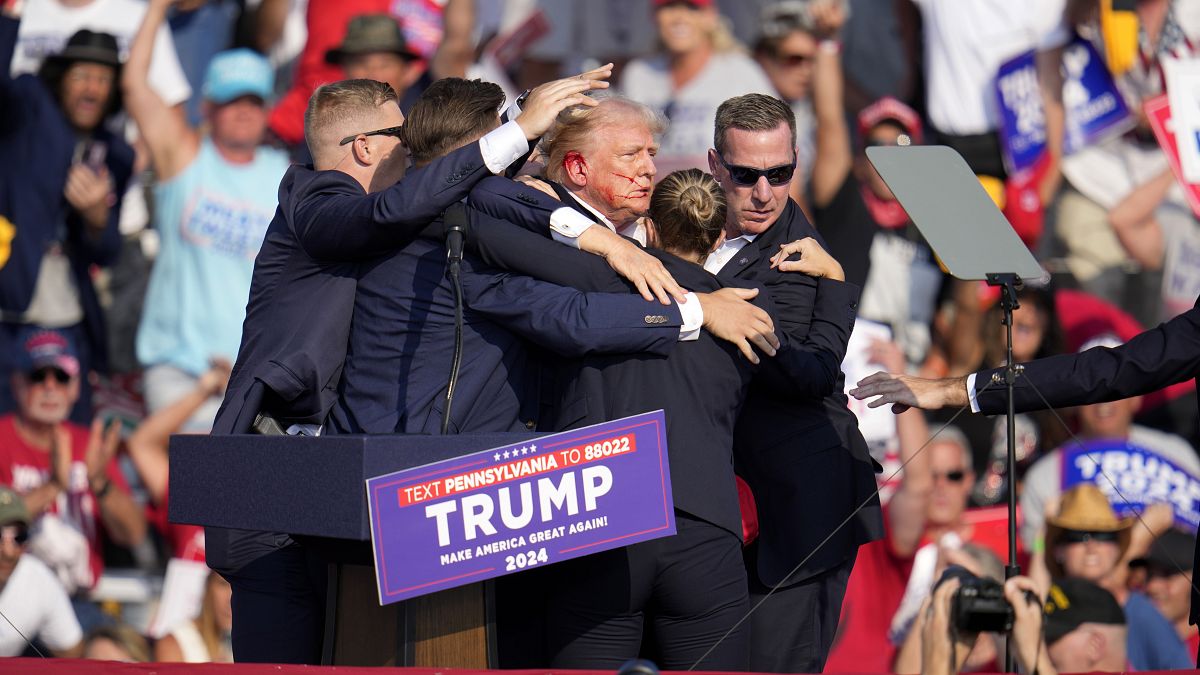
Trump and America's gun culture are under attack
by Surjit Singh Flora / 15 July 2024During a rally on Saturday, former US President Donald Trump narrowly avoided a potentially dangerous situation. He narrowly avoided a gunshot, which grazed his ear, causing injury. It's disheartening to witness such acts of violence, whether in the US or anywhere else. It is important to always seek peaceful resolutions when faced with conflicts. Similar events took place involving Pakistani Prime Minister Benazir Bhutto and Indian Prime Minister Rajiv Gandhi.
Regardless of your stance on politics and politicians, it is crucial to denounce any form of violence towards those involved in democratic processes. These attacks have significant global implications, extending beyond the borders of the US. The process's integrity guarantees that the law and the people will prevail in a highly respected nation.
Violence is a result of physical strength. It goes against personal freedom. Trump expressed his shock and sadness hours after the massacre, highlighting the alarming frequency of such events in our society. We reached out to President Joe Biden, who is currently in a race against Trump and had a conversation with him regarding the event. Biden strongly denounced the Trump assault, emphasizing that violence has no place in America. This idea was conceived by someone in poor health.
Some Republicans wasted no time in pointing fingers at Biden and his associates, claiming that Trump's relentless criticism had created a hostile environment that posed a threat to democracy.
The rally's vibrant and lively atmosphere received a warm reception from the audience, reminiscent of the joyous Diwali celebrations. Amidst the chaos, individuals naturally took cover, feeling uneasy about the circumstances. Loca expressed gratitude that Trump emerged unscathed. Our hearts go out to the innocent rallygoers who lost their lives and we send our thoughts and prayers to those who were injured.
Trump later discussed the incident, emphasizing the importance of maintaining composure and not succumbing to misinformation and intense emotions online. He urged all Americans to respond in a calm and nonviolent manner. This issue needs to be resolved. Reflect on the impactful inauguration speech delivered by Abraham Lincoln. He addressed a nation in a state of chaos, expressing his desire for the collective memory to resonate with all through the compassionate aspects of our nature. "I will get in touch with you."
Let's stay focused and delve into the suspected shooter's intentions, connections, and political beliefs. Approach this issue with a level-headed and rational mindset. Politicians, pundits, and civic leaders from all backgrounds must maintain composure and prioritize the development of our nation's future through thoughtful ideas.
Although presidential debates can be intense, American presidential elections have consistently maintained a sense of composure. On March 30, 1981, Reagan was shot. He miraculously made it through!
It's worth noting that President Gerald Ford had a close call with an assassination attempt in September 1975. By the way, I have something interesting to share with you. Kennedy was the final president to pass away while serving in office.
When will Americans truly understand the repercussions of such violence? The potential consequences of impulsive actions, such as the tragic incident involving Senator Kennedy, can have a detrimental impact on our nation through legal repercussions and public scrutiny. When will Americans finally grasp the importance of engaging in civil discourse, refraining from personal attacks, and taking into account the consequences of their words?
Former US President Barack Obama emphasizes the importance of maintaining a peaceful political environment in a democracy. I'm relieved to hear that Trump is safe.
Indian Prime Minister Narendra Modi is deeply troubled by the recent incident involving a potential threat to President Trump's safety. He emphasized the importance of steering clear of violence in politics and democracy.
PM Modi expressed his deep sadness regarding the attack on his friend, former President Donald Trump. I vehemently denounce the incident. Violence should never be tolerated in the realms of democracy or politics. Wishing him a speedy recovery. I'm pleased to have come across this "X" post.
The state of American politics is devoid of any sense of decency, with violence deeply ingrained in society. This situation is exacerbated by the ownership and usage of guns. Trump has consistently shown support for them, even in instances where private militias have targeted politicians. Politicians and elementary school pupils alike are faced with the devastating consequences of chaos. Radicals are accountable for the tragic loss of innocent lives. This is a common occurrence in the United States.
Multiple pieces of legislation from the White House are aimed at addressing America's gun culture. Shootings at schools, universities, malls, churches, gurdwaras, and mosques cause heightened tensions and provoke strong reactions from politicians. There is often a heated debate and various proposals regarding gun cultural restrictions. Although these ideas are well thought out, they often go unnoticed and are forgotten over time. Every single political candidate Which weakness is more significant in the United States?
Surjit Singh Flora is a veteran journalist and freelance writer based in Brampton Canada
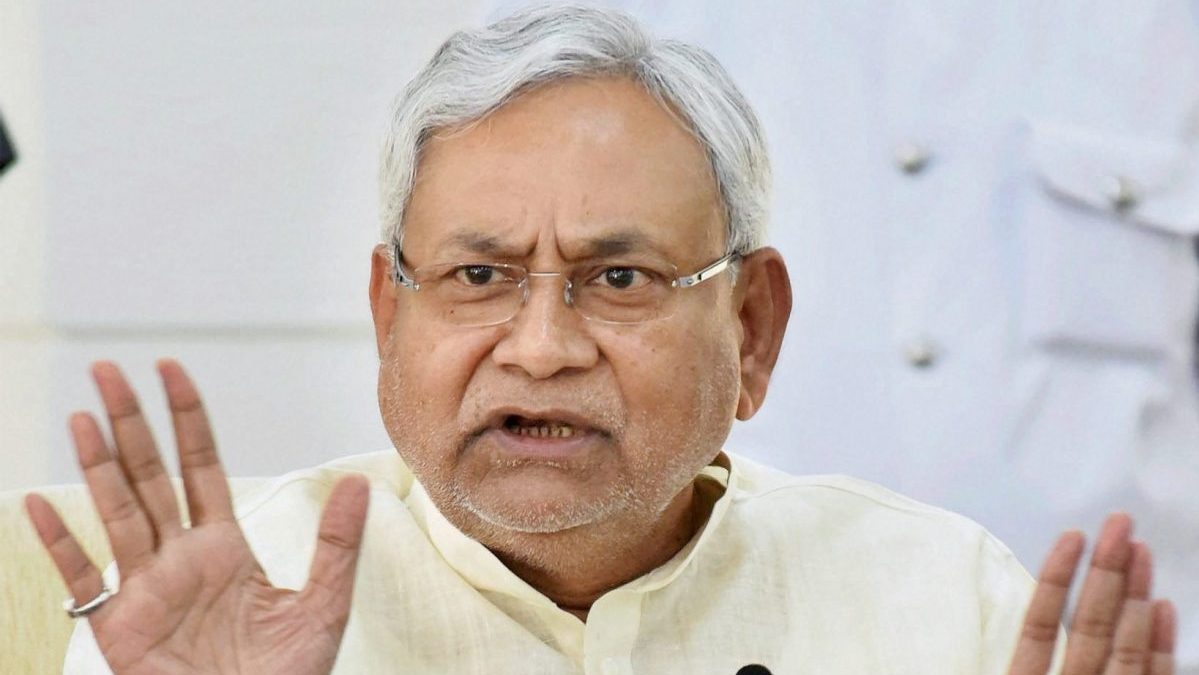
Caste from Confrontation to Consolidation: The Politics of Nitish Kumar in Bihar
by Opinion Express / 03 July 2024The history of caste is one of the defining features of politics in Bihar. Without delving deep into historical antecedents, it suffices that colonialism made it politically active. In the 1920s, a formidable caste alliance was forged in the form of ‘Triveni Sangh’ to challenge the dominance of upper castes. This formation had some initial success in the local elections of that time. Since then, the plank of caste regularly surfaces and has been articulated in the form of social justice. Although its aspirations were partially addressed by giving reservations to SCs and STs, its political significance was not recognised until the implementation of Mandal Commission recommendations in the 1990s. Full-fledged recognition of caste accorded it a critical significance as all political parties joined the mad race to capture the OBC's vote bank. Still, the glory endured to those parties who had been at the forefront of such demand before and after independence - socialist parties of various hues. Indian politics, after the implementation of the Mandal Commission’s recommendations, no longer remained merely ritualised parliamentary politics where the elite-dominated its course without being challenged. It was now open for the demos coming from vernacular traditions to overwhelm the realm of politics. It was a radical reversal of traditional elite politics in India- perhaps an inevitable consequence of democratic politics. A calm and tradition-based electoral process no longer remained the same as it (the recommendations) re-energised and invoked the lower caste political consciousness. Caste no longer remained only a social category but suddenly became a potent political identity. It imbued agential power to those on the margins who were mainly passive and patronised despite their overwhelming number in the population.
This social factsheet was altered when Lalu securely assumed the office of Chief Minister by replacing Jagannath Mishra, the then Congress Party Chief Minister. The changed situation inaugurated a new politics of caste assertions in Bihar in which confrontation inevitably followed the course of radical alteration of the nature of political order- the nature of legislative assembly, bureaucracy, party structure, etc. The socially entrenched classes put their might against such changes. But with political power in his hand, Lalu withstood their challenges and brought OBCs (at least the dominant sections, notably his caste- Yadav) into the limelight and firmly placed them in the political order. He reaped the political benefit immensely by making a formidable alliance of his caste with the Muslims that acquired the popular abbreviation M-Y. His three consecutive victories from 1990 to 2005 made him invincible - at least, he had that sense of invincibility. He not only frightened political opponents but also his partymen who refused to accept his dictate. Once sure of his electoral victory, he hardly paid any attention to the governance, allowing the situation to become lawless, bringing Jungle Raj into the state. The ghost of Jungle Raj still haunts his party. It is broadly a phase of caste confrontation.
In this background, Nitish Kumar, a bete noire for Lalu, left the party and thereby parted his company from him. First, he formed his party, and later, with the support of the BJP, he became the chief minister of Bihar in 2005, since then continuing as CM, notwithstanding his frequent changes of parties and alliances.
Now, the saga of new politics begins in Bihar with the political ascendancy of Nitish Kumar. This phase may be termed caste consolidation, a new beginning of synchronous caste politics. Nitish, as an astute politician and his long association with socialist politics, fully realised the utter significance of caste for political power. But he hailed from a caste with minuscule numbers- only 3 percent in the state- that made it impossible to form his caste-based majority. Following the logic of real politics, he fragmented the homogenous OBCs bloc by giving 25 percent reservation to the extremely backward castes (EBCs) from Annexure 1 and constituting a Maha Dalit Commission to fix quota for the lowest of them. In addition to this stratagem, he made fifty percent reservation for women in three-tier Panchayati Raj Institutions (PRIs). All these changes yielded positive political gains for him, carving a solid support base with the assured support of EBCs, Maha Dalit, and women. It not only made him politically relevant but also allowed the benefits of reservation to percolate down. As a political strategist, he collaborated with the upper castes, soothing their bruised pride and allowing them some political space in the system. His innovative politics of caste spawned a new era of political representation long denied to the lower rung. That apart, he also overhauled the state administration and boosted its morale, assuring the state officials of political non-interference. Such steps ensured political stability with a recharged bureaucracy, embarking on the governance goal with new zeal and vigour. As a result, Bihar's GDP marched ahead of the national level.
To those who prophecised Nitish's political demise in the 2024 elections, it was incomprehensible to them that the support base he built over the years still endures. The social segments he nurtured strongly aligned with him. The poor women, harassed physically and economically by their alcoholic husbands, were able to save their meager resources after Kumar passed a stringent law to make the state alcohol-free. They continue to support him.
The expansion of political representation to the historically disenfranchised section has brought not only a new political consciousness among them but also new claimants for their mandates comprising both the regional and the national political parties. Their support, however, remains intact in favour of JDU led by Nitish. It implies that inherent social diversity demands decentralisation of power, empowering the different segments of the social collectivity. It underlies that uncritical adherence to the homogenous collectivity makes it hardened, which impedes the trajectory of democracy in responding creatively to ever-changing situations. Thus, the synergy of castes struck by Nitish Kumar ushered in the politics of caste consolidation based on the principles of equal sharing of power- it will open new egalitarian possibilities for castes, especially for the disempowered castes, in the otherwise hierarchical caste society. Possibly, Akhilesh Yadav owes a lot to Nitish Kumar for coining the phrase of PDA (Pichhara, Dalit, Alpsankhyak), which enabled his party to make deep inroads in this election. In consonance with the idea, the narrative of the caste census easily stuck with the voters, reviving the political fortunes of Samajwadi and the Congress parties. The above construal is what not only makes Nitish Kumar politically relevant but it also works as a beacon for future democratic politics in India, particularly for Bihar.
Authors: G.N Trivedi, Former Professor, University of Delhi & Manish Kumar, Doctoral Scholar at School of Development Studies, TISS-Mumbai

BHARTIYA NYAYA SANHITA – A POLITICAL AGEDA?
by Sarthak Bhatia / 03 July 2024The New Bhartiya Nyaya Sanhita, 2023 (successor of Indian Penal Code, 1860) along with the two other bills, The Bhartiya Nyaya Suraksha Sanhita, 2023 (successor of Code of Criminal Procedure, 1973) and the Bhartiya Sakshya Bill, 2023 (successor of Indian evidence act) received the president’s assent on 25th of December 2023. However, the government's action casts serious questions on the motives behind it. The law was tabled in the parliament during the period when 97 MPs were suspended; as a result, any possibility of discussion and debate was eliminated. Since all three of the new laws are perfect replicas of the ones that came before them, the motivation for such an act is nonetheless unclear.
Importantly, section 113 of the Bhartiya Nyaya Sanhita, 2023 adds a new offense called "terrorist act," which has already been explicitly defined by the Unlawful Activities Prevention Act (UAPA). This might lead to an extensive misuse of the law.
The insertion of the terrorist act in the BNS, which is the replica of the terrorist act as mentioned in the UAPA act, is only harming the integrity and effectiveness of the clause mentioned under the UAPA act. By addition of such a clause in the general law would give the superintendent of police the liberty to frame charges under either of the acts, and granting such power to the local police officer would only increase tyranny across the country. Acts of terrorism sometimes entail risks to public order, national security, and social stability in addition to direct physical harm to individuals. The BNS's definition of "terrorism" automatically incorporates the UAPA's term, which does not limit the crime to the body alone. This is ludicrous, though, as terrorism is by its very nature concerned with the aftermath of an act rather than the act itself, and such attacks may target civilians or important infrastructure, or perhaps both.
As said, it's uncertain why the BNS includes a provision for the new charge of the terrorist act. Given that terrorist actions are already covered under the UAPA, a special legislation, why was there a need for duplication? There are serious questions about the reasoning behind this change given how similar the definition of a "terrorist act" is in both legislations. To prevent misunderstandings and guarantee uniform interpretation, the criminal justice system usually strives for accuracy and clarity while crafting laws, according to current criminal law jurisprudence.
There would be dissonance regarding the legislatively intended scope and application of this duplicate definition if it existed in both the BNS and the UAPA. Furthermore, since the parliamentary standing committee on Home Affairs fails to explain such a legislative action, the reasoning behind this repetition becomes increasingly vague and obscure.
The UAPA was passed in response to the extremely specialised and intricate nature of terrorist activity, the requirement that it be addressed by a distinct procedural legislation in order to manage the nuances involved, and the necessity to give specific restrictions that may not be sufficiently addressed by general statutes.
In order to resolve disputes between the general and particular provisions of "conflicting" legislation, the courts have consistently adopted the "rule of harmonious construction." This legal maxim states that the special law's provision must take precedence over the general laws in cases when there appears to be a disagreement between two separate legal provisions.
While the BNS is a general legislation that deals with transgressions in general, the UAPA is a particular law that handles terrorism. Consequently, it contradicts the sense to introduce Section 113 of the BNS when the UAPA will apply instead.
Assuming that members of Group A are seen as opposing the ideology of the government, the SP may selectively book them under the UAPA and use its strict rules to keep them detained, while the other group may be charged under BNS. This gives rise to the possibility of manipulating the legal system for political purposes.
Fairness in judicial procedures and equality before the law is directly threatened by the possibility of discriminatory treatment motivated by ideological differences. The possible abuse of these authorities may lead to the elimination of basic rights and the silence of dissident voices.
In turn, a strong system for accountability, supervision, and adherence to legal standards is required due to the incorporation of anti-terrorism provisions into general legislation and the discretionary powers bestowed upon the Superintendent of police. To guarantee the fair and reasonable application of anti-terrorism legislation and avoid their exploitation for political goals, it becomes crucial to strike a careful balance between the imperatives of national security and protecting individual rights.
The investigation's course is decided by the SP's choice to file a case under the BNS or the UAPA. In addition, the state police may knowingly or unknowingly record the case under the BNS to maintain jurisdictional control and stop the matter from being referred to the Union government. Ego-driven resistance to turning over a case to the NIA in situations where the state and Union administrations have different political philosophies might make it more difficult to combat terrorism.
This situation presents a serious difficulty that might impede the established legal procedure. The probability of applying anti-terrorism legislation selectively due to political concerns poses a threat to the values of justice equity and the rule of law.
It is interesting to observe that in places where the state and federal administrations have similar political philosophies or connections, this problem might not be as severe. However, the possibility of abuse of discretion in the execution of anti-terrorism laws necessitates close examination in areas characterised by political disagreement.
FREE Download
OPINION EXPRESS MAGAZINE
Offer of the Month