
News Destination For The Global Indian Community


News Destination For The Global Indian Community

Green Energy: Can the Private Sector Be the Cure for India's Energy Appetite?
by Deekshitha S / 02 January 2024India's energy landscape has undergone a significant change in the past decade, to tackle the impending climate crisis. India will need an additional $300 billion to reach the goal of 500 GW of clean energy by 2030 (ADL report). As the transition to clean energy is capital-intensive, the cooperation of the private sector becomes increasingly important. Beyond tackling climate change, harnessing private capital for clean energy can unlock economic growth, generate green jobs, and enhance energy security.
With the government playing a catalytic role, investor confidence in India's clean energy future is soaring. Production-linked incentives and regulatory reforms have fueled a 40% rise in clean energy investment since 2020, boosting investor confidence (Times of India, 2022). A recent surge in renewable energy loans issued by banks and NBFCs further validates this trend. (Yoshino and Taghizadeh-Hesary, 2015).
To facilitate private sector participation in India's green energy ambitions, it becomes necessary to venture beyond mere capacity addition and dip into nascent technologies like green hydrogen, geothermal, ocean, and rooftop solar. Private investment in research and development, a skilled workforce, and technology transfers have become the need of the hour. India requires roughly $12 billion annually for clean energy R&D alone, highlighting the substantial gap that private participation can bridge (CEEW, 2023).
Furthermore, the rise of renewable energy generation makes effective energy storage solutions vital for addressing energy fluctuations and guaranteeing grid stability. Private companies can invest in and build pumped hydro plants, grid-scale batteries, or other storage solutions, creating a competitive market and driving down costs (Singh & Mukherjee, 2023). They can also develop innovative ownership models for storage facilities, such as community microgrids or energy storage as a service, ensuring wider accessibility and cost-sharing.
On the investment front, fostering innovative financial instruments like green bonds, climate-linked debt, and crowd-funding platforms can unlock substantial financial resources (Ghosh, 2022). While Adani has raised $1 billion through green bonds, Tata Power has raised $320 million via sustainability-linked loans, showcasing diverse funding options in the renewable space (Mint Genie).
Although India's private sector is stepping up, its debt burden remains a pressing concern, being 24-32% higher than developed economies like the US and Europe. Market concentration also poses a significant hurdle. The capital-intensive nature of solar and wind power has led to an oligopoly, with just 10 firms holding 60% of the total market share (Kunal B Fulewale, 2019). While the private sector's enthusiasm is encouraging, fostering a more open and inclusive market, along with managing the debt burden is crucial.
Beyond financial hurdles, land acquisition remains a major bottleneck, stalling projects due to its large footprint and local protests causing potential disruptions, like those in Nedan, Rajasthan. Moreover, acquiring fertile land raises food security concerns (Down to Earth, 2019). Complex logistics in remote areas add another layer of complexity and increase cost. These operational snags trigger a ripple effect, pushing up tariffs that in turn burden the state and discoms (Down to Earth, 2020). Establishing designated renewable energy zones with pre-approved land, robust infrastructure, and a streamlined permitting system could offer a solution for addressing these hurdles.
India's clean energy journey is not a solitary sprint; it's a collaborative marathon where the private sector's technical prowess and the government's supportive regulatory policies pave the path to a sustainable future. With a projected market size of $500 billion by 2030 (Times of India, 2023), India's renewable energy sector represents a significant and timely opportunity for private sector participation. This rapid growth presents a compelling avenue for investment and engagement in the future of clean energy.
Writer Deekshitha S is an engineer turned policy enthusiast.
Indian Youth & Politics: Is the youth of today just the leader of tomorrow?
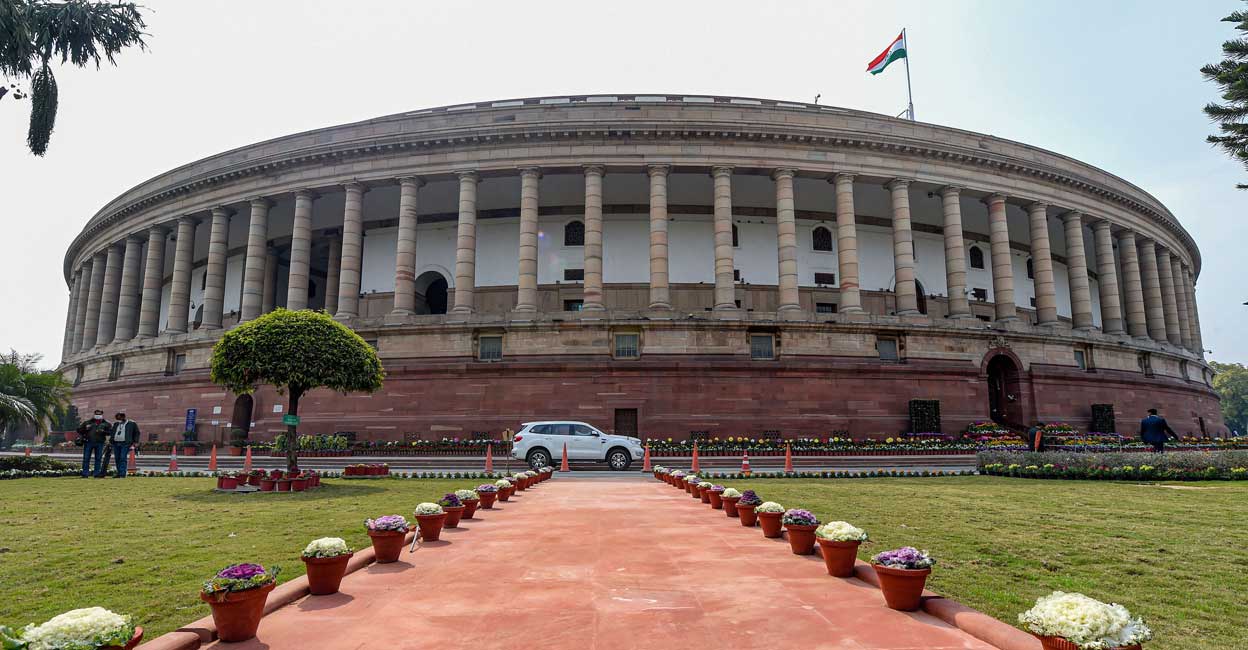
by Manan Singh / 01 January 2024The youngest country in the world, India, is often criticized for not having enough young parliamentarians. On one end dignitaries proudly state that when the world turns old, India will stay young, but on the other hand, only 6% of the Indian parliament comprises people below the age of 30. Thus, though the majority of the Indian population is young, it has near to no participation in the apex body that deals with policymaking. However, India does not fare very poorly in this regard in comparison to the world, as the youngest parliament in the world, Norway, has only 13.61% parliamentarians under the age of 30. Yet, this is not something to be satisfied with. 13% need not be the benchmark for a country like India, we must aim higher. It is a fair argument that parliamentarians and policy makers must be mature and experienced individuals but such an argument is not entirely satisfactory. The reason is that experience cannot be considered as an argument to negate the opinions and participation of nearly two-thirds population of our country.
One of the primary reasons for low youth participation is that the minimum age for an individual to be part of India’s highest legislative body is 25. Indeed, politics does not just mean being part of the government, rather it is a small part of it, but it is the one which creates the biggest impact on the society. The experience and maturity argument is brought back here. The general notion is that the youth must be trained and taught and they must learn by observing so that they are the leaders of tomorrow. Nelson Mandela once said, “The youth of today are the leaders of tomorrow.” As much as I agree with this quote of his, my question is, why are they just leaders of tomorrow and not considered leaders of today? Why is young age considered as a reason for presuming that an individual cannot have a large impact or is not mature enough to participate in policy-making and be part of a country’s decision-making body?
The youth is just awaiting an opportunity and the world will see them embarking on a journey of revolution and positive change. With every passing year, the involvement of youth in change-making is drastically increasing. The interesting thing is that most of these interventions are not because a particular opportunity was provided to the youth but because they saw the need to take action, took the initiative and achieved the goal successfully. Today, it is difficult to back a claim that the youth are not capable enough to be political leaders and do not possess the skill set to let them take an active part in politics. The youth is running their organizations, initiatives, companies, businesses, and forums and are bringing about a change in society by being leaders. In such a scenario, I fail to understand how they are pictured as not being of the right age to be leaders. This argument of the incapability of the youth to participate in politics makes less sense to me when I begin to think about India’s freedom movement. From revolutionaries like Shaheed Bhagat Singh to pioneer politicians like Jawaharlal Nehru and Netaji Subhas Chandra Bose began their active political careers in their early or mid-twenties. As much as the old leaders like Mahatma Gandhi are credited for India’s independence, the contribution of the youth is at par, if not more.
Another flawed argument in India to prevent youth participation in politics is that they are not interested in being part of politics. Reports tell that students studying subjects like polity, political science and international relations are at an all-time high in India. This rise is not just seen among men; rather reports also state that nearly 52% of the students studying political science in colleges in India today are women. Young people are opening think tanks and forums to have discussions on pertinent issues and are even involved in policy consultation. If you wish to witness an individual’s oratory skills, diplomatic ability and the promptness with policy of today’s youth, you must go and attend a Model United Nations (MUN) Conference or a Youth Parliament. Not just in UN committees like the Security Council and General Assembly, the youth has shown exemplary performance in committees like Lok Sabha, Rajya Sabha and All India Political Parties Meet. With their out-of-the-box thinking, diplomacy skills and new-age thought process, they have at times come up with extremely innovative and on-point suggestions on topics like the New Education Policy, Uniform Civil Code, etc. The current delegates of Youth20 (Y20) India are also a perfect example to analyze the leadership capabilities of Indian youth.
As the youth asks for a chance to be part of politics, they must also realize that with position comes greater responsibility. Not just the responsibility of making the world a better place to live in by creating stringent policies and ensuring that they are implemented but also by ensuring that they extend a hand to the upcoming generations. All the youth that do get the opportunity to be part of politics, it is their duty as well to pave a path for greater youth participation and also for mentoring the interested youth. Moreover, a know-it-all attitude will not be the most beneficial. A good leader must always listen and learn, that is what the youth will have to keep in mind. Doors for opportunities are gradually opening and the youth must make the most out of the opportunities provided.
Before concluding, an important aspect of youth’s involvement in Indian politics, I would like to highlight is diversity. When we say that the youth is the leader of today, which youth are we talking about? The majority of the Indian population continues to be rural or poor and largely uneducated. All the discussion we have had till now tilts towards the urban youth participating in politics and how they have been successful. The independence movement does come to our aid again, as we observe in the movement that all those who participated in politics even then were not educated but with the right guidance and training they could make the apt decisions as per requirement. Today, the numbers of young sarpanch in villages are also rising. Both men and women are taking an active part in not only central or state politics but also rural politics. This diversity of India is not to be ignored and greater attention needs to be paid to guiding rural youth and providing them with opportunities so that they do not get neglected.
This article poses a simple argument, why should youth be only taken as leaders of tomorrow in politics, when they possess the caliber to be leaders of today? Certainly, the right guidance and mentorship are required to compensate for the possible experiential lack, if any. The world must also understand that when they call out the youth for not having the experience, it is they who have not provided the youth with the right opportunities and space to gain experience, learn and grow. Countries like Rwanda, Kenya, and a few others have had this realization and have provided reservations for the youth in their parliaments to ensure consistent participation. Since time immemorial, youth has shown its capability of being a leader and its ability to embark on positive change. Most of these young leaders generally found senior leaders who were willing to groom them and let them be leaders of the present and the future. These mentors never told them to wait for 30 years and be considered mature at 45, to become a political leader. To state a few examples, Gopal Krishna Gokhale mentored Gandhi, Netaji Subhas Chandra Bose was mentored by Deshbandhu Chittaranjan Das, and the list goes on. Thus, existing leaders must also follow the decree and take up roles of mentors for young and aspiring leaders. I feel for this young India of today, for the young to be political will be a boon and it is time for the country to create an environment for the same. Today’s India is young and it deserves to be aptly represented and make decisions for the world they wish to live in. Youth has the potential and they must be allowed to be leaders of today, not be thought of only as leaders of tomorrow.
Canadians are paying the price for Trudeau’s overspending
by Surjit Singh Flora / 01 January 2024Starting on January 1, 2024, Canada will implement substantial changes to its study permit program for international students. These changes include a reduction in the number of study permits issued, limitations on working hours, and an increase in the financial requirement for study permit applicants. The cost-of-living financial requirement will be raised from the current amount of $10,000 to $20,635. Additionally, applicants will need to demonstrate sufficient funds to cover their first year of tuition fees and travel expenses. These adjustments aim to enhance the preparedness of international students for their lives in Canada. The minister asserts that the current situation has reached a point where further action is necessary.
Indeed, the truth is, these changes were made because there are too many students in Canada, no proper housing arrangements, no jobs, and Canadians, including foreign students, depend on food banks, while many food banks denied catering to international students last month. After that, many Canadians made noise about why these international students depended on food banks while Canadian immigration policy required $10,000 while they studied.
The blame lies with the government and loan companies that exploit students for visa money. The government will be increasing the student permit fee starting on January 1, 2024. Proof of funds is required annually along with tax returns. However, this is still insufficient. Once a student is approved for a study visa and arrives in Canada, they will repay the loan, and their bank account will be left with very little funds. The government must make it mandatory for them to provide proof of their bank statement every month to demonstrate that they have sufficient funds in their account.
Also, life's unpredictable, and while students sometimes need a helping hand so do we. Don't punish the good for the bad and the flawed.
However, Canada was once a popular destination for immigrants seeking to earn a living, but the situation has deteriorated due to these problems. From there, the immigrants have either chosen to move to other countries or return to their homeland. The number of immigrants entering Canada has been steadily rising since the 1980s, according to a recent survey by the Conference Board of Canada for the Institute for Canadian Citizenship (ICC), titled "The Leaky Bucket: A Study of Immigrant Retention Trends in Canada." This trend gained momentum in both 2017 and 2019, resulting in a significant 31 percent increase in average revenue. The number increased after COVID-19 as the economic condition of Canadians generally declined.
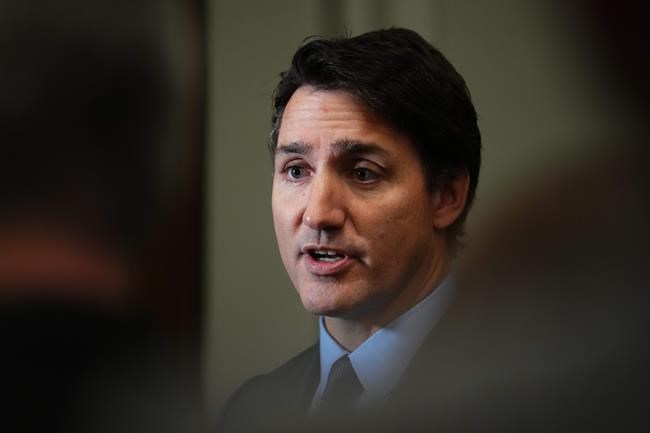
The Parliamentary Budget Office (PBO) has released their analysis of the Liberal fall minibudget, which can be summarized as follows: prices are increasing, debt is increasing, taxes are increasing, and time is running out. After eight years under Justin Trudeau's leadership, Canadians are facing the challenge of managing a significant increase in national debt, amounting to one hundred billion dollars. This surge in debt has contributed to higher inflation rates, resulting in a situation where the government's wealth has grown while the financial well-being of the general population has declined.
In their analysis, the PBO reported that the deficit will be $8.5 billion worse this year than the Liberals promised, meaning more Canadian tax dollars will be spent servicing interest costs on Trudeau’s debt. On top of this, they will add another $20.7 billion in inflationary debt, despite warnings from the Governor of the Bank of Canada that this will make everything more expensive.
Justin Trudeau’s uncontrolled spending will keep inflation and interest rates higher for longer, pushing already struggling Canadians over the edge. And this reckless spending risks a mortgage meltdown on the $900 billion of mortgages that will renew over the next three years.
Immigration and reverse migration hurt Canada's population balance. In 2010, 14.1% of Canada's population was 65 or older, according to Statistics Canada. By 2022, it had jumped to 19%. Migration disruption could fuel these trends. In 1966, 7.8% of Canadians were over 65. In 2022, it dropped to 3.4%, and by 2050, it will likely be below 3%. This affects government funds by having fewer taxpayers and more people relying on support. More elderly, more strain on healthcare.
Canada's aging population poses a big challenge for policymakers. Canada actively encourages young immigrants, offering various immigration options such as granting permanent resident status to international students after they finish their studies. This approach remains popular among policymakers. Canada will welcome 485K immigrants in 2024 and 500K in 2025. Canada welcomes skilled workers, temporary workers, and international students as immigrants. Each worker faces unique challenges. Skilled workers in Canada: excitement turns to challenges. Skilled individuals struggle to find suitable jobs and often settle for low-paying work to provide for their families.
America prefers to hire educated people, even if they do not have the same educational qualifications and experience as other immigrants.
The process of getting a license is quite complicated and expensive and takes a lot of time to complete. The influx of international students increased after Canada eased the rules to allow part-time work immediately after school admission. This also benefited the Canadian economy immensely. By 2022, more than 8 million study permit holders will be enrolled in educational institutions. In 2022, the contribution of international students to Canada's gross domestic product was estimated to reach $22 billion, helping to create nearly 200,000 jobs.
International students are usually paid the minimum wage, which helps small and retail entrepreneurs run their businesses. After completing two years of education and one year of work experience in Canada (1560 hours), a person is eligible to apply for Permanent Residence (PR) but the PR is awarded based on Comprehensive Ranking System (CRS) scores. goes CRS is a points-based system that is used to measure one's score and rank in the Express Entry pool.
The CRS score depends on language, education, work, and age. The CRS cut-off varies in each PR draw round. 2022 saw CRS scores ranging from 491 to 557. The cut-off price depends on applicants, scores, and housing decisions. On October 23, 2023, 214,873 applications were in the pool. Only 3,600 applicants with scores of 431 or higher were invited for the draw on October 26. Applicants must wait a long time to earn more points. They'll be temporary workers with a three-year permit. Earn extra points by getting a job offer or LMIA approval. There were few applications and many rejections.
The government sometimes lowers the CRS score requirement, like in 2021, when it dropped to 75, helping many applicants. Exemptions remain uncertain in terms of amount and timing. International students often go back home. Indian students wait and try various tactics to boost their CRS score, but it's not for everyone. CBC News reported that half of international students had no tax records after finishing their studies, indicating they likely went back home. According to an ICC survey that the same channel cited, 23% of educated new Canadians intend to leave the country in the next two years.
High living costs here make migrants give up on their dreams. Canada's inflation is squeezing wallets as wages remain stagnant. Canada offers immigration, refugee, and citizenship programs but lacks support for their long-term maintenance. The road to residency is a maze of rules and surprises.
Surjit Singh Flora is a veteran journalist and freelance writer based in Brampton Canada

Stakes Rise as Taiwan Polls Elicit Diverse Opinions for Mainland China
by Prashant Tewari / 31 December 2023In the lead-up to Taiwan's presidential elections on January 13, 2023, candidates have expressed a desire for peaceful relations with Beijing, despite increased tensions and provocations from the Chinese government. The frontrunner, William Lai, who is currently Taiwan's vice president from the ruling Democratic People's Party, stated during a televised debate that he is open to communication with the government in Beijing. However, Beijing has refused to engage in dialogue with Lai and President Tsai Ing-wen, accusing them of separatism and attempting to provoke a Chinese attack on Taiwan.
China has shown a preference for the more China-friendly Nationalist Party, or Kuomintang, candidate, Hou Yu-ih. Despite the historical endorsement of unification with China by the Kuomintang, recent shifts reflect Taiwan's electorate increasingly identifying as Taiwanese rather than Chinese. Hou expressed a commitment to peaceful relations with Beijing while rejecting Taiwan's independence and opposing potential unification under China's "one country, two systems" framework, as seen in Hong Kong.
The third candidate, Ko Wen-je from the Taiwan People's Party, emphasized a pragmatic approach to Taiwan-China relations. He referenced a quote by US Secretary of State Antony Blinken, suggesting cooperation, competition, or confrontation based on the circumstances. Ko highlighted the shared history, language, religion, and culture of the people on both sides of the Taiwan Strait but underscored the importance of Taiwan maintaining its current democratic and free political system.
Tensions between Taiwan and China have manifested in increased military pressure, with China sending jets, ships, and even espionage-capable balloons near the island. The United States, bound by law to provide Taiwan with necessary defense, closely monitors developments, as differences over Taiwan remain a significant flashpoint in US-China relations.
As the elections approach, the candidates are navigating a delicate balance between expressing a willingness for dialogue with Beijing and safeguarding Taiwan's autonomy and democratic way of life. The international community is closely watching these developments and preparing to respond to potential escalations in the region.
VIT Thrusts India's Intellectual Prowess onto the Global Stage
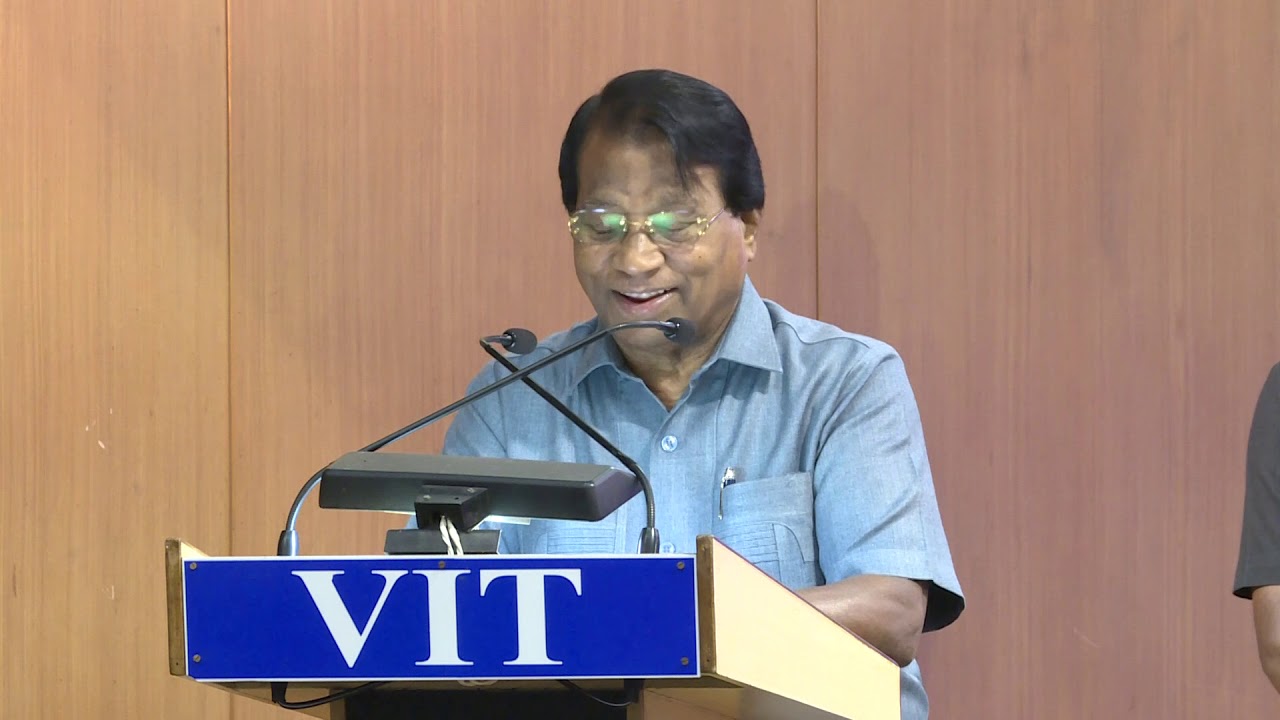
by Prashant Tewari / 12 December 2023VIT University, popularly known as Vellore Institute of Technology, has undoubtedly played a transformative role in shaping the educational landscape of India and contributing significantly to the nation's growth story. The institution's journey to becoming a global leading intellectual hub is closely intertwined with the vision and leadership of its founder, Dr. G. Viswanathan. His visionary approach, commitment to excellence, and entrepreneurial spirit have not only propelled VIT to great heights but also positioned him as a role model for the next generation of entrepreneurs.
Over the years, the institution has evolved into a comprehensive university with a global reputation for academic excellence, innovation, and research. The transformation of VIT into a hub of intellectual activity can be attributed to several key factors.
Academic Excellence: VIT has consistently focused on providing high-quality education, adapting to changing industry needs, and fostering a culture of innovation. The university offers a wide range of undergraduate, postgraduate, and doctoral programs in engineering, technology, science, business, and humanities. The curriculum is regularly updated to incorporate the latest developments in various fields, ensuring that students receive relevant and contemporary education.
Research and Innovation: VIT has placed a strong emphasis on research and innovation. The university has established research centers and laboratories equipped with state-of-the-art facilities to facilitate cutting-edge research. Faculty members and students are encouraged to engage in research activities, leading to numerous publications, patents, and collaborations with industries.
Global Collaborations: VIT has actively pursued collaborations with renowned international universities and research institutions. These collaborations have not only enhanced the global exposure of VIT students but have also facilitated knowledge exchange and collaborative research projects. Such global linkages contribute to making VIT a truly international intellectual hub.
Infrastructure and Facilities: The promoters recognized the importance of providing world-class infrastructure to support academic and research endeavors. VIT boasts modern classrooms, well-equipped laboratories, libraries, and recreational facilities. The emphasis on a conducive learning environment has attracted students from across the country and around the world.
VIT's Impact on the Indian Growth Story
VIT University's contributions to the Indian growth story are multifaceted and extend beyond the boundaries of traditional education. The institution has played a crucial role in:
Human Resource Development: VIT has consistently produced a pool of highly skilled and qualified professionals across various disciplines. These graduates contribute to the workforce, driving innovation, and serving as catalysts for economic growth. The emphasis on industry-relevant education ensures that VIT alumni are well-prepared to meet the demands of a dynamic and evolving job market.
Innovation and Entrepreneurship: The culture of innovation and entrepreneurship fostered at VIT has given rise to numerous successful startups and ventures. Graduates are encouraged to think creatively, identify opportunities, and take risks – essential qualities for any entrepreneur. The impact of VIT alumni in the startup ecosystem reflects the institution's role in shaping the entrepreneurial landscape of the country.
Research and Development: VIT's commitment to research and development has contributed to advancements in various fields. The university's research output has practical implications for industries, leading to the development of new technologies, products, and solutions. This R&D focus aligns with the government's emphasis on innovation and technology-driven growth.
Global Recognition: VIT's collaborations with international institutions and its global alumni network have enhanced India's standing in the global academic arena. The exchange of ideas, knowledge, and research findings on an international platform elevates India's reputation as a hub of intellectual activity and innovation.
VIT - A step ahead in innovation
In the dynamic landscape of higher education and research, VIT (Vellore Institute of Technology) stands out with its forward-thinking approach and commitment to cutting-edge innovation. The institution's innovation policy serves as a blueprint for fostering creativity, research excellence, and technological advancements. Let's delve into the key aspects that define VIT's cutting-edge innovation policy.
To incentivize and celebrate innovation, VIT has incorporated a system of recognition and rewards into its innovation policy. Outstanding contributions to research, technology transfer, and entrepreneurial endeavors are acknowledged and rewarded. This not only motivates individuals and teams but also creates a culture where innovation is celebrated as a cornerstone of academic excellence.
In conclusion, VIT's cutting-edge innovation policy exemplifies the institution's dedication to shaping the future of education and research. By fostering a culture of research, interdisciplinary collaboration, industry integration, and ethical innovation, VIT positions itself as a leader in the global academic landscape. As the institution continues to evolve, its innovation policy remains a guiding force, ensuring that VIT remains at the forefront of advancements that positively impact society and contribute to the global pool of knowledge.
Dr. G. Viswanathan: A Role Model for GenNext Entrepreneurs
Dr. G. Viswanathan's journey as the founder and chancellor of VIT University serves as an inspiring story for budding entrepreneurs. Several qualities and principles embodied by Dr. Viswanathan make him a role model for the next generation of business leaders:
Vision and Ambition: Dr. Viswanathan's vision to create a world-class educational institution and his ambition to position VIT on the global stage reflect the importance of having a clear vision and ambitious goals. Entrepreneurs can learn from his ability to envision the future and work tirelessly to turn that vision into reality.
Adaptability and Innovation: The ability to adapt to changing circumstances and embrace innovation is a hallmark of successful entrepreneurs. Dr. Viswanathan's proactive approach to introducing new programs, embracing emerging technologies, and adapting the curriculum to industry needs demonstrates the importance of staying ahead of the curve.
Commitment to Excellence: Dr. Viswanathan's unwavering commitment to excellence in education, research, and infrastructure sets a high standard for entrepreneurs. Striving for excellence in every aspect of business operations is a key lesson that aspiring entrepreneurs can take away from VIT's success story.
Global Perspective: In an increasingly interconnected world, having a global perspective is crucial for success. Dr. Viswanathan's efforts to establish international collaborations, participate in global forums, and create a diverse and inclusive environment at VIT showcase the importance of thinking globally for long-term success.
Social Responsibility: Beyond business success, Dr. Viswanathan's commitment to social responsibility is evident in VIT's initiatives in community development, education outreach, and philanthropy. Entrepreneurs can draw inspiration from the idea of business success.
Prashant Tewari Editor-in-Chief Opinion Express
Swamy Dwarkeshlalji Stresses the Role of Ultimate Devotion in Attaining Salvation
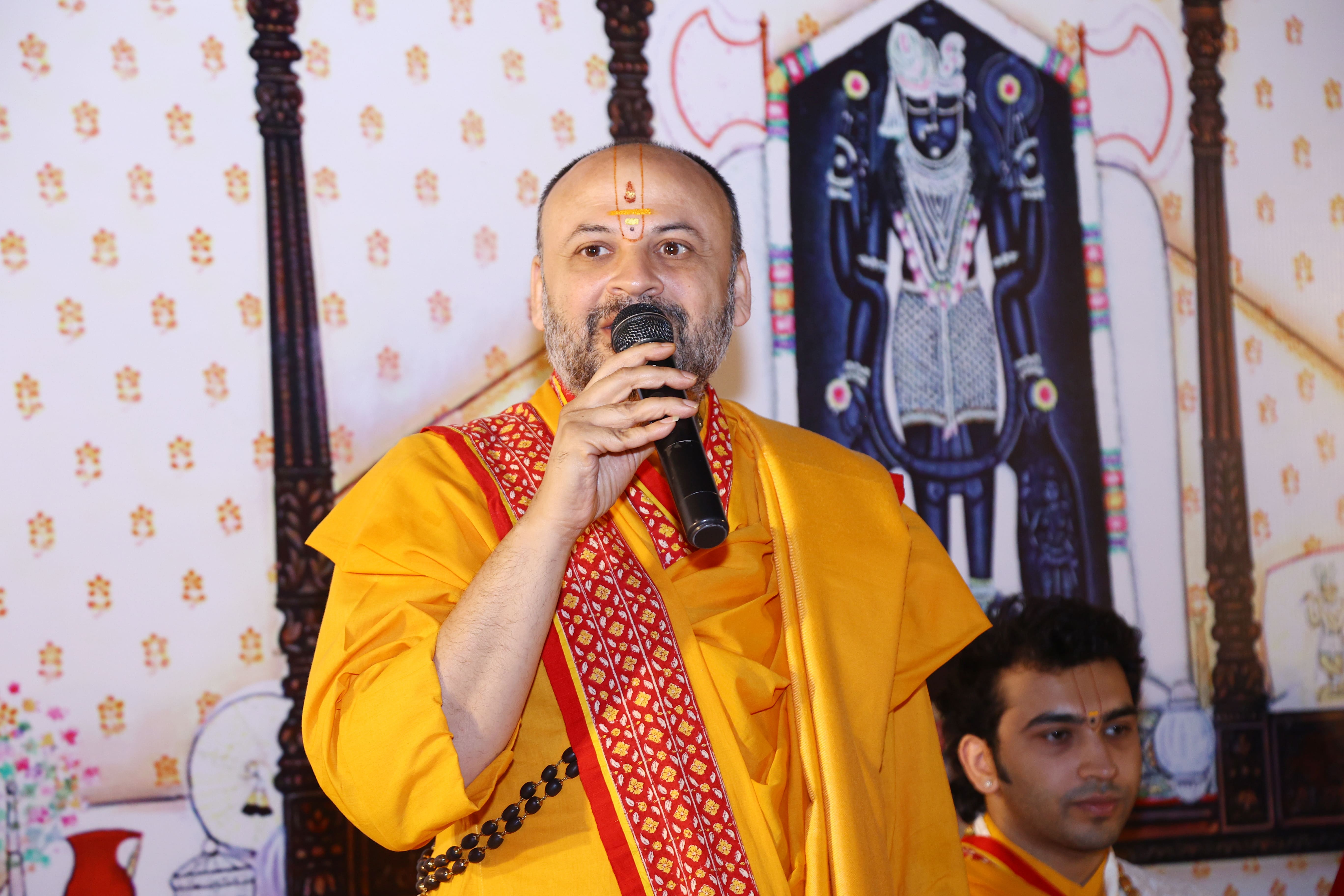
by Prashant Tewari / 31 October 2023Swamy Vallabhachari, a revered philosopher of Dvaita Vedanta, was a luminary whose teachings have transcended boundaries and impacted the lives of millions around the world. Rooted in the rich Dvaita Vedanta tradition of India: his disciple, descendent Dwarkeshlalji's profound wisdom and knowledge have served as a guiding light for spiritual seekers while contributing to a deeper understanding of the human experience.
Dvaita Vedanta, the school of thought to which Dwarkeshlalji belongs, is a branch of Indian philosophy that emphasizes the duality of the self (atman) and the ultimate reality (Brahman). It was founded by the celebrated philosopher Swamy Vallabhachari, and it posits that the individual soul is eternally separate from the supreme divine. Dwarkeshlalji, a prominent figure within this tradition, inherited and disseminated the profound teachings of Dvaita Vedanta, with a contemporary approach that resonates with a global audience.
Dwarkeshlalji Maharaj from an early age had an innate spiritual inclination, and he demonstrated a deep thirst for knowledge and wisdom. He embarked on his spiritual journey under the guidance of his guru, and it was here that he immersed himself in the teachings of Dvaita Vedanta. His commitment to his studies, coupled with his genuine love for humanity, set the stage for the transformative work that he has undertaken over the years.
One of the most distinctive features of Dwarkeshlalji's philosophy is his ability to bridge the gap between ancient wisdom and contemporary life. He possesses a rare gift of making complex philosophical concepts accessible to people from diverse cultural backgrounds. His teachings emphasize the practical application of Vedantic principles in everyday life, promoting the idea that spirituality is not an isolated pursuit but should permeate every aspect of our existence.
Dwarkeshlalji's message resonates with a wide range of audiences, both in India and abroad. His ability to connect with individuals from different walks of life is a testament to his universal approach to spirituality. He recognise the core principles of Dvaita Vedanta could serve as a guiding light for anyone seeking deeper meaning and purpose in their lives. His teachings transcended religious and cultural boundaries, welcoming people of all backgrounds to embrace his philosophy.
One of the cornerstones of Dwarkeshlalji's teachings is the concept of 'Bhakti,' or devotion. He professes devotion to a personal deity that could serve as a powerful means of achieving spiritual realization. Through his lectures and writings, he encourages individuals to develop a deep, personal connection with the divine. His emphasis on devotion as a path to spiritual growth was both inspirational and practical, offering a tangible way for people to connect with the divine.
Dwarkeshlalji's impact on the lives of his followers is profound. Many who came into contact with his teachings experienced a profound transformation in their perspectives and behaviors. He encourages his followers to lead lives infused with compassion, integrity, and a sense of purpose. His emphasis on ethical conduct and selfless service, rooted in the teachings of Dvaita Vedanta, guided countless individuals toward a more meaningful and fulfilling existence.
In addition to his work in India, Dwarkeshlalji embarked on several global tours to spread his message. His ability to communicate in multiple languages and his deep understanding of the human condition allowed him to connect with people from different parts of the world. His global outreach expanded his reach, and his message began to resonate with people from diverse backgrounds.
One of the enduring living legacies of Dwarkeshlalji is the philosophical literature he is producing regularly. His writings encompassed a wide array of topics, from the fundamental principles of Dvaita Vedanta to the practical application of spiritual teachings in daily life. These writings, often in the form of books, articles, and discourses, continue to serve as valuable resources for seekers and scholars alike. They provide insight into his profound understanding of the Vedantic tradition and his ability to adapt these ancient teachings to contemporary challenges.
Dwarkeshlalji has established ashrams and spiritual centers, both in India and abroad, where seekers could gather to study, meditate, and engage in spiritual practices. These centers became hubs of spiritual learning, fostering a sense of community among his followers. They continue to thrive, serving as beacons of spiritual wisdom and guidance for those on the path of self-realization.
In addition to his philosophical teachings, Dwarkeshlalji is renowned for his philanthropic efforts. He recognized the importance of giving back to society and believed that spirituality should be inseparable from acts of kindness and service. His charitable initiatives, including providing food and education to the underprivileged, and his efforts to promote environmental awareness, demonstrated his commitment to the well-being of humanity and the world at large.
Dwarkeshlaji's teachings continue to inspire and guide countless individuals. His followers have organized numerous events, seminars, and conferences to celebrate his life and work. These gatherings provide a platform for the exchange of ideas and the exploration of the profound wisdom he shared.
The impact of Dwarkeshlalji's teachings on the lives of his followers is immeasurable. Many attest to the transformative power of his philosophy, which has enabled them to navigate life's challenges with grace, equanimity, and a deeper sense of purpose. His emphasis on self-realization, ethical conduct, and devotion has allowed individuals to lead lives filled with inner peace and contentment.
Dwarkeshlalji's work is a testament to the enduring relevance of ancient philosophical traditions in the modern world. His ability to adapt these teachings to contemporary contexts and to reach out to a global audience highlights the timeless nature of spiritual wisdom. He showed that the pursuit of self-realization is not limited to any particular culture, religion, or geographical location, but is a universal aspiration shared by humanity as a whole.
Dwarkeshlalji, a philosopher of Dvaita Vedanta, stands as a remarkable figure who has touched the lives of millions around the world. His teachings, rooted in the profound wisdom of the Vedantic tradition, offer a path to self-realization, ethical living, and devotion to the divine. His ability to bridge the gap between ancient philosophy and modern life has made his message accessible to people from diverse backgrounds. His living legacy continues to thrive through his writings, spiritual centers, and the transformative impact he has had on the lives of his followers. Dwarkeshlalji's work reminds us that the quest for spiritual realization is a universal journey, and his contemporary teachings continue to be a source of inspiration and guidance for all who seek a deeper understanding of the self and the ultimate reality.
The Geopolitical Shifts of Our Time
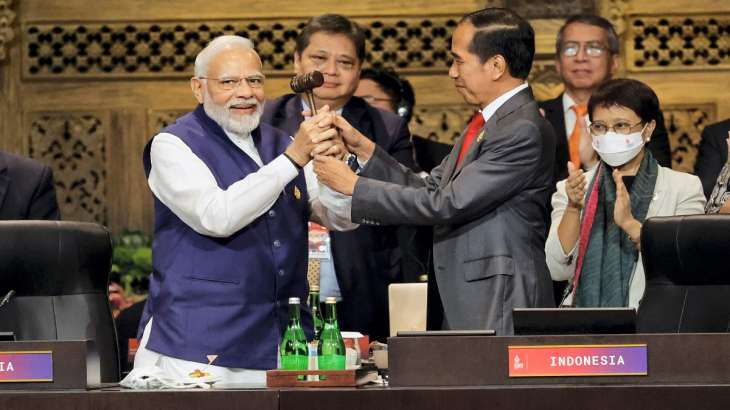
by Aayush Kumar / 26 October 2023In 2020, the European Union's External Affairs Minister, Josep Borrell, expressed the idea that COVID-19 would reshape the world order and it will bring about significant changes. As we now stand in 2023, the global geopolitical landscape has indeed transformed, influenced by a variety of factors.
The COVID-19 pandemic exposed the weaknesses in global governance, particularly in the realm of public health. It also contributed to a shifting balance of power, with China and Asia gaining prominence on the global stage. The United States' trajectory has been affected by the pandemic, and the competition for global influence between the USA and China, along with Russia's role, has become a dominant factor.
This new world order is characterized by changes in over-consumption, global value chains, globalization, and our relationship with nature. Global supply chains are being reconfigured, with new alliances forming and industries relocating to different destinations. For example, the "China+1" policy is leading to considerations of India and Vietnam as attractive destinations due to their cost-effective labor and favorable business environments.
The Russia-Ukraine conflict has had a significant impact on the geopolitical landscape. The expansion of NATO and a stronger US-Europe partnership raised concerns in Russia, leading to its invasion of Ukraine. Russia's global isolation has pushed it closer to China. Similarly, the Israel-Palestine conflict highlights the volatility in West Asia, with Iran seeking closer ties with China. These developments emphasize the polarization of the world, requiring India to navigate diplomatic challenges to protect its national interests.
India's role in this evolving world order is of great interest. The successful hosting of the G-20 Leader's Summit in 2023 and the "New Delhi Declaration" underscored India's importance. The US and the West have recognized India's role in the Indo-Pacific for maritime security and countering Chinese influence. India's historical ties with Russia also position it as a potential bridge between Russia and the West. By attracting investments in manufacturing and serving as a global supply chain hub, India can play a significant role in sustainable development and global progress, in line with the principles of "Vasudhaiva Kutumbakam" (One Earth, One Family, One Future).
(Writer is Alumni & Scholar, St. Stephen’s College, New Delhi)
BJP to offer collective leadership formula in the upcoming state elections
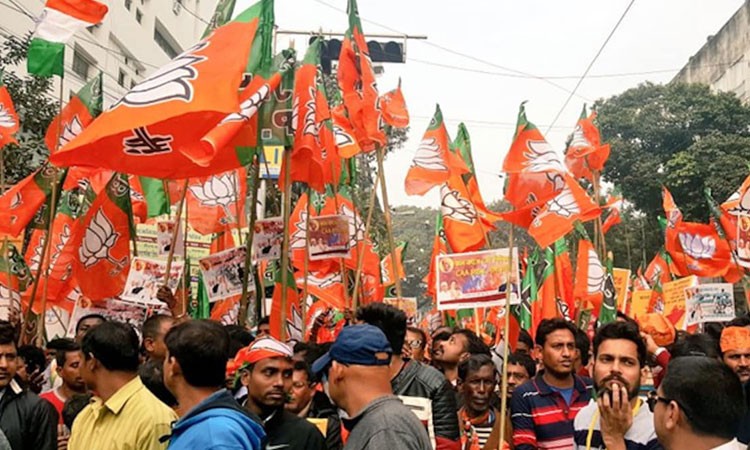
by Prashant Tewari / 26 September 2023The Bharatiya Janata Party, known for its strategic political moves, has taken an unexpected turn in the run-up to the upcoming state elections in India. In an intriguing move, the BJP has decided not to project a chief ministerial candidate in any of the five states slated for elections later this year. This includes the key Hindi-speaking states of Chhattisgarh, Madhya Pradesh, and Rajasthan, as well as Telangana and Mizoram. Instead, the party plans to rely on what they term "collective leadership" to secure victory.
Amid Speculation over Shivraj Singh Chouhan's Future
This move comes at a time when speculation is rife regarding the future of Madhya Pradesh Chief Minister Shivraj Singh Chouhan. Despite his extensive political experience, the 64-year-old leader has not been officially named as a candidate for the chief minister's post in the upcoming elections. This has sparked rumors that the party might consider replacing him to counter anti-incumbency sentiment.
Clarification from Party Sources
While there has been widespread speculation about Chouhan's political future, BJP sources have moved swiftly to quash rumors that he will be dropped from the race. Party insiders have asserted that any talk of Chouhan's exclusion is "completely wrong." However, the caveat remains that "any leader can become chief minister," suggesting that the BJP is keeping its options open.
The Concept of "Collective Leadership"
The BJP's decision to embrace "collective leadership" is not only a departure from the norm but also a strategic gamble. Under this approach, the party will not name a chief ministerial candidate ahead of the elections. Instead, they have indicated that if they emerge victorious, the newly elected lawmakers will collectively decide on the chief minister.
Implications and Analysis
This move by the BJP carries both risks and potential benefits. On the one hand, not projecting a chief ministerial candidate allows the party to avoid the potential negative impact of anti-incumbency sentiment against specific leaders like Chouhan. It also fosters a sense of unity within the party, as no single leader is singled out for the role. Additionally, it keeps the opposition guessing and disrupts their strategy.
However, on the flip side, this strategy could also lead to confusion among voters, who often cast their ballots with the chief ministerial candidate in mind. The lack of a clear face for the party may make it challenging to convey a strong and cohesive message to the electorate. Furthermore, it remains to be seen how the party will handle the process of selecting a chief minister after the election, potentially leading to internal power struggles.
Conclusion
The BJP's decision to forgo projecting a chief ministerial candidate in the upcoming state elections is a bold and unconventional move. It reflects the party's willingness to experiment with new strategies to secure victory, even at the risk of potential pitfalls. As the elections draw closer, all eyes will be on the BJP and its "collective leadership" approach to see if it pays off or proves to be a political gamble that backfires.
From ‘India’ to ‘Bharat’: Reclaiming the identity of an ancient Nation
by Opinion Express / 11 September 2023The sacred scriptures that originated on this soil referred to this immense, varied, and mystic land as distinct and diverse in every possible aspect and dimension—its geographical, historical and spiritual being that came to be known as the homeland of "Bharata", which is a culturally and intellectually rich and awakened world located in the South East ("Dakshina Poorva Dighbhage, Bharata varshe, Bharata khande"). This land which was the chosen home of the descendants of King Bharata, was known for its vast treasure of knowledge immortalised in books that are primitively simple and holistically and esoterically profound in philosophy, science, medicine, and just about anything that is concerned with the earthly and heavenly aspects of human life. A critical reading of history would alert us to the naming of this land from a conqueror’s perspective, a perspective that would be inevitably limited, much like the blind men in the story trying to name the elephant. This was bound to be impressionistic. Some of these names are referents to such geographical and cultural features as the Sindhu, and Hindu, Indica and India. Megasthanes, the Greek traveler, whose extinct text "Indica", which survives only some surviving fragments sings paeans to the rich cultural, philosophical and spiritual heritage of this country.
As E M Forster says, the sun can look down at this part of the world and claim it to be the flesh of its flesh, the blood of its blood, for, India has never been under the sea unlike other landmasses. It has a unique, matured look on the one side, and a young, fresh look on the other. Its tectonic plate extends up to the Antarctic, justifying the name of the ocean named after it. All other countries near the Ocean are peripheral to it. Historically, India can also claim to be the cradle of mankind what with fossils of Sivapithecus, to name one, being found in the Himalayas. Isolated from the turmoils of Asia and Europe for a long time, the country evolved a unique culture and history. It stands to reason that this part of the world, unlike any other in every way, and older than any civilisation in its continuity, should have a unique and original name that is given by her own children who know her best.
While it is claimed that political nationalism originated in the British Isles and France’s Burgundy, cultural and social historical bonds are no less binding factors of nationalism. The fact that Sri Adishankara, often compared by Western scholars with St Thomas Aquinas, built mathas more than a millennia ago in the four corners of what came to be called India, establishes no less explicitly and forcefully the concept of India as any political nationalism can. On the other hand, the idea of kala pani excluded other lands from India. The subcontinent forms a natural landmass with the Himalayas in the north and the Ocean in the south. In civilisational and national terms, the idea of India as we know it, was already in place. The fact that some people dismissed India as a “mere geographical expression” is neither here nor there—Metternich said the same words about the Italy of his times. Such denigrators have all been consigned to the dustbin of history. And all the time, there was a Greater India, as some historians have called it, extending to Cambodia (the Southeast Asian version of Kambhoja, or with the Thai capital of yore as Ayuthaya (their version of Ayodhya), India had its own version of the mission civilisatrice, albeit a peaceful one.
The rich legacy of this nation attests to its ancient glory and its historical annals are adorned with every modern feature that our contemporary world boasts of. In Harappa of the Indus Valley Civilisation, there was city planning on the grid pattern, and a drainage system with an advanced plumbing replete with manholes to clean them. In the Mahajanapadas (republics), we had an alternative to the monarchy almost in a Hegelian dialectic of thesis and antithesis. The Sabha and the Samiti were vital moot halls—parliaments—deciding the fate of the land they ruled. Nor was there a conflict between republican and monarchical forms of government as we see today. Harmony was the watchword then, as it is now. The point is that the land developed and sustained an advanced civilisation. It is unfortunate that it came to be known by the name given by foreigners who only saw it literally peripherally. For, if the Indus is a mighty river, there are others such as the Brahmaputra to match. Thus it is very important to find a name that does justice to the land.
The name Bharat is rich in meaning. It is the name of a great and inspiring hero whose prowess was the subject of wonder right from his childhood, and is known to have united India in ancient times. This vision of unity is much needed, since it is from this mystic land hails the profession "vasudhaiva kutumbakam"—the world as one family.
Further, the name Bharat recalls the unsurpassable ancient knowledge, teaching the world numbers and astronomy and thus playing a major role in ushering the modern age. Bharat will be a reassuring hope for the world against imperialist and other anti-civilisational forces.
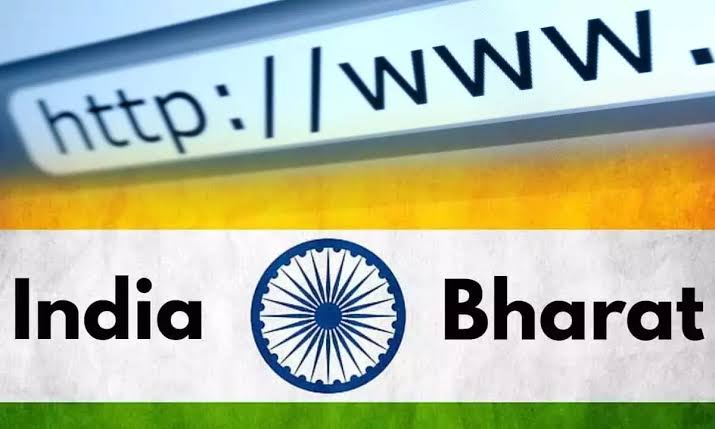
Perhaps, India is the only country that officially has two names. According to Article 1 of the Constitution of India, "India, that is Bharat, shall be a union of states". It is a union strongly resisting any propensity of secession. In an enlightening moment for the rest of the world, the US Ambassador to India, in the 1980s, when the so-called Khalistani movement was at its peak, said that there are more chances of Texas splitting off from the US than Punjab breaking away from the country. The point is that culturally, historically, and in every conceivable way, the nation has been one, and will remain so. With the name of Bharat, all malicious and centrifugal forces can be neutralised.
Since the name Bharat is already in the Constitution, the change entails no radical departure from it, keeping in place what has been called its “basic structure”. It would only be making it more focused, and more appropriate. The strange juxtaposition of a foreign name and a genuine, indigenous one will no longer puzzle or bemuse Indians—and the world.
The distinguished culture, the remarkable historical legacy, an influential way of life, and a spirituality of cosmic consciousness, which are valued as the intellectual bases for a highly conscious culture sourced from this soil have been a part of the conscious and subconscious experiences of almost all people on this planet. This consciousness should deter and preclude any annoyance and defuse any inept questioning of the necessity of this great nation to be renamed as 'Bharat'. This intellectual acquiescence has led to the obscuring of the nation’s proud legacies and history for centuries together. This historical meekness reconfiguring itself is now trying to at least re-centre its jaded ideas and views to barrenly, out of dead habit, questioning the renaming of the nation.
There was no such susurrus when so many nations across the world renamed their lands to reflect and earn back their historical pride. Turkey, once called Asia Minor, changed its name to 'Turkiye'; Holland renamed as 'Netherlands'; Czechoslovakia as the ‘Czech Republic'; Kampuchea as 'Cambodia'; Siam as 'Thailand'; and Swaziland as 'Eswatini'. Our neighbouring countries have no exception, since Burma renamed itself as 'Myanmar', and Ceylon as 'Sri Lanka'.
As India finds her feet and rises in importance on land, air, and in space, in economics and international affairs, it is time that a colonial legacy and historical accidents are laid to rest and the patina of the ages is wiped clean. While the lessons of history have to be learnt, it is also important that they should not continue their vice-like grip on the country. Thus, historically, culturally, constitutionally, semantically, and in every other sense imaginable, it is appropriate to rename India as Bharat.
(The opinions expressed in this article are personal)
* The author is the Vice Chancellor of The English and Foreign Languages University (A Central University) located in Hyderabad, Shillong and Lucknow.
Prof. E. Suresh Kumar
Failure of Rule of Law: Demanding Accountability and Justice for the Manipur Incident
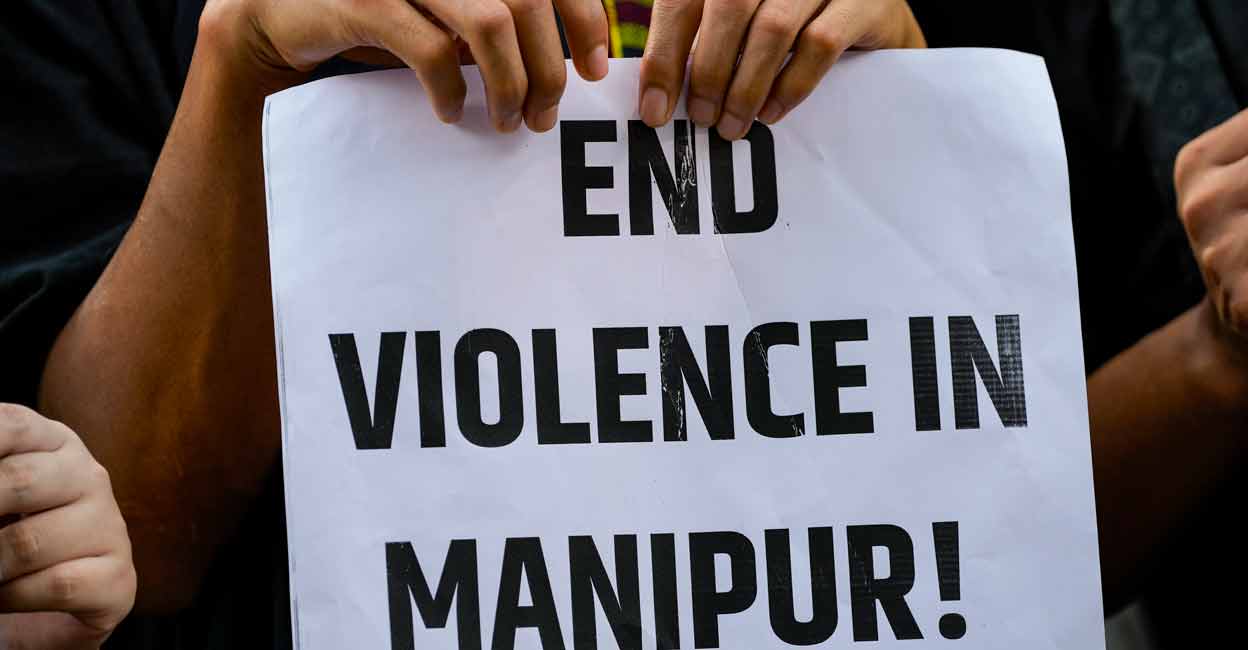
by Jyotika Kalra / 09 August 2023As a society, it is unthinkable that even today women are used as a means to take revenge in a conflict. Women were paraded naked and the whole mechanism shamelessly remained a spectator until they saw the incident became viral and there was no other way to hide it. On the one hand, it shows the ugliness of a patriarchal overview of women and on the other hand, it exposes a grave failure of the rule of law and accountability within our society.
The gruesome details of the Manipur incident are not hidden from anyone but unfortunately, what happened after the incident is even more disturbing. The police took no action to trace the family that was abducted from their custody and no action was taken for 2 months. The proximity of this heinous crime to India & police station, Nongpok Sekmai police station, (as reported in Indian Express December 2, 2020 & India Today Jul 21, 2023) also adds to the sense of disillusionment among the public.
The lack of action for a prolonged period of time following the incident, till the video went viral, prompts questions not only regarding the police inaction but the ineffectiveness of oversight bodies, such as the State Human Rights Commission, State Women Commission, National Commission for Women (NCW) or National Human Rights Commission (NHRC). This inaction raises serious concerns about the integrity of the police and other Institutions responsible for upholding the rule of law.
Regrettably, the Chief Minister is found to be playing theatrics to the crowd by demanding that the accused be hanged. This is a clear display of chaos and crippled leadership where the chief of the state is clearly unaware of his own duties. The Chief Minister forgot the role of hanging an accused falls under the purview of the judiciary.
The viral video of this gruesome incident has not only tarnished Manipur's image, but the entire nation feels embarrassed. As a former member of the NHRC, I feel that the inaction of these oversight bodies is due to the feeling of no actual obligation towards the citizens until either the video goes viral or there is no option but to save their own image.
At the Commissions, there are no oral hearings, and the cases are handled in a very routine manner. The complaints are initially dealt with by junior consultants, who take a call on whether this complaint is serious or not. There is no formal and regular training for them to be sensitized on what are grave and urgent matters and how should they be dealt with. In any complaint, it might take more than a month to pass the first order in the complaint. On the other hand, the emphasis had always been how many complaints were being disposed of. The focus remains on reducing the pendency, forgetting that the purpose of Institutions is to protect Human Rights.
We should also not hesitate to say that the Manipur High Court also failed to protect human rights and fundamental rights. The inactivity of these oversight institutions raises a basic question: what purpose do these bodies have if they are failing in their basic duties? The delayed response from the NCW and NHRC until the video went viral reflects poor functioning and accountability toward the public.
It is imperative that these Commissions take immediate action when presented with such complaints. Accordingly, this incident should be taken as a wake-up call for the Commissions to re-design their functioning and focus more on the protection of Human rights by associating more people working in the field of human rights. It is the commissions that have the responsibility to enquire where the state fails in the prevention of human rights violations, it is they who should have stepped in when these complaints from Manipur started being reported to them in May. The public outcry on the waste of the taxpayer's money on such Institutions needs to be addressed.
It is necessary to understand that these institutions acting neutrally and promptly is fundamental for a strong democracy. At least, the police officials should have been held accountable for being negligent or complicity, under Section 166A of the Indian Penal Code. The Commissions must find out what went wrong and why action was not taken promptly. They must have special and fast-track mechanisms for handling grave and serious cases and should have had a ready mechanism for sending the teams for spot inquiry in such crimes. Even a mere belief among the public and the police officials that the Commission team is coming for a spot inquiry would have changed the situation on the ground. Unfortunately, in this scenario, none of this happened.
As a nation, we believe in Vasudhaiva Kutumbakam, the idea that the world is one family. Yet, incidents like this demonstrate that there are dark elements in our society that resort to gruesome acts of revenge, particularly against women. Our system has built-in redundancies if the state is unable to uphold the rule of law. However, if our commissions fail to live up to this responsibility, we are looking at a grim future.
( Writer is an Advocate-on-record Supreme Court of India, Former Member National Human Rights Commission )
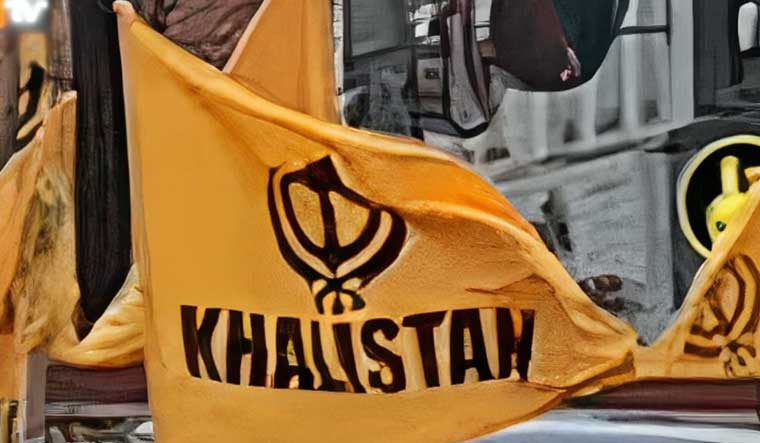
Are Khalistan Freedom rallies promoting justice or spreading propaganda?
by Surjit Singh Flora / 30 July 2023Khalistan Freedom rallies are going to be held on July 8. Gurpatwant Pannu of Sikhs for Justice has announced that rallies will be held in front of Indian embassies around the world on July 8.
Since the beginning of this year in Canada, there have been three such incidents in which pro-Khalistan groups have carried out public activities. Also, at the Sikh Khalsa Day parade in May, images depicted the 1984 assassination of prime minister Indira Gandhi by her two Sikh bodyguards.
The Indian government has consistently condemned these incidents. But in Canada, such incidents are appearing more than before, and Trudeau government just keeps their eyes closed.
In the current incident, posters against Indian diplomats have come out, after which controversy has arisen again. The poster prepared in this regard had pictures of Indian diplomats, and their phone numbers were also written. On top of the picks, they put the guns and knives. The Government of India has also taken strict notice of this poster.
The foreign minister said, "We have partner countries like Canada, America, Britain, and Australia, where Khalistani activities sometimes take place. We have requested that they not give space to Khalistani." External Affairs Minister Jaishankar said that such an ideology is not good for any country or mutual relations.
Canadian Foreign Minister Melanie Joy emphasized Canada's commitment to the safety of diplomats under the Vienna Conventions. Canada is staying in touch with Indian officials concerning online content related to a protest on July 8. This content is not acceptable. "We understand that the actions of a few don't represent the whole community or Canada," she added.
Murder of Harjit Singh Nijhar
45-year-old Hardeep Singh Nijhar, who is wanted by Khalistan supporters and the Indian government in several cases, has been murdered in Surrey, BC, Canada.
A survey about a handful of Khalistan supporters doing anti-India activities in Canada has revealed a big revelation. According to the Associated Times survey, only 2% of Indian immigrants from Punjab who live in Canada support the Khalistan agenda. While 98 percent of the people believe that anti-India elements are fueling the Khalistani agenda and that their purpose is to disturb the common people in Punjab, The respondents in the survey have also said that the money collected in Canada in the name of Khalistan is being misused for personal interests. The survey comes at a time when Khalistani supporters are in a frenzy after the killing of terrorist Hardeep Singh Nijhar in Canada and are about to defuse the situation by protesting in front of the Indian High Commission in Toronto on July 8.
The Associated Times survey has included several major areas of Canada where a large number of NRIs live. These include British Columbia, Ontario, and Quebec. In the survey, Punjabi Indians completely rejected Khalistan's propaganda and movement. They have made it clear in the survey that a small group of people are trying to fuel the Khalistan movement, raising doubts about the ulterior motives of this group.
The survey also revealed that some unemployed people are earning thousands of dollars by claiming that they are collecting money to support families struggling in Khalistan, India. Instead of sending this aid to India as promised, they are allegedly pocketing the donations personally. It is being told that fraud is being done on a large scale in the name of Khalistan. Some people are building houses and setting up businesses in Canada with ill-gotten gains. This revelation has shocked the entire community, raising questions about the real picture of the Khalistan movement in Canada. According to the new data available in 2021, about 1.4 million people of Indian origin lived in Canada. The number of Sikhs in the total population of Canada is 2.1 percent. According to the 2016 Canadian census, more than 500,000 Canadians reported Punjabi as their mother tongue, highlighting the significant presence of Punjabis in the country.
Politicians are using the Khalistani issue.
The survey results also revealed disturbing information about some high-profile Canadian politicians and individuals. The Associated Times has quoted people involved in the survey as saying that these people are allegedly using the Khalistan issue for personal gain, raising questions about their real intentions.
No one talks about Khalistan in Punjab. There is a debate about creating Khalistan in Punjab among people in Canada, the UK, and other countries. However, the people of Punjab are not in favour of it.
Actually, how it started, Sikhs settled abroad during the 1980s, when Punjab was plagued by terror and bloodshed. The Indian government and Khalistan extremists both did many bad things during that time. Both Sikhs and Hindus in Punjab suffered as a result. Some people believe that India is responsible for all the negative experiences they've had, and they think that Khalistan is the only solution. They rarely visit Punjab and India to see how things have changed.
Few supporters, like Punnu and others, have a desire for power. They attempt to brainwash individuals into backing the fictional Khalistan movement, aiming to gain political recognition and influence.
Politicians and the 1984 Sikh Genocide: Everyone desires peace. Politicians disrupt it. 1984 was a dark year in Indian history due to the Sikh genocide, with the government failing to take action. Rajiv Gandhi also made nonsensical statements about the incident. This clearly infuriated Sikhs. They've moved abroad. This movement won't burn their houses. They're spreading propaganda.
Sikhs have been known as the most patriotic community in India throughout history. They've given enough to the country. They have a good understanding of right and wrong. The 9th Sikh Guru is called 'Hind ki Chadar' for a reason.
Sikhs are proud to be an important part of India. They hold respected positions in the Indian Army, Navy, and Air Force, earned through hard work and love for their country. Skilled Sikhs excel in various fields such as medicine, IT, software, management, marketing, and engineering.
Khalistan caused bloodshed in Punjab from 1980 to 1988. Any Punjabi can fill you in on what happened then. Kashmir and Punjab were both in a state of extreme turmoil and violence. Don't consider Hindus or Sikhs in this context. Both Hindus and Sikhs were being killed indiscriminately. I know stories of Khalistan extremists killing Sikhs who didn't support or contribute to Khalistan. Punjab has experienced the reality of Khalistan. Punjabis don't want to go through that again.
Logical Sikhs and Punjabis They are aware of past events like Operation Blue Star, the 1984 genocide, the Khalistan movement, and more. They know that the 1984 genocide was committed by Congress party politicians, not by India. India is united against the culprits. They acknowledge the dark phase, but not all of India is bad. Similar incidents occurred involving Hindus and Muslims in 2002 and the 1980s in Punjab.
There will be ongoing security instability from both internal and external sources. It won't be Maharaja Ranjit Singh's Khalistan, but rather a Khalistan controlled by power-hungry individuals. Pakistan poses a constant threat. What if the Pakistani army invades Punjab with its advanced weapons? Could Khalistan have a chance, then? But now it’s too late, it’s very late.
Surjit Singh Flora is a veteran journalist and freelance writer based in Brampton Canada
FREE Download
OPINION EXPRESS MAGAZINE
Offer of the Month