
News Destination For The Global Indian Community


News Destination For The Global Indian Community

Poor DNA Analysis Responsible for Low Conviction Rates in India
by Vivek Sahajpal / 06 November 2018In a country like India where sex crimes are quite high, it is unfortunate that we’re behind in the collection and analysis of DNA from crime scenes, leading to poor conviction rates.
Forensic DNA is the world’s most effective crime fighting technology. It is highly accurate and globally accepted as a premier standard for human identification from biological evidence. In fact, the probabilities of potential error are extremely low, given that the DNA is collected, preserved and tested accurately. Over 59 countries have adopted this system to reduce crimes and they all use a similar technological set-up for DNA profiling. While most of these countries have already set up a DNA database, India is still lagging behind. However, the introduction of Human DNA Profiling Bill that had been proposed in Parliament is a step in the right direction.
Rape and other sex crimes against women are a serious societal problem in India. Everyday the news is filled with violent incidents against women and children. Even as the crime rate escalates, the conviction rate, especially in rape and sexual assault cases, has fallen from nearly 50 per cent in 2012 to less than 30 per cent in 2015 in Delhi alone. More than 1.4 lakh rape cases still stand pending in courts nationwide. As per the National Crime Records Bureau (NCRB), more than 34,600 rapes were registered in 2015.
Significant backlogs exist in the crime labs with respect to DNA profiling due to lack of infrastructure and manpower. The situation gets further aggravated by the lack of a DNA database. A DNA profile generated from a crime case has no relevance until a suspect’s DNA profile is available to compare with. In blind cases of rape and murder, it becomes a very lengthy process to search for the culprit. At times all the efforts may not bear fruit at the end. With the availability of a DNA database, the profile from a crime case can be quickly compared to the existing repeat offender samples present in a database. This can save a lot of time, in addition to directing the investigation on the right track. Further, this will also accelerate the investigation and trial process.
The DNA Profiling Bill and addressing associated privacy concerns: Considering the current scenario on sexual assault in India, the need for a Human DNA Profiling Bill has been a topic of debate for over a decade now. Since its inception, the Bill is riddled with apprehensions such as concerns over potential misuse of the information in the database; issues with the rules set on the use of the information stored in the DNA database, et al. However, to address these issues, the Bill was deliberated over and multiple iterations after, it has now been presented in the Monsoon Session of Parliament. Further discussions over it will ensue in the upcoming Winter Session.
I am going to start with laying emphasis on what the DNA Bill states. It has clearly defined rules and regulations on:
- Collection and transportation of crime scene DNA.
- Stringent quality assurance norms for DNA labs.
- Stringent protocols for access of information by law enforcement, legal and judiciary for justice delivery.
- Identifying missing persons and unidentified bodies
It is imperative to highlight that, contrary to popular belief, the DNA database stores DNA profiles of convicted criminals involved in heinous crimes only. One must not confuse this with other systems such as Aadhaar (which is unique number identity for all residents of India). I am highlighting this as it is important to dispel fear from the mind of the masses. The common man is not required to provide a sample of their DNA. The DNA database is similar to fingerprint records of criminals maintained by fingerprint bureaus at the National and State level.
Additionally, it is important to note that the Bill clearly highlights that DNA sample cannot be collected from a non-consenting individual without permission from the magistrate, who may grant permission based on the situation.
Also, a trial court can send the DNA sample for re-examination if it is convinced with the accused’s plea. However, the above protocols are not applicable to heinous crimes punishable by death or crimes that extend 7+ years imprisonment terms.
Recently, the Ministry of Home Affairs released a set of guidelines/standard operating procedures (SOPs) on the collection and preservation of DNA evidence in case of sexual assault and rape investigation. These SOPs will provide knowledge to the law enforcement as well as the medical fraternity on the rules to be followed while collecting, preserving and transporting crime scene DNA.
DNA profiling and the science involved: Accurately collected, preserved and transported crime scene DNA, when analysed, will produce a unique DNA profile. To create this profile, 20 standardised locations are picked out of over three billion base pairs from a single DNA strand. The resulting specimen does not contain any prognostic information on genetic health or other phenotypic characteristics, such as hair, colour, age, built, height, intelligence, except the gender.
The DNA secured from the crime scene is searched against a DNA database with samples of criminal DNA profiles. If a match occurs, only then is the crime lab notified and the information is shared with the investigation team. The DNA database is completely secure — only a handful of well-qualified and proficient individuals have authorised access for the purpose of crime investigation. Also, the whole database is designed to protect individual privacy.
Different countries have different systems that work compatibly with their set laws and regulations. The Federal Bureau of Investigation’s (FBI) Combined DNA Index System (CODIS) is one such system that successfully combines science and technology to create an effective DNA analysis/comparison tool. These systems are specifically designed to ensure data security.
CODIS and other similar data bases in the West have already addressed issues primarily related to security and privacy. The use of DNA database takes the forensic application of DNA technology in crime investigation to a whole new level. Unfortunately, India has not yet tapped into this potential.
Why the DNA database is important: DNA database is the need of the hour. A repository containing DNA profiles of criminals makes it easier for investigators to identify and arrest offenders in most unsolved cases, especially sexual assault; it decreases the chances of repeat offence. Often, repeat offenders change location or bide their time before committing the crime again. The DNA database will make tracking these offenders easy.
India, though faced with a problem of serious sexual assault cases, is not doing enough to ‘collect’, ‘test’ and ‘compare’ DNA from crime scenes, which amounts to poor conviction and very high pendency rate. However, the Indian legal system and investigative agencies are not completely unfamiliar with DNA casework. We have several successful examples, such as the Nirbhaya gangrape case, Gudiya rape and murder case, the Navi Mumbai paedophile rape and murder case, and Venkatesh exoneration case, that indicate effective use of DNA casework to deliver justice.
Though a lot needs to be done to improve adoption of DNA casework in the country, there is sufficient proof to show that law enforcement and investigative agencies are now progressing in the right direction. There are discussions on planning the right policy and improving infrastructure support.
Writer: Vivek Sahajpal
Courtesy: The Pioneer
A Step Towards Gender Equity
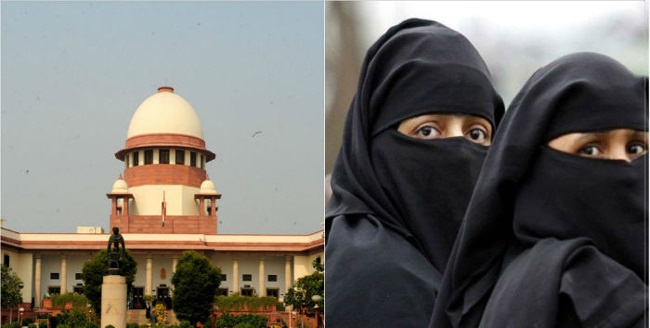
by Opinion Express / 24 October 2018The decision of the Court to criminalise triple talaq is a show of promise that the Indian judiciary system if changing for good.
The Union Government’s use of the Ordinance route to criminalise instant triple talaq was on expected lines. It was due to the inability of the Rajya Sabha to legislate business, which prevented it from taking up the Muslim Women (Protection of Rights on Marriage) Bill thanks to ruckus in the House and a lack of consensus on the issue, that the Modi Government was compelled to fulfil its promise to Muslim women to bring end to the practice of Muslim men granting instant triple talaq to their wives. Neither, however, was opposition to the Ordinance unexpected. As has been the norm, helming the anti-ordinance agitation were Muslim clerics and various Opposition parties who flayed the move for a clutch of reasons. While some accused the Government of “intervening in personal laws” others termed the Ordinance as ‘harsh on Muslim women instead of providing them succour’. The Congress smelt political conspiracy and accused the Government of treating the matter more as a “political football” than a matter of justice to Muslim women. But the elephant in the room, as it were, is that the objective behind the move, which is to bring about gender equity, was elided by all.
As regards the argument of Muslim clerics, the problem is that the issue is no longer a matter of ‘personal law’ or under the aegis of Muslim Personal Law because the Supreme Court had in a majority verdict ruled that instant triple talaq is illegal, unconstitutional and not an integral part of the religion of Islam. Further, the apex had asked the Government to bring forth legislation against talaq-e-biddat. The Government was duty-bound to do so, and it did. When opposition in the Upper House stalled the Bill, it resorted to the proclamation of an ordinance. Cut and dried, that is the correct position. As for the objections about the penal provisions being harsh towards Muslim women, as in they would be left uncared for financially while their ‘husbands’ who have divorced them via triple talaq languish in jail, several provisions of the Ordinance have been amended to take care of women in such a situation given the patriarchal structure of Indian Muslim society. To cite an example, provision has been made for providing a sustenance allowance to a victim of illegal triple talaq. Also, only the woman herself or her close blood relatives can file a case thus eliminating the possibility of interference from other parties. The Ordinance further provides for bail to the husband but only after hearing the wife. Besides, opportunities for reconciliation too are kept open provided the woman wants it. This issue goes beyond the boundaries of politics. Gender justice must always trump claimed religious practice. That is the whole point of individual rights and freedoms in the Constitution that assure each individual citizen of India the right not be discriminated against.
Writer and Courtesy: The Pioneer
Cost of Justice
by Pranav Wahi / 22 October 2018The apex court’s request to make a law to control the legal situation may stay inactive as legislators themselves are polished lawyers who charged excessive fees for their services.
A lawyer, like an engineer, constant upgrades and builds the society. A lawyer, like a medical practitioner, chronically rehabilitates and heals the impairment caused to the society. They ease the pavement of justice to the citizens and are trusted with fate to uphold their rights and claims. In recent times it’s their paychecks which demand the respect attached to their profession and not their integrity and valor. Should they as justice laborer be paid an exorbitant fee of seven figures? The ongoing struggle of this country has been to make justice accessible to all its citizens. For six decades, the state has been following the fundamental duty to ensure justice for all. The biggest barrier between a claim and its settlement is the fee of the lawyer in this country. And the biggest attraction for admission in this industry is also the same fee.
AK Goel and UU Lalit in B Sunita V/S State of Telangana proposed the legislature to opt for flooring and ceiling of a fee of advocates. The respondent alleged that the fee charged by her attorney was exorbitant and in violation of the ethics propounded by the Bar. Any claim upon the damages awarded by the court is also in violation of the Advocates Fee Rules. The judgment further throws light on the 131st report dated August 31, 1988, by the Law Commission, which suggested for regulation and standardization of fees by the member of the legal profession towards the monopolistic characterizer of the profession. It was further interpreted by the court that there is a dire need to strengthen the mechanism to deal with professional misconduct by members of this profession. It was concluded that the success of the administration of justice to a great extent depends on the successful regulation of legal profession confined to the mandate under Article 39A, which promises equal operation of justice to all. As a result to such interpretation, the court urged the Parliament to form a legislative framework for flooring and ceiling the fee charged by lawyers.
Many countries, such as Germany, Australia, Costa Rica, Finland etc, have adopted a model of remuneration fee for the advocates. This implies that the parties engaging the services of a lawyer have an already printed fee structure as per the demands of their legal dispute. Such a framework allows a person to stipulate what is the cost of litigation for their dispute, which is an effective determinant of to-sue-or-not-to-sue. Given the competitive attitude prevailing in Indian markets which exploit the competition, such a framework can drastically help cultivate basic sanity and merit of this profession. It is provided that an advocate is not to charge below a certain fee for a certain work by their clients.
Although the Indian market can also welcome price ceiling in such a framework, the professionals practicing law charge an exorbitant cost for their services. A legislation ceiling their fees will not make just make justice reasonable but more approachable. Article 19 (1)(g) gives the right to every citizen to carry any profession, practice or trade. It is an understated fundamental right because 60 years ago, not every citizen had such a right. However, if constraints are to be put on the rewards of any profession, do we as citizen truly have the freedom to practice it? Is ceiling and flooring of remuneration awarded to the advocates a reasonable restriction? According to Article 19 (6), the state has the power to put a reasonable restriction on any profession in the interest of the general public. The term reasonable is defined by many jurists, which primarily suggests that restrictions imposed mustn’t be arbitrary, should be proportional to the object sought to be fulfilled by the law and justifiable. To combat the need for this restriction, an analysis of the framework is drawn below:
Arbitrariness: A legislative framework embodying the spirit of regulations of other countries is far from being arbitrary. Law of remuneration of Attorney, 2004 of Germany, Legal Profession Uniform Law Applicable Act, 2014 of Australia, Advocates Remuneration Order, 2015 of Kenya, Advocates (remuneration and taxation costs) rules of Uganda etc, can form the outline to design the remuneration code for a fee of an Attorney in India. These regulations not only give a precise monetization of every service provided by an advocate but also allows the parties to the contract to negotiations a higher remuneration by consent.
Proportional to the object sought to be fulfilled? Price ceiling and flooring has to be done on the basis of current trends and demands of the industry. It shall be done by respective states as the cost of litigation varies inter-state. It would also need regular revision in accordance with the inflation rate. A rationale fee structure needs to be created after a thorough analysis of the pay scale of this group and the purchasing power of its consumers which is not discriminatory to either.
Justifiability: The profession of law provides a mechanism to shape the norms of society. It ought to be outrageously rewarding. With legal aid programs and pro bono schemes, there should be no need to restrict the remittances. Nevertheless, for a person of socio-economic class, the services of a lawyer are considered luxury for its costs and schemes. This regulatory framework shall be seen as an approach to make justice more accessible for every strategy of the society and not just the needy. A profession of such sanity shall not remain within the fancies of the wealthy.
A suggestion by the apex court might remain dormant as the lawmakers present in the Parliament are themselves decorated lawyers who have charged to the sky for their skill and association. It would rather be surprizing if they can fathom the plight of the citizens they work for and make changes to make litigation inexpensive. Regardless, it’s a commendable insight pioneered by the apex court in pursuance of its function of promoting justice.
(The writer is a fourth-year law student of Vivekananda Institute of Professional Studies, New Delhi)
Writer: Pranav Wahi
Courtesy: The Pioneer

Laws Against Terrorism
by Raghav Pandey/Neelabh Bist / 20 October 2018Laws against terrorism rely more on social conditioning of the accused and less on reasonable evidentiary support.
The international community has always faced a quagmire in its desperate attempt to give a definition to terrorism. After all, one man’s freedom fighter is a terrorist for the other. The issue in defining it is the danger it entails of becoming so narrow that it does not incorporate all forms of terrorism. Similarly, there exists the danger of it becoming so wide that it holds no meaning and any criminal could be held liable as a terrorist.
General tendency is to equate terrorism to Islamist fundamentalist terrorism, although this is usually the result of being continually exposed to a traditional and textualist mass media. In reality, this is not the case and terrorism is not solely restricted to militant Islamism. It is, in fact, so wide and multi-faceted that it takes different forms across the globe and cultural demographics. FARC, the militant Communist group in Columbia or the Klu Klux Klan in the US, stand as testimony to this fact. Before India’s independence, radical freedom fighters were seen as terrorists by the colonial Government whereas in modern-day India, Kashmiri separatists are seen as heroes by some and terrorists by others.
The need for a definition of terrorism stands as a major criticism of the existing tactics the states use to wage fight against terrorism since all existing laws would not be jurisprudentially justified without understanding and truly defining what they want to fight or prevent. One such law is preventive detention, wherein it is not known who the enemies are. In studying its morality and effectiveness as a legal tool, preventive detention can be analysed using these two basic systems of ethics: Deontological and virtue ethics. According to deontological ethics, which focuses more on the validity of the action than its consequence, preventive detention is wrong since it does not detain people on the basis of merits of their acts but on mere suspicion.
Virtue ethics can be used to argue it in both ways but it leans towards the idea that it is wrong since there is no direct way of knowing who is going to cause harm. Therefore, susceptibility to cause harm to an innocent, which is innately non-virtuous, would rule it out. There are a plethora of problems with preventive detention. First, it rests on a prediction about future behaviour and that too on very little evidence. Second, the risk of detaining innocent people is very high. Third, preventive detention is inconsistent with basic notions of human autonomy and free will. Last, even preventive detention faces the problem of not being specifically defined as it always revolves around systems of pre-charge detention, pre-trial detention, administrative detention, immigration detention and national security detention.
The lacunae in the laws related to preventive detention on an international level are also contributing to many different problems. The basic right to hearing on time is the main issue that sprouts from it. Another major issue is the problem with granting of bails. A person is presumed innocent until proven guilty. But many countries have no provision for grant of bail to the accused. The main question on the debate revolving the rights of the suspected terrorists is: How effectively is the law safeguarding them? For this, we need to look at the general rule that is followed in most countries that are in a continuous raging battle against terrorism, especially India.
In India, the Constitution itself sanctions the preventive detention laws while at the same time, guaranteeing fundamental rights to a detained person. Entry 9 of List I in the Seventh Schedule of the Constitution provides the Parliament with the exclusive right to enact laws relating to preventive detention for matters that are related to foreign affairs, defence or the security of the nation. In the recent past, the enactment of various laws relating to preventive detention and the subsequent cases challenging the validity of the provisions of the same have added new contours of development to the laws.
In today’s time, National Security Act of 1980 (NSA) and the Conservation of Foreign Exchange and Prevention of Smuggling Activities Act, 1974 (COFEPOSA) are the main preventive detention legislations. The Terrorist and Disruptive Activities (Prevention) Act, 1985 (TADA), the Prevention of Terrorism Act, 2002 (POTA) and the Unlawful Activities (Prevention) Act, 1967 (UAPA) are some of the other legislations that were enacted to counter terrorism in India. In particular, it was the UAPA Act that was used recently to arrest five activists, including Sudha Bharadwaj, Vernon Gonsalves, Varavara Rao, Gautam Navlakha and Arun Ferreira who were put under house arrest after orders from the Supreme Court.
POTA, which was legislated after the strikes in the Indian Parliament, had two repressive measures that are inconsistent with the provisions of the International Covenant on Civil and Political Right (ICCPR). First, it did not allow the legal counsel to be present during the time of interrogation of the accused. And second, it allowed the prosecutor to file a charge sheet extending to a time period of 180 days. Additionally, it was almost impossible for the accused to be granted a bail as it could be granted only when the court thought that there were “reasonable grounds to believe that the accused is not guilty of the alleged offence and not likely to commit the offence while on bail”.
POTA was, thus, repealed in 2004. But after the Mumbai bombings, the presence of POTA was introduced in the UAPA (Amended) wherein it was stated that any officer ‘knowing of a design’ or ‘having reason to believe’ that a person might commit an act will have the power to arrest the person. Bail was denied again to 180 days of investigation period. The ICCPR is an instrumental human rights treaty which provides people with protection for civil and political rights. India acceded to the ICCPR in 1979 after which it issued a declaration regarding Article 9 of ICCPR, which specifically deals with preventive detention. It was stated that the Article has to be operated in conformity with Article 22 of the Constitution of India which provides safeguards for an arrested person. But it has been seen time and again that detention laws in India are incompatible with Article 9 of the ICCPR as safeguards are not applicable to persons ‘arrested under any law providing for preventive detention’.
The present law in force to counter terrorism, UAPA, itself suffers from many drawbacks. It provides a very huge definition of ‘unlawful activities’, includes action which disclaims, questions, disrupts the sovereignty and territorial integrity of India due to which any fair comment against the Government of the day can land a person in jail. Further, detention without the filing of a charge-sheet can be stretched up to 180 days and the Court can, only on a bare perusal of the police diary, deny bail to an accused. Furthermore, the Government is also empowered to label any organisation as a terrorist organisation by a notification in the Official Gazette.
Therefore, despite the claim made by India that its laws are internationally complied with certain facets, like the excessive periods of detention or arbitrary implantation of policies, leave no room for basic human rights of the accused to be exercised. In any case, the state should not deprive any ‘suspected terrorist’ of the basic rights of being ‘presumed innocent until proven guilty’. Thus, the laws against terrorism are not effective per se since they do not rely on the judgement of humans based on reasonable evidentiary support but on the social conditioning, they have received. This could counterfeit the efforts of the war on terrorism since it further divides a population already subjugated by communal and cultural conflict.
Without debate and deliberation of a courtroom, which is the fairness of a just trial, this detention of suspects means nothing to this impending struggle against one of the most frightening forces the world has dealt with. Thus on moral and legal grounds, laws related to terrorism need to be visited again by the legislature.
Writer: Raghav Pandey/Neelabh Bist
Courtesy: The Pioneer

Modern Legal Systems VS Ancient Religious Beliefs
by Opinion Express / 19 October 2018The constant disagreement and collision between modern legal systems and ancient religious beliefs is bound to happen more often than not.
Belief in a higher power, faith, as we would call it, has been an essential component of humanity since the first human being capable of cognitive thinking emerged on the planet. After all what was our purpose on this planet? Who put us here and what did the future hold in an often dangerous planet with forces of nature far beyond our comprehension and prediction let alone the ability to control them. Organised religion as we know, dates back to 2000 BCE if one considers the time when the first basic beliefs of the Zoroastrian faith were formulated. The earliest tents of Hinduism and Judaism date back to 1000 BCE. The problem is that living in this modern age of communication technology and the fact that you can cross half the planet in a single hop in under a day is something that people, who wrote those ancient scriptures, could never have imagined, no matter how powerful the hallucinogens they took. There was disease, pestilence and constant war back then, women were bartered as commodities and wars over minor slights killed thousands. Communities and possibly religions were swept away in tsunamis or buried under volcanic ash. Because people those days knew no better. We do know better today but many still believe in ancient wisdom, and make no mistakes, some of the words in all our scriptures are very powerful and hold good even today. But some beliefs should hold no place in a modern, forward-looking society.
The question however is not whether we should change those beliefs but we should change those beliefs. It is not easy and to pretend that those who believe will not fight back or refuse to change no matter how compelling the reasons to change is irrational. And that is what we see happening at Sabarimala right now. The Supreme Court feels it is upholding the constitution, but it has ignored the beliefs of millions who are, rightly, in their opinion deeply hurt and troubled. Unfortunately in Sabarimala, India’s deadly democratic dance is playing a role with opposing sides being taken and making matters worse. To pretend that such change would not have been violent is almost criminally negligent by the authorities. And for the Supreme Court justices, sitting in Delhi to believe that with the stroke of pen such change can be enforced seems bizarrely naive. Changing beliefs is, for better or for worse, a long and painful process which has been evident in the schisms and trauma that afflicted Europe in the late-middle ages. But those changes led to the remarkable scientific and artistic progress of the Renaissance and beyond and took Europe to a higher plane. In India, our beliefs should also evolve to reflect the times we live in, but the state and the judicial system should be wary of trying to hasten the process, lest things get much worse before they get better.
Writer and Courtesy: The Pioneer
Justice Deepak Misra – Significant legacy!
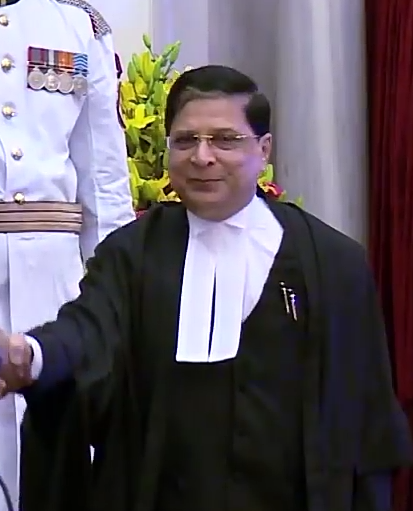
by Opinion Express / 01 October 2018CJI Dipak Misra retires on October 2. His tenure will certainly be one of the most talked about in Indian jurisprudence
India has had some controversial judges in the past, even some who have held the office of Chief Justice of India. But while allegations of all manner have been aired albeit in hushed tones in the corridors of the Supreme Court against many, they have in the main proven to be nothing more than bazaar gossip and have never stuck to any CJI. Allegations against the outgoing CJI Dipak Misra too have been made including by officers of the court who ought to have been more circumspect, not to mention the unprecedented press conference called by four of his senior-most colleagues including his designated successor Justice Ranjan Gogoi. Chief Justice Misra’s stewardship of the highest court in the land, however, has seen some of the most landmark judgments of the past 50 years being delivered and while history may not forget the controversies around his tenure, it is likely to relegate them to a footnote when assessing his very significant contribution to evolving jurisprudence in India.
The outgoing CJI in many ways oversaw a Supreme Court that appears to have vastly expanded its role. Few other top courts in democracies hear so many cases; indeed the Supreme Court of the US hears only around 70 matters in a year while the apex court in India deals with as many petitions in the course of a day. Members of both Bar and Bench also feel the apex court have gone too far in jettisoning the pyramidical structure of the Indian judiciary wherein the Supreme Court is supposed to be the forum of last appeal not the court of first resort as has been brought out in the Urban Naxals detention case. Other Constitutional experts believe that the top court has at times exceeded its brief and the battle between the judiciary and the executive is plaguing policy making in contemporary India. In fact, his detractors had launched a sotto voce campaign on the CJI’s alleged closeness to the current dispensation, conveniently eliding the fact that the very same Government delayed confirming judges despite their being passed by the Supreme Court collegium headed by him! All this is not to say, naturally, that these issues had their genesis in the outgoing CJI’s tenure but they certainly did come to the fore arguably like never before during his stint as the top judge of the country. With the CJI-designate Justice Gogoi thought to have a different style of inter-institutional working from the outgoing CJI, many expect the battles between the executive and the judiciary to become louder in the coming months. The bottom line, though, remains that each CJI has his own approach to these matters but crucially the integrity of none can be questioned. Chief Justice Misra’s legacy is intact. He will be remembered for passing vital judgements — on the right to privacy, the constitutionality of Aadhaar as well as allowing women to enter the Sabarimala shrine among others. Yes, more should have been done to revamp the Indian judicial system starting with the lower judiciary which has been hollowed out, unfortunately, by a combination of incompetence, lack of accountability and even corruption. A key enabler of vigilante justice, media trials and social media defamation is the collapse of the lower judiciary in dispensing timely justice unaffected by societal trends and focusing only on the evidence before it without caste, class or gender playing a role. As we thank the Chief for his helming of the one institution in India which is still the last hope for justice for millions and wish his successor the very best, these are the issues we humbly submit which need immediate attention.
Supreme Court for Live Telecast of Court Proceedings
by Opinion Express / 28 September 2018The Supreme Court of India has issued a directive to allow live telecast of court proceedings for greater transparency and accountability.
The Supreme Court’s green signal for live screening of court proceedings on a pilot basis starting with Public Interest Litigation (PIL) case hearings first on its own premises and subsequently, if all goes well, for all cases and in High Courts and trial courts as well, is an unprecedented triumph of transparency. The Indian judicial system must be complimented, on bended knee, for having evolved with time and its ability to continue doing so is an asset to our nation and its institutions.
It has for long been held that the legitimacy of the court, or for that matter any other pillar of democracy, rests primarily on public acceptance of their processes which while undoubtedly robust in theory must also be seen to be so. This, in turn, depends heavily on the fixing accountability and its concomitant notion of transparency. It is here that the concept of open courts if implemented properly can go a long way in reaffirming the trust reposed by citizens in the judiciary. It may also help save both time and money as well as speed up the entire judicial process. As it is, there are more than 3.3 crore cases pending in various Indian courts. While upholding transparency and making the people a party to the deliberations that take place inside the four walls of the courtroom, the apex court has been very mindful in taking care of one important caveat that such freedom entails. It has, in its order, very responsibly exercised caution in relation to matters that are most sensitive and private — matrimonial affairs, rape cases, those involving children and/or juveniles, among others. The Court held a decision on the telecast of the video feed whether live or otherwise would rest upon the presiding judge and prior consent of all parties would be required.
The idea of open court proceedings or live telecast/web streaming is neither new nor complicated. Several countries such as the UK, Canada and Germany have a long history of a commitment to this kind of a system. The top court’s judgement also pushes further the pronouncements made earlier to make a move towards digital courtrooms — in a major boost to the Government’s E-courts Mission Mode Project, the Court had ruled in April this year that it would go paperless and called for deliberations on fixing a mechanism for the digital filing of cases. As many as 14,249 courts are expected to benefit from the project. In March, the Supreme Court had called upon for the installation of CCTV cameras in lower courts in at least two districts of every State and Union Territory. We are well on the way to a transparent and accountable justice-delivery system. Thank you, Milords.
Writer & Courtesy: The Pioneer
Apex Court Upholds Constitutionality of Aadhaar
by Opinion Express / 27 September 2018In a majority judgment, the Supreme Court upheld the constitutional validity of Aadhaar card, which has been a source of confusion for the common men regarding linking it with several services.
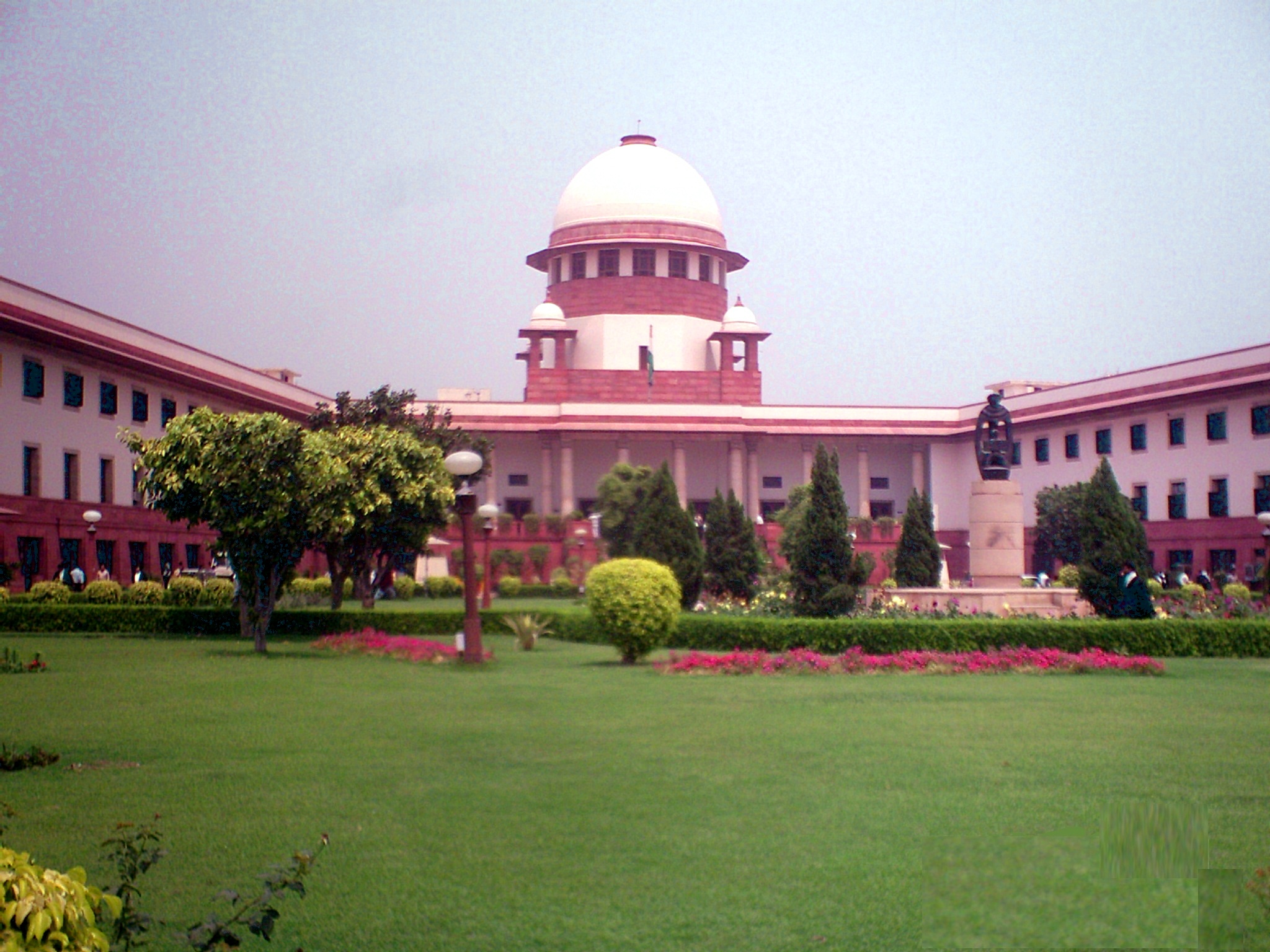
The collective sigh that people heaved after the Aadhaar majority judgement (4:1) was delivered was not from the malcontents railing against the national identity scheme. It was from nearly everyone, given that the order extended to a whopping 1,448 pages! But the Supreme Court has while upholding its validity laid down some pretty important guidelines for the use of Aadhaar, particularly delinking its need for education and also striking down Section 57 of the Act which might have allowed the Government to use the identity scheme for mass surveillance through private entities.
Even Justice Dhananjaya Chandrachud’s dissenting opinion was arguably not so much about the validity of the scheme but the way the current Government classified the Aadhaar Act as a Money Bill and passed it only in the Lok Sabha. Of course, with the Rajya Sabha stalled for the past four years, and indeed even before that, the Money Bill route was possibly the only route the Government could have taken. And despite what the Congress says today, this was dreamt up by them when the Aadhaar scheme was first thought of.
That said, by allowing the Government to continue using Aadhaar for social sector welfare schemes and mandating its use, the only people excluded from getting Aadhaar are children who do not avail social sector benefit schemes and possibly those very few children under 18 who pay ‘taxes’ in India. But the Government’s contention that Aadhaar has helped plug leakages in India’s social sector welfare schemes as well as identify rampant fraud in ration shops among others alongside the claim that this has helped the Government save Rs 90,000 crore over the past few years must have held some weight with the Court.
Also, given India’s historically low rate of income tax incidence, the Government argued that Aadhaar has helped reduce non-compliance. One will not need an Aadhaar to open or operate a bank account but with Direct Benefits Transfer, and with PAN-Aadhaar linkage, this is just an exemption for junior account holders and farmers not availing a Government benefits scheme, the latter likely being a grand total of zero.
So effectively, apart from not needing an Aadhaar number for a mobile phone connection, nothing really changes after this judgement. Nandan Nilekani’s legacy in Indian policy-making is now assured. Aadhaar will also go down as the Bharatiya Janata Party’s biggest U-turn since it came to power in May 2014, from being its biggest detractor to its biggest advocate.
But its benefits have been recognised and in a country with a huge number of poor people, Aadhaar’s usefulness has been vindicated. The detractors of Aadhaar may crib and cry but they have a point that despite today’s judgement, the potential for misuse of the system remains and courts and civil society must keep an eye out on the Government.
Writer & Courtesy: The Pioneer

Adequate Protection of Sanitation Workers Necessary
by Opinion Express / 25 September 2018Sanitation workers in India do jobs that many of us don’t even think about in life. They deserve adequate protection and compensation.
Stories of sanitation workers losing their lives while cleaning tanks and sewers keep hogging the headlines year upon year but nothing seems to change. Only last week, five manual scavengers who were allegedly put under pressure to go down into the sewers to clean them without protective equipment lost their lives as they were overcome with noxious gases as soon as they entered the sewer tank in an upmarket residential complex in the Capital. Another death followed at a different location but due to the same reasons a couple of days later. And few months ago, a five-star property in Delhi was embroiled in a row when five workers died cleaning due to inhaling toxic gases while cleaning the hotel’s septic tank. Tragically, five more died due to asphyxiation while cleaning septic tanks in Odisha also last week. Similar reports come in from various parts of the country on a depressingly routine basis. The harsh reality is that our cities lack proper sewage system and most urban areas survive on those put in by the British colonial administration while mushrooming housing complexes have huge septic tanks that builders don’t seem to recognise require regular maintenance. At a time when countries all over the world are moving towards mechanisation and automation, it is disgraceful that India lacks modern sewer cleaning technologies. As an aside, it is also shameful that a country which boasts of having the largest swachchta programme in the world has not been able to make the switch from dry latrines to flush toilets 71 years after Independence.
The class bias in mainstreaming discussions about the state of sanitation workers and sewers in our country is apparent as these issues make headlines only when fatalities are reported and then conveniently disappear from the front pages of newspapers. Citizens must share the blame because the lives lost seem to be considered inconsequential by those who live life in better circumstances. It is a horrific reflection on the de-sensitized nature of contemporary society that most people are more concerned about overflowing sewers than the conditions in which those sent down them work. The latest report by the National Commission for Safai Karamcharis (NCSK) revealed that on average one worker dies every five days while cleaning sewers and septic tanks. It is time to begin robustly prosecuting and/or fining municipal bodies as well as contractors who do not ensure workers have even the most basic of protective and safety gear and proper wages/benefits. It is a telling commentary on societal and governmental priorities that till date nobody has been prosecuted for employing manual scavengers.
Writer: Pioneer
Courtesy: The Pioneer
Goodbye to Section 377
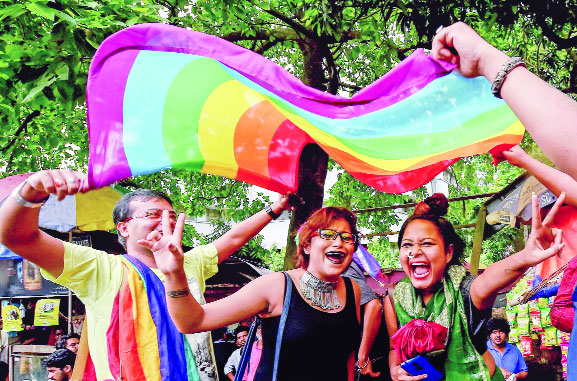
by Opinion Express / 09 September 2018It was a historic judgment for India when the Supreme Court decriminalized gay sex, but LGBTIQ activists say there’s a long way for acceptance and normalization in terms right to marry, child adoption, and property inheritance.
The arc of the moral universe is long, but it bends toward justice
— Dr Martin Luther King Jr
The LGBTIQ community today has much to celebrate. For 158 years, it has suffered in silence — ostracised, humiliated, attacked and beaten by society monitors due to sexual orientation. Like Bill Pullman in the 1996 movie, The Independence Day said: “We are fighting for our rights to live, to exit. We will not go quietly into the night, we will not go vanish without a fight, we’re going to live on. We’re going to survive”.
In this regard, the scrapping of Section 377 is a landmark judgment in which Supreme Court decriminalised homosexuality. This is the first step to bring about a larger impact in society by changing the mindset of people and the demand for civic right and inclusiveness. However, the Pride Parade will continue to take place to break gender stereotypes. A long way to go in achieving this, but by raising awareness through active and continuous discussions at school, college and workplace and impactful reportage the ultimate change may come.
According to The Humsafar Trust (HST), between 2016–2018, HST’s crisis response team attended to 83 crises cases in Mumbai. Of these 83, 6 cases involved an adult, homosexual male being blackmailed by the police under the threat of Section 377 of the IPC. In 12 cases, adult, homosexual males were threatened with false accusations under this section and victims of extortion by ordinary persons, sometimes climbed to Rs 1 lakh.
While reversing an earlier decision, the court termed the Section irrational and arbitrary and ruled that the LGBTIQ community would from now on have rights similar to other citizens. In other words, consensual gay sex is no longer illegal provided it is in private. The SC also said that there should be respect for these rights and criminalising gay sex was irrational and indefensible and must be interpreted as per the requirement of changing times.
The ruling came in light of a writ petition filed by dancer Navtej Jauhar, journalist Sunil Mehra, Chef Ritu Dalmia, hoteliers Aman Nath and Keshav Suri, business executive Ayesha Kapur and 20 former and present students of various IITs. The issue was first raised by Naaz Foundation, an NGO which had approached Delhi High Court in 2001.
With this judgment, India joins the list of countries like Vatican City (1890), the US (2003), Fiji (2010), Nepal (2007), Seychelles (2018) and Canada (1969) to decriminalise homosexuality. Incidentally, it has never been illegal in countries like Indonesia, North Korea, South Korea, Poland, Taiwan and even Vietnam.
Section 377 referred to gay sex as an unnatural offense and punished carnal intercourse against the order of Nature with any man, woman or animal, with 10 years of imprisonment.
Welcoming the verdict, Ashok Row Kavi, Humsafar Trust founder-chairperson, says: “We believe this is the beginning of a new journey for the LGBTIQ community in India. This verdict comes after sustained advocacy for over 18 years on the issue. At long last, the law does not criminalise consensual sexual acts between adults, occurring in private.
“The LGBTIQ Indians can finally enjoy equality before the law, freedom of expression, personal autonomy and right to dignity as expressed in Articles 14, 15, 19 and 21 of the Constitution of India. It is now time to gear up for our fight towards further rights including legal recognition, marriage rights, employment rights, anti-discrimination laws, adoption and other legal rights which have been historically denied to us.”
Agreeing with Kavi, Yashwinder Singh, program manager at the Trust, tells you that verdict against section 377 will be a huge support to deal with the crisis cases and the fight for the human rights of the
LGBTIQ community. “All the people under the LGBTIQ umbrella can live and ask legal assistance without the fear of being prosecuted under Section 377,” he tells you.
Filmmaker Onir says that this is just a beginning. “The scrapping of 377 doesn’t guarantee us civil rights and inclusion. It is just giving us the right to have consensual sex between two adults of the same sex. But with this move, we are empowered to take the fight forward to get our civil rights, including the right to marry same-sex people, right to adoption, rights at workplace, right to inheritance and other benefits like rights that guarantee us equality, liberty, respect and dignity of life irrespective to cast, creed, gender, religion and sexuality. It is a long journey still,” Onir adds.
The director, who has made films like My Brother Nikhil and Shab, opines that his work will now get accepted and screened by satellite channels. “My next fight is going to be for inclusion. For years, I had to fight with satellite channels requesting them to show my film My Brother Nikhil on TV. Even for my last film Shab, I fought for eight months for a U/A certification from the Central Board of Film Certification and am still facing a hurdle for a satellite release. There is an unspoken homophobia that muted my voice every time I raised my voice to screen my films.
“Today, I hope they will accept the SC’s order and accept my films. There are very few people coming up with films on the LGBTIQ community. I hope that after this verdict many more filmmakers will come up and tell stories that need to be told to make the society understand and accept homosexual people. It is about becoming a better human being and a better society which accepts and celebrates people,” Onir tells you.
Filmmaker Sridhar Rangayan faced a similar fate when he started working with the LGBTIQ community in 1990 with the launch of the first gay magazine Bombay Dost. He has been organising Kashish Mumbai International Queer Film Festival for nine years which exclusively showcases films on the lives and challenges of people from this community.
“I faced several challenges. Not many people like to attend a film festival that talks about LGBTIQ people. Even companies and brands would not extend financial support. With this judgment, we are hoping to have a turnaround,” Rangayan says.
Prince Manavendra Singh Gohil, an LGBTIQ activist who has been running The Lakshay Trust which works for the community, feels that Section 377 was not used as much as it was misused by enforcing authorities. “I have been working with Lakshay Trust, the first organisation which started working with transgenders and gays in Gujarat. We have been contacted by the Government for HIV prevention and when our workers would go to distribute contraceptives for safe sex practices, they would be harassed by the police and tortured on grounds that we were violating Section 377. So this kind of misuse will stop and scrapping this law is definitely going to help us to fight HIV. It has also been notified by the Health Ministry that Section 377 has been an impediment to HIV control,” Prince Gohil asserts.
The life of homosexuals was full of hurdles earlier. A reflection of this was shown in films like My Brother Nikhil. “A lot of people were forced to live double lives as they were considered criminals. People feared to come out in open. They were made to feel ashamed for their sexual orientation. This was misused by law enforcing bodies. There are people who think that gayism spreads diseases. First, there is nothing called gayism. Second, statistics say that homosexuality does not cause diseases, unsafe sexual practices do. They misquote history, culture and science to prove their regression,” Onir says.
The fact that Section 377 has now decriminalised gay sex is a boost to the community’s confidence. “You are a citizen of this country and not a criminal. We may not be afraid now to reveal our identity” Rangayan says.
Now, while the State is behind the LGBTIQ community, the next step is to change the mindset of the people who need to accept the community. In this regard, Justice Nariman has asked the State to give wide publicity to the judgment and to sensitise key actors like the police.
“With the help of media, satellite channels and other social media platforms, we will be able to tell stories that will help people to understand and learn to accept
LGBTIQ people. It will not happen overnight. It is everybody’s duty to make the difference,” Onir tells you.
Agrees Rangayan, adding that the legal change has to be followed up with social changes. “The society needs to understand that LGBTIQ are just people with different sexual orientation or gender identity. There is nothing different about them. One’s identity is not just being gay or lesbian or bisexual. One’s identity is one’s personality, nature and the kind of work we do. We are hoping to get social acceptance at a larger level. This will give confidence to the families to support their children. We need to understand that same-sex has been part of India for centuries. It is not a western import. It is as natural as anything else. That is the change we would like to see in the people. We should talk to religious groups, Government officials, doctors. All of them have to be sensitised,” Rangayan says whose award-winning film The Evening Shadow is the curtain raiser film at the ongoing Lonavala International Film Festival.
Through Kashish Forward Programme, Rangayan is also spreading awareness amongst youth by screening LGBT films to them. “Youth’s minds are open to imbibe new ideas. I have also been a part of a group — Swikaar — which supports and connects parents in accepting their homosexual child. Children feel more confident to reach out and talk to other parents. Being gay or lesbian is not a disease,” Rangayan says explains.
Prince Gohil says the next step has to be the implementation of the judgment and advocacy at all levels. “We have to work towards implementing this judgment so that it reaches to the masses. For this, we need the support from the Government and other stakeholders to ensure equal rights and zero discrimination. We need to do advocacy at all levels and create more and more allies to get the support and acceptance from people who are not from the community. I have already designed a model which talks about LGBTIQ issues and this will get implemented at Karnavati University in Gujarat where I give lectures. I am going to provide a safe place for the people who are thrown out of their house by their parents for being a homosexual. I am also educating parents to accept their child. We can reduce the hypocrisy at the lowest level possible,” Prince Gohil says.
Dr KK Aggarwal, president, Heart Care Foundation of India tells you that the medical community has always considered homosexuality as a normal and natural phenomenon and not a disease or crime. “It becomes important now for a medical doctor to know if the person is an
LGBTIQ. Till now, many of them did not come forward and disclose their orientation fearing the law. The job of a doctor or of the judiciary is to change with the changing times and broaden, delete or re-interpret the laws as per the changing needs of the society. It is heartening that the SC is now coming to the rescue of people, which will help in reducing the mental and social disorders in the society.”
Even the Indian Psychiatric Association indicates that homosexuality is not a psychiatric disorder. Clinical psychologist Dr Pulkit Sharma, welcoming the SC’s decision, opines that the judgment is only a part of the solution. “There are a few gay couples outside of India who feel that while the passing of a law is a move in the right direction, it is the society’s perception that needs to change towards homosexuality. Till that happens, such people will find it difficult to overcome their fears and the problems they face because of their orientation,” Sharma says, adding that the scrapping of the Section will help such people facing psychological problems but the society needs to change its mindset first.
Social activist and advocate Ashok Agarwal tells you that today’s society is healthy and progressive. “People should have liberties. If two men and/or women want to live together they should be allowed. More freedom should be given. For a country to progress, it is necessary for the society to progress. We must learn something from the scrapping of Section 377. We must move beyond archaic thinking. And the good is that now LGBTIQ people will not be blackmailed by unscrupulous elements,” Agarwal states.
Tripti Tandon, a lawyer with Lawyers Collective, who represented two petitioners RS Jafar and Kavi, has a similar take and tells you that the best part is that the community will now not be blackmailed because of its sexual orientation and personality.
“First, Section 377 was used to criminalise the expression of one’s sexuality and personality because there was no distinction between consensual and non-consensual. This is gone. Second, because of this, two people of the same sex engaging in an intimate act have the same right as heterosexual people. The LGBTIQ community faced blackmail, violence and extortion. This happened to them every day and they couldn’t report it. If they did, the police would label them criminals. Now, the community can report a crime against it and seek justice. Third, the court says that LGBTIQs are entitled to a full spectrum of rights. This is very powerful. It will mean that LGBTIQ people can enjoy all rights like other citizens in every sphere, work or education. No discrimination will be tolerated,” Tandon explains and adds that the scrapping of the Section has opened the door for same-sex marriages.
She also tells you that despite the backing of the State, it is the society that needs to change. “This is the reason why the SC has urged the society to change its mindset. It has said that the scrapping of the Section has to be widely publicised and made available on social media platforms so that people read it. How does society change? Someone needs to stand up. Then only will, larger numbers will follow. That is what people did after the Naaz judgment of Delhi High Court. People came forward and said: ‘I am legal. There is nothing criminal about my personality’. This has happened again. The SC has said that LGBTIQ has full rights. When someone stands up against with them with this judgment, the society has to take notice,” Tandon says.

Legal Action Against Extremist Violence
by Opinion Express / 30 August 2018Irrespective of the political ideology, supporters of extremist violence in India must be brought to book.
The reaction of the simpatico to the crackdown on Maoist sympathisers — urban Naxals, in popular parlance — via multi-city raids by Pune police which has led to the arrest of five activists, some of them lawyers and academics, is symptomatic of communitarian discourses having overtaken common sense, the primacy of individual rights, due process and faith in the law of the land in contemporary India. While it is entirely correct that being of an extreme ideological persuasion, ultra-Left in this case, is no crime, and dissent is vital to democracy, it is equally important to remember that words and actions including providing material/logistic support intended to promote and/or normalise violence, whether against individuals, the state and its institutions, or class, caste, community groups is illegal and those who do so must face the full might of the law. This applies across the board, of course. So, the lack of discernible strong action against revanchist organisations — Right-wing outfits, in popular parlance — also accused of promoting/normalising violence will and should raise eyebrows. But that is no excuse for saying those who have been identified by police after a months-long investigation as suspects should be exempt from going through due process because of their social standing, ideological position, gender, age, profession, academic qualification, purported advocacy of human rights or any other such factor. The law is blind.
Indeed, it is illustrative that some of the detained suspects are using the legal remedies available to all Indian citizens,thanks in the main to the adherence of Indian state instrumentalities to due process, to question their arrest/remand and they have every right to do so. That those sympathetic to the Maoist/Naxalite cause have through propaganda, agitprop and the propagation of communitarian ideologies been in the forefront of justifying a violent overthrow of an allegedly oppressive Indian state is, in the above context, rather ironical. But then spouting an incendiary discourse against the state and its institutions even while utilising its benefits (justified as tactics’) is a hallmark of extreme ideologies of leftist provenance so it should not surprise us. All this, naturally, is not to say that innocents are not framed by police in this country or false and malicious allegations not made for personal gain/political benefit. But who is to be the judge of that? It is the legal system, decrepit and flawed as it is, which is still the only arbiter of whether a charge is, even prime facie, sustainable and that is because contrary to what some would have us believe, we are not a police state.
The charges against the five detenus, which are a part of sustained Government crackdown on Maoist sympathisers over the past few months, relate to the violence in Bhima Koregaon on January 1, 2018, as well as the investigations carried out by police over subsequent months into the support, logistical and material, allegedly provided by what they have termed Maoist think-tanks. Unlike those who make careers out of cooking up malicious and false allegations and then manipulate simpatico media or use social media to run vicious campaigns against upright institutions and individuals but never approach the courts themselves because their allegations would then be subject to scrutiny at the threshold level itself for prima facie substance before being admitted, when police and/or investigative agencies charge a suspect they know that their actions will be subject to the most rigorous scrutiny by the law courts. It behoves us all to await the result of that scrutiny before rushing to a conclusion one way or the other.
Writer & Courtesy: The Pioneer
FREE Download
OPINION EXPRESS MAGAZINE
Offer of the Month