Thursday, April 25, 2024
…

News Destination For The Global Indian Community


News Destination For The Global Indian Community

Talktime | ‘Learnt a lot from Vidya’
by Musba Hashmi / 18 August 2019Gauahar khan | Known for her role in Begum Jaan, Khan has won hearts through her acting and bold nature. She speaks with Musba Hashmi about her latest projects and journey. In order to get fame, one needs to work hard, she says
What is your character in The Office about?
I play Riya Pahwa. She is the boss’ boss. She sits in the Delhi head office. She has a lot of critical decisions to make. She keeps telling Jagdeep Chadda (played by Mukul Chadda), who is a branch manager, that he has to listen to her advice otherwise the company will suffer losses. Basically, time and again she makes Chadda realise that she is the boss. She is confident and a sorted woman.
What made you say yes?
It is a character that I haven’t played before. In my first film — Rocket Singh, my role was set-up in an office environment but it was of a receptionist and here I play the boss. It is a different role altogether. Moreover, it is a web series and being aired on Hotstar. When the team of Applause Entertainment approached me for the role there was no reason to turn it down.
What is that one thing that is attracting people towards remakes or adaptations of foreign shows?
When you see a movie and if you like it, you want to see it’s sequels too. Same goes for this. If there is a good adaptation people will watch it. The Office is an adaptation of a cult show which was an international format. It’s not as if it’s a scene to scene pick up. You have to make the required changes. Here comes the connectivity with the audience. For example, it is an Indian adaptation so accordingly everything has been decided keeping in mind the Indian audience — be it the characters or the work environment. This makes it an interesting watch. A big show like this deserves an Indian adaptation.
Is there a checklist that you follow before signing projects?
First, the script should be good. Second, I look for the production house. Third, good director is a must. Fouth, the platform on which it will be shown. For web series, the platform is decided at a much later stage but then good names should be associated with a project.
You have worked in films, TV and now web. Where do you find yourself most comfortable working in?
I find myself most comfortable in front of the camera. Medium doesn’t matter. I love playing different characters. I am comfortable working in any medium as long as I am performing. I have also done Zangoora, which was Bollywood’s first musical. I have done everything and I hope I continue to add newer mediums and genres in my list.
You have been a part of a lot of reality shows. Any plans to step into the mainstream TV?
If I am offered a good lead character, then yes. But, the role has to be appealing. I would love to do something around love, drama and romance because I haven’t done that yet.
How was the experience working with Vidya Balan in Begum Jaan?
There were so many lessons that I took back home from her. More than an amazing actor, she is an amazing human being. She takes care of people around her and is very much aware of what’s happening around. I love her to bits. She is very professional, throws no tantrums and never causes any trouble to anyone just because she is a big actor.
A lesson learnt in the industry.
You don’t need to be affiliated to some big name from the industry to earn fame. Your hard work earns you work. Doing good work brings more good work in your way.
Good, bad and ugly of trolling.
Trolling is only bad and ugly, there is no good. The only good can be that it teaches you how to ignore people who want to bring you down.
How has your journey been thus far?
I only see my journey as a glass half full. I don’t care about the time when things didn’t turn out well. I am a very optimistic person.
What are your upcoming projects?
There are two web series in the pipeline. I don’t want to talk more about it but I have completed shooting for one and have signed the other.
Writer: Musba Hashmi
Courtesy: The Pioneer
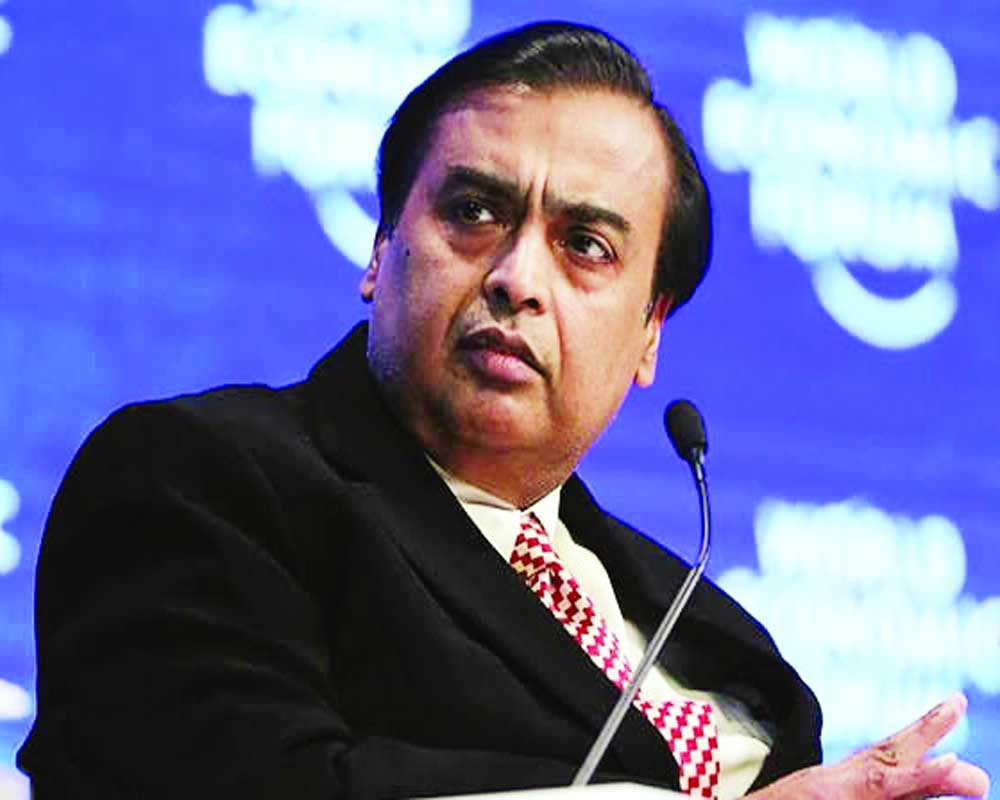
Mukesh Ambani’s Impact on Consumers
by Opinion Express / 13 August 2019Mukesh Ambani looks forward to changing how Indian consumers consume everything.
At another time, Mukesh Ambani’s announcement at the Reliance Industries Annual General Meeting (AGM) — where he formally announced the launch of his fibre-optic data network for Indian consumers, bringing his war on the telecom incumbents from mobile data networks to landline data connections — would have raised more questions than answers. There is little doubt that Ambani’s long-planned entry into mobile data networks has dramatically changed the way Indians treat data consumption, from carefully monitoring their usage to being carefree about their monthly bill or running out of data as prices across the board have crashed. Ambani plans to do the same with his ‘Jio Fibre’ service, bringing high-speed fibre networks to every nook and cranny of India. His proposals are not just an existential threat to current operators, but when combined with his plans to provide a free 4K television set and set-top box, could fundamentally change the way Indians consume entertainment at home. Just the way he changed the way Indians used their mobile phones. As much as people might complain about how the rise of apps such as Tik-Tok have corrupted Indian youth, the fact is that without Reliance Jio that would not have been possible. For better or worse, Mukesh Ambani has changed the way Indians behave and in doing so, has dramatically changed the way most Indians view him and his monolithic business empire. Once, any association with Ambani and Reliance Industries was pilloried by the likes of Delhi Chief Minister Arvind Kejriwal. Today thanks to the fact that Ambani revolutionalised data pricing, the general public has a favourable view of him in urban centres.
However, one must not forget that Ambani’s entry has made life difficult for the incumbents. He has indirectly driven the merger of Vodafone and Idea, saddled them and others such as Airtel with massive losses and put others like Tata Teleservices and even his younger brother Anil Ambani’s Reliance Communications out of business altogether. And much as many consumers in India do not feel much sympathy for some of the incumbents, as their reputation as money-grabbing operators was not completely unfounded, it is vital that competition in the country survives. For this, the financial viability of other operators must be ensured. At the very top, Mukesh Ambani should not be allowed to dominate the market and become a monopolist. That is not good for the Indian economy and the general sense of competitiveness in India.
Writer & Courtesy: The Pioneer
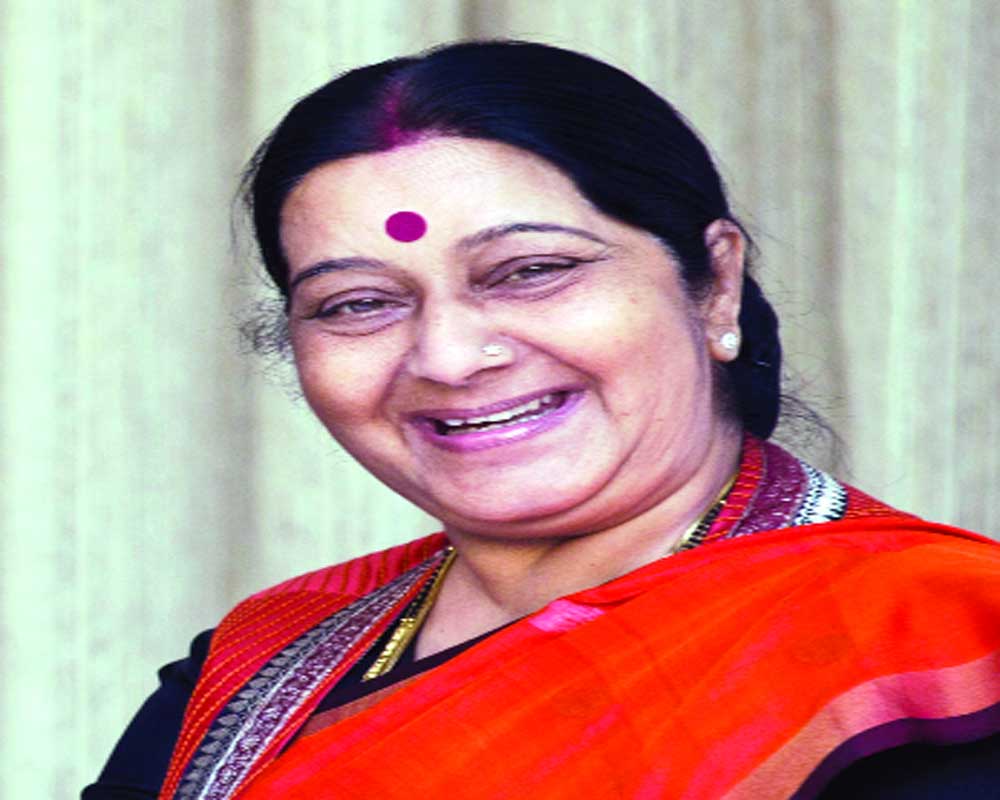
Sushma Swaraj: The Iron Lady
by Opinion Express / 08 August 2019Sushma Swaraj showed how humanism and politics are never at cross purposes and how women can overcome glass cliffs
“The old order changeth, yielding place to new…..lest one good custom should corrupt the world,” wrote Alfred Tennyson. But in the passing away of BJP veteran Sushma Swaraj, who embodied this philosophy, one wishes that “one good custom” could have, should have continued. For that showed how it could endure and reinvent itself. If only to rescue the faith in our democratic system. If only to believe that compassion and grace are a tougher play than any muscularity of purpose. And that alone makes for legacy. It would, therefore, be unjust to confine Sushma Swaraj to her role in the BJP. No. In the end, she became a global woman politician, who never said “no” to anything that was thrown her way, rose to the top despite challenges, and owned every task as if she were cut out for it and unachievable for anybody else. Most importantly, she kept her humanism separate from politics, which she saw as a way of getting the job done, never letting it define her. In fact, she defined it. So it is understandable why thousands of tributes are pouring in from across the world, even from nations with whom we have had a troubled relationship, appreciating her ways of engagement and relieving crisis with her direct intervention and action. A people’s person, she helped Indians across the world as much as she did other nationals who needed help at our embassies, particularly those who required medical treatment here. In many ways, Swaraj will forever remain a pioneer in the annals of women’s leadership in India. In a bindi and sari, she wore tradition easily. She chose the difficult option in politics, making her path through the male-dominated leadership of the BJP, an arduous climb compared to her counterparts in the Congress, most of whom had the mantle of entitlement. Swaraj broke through as the party’s first woman Chief Minister, Union Cabinet Minister, general secretary and even spokesperson. She was perhaps one of BJP’s most proactive I&B ministers, ushering in industry status for film producers and propagating community radio. A passionate and arresting orator after Vajpayee, she has had Parliament in thrall with her speeches, particularly as the Leader of the Opposition from 2009 to 2014. The House will surely miss that fire and brimstone. She famously vowed to shave off her head if Congress supremo Sonia Gandhi was made the Prime Minister and fought her creditably from the Bellary Lok Sabha seat. But that didn’t stop Sonia from exchanging pleasantries with her at Central Hall.
Her toughest stint was within the BJP despite her dedication and commitment to every role the party assigned her, particularly glass cliff challenges vacated by her male colleagues. Though she was among the second-rung leaders that BJP has a culture of grooming, she didn’t have the Sangh Parivar’s endorsement, which chose a monolith called Modi. Yet she survived and re-calibrated her loyalties to her one-time peer and newly-anointed leader, compelling him to admire her performance as his Minister. But it was a stifling tenure. Though she was the only woman foreign minister after Indira Gandhi, she was seldom allowed operating space, the bulk of foreign policy being conducted by the PMO. Still, Swaraj pushed the envelope, adding a personal touch to resolving people’s procedural problems and holding her own in forum discussions like ASEAN. She became a pro in social media diplomacy, helping in cases that users put up for her intervention and attention, something that led Washington Post to call her the “supermom” of diplomacy. With tremendous grace under pressure, she bowed out of the electoral race of 2019, knowing full well that it was better to let go of things not meant to be. She was wiser to step back as a protege of the Vajpayee-Advani school than being benched. When she transferred an official for refusing passports to an inter-faith couple, she came into direct confrontation with hardliner trolls, some of whom followed the present leadership and were seen as having their tacit endorsement. With hardly any peer support or defence, that episode highlighted the ideological gap between two generations of the BJP and how she was too different to negotiate a DNA switch. An old BJP leadership, operating in a different contextual dynamic, could afford to be more omnitheistic and share the spotlight. The new leadership, coming as it does on the back of a consolidated verdict, will predictably go by with what it succeeded with in the first place, a presidential style of operations. Yet it could not neutralise her free spirit, one that will continue to inspire us.
Writer & Courtesy: The Pioneer
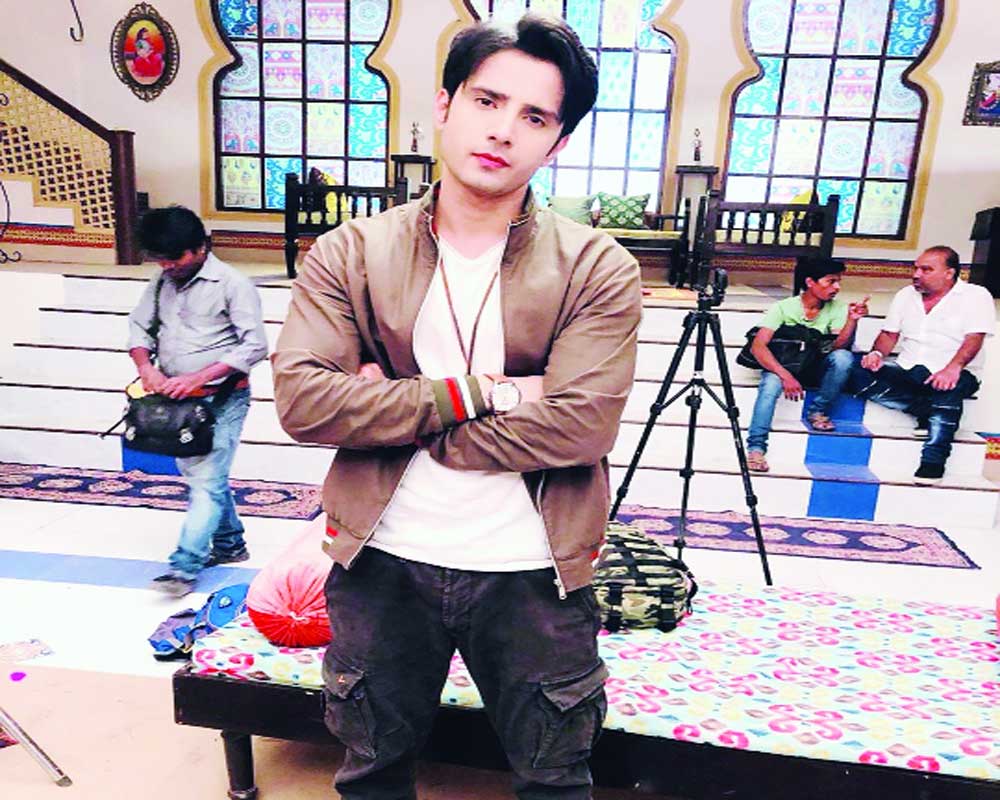
‘I LOVE TO DO CHALLENGING ROLES’
by Musba Hashmi / 30 July 2019He debuted with Jhalli Anjali and has experimented with different roles. MUSBA HASHMI speaks with ZAAN KHAN about his new show Hamari Bahu Silk and acting journey
- What is your role in Hamari Bahu Silk?
I play Naksh Parekh, a 22-year-old photographer. My grandmother wants me to give up photography and take over the family business of catering services.
- How easy or difficult was it to get into the shoe of the character?
I had to work hard to get into the skin of the character. I am a Pathan and my character is a Gujrati. I had to learn to speak Gujrati and bringing in that accent which was a challenge for me. To get it correct, I spent time with my Gujrati friends so that I could learn the language and get my accent correct. I didn’t want to sound fake. Also, I had to learn photography. I weighed 82 kg when I was offered the role. I had to look like a 22-year-old so I shed 15 kg in one month. It was difficult. A lot of preparations went into it. It was like a learning process for me.
- Did you always want to be an actor?
No, I never wanted to get into acting. I wanted to become a singer. I was clueless about acting. But it happened all of a sudden. I was in my third year of engineering and I was going home during the vacations. On my way, I saw a film shooting going — it was for Satyagraha. Ajay Devgn and Amitabh Bachchan were shooting and I was excited to see them. I stopped there for some time. Some of my friends were line producers on the sets. Suddenly, one of them came to me and asked if I was comfortable in standing behind Ajay for a scene. I told them that I have never done acting and they said that all I had to do was was to stand behind him. It went on for 10 minutes and then they offered me to go with them for 10-15 days as they needed those same group of boys for other scenes. I went for it. On my second last day on the sets, I met Prakash Jha sir and they asked me if I was comfortable in reading out dialogues. The positive thing in me is I am confident. I don’t get anxious. Then, he offered me a role — Vicky. This is how I got into acting.
- How has your journey been thus far?
Mumbai has been extra kind to me. I still remember when I first came to Mumbai in 2014. Within two weeks I got my first show as a lead — Jhalli Anjali. It aired on Channel V. I have seen both highs and lows. I got a bit distracted in between my career and lost my focus on acting. But, I managed somehow and started focusing on my work again.
- What kind of roles attract you?
I love challenges. Any role that would challenge me as an actor, I would love to do that. I have played a lot of different roles. From a simple and innocent boy —Dhruv in Jhalli Anjali to a negative one — Kunwar Jeewan Singh in Ek Tha Raja Ek Thi Rani. I love playing different characters. I love to enhance my craft (acting) and as long as I am getting to do it, I would love to play any role.
- Apart from acting, what keeps you busy?
I love playing football. I love to eat. I read a lot in my free time. I am a family man, I visit my family once a month.
- What else is there in the pipeline?
I am concentrating on this show. I am very clear in my mind that till the show is running, I will only focus on it.
Writer: Musba Hashmi
Courtesy: The Pioneer
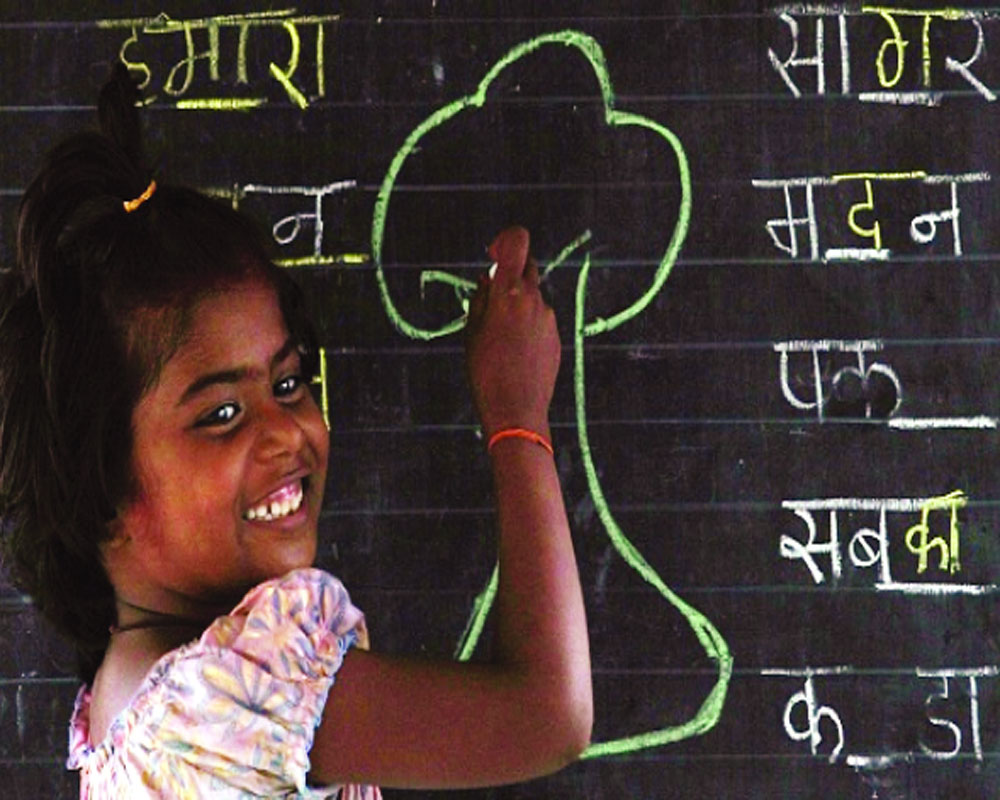
Importance of mother tongue
by JS Rajput / 16 July 2019Several committees and commissions have emphasised the importance of the mother tongue medium. It is to be seen what comes of it in the final education policy
The report to UNESCO of the International Commission on Education for the 21st Century was released at the session of the International Bureau of Education (IBE) in Geneva on October 2, 1996. The chairperson of the commission, Jacques Delors, very clearly summarised the essence of global consultations and the future vision of global education in the 21st century. For individual national contexts, he unequivocally stated: “Education in every nation must be rooted to culture and committed to progress.” The report begins with Delors’s Preamble entitled, ‘Education: The Necessary Utopia’ and says it all in the first sentence: “In confronting the many challenges that the future holds in store, humankind sees in education an indispensible asset in its attempt to attain the ideals of peace, freedom and social justice.”
The report has been deliberated upon globally for over two decades; it has received global appreciation and has impacted policies and implementation strategies internationally. Its articulation of four pillars of education — learning to know, learning to do, learning to be and learning to live together — has received admiration from common folks to seasoned academics alike. In the first quarter of the 21st century, who would not appreciate the fact that education “is not a miracle cure or magic formula” but one of the “principal means available to foster a deeper and more harmonious form of human development and, thereby, to reduce poverty, exclusion, ignorance, oppression and war.” India, known for its economic, social, cultural, ethnic, linguistic and religious diversity, is committed to transform its education system to achieve social cohesion and religious harmony and strengthen unity in diversity. But its education system has to encompass a very sensitive canvas. Its three-language formula, accepted in the mid-1960s, is yet to be implemented fully in letter and spirit.
Its national policy on education was last revisited in 1992. After more than a quarter of the century, in 2019, the Kasturirangan Committee submitted the draft National Education Policy (NEP) to the Government for finalisation of a new education policy. The preparation of this report was preceded by a national consultation process spread over four years. The draft NEP is open for inputs and suggestions from every quarter before finalisation. It is interesting that widespread fresh consultations have generated demands for further extension of the time limit for submission of suggestions beyond July 31, 2019.
Yes, people are concerned about education, its quality, utility and capacity to achieve total personality development. While there is no limit to improvements in the presentation of such reports, one has to begin implementation at some point. The NEP, 2019 mostly consists of formulations that deserve support of all and active involvement of academics as well as scholars, who are unconstrained by ideological bonds and narrow political considerations.
The draft report attempts at giving a comprehensive view of national expectations and aspirations fully synchronised with international trends and requirements: “The vision of India’s new education system has accordingly been crafted to ensure that it touches the life of each and every citizen, consistent with their ability to contribute to many growing developmental imperatives of this country on the one hand and towards creating a just and equitable society on the other.” To achieve such an objective, the issue of ‘language’ and ‘medium of instruction’ will become relevant.
For obvious reasons, the British were not interested in educating Indians in their mother tongue. They needed obedient and loyal educated people who would despise everything that was Indian — be it culture, history or heritage. This could best be achieved by “delinking Indians from India.” The best and easily available tool was to develop fascination for English language and all that was Western and, hence, admirable. Under severe burden of learning an alien language, where was the time for children as also parents’ inclination to realise the importance of learning the mother tongue? It was rather interesting that within hours of the presentation of the report to the Human Resource Development Minister and its simultaneous uploading on the Ministry’s website, certain vested interests attempted to create an unsavoury conflict in the minds of people, raising the issue of the so-called imposition of Hindi on non-Hindi speaking States. It must go to the credit of the Ministry of Human Resource Development that within hours of the issue emerging on the national scene, it issued a clarification that the Government has no intention to impose any language on any set of people unwilling to learn it. In fact, ever since the three languages formula was accepted by the Government and a commitment made to the nation, none of the Union Governments ever tried to impose any language hegemony.
The issue of mother tongue medium has once again been comprehensively addressed in the draft NEP, 2019. It is a universally accepted fact that initial education must be provided in the mother tongue of the child. It is also a known that children in the age group of 2-8 years are extremely flexible in learning multiple languages.
The NEP report acknowledges: “Language has a direct bearing as the mediator in all cognitive and social capacities, including in knowledge acquisition and production. The science of child development and language acquisition suggests that young children become literate in (as a language) and learn best through (as medium of instruction) their ‘local language’ ie, the language spoken at home. It is interesting to note that the committee uses two terms — mother tongue and also the language spoken at the home.” One can cite an example that will indicate the farcical levels of fascination for English medium schools in India, particularly among those who can afford paying exorbitant fees in privately managed “public schools.”
A young professor, working in a national academic institution in Delhi, sought transfer to his home-town in Bengaluru to look after his octogenarian in-laws, who had no other support. The request was accepted and the family shifted to their home place “happily.” Their two kids — 10 and 12-year-old — got admission in a public school without any difficulty. However, their grandparents could communicate in Kannada only and the children were made monolingual, meaning they could speak English only. One had the occasion to ask the young parents how it was beyond comprehension that children were totally alien to Kannada. The response was very truthful and also revealing: “We decided to speak only English in our home and family conversation, even guests were requested accordingly. All this to ensure children acquire greater fluency in English — it was all for their bright future and to make their life easier to get a green card.” If highly educated people are so charmed by English medium and English language, none will be surprised to find the mushroom growth of English medium schools in villages and towns.
The growing fascination for English as the medium of instruction from day one onwards in schools is not new. It has a historic legacy. The language policy adopted by the British in India included every trick of the trade to wean Indians away from their culture and heritage and language was the first tool. One cannot ignore how Mahatma Gandhi analysed this fascination very early in his life.
On February 4, 1916, Gandhiji raised the issue of language and referred to the insight he had gathered from some Poona (now Pune) professors, who assured him “that every Indian youth, because he reached his knowledge through the English Language, lost at least six precious years of life.” On July 5, 1928, he made a very touching statement on the medium of instruction, which deserves to be re-read and examined in the context of language learning and policy formulation. In fact, more than the policy-makers, it is the parents who should be aware of the harm being inflicted on the children by forcing children to learn English at the cost of mother tongue language: “The foreign medium has caused brain fag; put an undue strain upon the nerves of our children; made them crammers and imitators; unfitted them for original work and thought; and disabled them for filtrating their learning to the family or the masses. The foreign medium has made our children practically foreigners in their own land.”
In his opinion, among the many evils that the British imperialists imposed on India and its people, the imposition of a foreign medium was the greatest. He fervently wanted India to shake itself free from the hypnotic spell of foreign medium; sooner the better. Sadly enough that was not to be. Practically every commission and committee appointed in the post-independence period accepted and emphasised the importance and necessity of the mother tongue medium but things have gone from bad to worse. We have reached a stage when Governments, having failed to look after schools properly, have allowed their credibility to touch the nadir. The failure to maintain the mother tongue medium, Government schools are now being covered under the plan called school merger. People understand the real position. It will be interesting to see what emerges on the language front and the issue of medium of instruction in the final national education policy.
(The writer is the Indian Representative on the Executive Board of UNESCO)
Writer: JS Rajput
Courtesy: The Pioneer
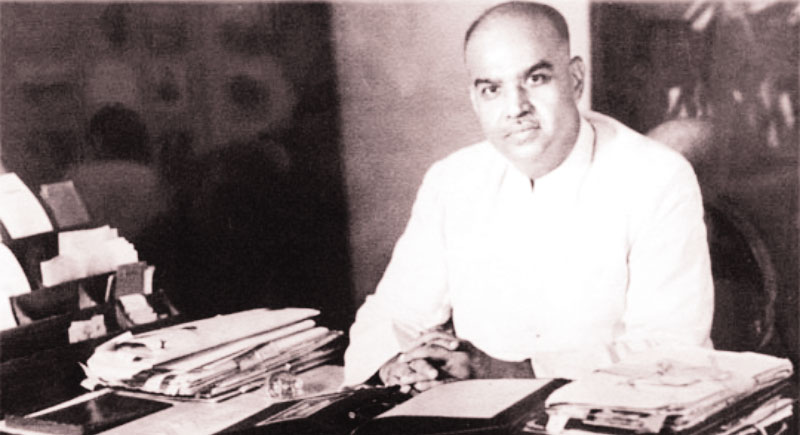
Syama Prasad Mukherjee : A politician of principles
by M Venkaiah Naidu / 06 July 2019Syama Prasad Mukherjee was thoroughly grounded in Indian ethos which actuated his political choices. Throughout his political life, he prioritised ideals over positions
It is a truism that occasion produces the leader. One of its telling examples would be Dr Syama Prasad Mukherjee (1901-1953), independent India’s first Minister of Industry and Supply and founder of the Bharatiya Jana Sangh in 1951. His 118th birth anniversary is being observed today (July 6). A qualified barrister by training, his passion was education, academics and Indian culture. A Vice-Chancellor of the Calcutta University at a mere 33 years — the youngest ever in India — he would have preferred to spend a lifetime in the hallowed portal of goddess Saraswati. However, the perilous political situation in undivided Bengal in the late 1930s compelled him to pursue active politics. Over the ensuing 14 years, he came to occupy an important place in national politics. He had become a symbol of new national aspiration when he passed away prematurely at the age of 52.
The party he co-founded, viz, the Jana Sangh, on the eve of India’s first general elections, felt orphaned at his untimely death. It had anyway put up a modest showing in the election. But it was the purity of his vision that impelled the party to increase its tally and mass base at every successive election from 1957 to 1977. It was the largest constituent that formed the Janata Party Government (1977-1979) and later took shape in its new avatar, the Bharatiya Janata Party (BJP).
But it is not for the sake of partisan politics or even his individual political brilliance that we remember him today. His parliamentary career was as brief as six years between 1947 and 1953. But what sets him apart and makes him a stuff of remembrance is not his characteristic brilliance but the principles he lived and died for. He gave up his Cabinet rank in protest against Prime Minister Jawaharlal Nehru’s response towards the plight of the Hindu minority in East Bengal (erstwhile East Pakistan) in 1950. Three years later, he laid down his life to uphold the status of Jammu & Kashmir as inalienable and an integral part of India. Conscience always outweighed authority in Dr Mukherjee’s plan of action.
Education ran in the veins of Dr Mukherjee. His father, Sir Asutosh Mookerjee (1864-1924), five-term Vice Chancellor of the Calcutta University, had turned the institution into a constellation of talent. Sir Asutosh was deeply imbued with the Indian ethos and wanted his son to do post-graduation in Bengali literature. Dr Mukherjee, having graduated in English literature with flying colours, chose to switch over to Bengali for post-graduation. He promoted serious research in Indian history from an Indian standpoint, opened the university’s first museum of Indian history, culture and archaeology and invited foreign universities to send their students to study Indian civilisation, culture and Sanskrit.
Apart from promoting serious research in Indian history, he also initiated a course in Islamic culture and history. Breaking the convention, Shri Mukherjee invited Gurudev Rabindranath Tagore to deliver the convocation address in Bengali for the first time in 1937. He also strongly believed in inculcating patriotism and love for the motherland among the students as also promoting our culture and civilisation. In September, 1939, he came in contact with Veer Savarkar and joined the Hindu Mahasabha. Soon afterwards, Dr Mukherjee was appointed its working president, which necessitated him to travel all across the country. Even Mahatma Gandhi welcomed his decision.
The Hindu Mahasabha years gave Dr Mukherjee the opportunity to demonstrate his leadership qualities, oratorical skills and organisational abilities. His first meaningful contact with the Rashtriya Swayamsevak Sangh (RSS) happened during that time. “I see in this organisation the one silver lining in the cloudy sky of India”, said Dr Mukherjee while addressing the Swayam Sevaks in Lahore in 1940. His relationship with the RSS became his capital when he founded the Bharatiya Jana Sangh 11 years later.
Impressed by his nationalistic outlook, Mahatma Gandhi insisted that Dr Mukherjee be included in the first Union Cabinet headed by Pt Jawaharlal Nehru. In spite of his reservations to be part of a Congress-led Government, he joined the Cabinet following the advice of Veer Savarkar.
As India’s first Minister of Industries and Supply, he piloted the industrial policy and laid the foundation for industrial development in the country. He believed in encouraging the private sector while creating a strong public sector base in the country.
He never hankered after power and placed the interests of the country above everything else. He had quit the Nehru Cabinet in protest against the Liaquat–Nehru Pact, which sought to protect the rights of minorities in India and Pakistan following the attacks on Hindus in East Pakistan. Dr Mukherjee wanted exchange of population and property at governmental level as a solution.
The Bharatiya Jana Sangh was proof of Dr Mukherjee’s farsightedness. The sapling planted by him, with the benefit of time, has today grown into one of the world’s largest political parties. Dr Mukherjee, the unofficial leader of the Opposition, was in no mood to rest on his plumes. In a short span, he emerged as one of the tallest parliamentarians and his speeches used to be heard with rapt attention by one and all.
Soon, he found the issue of fuller integration of Jammu & Kashmir close to his heart. He advocated the concept of One Constitution, One Flag and One Prime Minister for the country, saying “Ek desh mein do vidhan, do pradhan, do nishan, nahi chalenge” (Two constitutions, two heads of states, two flags in one country is not acceptable to India).
He lent his support to the movement of Praja Parishad, founded by Pandit Prem Nath Dogra, for fuller integration of the state with India. He visited the state once in 1952 when he had spoken to Sheikh Abdullah and Pandit Dogra. When his extensive correspondence with Pandit Nehru and Sheik Abdullah on the subject failed to break the deadlock, he decided to visit Jammu again to lend support to the satyagraha there.
But this visit, started on May, 8, 1953, was about to prove the last ever journey in his life. He was arrested on May 10, 1953, by the state police for entering Jammu & Kashmir without permit. He was flown to Srinagar and confined to a small cottage near Nishat Bagh, where he spent the last 40 days of his life as a prisoner before he died in a hospital under mysterious circumstances.
Following his death, Dr Mukherjee’s mother, Jogamaya Devi, wrote to Pandit Nehru seeking an impartial probe, which, however, was not accepted. In her reply to the condolence message sent by Nehru, she wrote, “I am not writing to you to seek any consolation. But what I do demand of you is justice. My son died in detention — a detention without trial”, she stated. On his birth anniversary, the best tribute to Dr Mukherjee would be to inculcate the values of nationalism and patriotism among the younger generation and to strive for protecting our culture, traditions, civilisational ethos and the unity and integrity of the country.
(The writer is Vice President of India)
Writer: M Venkaiah Naidu
Courtesy: The Pioneer
‘Mirror Never Lies’
by Team Viva / 18 June 2019Dastango Nusrat Ansari, through Dastan Alice Ki, presents Alice in a way that she is a dreamer and digs her own path through her struggles rather than being seen as an escapist. By Team Viva
Imagination has no restrictions. Who would know this better than Lewis Carroll? When Alice stepped through the looking glass one summer afternoon and fell down a rabbit hole, a tale replete with mystery, magic, twisted poetry, rhymes, confusion and logic came to the fore, where rabbits could talk and caterpillars would smoke hookah.
As artists Nusrat Ansari and Ainee Farooqui present the classics — Alice in the Wonderland and Through the Looking Glass — through the art of dastangoi, Nusrat explains how the duo brought out Alice’s story’s essence through the art form. She says, “Dastangoi has been picking up a lot recently. It’s written in a way that it naturally brings out the essence of a story. It is such a natural art form that it stays alive within the audience too as much as the performers.”
She says the art form involves a lot of improvisations and voiceovers, since this time they had kept it very interactive as well. But how? Nusrat explains with an instance, “When Alice has to guess the age of the queen, she tries to transfer the questions to the audience. So this way it is interactive. And it was so good to see that the audience was also actively participating in giving the answers and making the guesses.”
The artist says that such classics remain timeless and ever-relevant, and hence are narrated time and again. Hence, while Carroll’s classics had been penned in the 19th century, they remain relevant and ever-engrossing even today.
There are multiple interpretations of a character. When it was first presented by dastangos Poonam Girdhani and Ankit Chadha, they had their own interpretation of her, she says. Chadha had once said that the reason he chose Alice’s stories to begin their work for children is because her adventures are tilismi (magical) in nature, and the flavour of fantasy is similar to what they find in traditional dastans. Nusrat says, “My understanding and interpretation of Alice is that she is a very smart woman and one of those who knows that they are smart people. Even though she is being called an escapist and a lonely person, I see her as someone who finds her own way through her struggles, is a dreamer and believer, and has vivid ideas and imagination. She is a strong woman who can find out her ways.”
The dastan, based on Carroll’s classics, starts with Alice entering the fantasy land and discovering the world through the looking glass. After her size changes multiple times, Alice begins her journey on the chessboard to become a queen.
Talking about how the art form has evolved over the years, which had lost its charm among the audience in the late 1920s and brought back to life by Mahmood Farooqui during 2005. “People were amazed by what they saw and wanted to continue it after that. They saw it as an art form and an engaging form of storytelling.”
This is the first time, she says, that the classic is being presented even to the adults when it is mostly labelled as children’s tales or literature. “We did not just focus on children but kept in mind the adult audience too. And even they were equally engaged throughout.”
Writer: Team Viva
Courtesy: The Pioneer
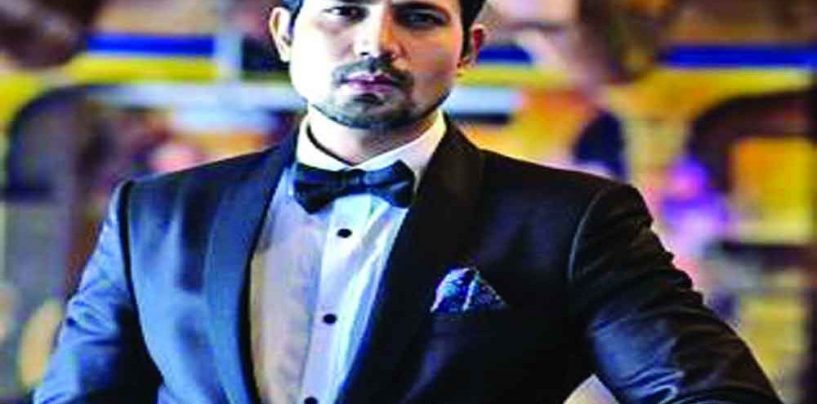
Vyas Covering Web Series to Movies
by Siddhika Prajapati / 17 June 2019Sumeet Vyas has romanced Kareena Kapoor Khan, played goofy roles in web series and is now looking forward to portraying Ram Jethmalani in The Verdict: State Vs Nanavati. By Siddhika Prajapati
He has no second thoughts while answering any of our questions. Nor does he hesitate or fumble. He is quick and smart while at the same time has an air of of detachment around him despite the recognition that he has been getting for his work of late. Actor Sumeet Vyas, who has been seen across different platforms — films, TV and web series — is devoid of any regret or guilt about his life or the kind of work that he has done.
It is the actor’s confidence and self-conviction that has got him so far. Vyas is set to play an intense role in Ekta Kapoor’s forthcoming web series, The Verdict: State Vs Nanavati, which is a switch from the goofy roles that he has been portraying recently. He took it up as it was a long time since he found a story which offered something different as he had been getting roles that were similar to TVF’s Permanent Roommates. So when the show’s director approached him to play lawyer Ram Jethmalani, he was surprised and overwhelmed at the same time.
Based on the famous case where KM Nanavati, a much-decorated naval officer shot his wife’s paramour, it has had cinematic outings in the past too, including Yeh Raastey Hain Pyar Ke (1963), then Achanak (1973) and the most recent one being Rustom, starring Akshay Kumar. The case in 1959 put the spotlight on Jethmalani, who was the prosecution lawyer while the public sympathy lay with Nanavati who was supported to the hilt by fellow Parsi Russi Karanjia’s tabloid, Blitz. Nanavati was eventually declared not guilty by a clearly partisan jury vote of eight to one. The larger outcome of the case was that the jury system in India was scrapped forever.
The actor says that there is a method to choosing any role. “I agreed to take up this character as I was bored of doing those ‘nice guy’ roles. I wanted to play someone with characteristics that do not define me in real life. Also, the story at its core is so powerful that any actor would want to take up the opportunity.”
It is the first time that Vyas is being seen portraying a layered role unlike the linear characters that he has been seen in, be it in Tripling or Official CEOgiri. When it comes to preparing for any role, the actor doesn’t believe in getting into its depth as this would affect his personal life. “I don’t believe in living the character. Once the shot is done, I immerse myself in my life. It’s very important for me and for my process of preparation to disconnect from the character once I have wrapped up the role,” he elaborates.
The Veere Di Wedding actor accepts that playing a real-life character, especially someone as dynamic as Jethmalani, was a huge responsibility. He read his biography and watched video tapes as a part of his homework for the role. He adds, “It’s very important to me to know exactly where the character is coming from. I don’t apply my personal logic into the character’s behaviour or the motives behind his action. I prefer to be natural without stressing too much.”
Talking in-depth about the character, the Parched actor says, “For any actor, the complexities of each character are an interesting aspect to scrutinise. No one can completely understand someone as multi-dimensional as Jethmalani. Neither I nor anyone can term him unfair or even reasonable. Thus, it’s an intriguing experience to play him on screen.”
The actor is one of the reasons we’re glued to YouTube. Back in 2016, he made us notice him with his substantial role in the film Parched, but it was his portrayal of the character Mikesh/Micky in TVF’s Permanent Roommates that garnered eyeballs.
Meanwhile, Vyas does not believe in comparing the digital platform with the silver screen. “As an actor, I personally, don’t find any difference. I will invest the same amount of efforts in the film which I would put in any other medium. The only difference is the platform through which the story is conveyed,” shares the actor.
According to the TVF star, web shows can never replace cinema. He agrees that it has emerged with new opportunities and its market is expanding. But cinema has its own essence. “Cinema has a vast reach whereas web series are quite personal. One can enjoy the film with family but series offers one the freedom to experience it alone,” he adds. Vyas has also written Yashraj’s web series Bang Baja Baarat, which was again a huge success among youth.
Besides acting and writing, Vyas has directed plays. He joined theatre at 17 which helped him grow up as an actor. “The content and the people with whom I work with satisfy me while choosing any project. For me, the medium is inappropriate. Whether it’s for stage, web or silver screen, I make sure that it has to improve me as a person. So, what I enjoy and what I don’t is the process which makes me decide on taking up any project,” Vyas says.
The show is expected to release by the end of this month.
Writer: Siddhika Prajapati
Courtesy: The Pioneer
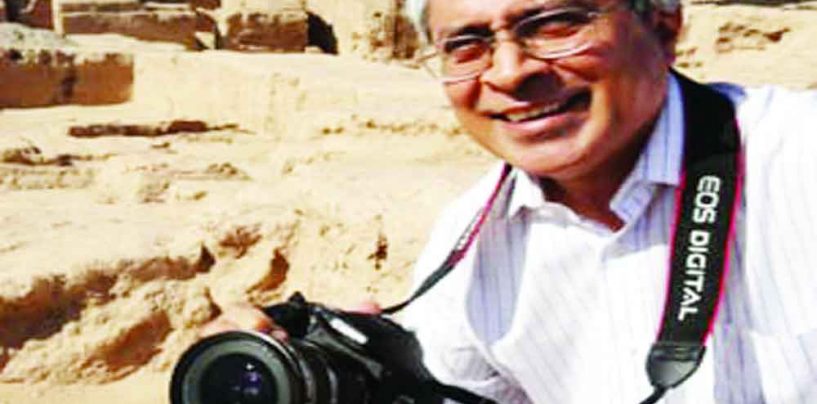
Induction of Yoga in Our Lives
by Chahak Mittal / 17 June 2019Filmmaker Benoy K Behl says that there is a dire need of introducing and promoting yoga in all branches of education, medicine and even workplace to create an atmosphere of harmony and oneness. By Chahak Mittal
We live in a world torn by strife, violence, confusion, drug abuse and a medical system, which is too commercial and exploitative. And one of the best answers to the problems and ills of the modern world is yoga, believes filmmaker and historian Benoy Krishen Behl.
Today, the ancient science of yoga has perhaps become more relevant than it was ever before. The first step towards world peace is the creation of peace within each person. It is through the transformation of individuals that the world would be changed. Each person should grow in the understanding of his true self and develop compassion. This would lead to more harmony within families and groups, in society and finally in the community of nations. The world would become more joyous and peaceful.
Through a 52-minute documentary film, shot in 26 cities and regions across 11 countries over five years, he is set to showcase a voyage of discovery, capturing the poetry and grace of yoga and of the world of nature. The film has interviews with leading medical practitioners, who speak in objective and scientific terms about the positive benefits of yoga, and with leading exponents as well as with academicians and students of the field.
Talking about how he chose the locations across the globe, he says, “These were decided to cover a broad range of the practice of yoga. It began with India, its birthplace. And then shot across East and West Coast USA, as these are some of the places where yoga is extremely popular. To show spectacular seascapes and beautiful backgrounds, we also shot in Bahamas and Costa Rica. We also wanted to show how yoga is proving to be extremely beneficial in areas ravaged with strife and conflict and hence, we shot in Brazil. There, the practice has proved to be useful even in jails and juvenile rehabilitation homes. We shot in dense jungles in Colombia. Other shooting locations were China, Japan and Vietnam to show the spread of yoga in Asia.”
Behl calls these five years of shooting as a “long labour of love,” which has also been a wonderful experience for him “to shoot with and capture the finest yoga asana practitioners and the beauty of nature.”
The filmmaker has been through some unforgettable experiences of meeting some of the “gentlest, kindest and the most generous people in the world.” From hearing the chants of Sanskrit bhajans across the globe at various ashrams every day, he and his team also went to some of the most dangerous and violent cities in the world like Medellin and Cali in Colombia, where yoga is being used to heal the scars of violence. He shares that often the camera had to be kept hidden while in taxis and on the streets. “However, local escorts accompanied us for safety at all times,” he says.
Behl says that making and conceptualising the documentary came very easily and “naturally” to him, as it has been 43 years in practising and researching about the ancient art of India that led him to make a film on the subject. “All Indian philosophy is yoga. It is all about achieving the final knowledge of our oneness with all that is around us, through meditation. Through yoga, we calm ourselves and see that we are less affected by the noise and distractions of the world around us. That is the purpose of yoga, it takes us to a state where the ever-changing perceptions around the world do not assail our consciousness. It represents a state when the constant fluctuations of the mind have been stilled, in which we may be able to direct our consciousness in a search for what is true and lasting,” explains he.
For someone who has been travelling around and researching about yoga since so many years, how has he witnessed the world around him change in terms of its understanding and recognition of yoga? He says that over the years, yoga has become extremely popular around the world and today “even modern hospitals in countries like India, Germany and USA have started taking the benefits of yoga seriously. The initiative of the Prime Minister of India in having an international day of yoga declared by the UN has gone a long way to give the practice its true place in modern international society.”
Yoga has a vision which symbolises oneness in all that there is around us, believes Behl, who says that there is a dire need of introducing and promoting yoga at more branches of education, medicine and even workplace to create an atmosphere of harmony around.
He says, “It is a vision of a great harmony and works towards integrating and joining us with the eternal reality.” However, one obstacle on this way of unity, he adds, is our ego. “Our ego makes us look at ourselves as separated individuals, with limitless desires. This leads to an endless chase towards them. We are never able to attain satisfaction and are constantly restless. We remain trapped in the noise and clamour of the materialistic world.”
He feels that such a vision of life should be introduced at all levels of education and at the workplace and it goes far beyond just the medical system. “It not only prevents disease, but as well covers all aspects of life.”
He believes that yoga not only enables us to understand ourselves better but also puts us on the driving seat for our own health. It is the study of consciousness, understanding one’s body, emotions, mind and beyond that, the true self.
Writer: Chahak Mittal
Courtesy: The Pioneer
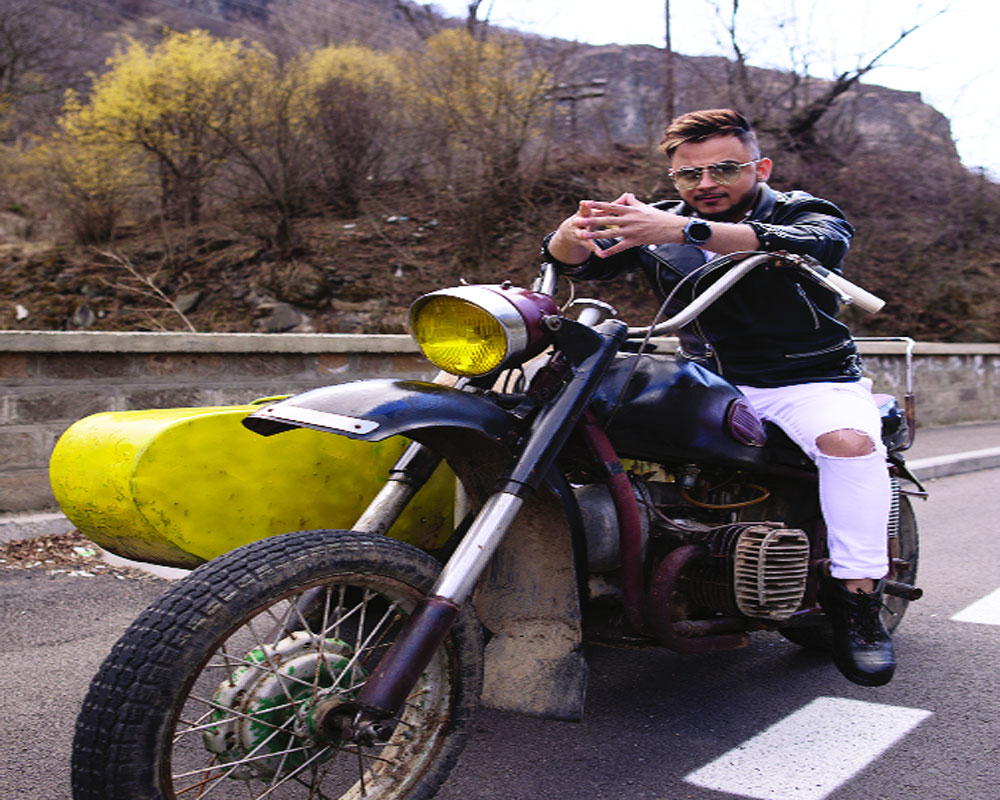
Greatest blessings come with Patience
by Team Viva / 15 June 2019It was patience and persistence that helped Millind Gaba make it big. By Team Viva
He swayed millions of heart with his new single Zindagi Di Paudi and is riding the crest of success. But it has not been an easy ride for Millind Gaba despite having roots in the industry. He shares “I imbibed music since childhood because my father is a music producer and has been a part of the industry for the last 35 years.” He says when he stepped out for a job, no option other than music was open to him as he was not good at sports or academics. Moreover, he too was determined to make a mark in the industry. He adds, “My family was happy to see me continuing the legacy. They made me aware about the intricacies and uncertainties of the field.” He was taught to strike a balance between success and failures even before he stepped into the world of music.
Initially, though it was music production that he ventured into. But his heart lay in singing and he often requested producers to allow him to perform for free but they did not comply. “All I wanted was a chance to prove myself but I was always rejected as they felt that I was a child,” he says. Along with music, he was keen to act as well. Here too, he faced so many rejections that he started questioning his destiny. The only thing which kept him going was his patience.
He wanted to make his music the talk of the town, which ultimately did happen in 2014 when he sang, Daru Party. “It turned out to be a game changer. I won appreciation and recognition everywhere. It gave me the opportunity to perform and connect with people from all walks of life all over India.”
The excitement in his voice is palpable when he talks about how he performed four roles in his song Four Men Down which was inspired by Mann behka in Ghajini where Aamir Khan played 11.
Gaba has been partial to Punjabi songs and he has sung most of his numbers in the language. He says, “I am a hardcore Punjabi. After singing in Hindi, I decided to switch to my mother tongue to make people aware of my Dilli wali Punjabi.” He shares that he has an inclination towards Bhojpuri.
An allegation that has dogged Gaba often is that of his lyrics being sexist in nature. However he counters and talks about the double entendre that he finds implicit in the songs of past, “People have started questioning the lyrics now. In the past there were songs like Aao huzoor tumko baharo mei le chalu and Aaj ki raat mere dil ki salaami le le.’ Aren’t these sexist? Kaun leta hai raat mei salami? Tell me? These songs were never questioned. Songs can be interpreted according to our intentions. I don’t pay attention to all this as I feel songs are made for entertainment. The ones I sing were created as dance numbers to enjoy. Listen, dance, enjoy, go back and sleep. I am not giving you any advice or suggestions through my songs”
Talking about his recent release, Zindagi Di Paudi he says, love inspired him to sing it. He had not sung any love song by far so he thought this was a good one to show his versatility. He showcased his acting alongside his music skills through it. He expressed his happiness over the success of the song and also that it had struck a chord with boys. “I had hoped that the song would have this effect,” he says.
While choosing a song he makes sure that it syncs with his personality as he is well aware that he can’t portray a gangster or even a negative role. His favourite actor is Ranveer Singh. “I can identify myself with him especially when he is on the stage. He has a volcano of energy.” He also admires Aamir Khan for his acting and professionalism and wants to work with him. His list of favourite singers include Hariharan, Nusrat Fateh Ali Khan and Sonu Nigam.
Besides being a music addict, he is a travel junkie. His next song is a lively friendship anthem with his friends. Besides this, he will also share the screen with Tulsi Kumar soon.
Writer: Team Viva
Courtesy: The Pioneer
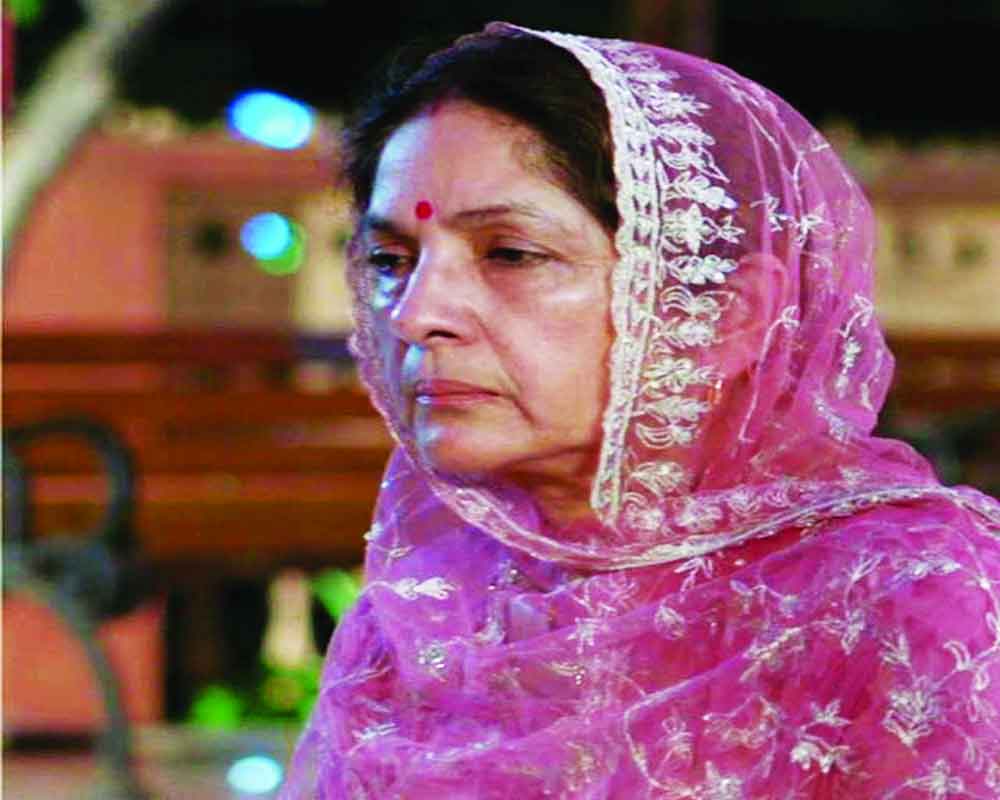
A Star That Never Dims: Neena Gupta
by Saimi Sattar / 08 June 2019Saimi Sattar reckons Neena Gupta has remained timeless despite the passage of decades. 2018: She was seen as the middle-aged Priyamvada Kaushik whose pregnancy is the cause of much consternation for the entire family. She won the Filmfare Critics Award for Best Actress for her realistic portrayal.
Flashback to 1999 and Saans, where she portrayed the character of the wronged wife who refuses to play martyr. The serial, which she also directed, was path breaking for the way it depicted the woman who, though much in love, refused to break down into histrionics that are the norm even now on television.
Go back even further to 1982 when she portrayed he role of Abha in Gandhi and capped it the very next year by swinging around in a crane along with Pankaj Kapoor, Satish Kaushik and Satish Shah in the iconic Jaane Bhi Do Yaaron as Priya.
The decades might have changed but Neena Gupta has held steadfast in the industry with her nuanced performances, howsoever small, that made a mark. But she is hungry for more. “For both actors and directors, this is a golden time. There is so much variety in films and then there is web which means that there are so many platforms. It doesn’t matter what the format is for it is acting. I wish I was younger when I could do much more. But even then, it is fantastic.”
Any other actor might have decided to quietly fade away given the controversy that she unleashed when she decided to be a single parent, but then Neena is made of sterner stuff. And this has paid dividends as the society and the industry has changed offering content that she is in sync with. “One reason is society and women are changing. How many middle aged women are going to the gym now? Earlier they wouldn’t have even heard of it. The second reason is the platform. Web series have seasons. If you did a TV serial, we were stuck for two years where actors even with smaller roles get noticed. The whole scenario has changed,” she points out.
Moreover the lines between arthouse and commercial cinema have blurred. “Badhaai Ho is an arthouse film but a commercial hit, which didn’t happen earlier. That’s the change. It is a mainstream film done artistically and is at the same time, realistic,” she says.
Her latest venture is Adi Sonal one of the six parts of the omnibus, Shuruaat Ka Twist. “The director Heena D’Souza came to me with the story and I really liked the subject and that’s why I agreed to do it. It is the story of a middle class household with a husband, son and daughter-in-law. The beautiful undercurrent of a relationship between me and the daughter-in-law which is subtle and which you don’t realise till you see the end forms the crux of the story,” says Neena. Describing the character further, she says, it is like one of those typical housewives who spend the entire day wearing a night gown with a chunni. “She is just doing her duties the way she has been taught. The end comes as a surprise,” she says.
While choosing her roles there are several things that she keeps in mind. “The whole script and the role should excite me. The other things that I look out for are the directors and the cast,” says Neena.
While she has worked with stalwarts like Pankaj Kapur, Naseeruddin Shah and more, acting with the younger lot of actors has been a learning process too. “They are so hardworking and disciplined. There is no generation gap. We were like friends and had so much fun. In between shots, we could talk about just anything. We discussed our problems. I learnt a lot from Ayushmann and the way he chooses his role,” she says.
She also feels that the industry has changed the way it treats women. “The industry is more professional. Women are more respected. Male actors are much more decent and directors now are more open to suggestions,” she says.
She elaborates further about the difference between directors of yore and the younger ones. “While working with Subhash Ghai or Shyam Benegal, you were to scared to give a suggestions. While these directors are not a walkover, they are ready to take suggestions if it improves the quality,” she says.
A National School of Drama alumnus, she feels that the place has influenced her in varied ways. “I am very committed and disciplined. I work hard and don’t mind giving several takes. I don’t argue and I respect the director’s decision,” says the actor who just turned 60 but defies the norms agreeing.
She is philosophical about the experiences that she has had in life. She points out that, “I’ve come to the conclusion that everything that happens comes to some use someday. Even me talking to you will be of use some day. Maybe you ask something and I will think that I’ve never thought of it that way. So whether it is NSD or Mumbai or my parents, they’ve influenced me a lot but how and where it will be of use, I don’t know.”
Looking ahead, she has a pilot ready for her iconic Saans, “I am looking for a platform,” she says.
When one wonders about the state of Indian television, she is quick to retort. “Why should we bother about TV being caught in a bind when we have such amazing content on other platforms. They must be having an audience. It must be selling times. When it won’t sell, they will change too,” she says.
When one asks Neena, who lived and studied in Delhi, about her favourite places in the city, she retorts, “I am a Mumbai person. But I like to eat at Nathus. I love to roam around in Connaught Place and shop at the emporiums in Baba Kharak Singh Marg. I often went to shop for chudis at Hanuman mandir. Now, when I come back I go for my walks to Lodhi Garden and visit India International Centre.”
However, there are some things about the city that she doesn’t like. “Dust,” she says emphatically and adds, “Unprofessional and poking your nose in each others affairs.”
When you talk about Jaane Bhi Do Yaaron, she is categorical, “I don’t think one should remake such a film.” Yes, just the way it is difficult to imitate the amazing grace that she has about her persona.
Writer: Saimi Sattar
Courtesy: The Pioneer
FREE Download
OPINION EXPRESS MAGAZINE
Offer of the Month